Integrated Intelligent Energy ›› 2026, Vol. 48 ›› Issue (1): 43-58.doi: 10.3969/j.issn.2097-0706.2026.01.005
• Optimization and Scheduling of Integrated Intelligent Energy System • Previous Articles Next Articles
PAN Lei( ), DING Yunfei(), PANG Yi*(), WANG Yuxuan(), CHEN Jianwei(), GAO Rui(), ZHANG Liyang()
Received:2025-08-12
Revised:2025-10-21
Published:2026-01-25
Contact:
PANG Yi
E-mail:panlei4089@163.com;819667068@qq.com;primepang@163.com;1442030308@qq.com;jianwei_chen1314@126.com;gaorui223@126.com;zlysghr@163.com
Supported by:CLC Number:
PAN Lei, DING Yunfei, PANG Yi, WANG Yuxuan, CHEN Jianwei, GAO Rui, ZHANG Liyang. Optimal scheduling strategy for REHMIS-IES based on SC-SAC algorithm[J]. Integrated Intelligent Energy, 2026, 48(1): 43-58.
Add to citation manager EndNote|Ris|BibTeX
URL: https://www.hdpower.net/EN/10.3969/j.issn.2097-0706.2026.01.005
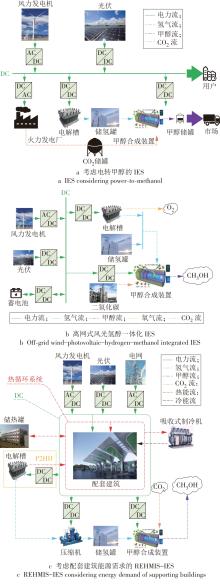
Fig.1
Topology of IES for methanol production
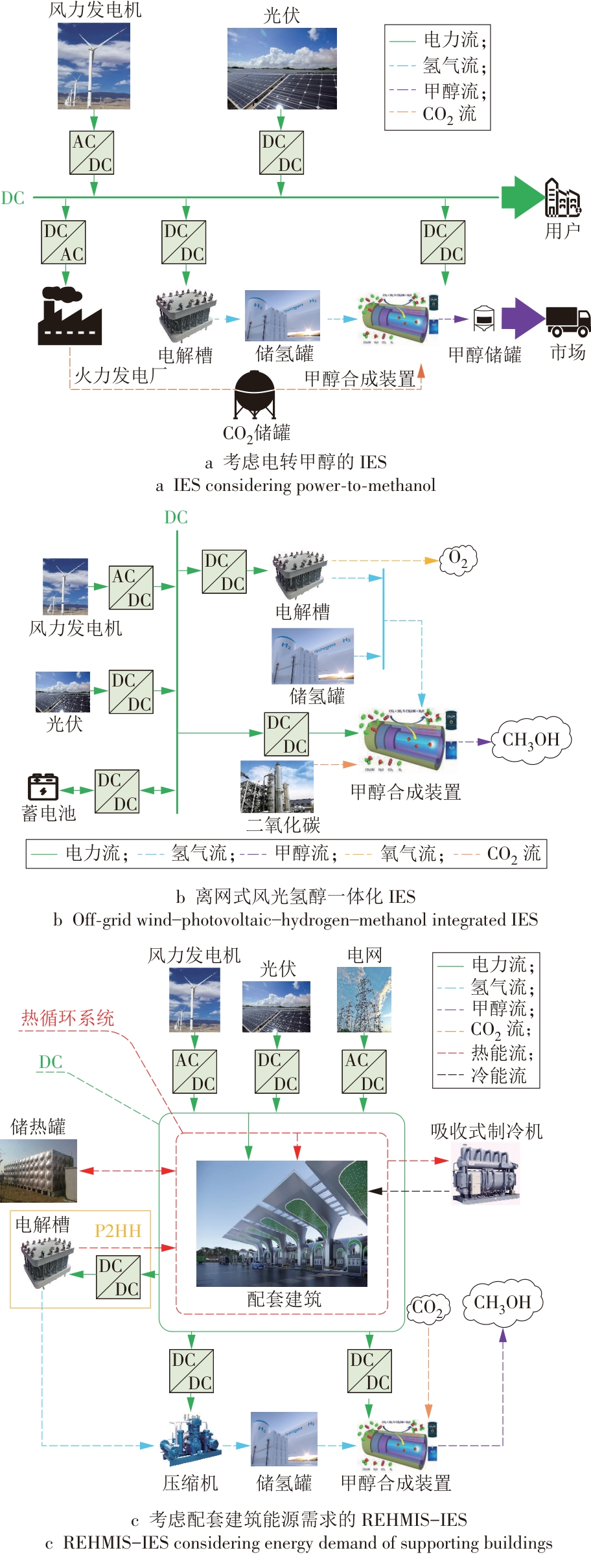
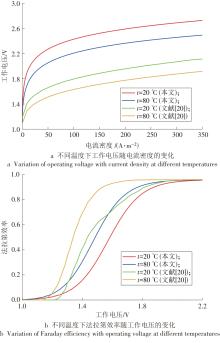
Fig.2
Comparison of reproduction results of alkaline electrolyzer characteristic curves with literature data
Fig.3
Structure of SAC algorithm
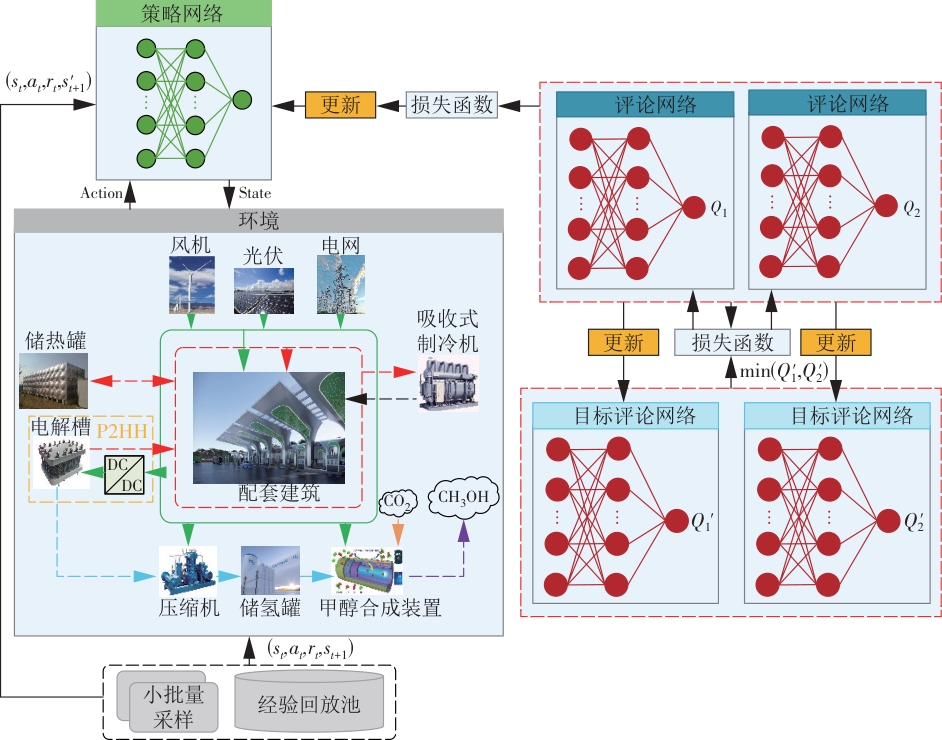
Fig.4
Conversion from DNN to MILP
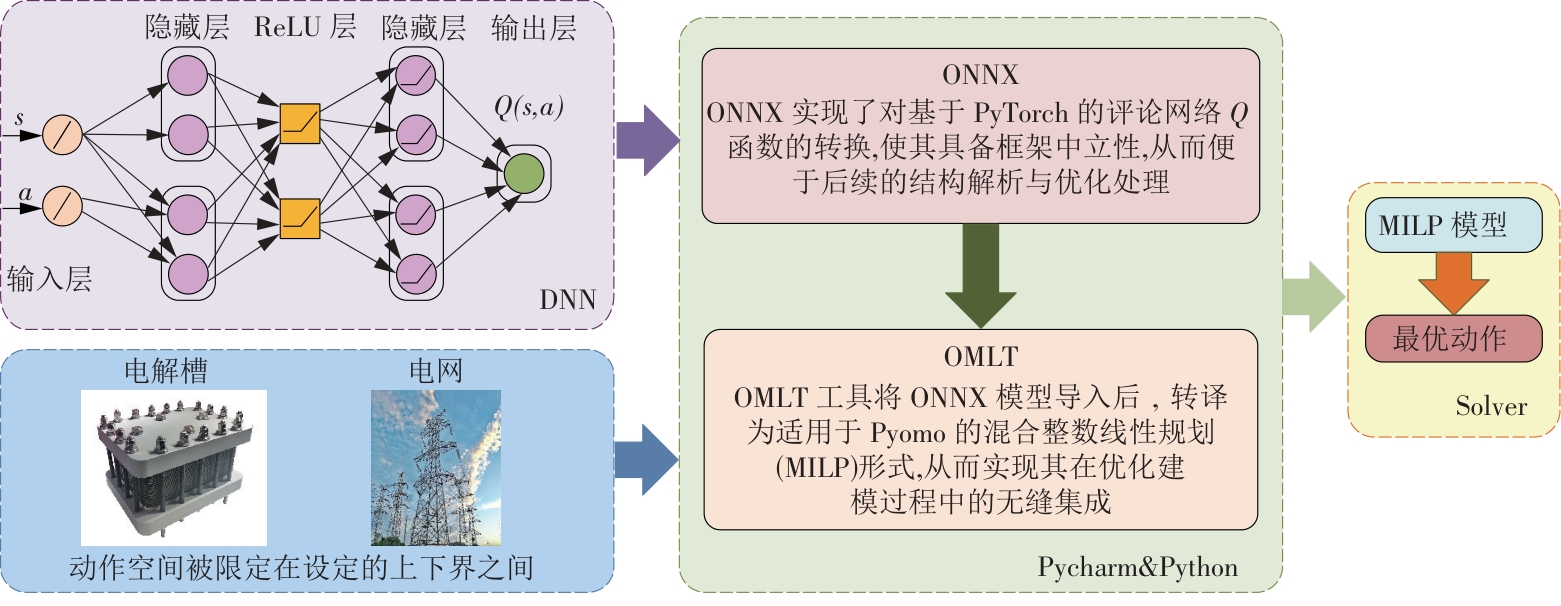
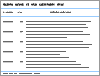
Table 1
System equipment parameters
| 设备 | 参数 | 数值 |
|---|---|---|
| WT | 800 | |
| vin/(m·s-1) | 3.5 | |
| vout/(m·s-1) | 25.0 | |
| vr/(m·s-1) | 12.0 | |
| nwt | 2 | |
| PV | 0.265 | |
| fpv/% | 80 | |
| Eref/(kW·m-2) | 1 | |
| δ/(%·℃-1) | 0.47 | |
| tref/℃ | 25 | |
| EL | r1/(Ω·m2) | 3.538 55×10-4 |
| r2/[Ω·m2)·℃-1] | -3.021 50×10-6 | |
| s/V | 2.239 6×10⁻¹ | |
| t1/(m2·A-1) | 5.130 93 | |
| t2/[(m2·℃)·A-1] | -2.404 47×102 | |
| t3/[(m2·℃)·A-1] | 5.995 76×103 | |
| A/m2 | 0.25 | |
| f1/(mA2·cm-4) | 250 | |
| f2 | 0.96 | |
| F/(C·mol-1) | 96 485 | |
| HT | mHTN/kg | 800 |
| SHT_min/SHT_max/% | 0/90 | |
| 压缩机 | c/[kJ·(kg·K)-1] | 14.304 |
| T1/K | 293 | |
| ηc | 0.75 | |
| κ | 1.4 | |
| HST | QHSTN/(kW·h) | 1 000 |
| SHST_in/SHST_out/% | 0/90 | |
| 甲醇合成装置 | 0.169 | |
| AC | 750 |
Table 2
Electricity prices and CO2 purchase prices
| 项目 | 价格 | ||
|---|---|---|---|
| 电网电价/ [元·(kW·h)-1] | 夏季(6—8月) | 高峰 | 0.50 |
| 低谷 | 0.31 | ||
| 冬季(12—2月) | 高峰 | 0.79 | |
| 低谷 | 0.31 | ||
| 春秋季(3—5月,9 —11月) | 高峰 | 0.69 | |
| 低谷 | 0.31 | ||
| 平均购电价格/[元·(kW·h)-1] | 0.51 | ||
| 平均售电价格/[元·(kW·h)-1] | 0.29 | ||
| CO2采购价格/(元·kg-1) | 0.10 | ||
Table 3
Network structure and training parameters
| 参数 | 数值 |
|---|---|
| 软更新系数 | 0.01 |
| 经验池容量 | 45 000 |
| 批量大小 | 256 |
| 训练次数 | 3 000 |
| 探索率 | 0.000 1 |
| 策略网络结构 | 3×64(ReLU,tanh) |
| 评价网络结构 | 3×64(ReLU) |
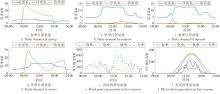
Fig.5
Characteristic data of REHMIS-IES
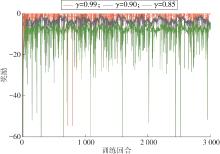
Fig.6
Reward curves under different discount factors
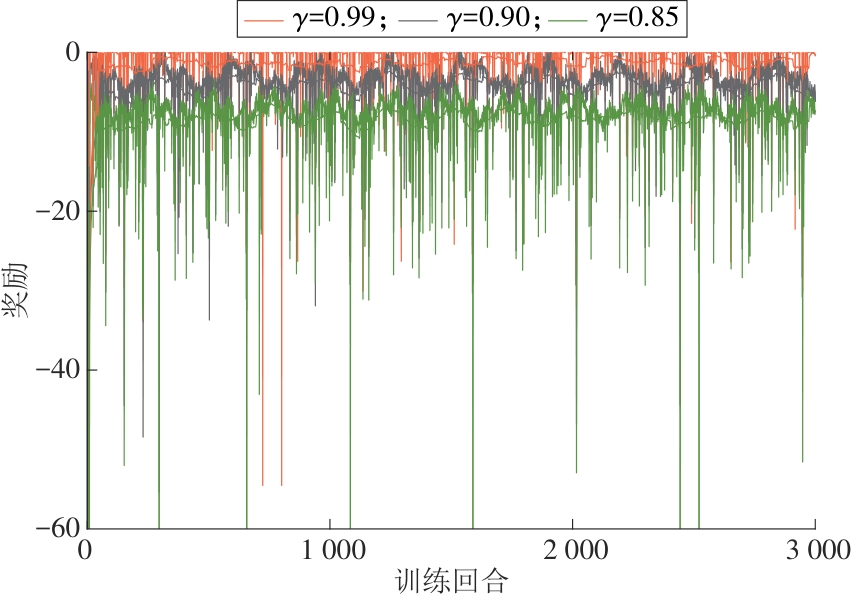
Fig.7
Training process of SAC algorithm
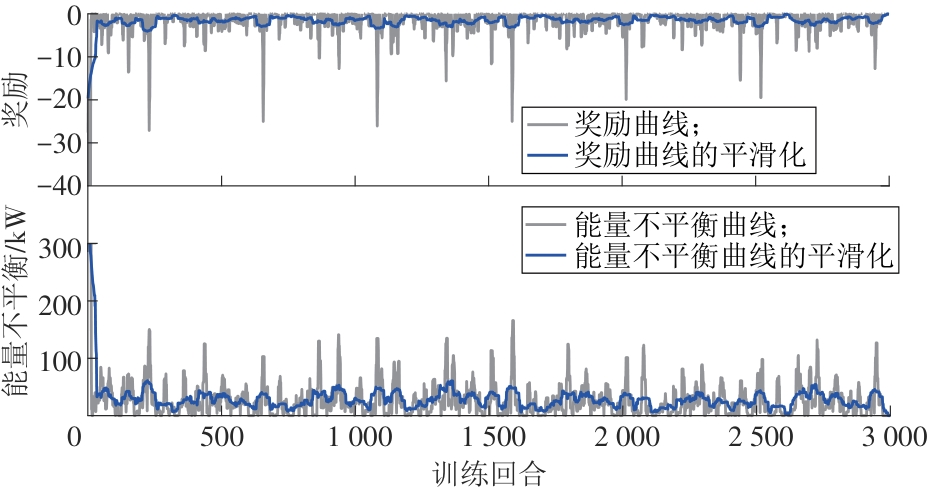
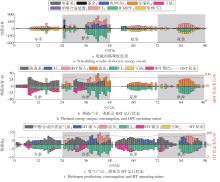
Fig.8
Scheduling results in four seasons
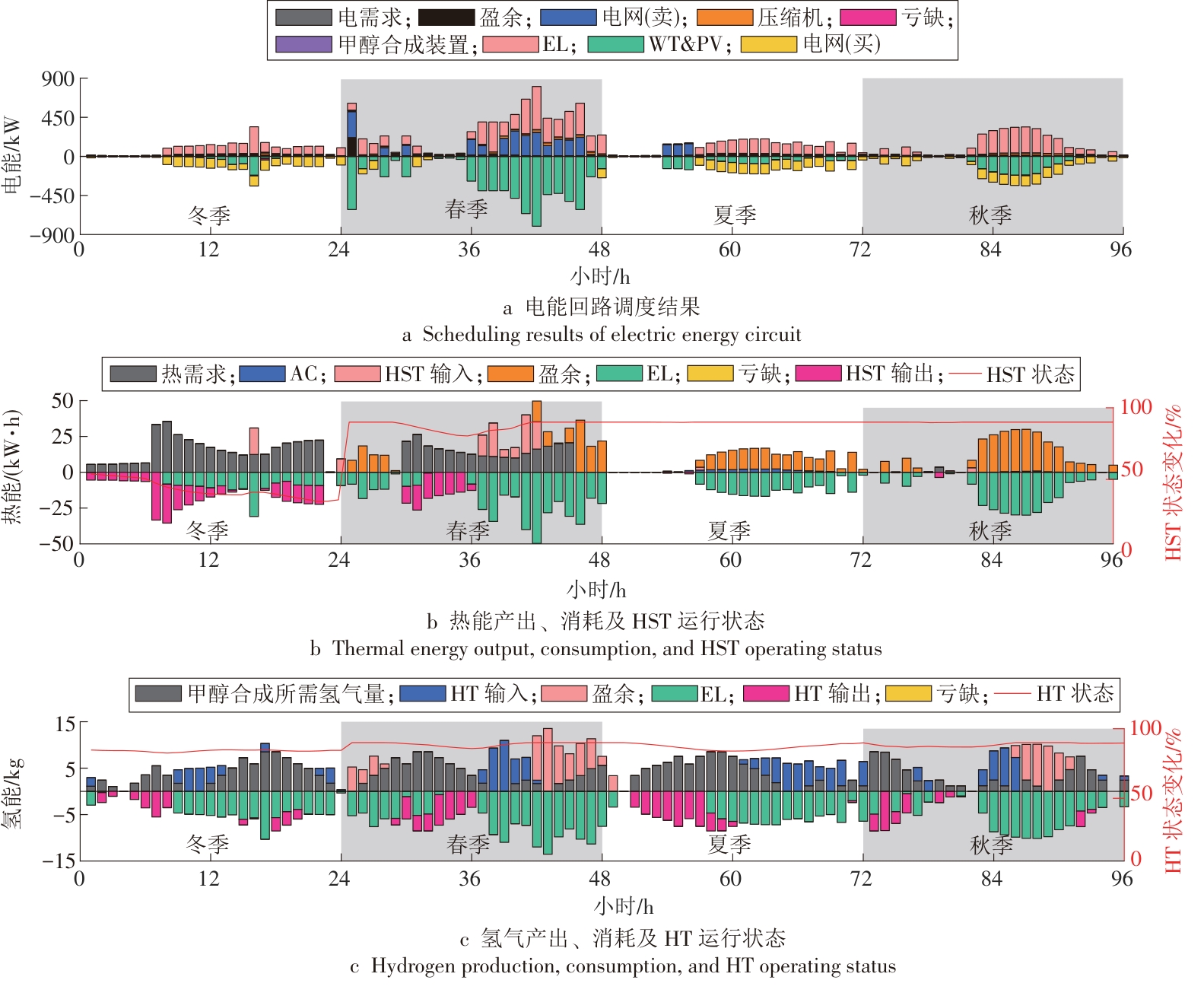
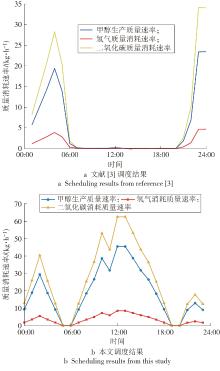
Fig.9
Comparison of material consumption and production in methanol production
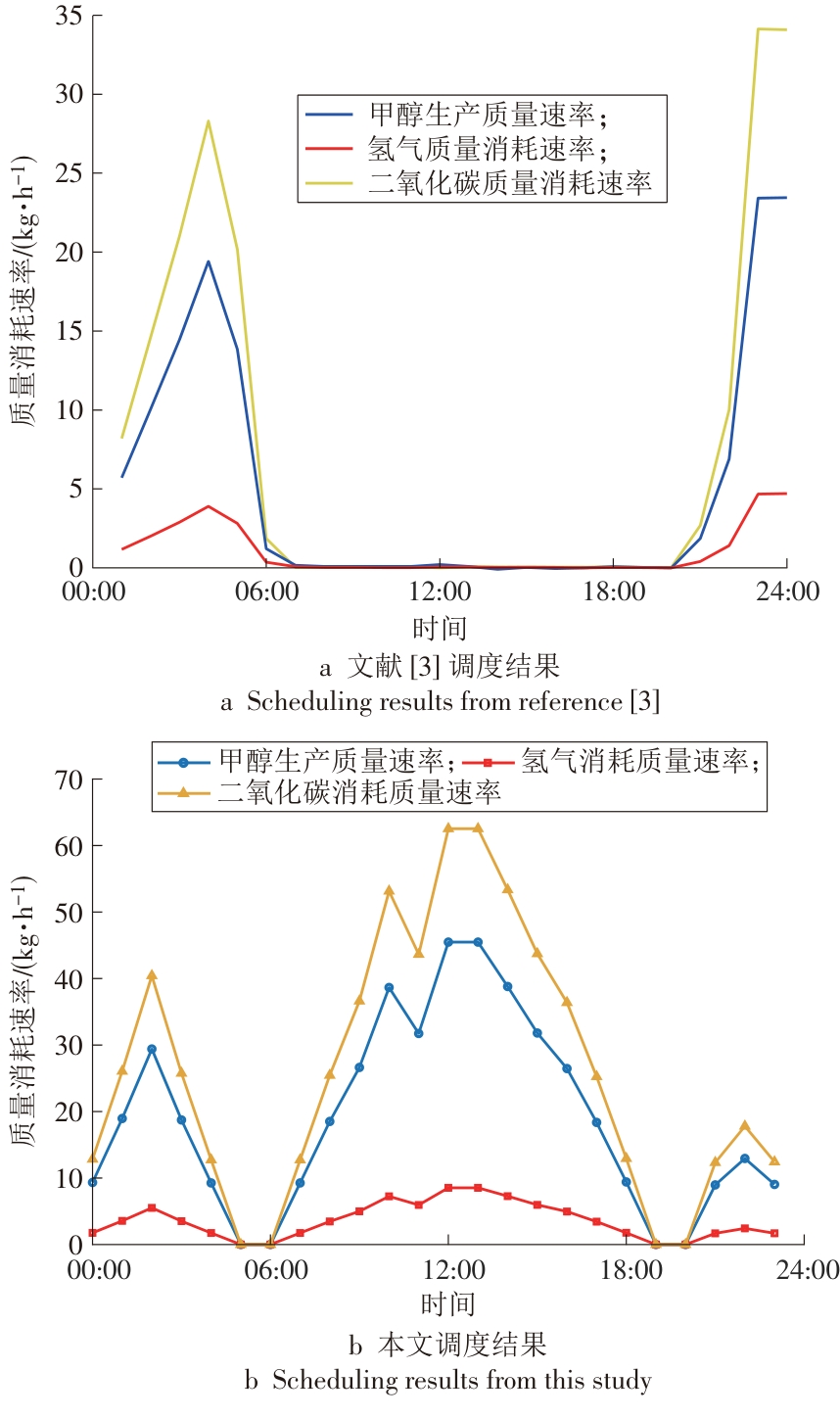
Table 4
Comparison of multi-scenario operation results
| 场景 | 运行成本/元 | 电网买电/元 | 电网卖电/元 | 电不平衡/(kW·h) | 热不平衡/(kW·h) | 氢不平衡/kg |
|---|---|---|---|---|---|---|
| 1 | 738.58 | 418.75 | 40.75 | 0 | -256.18 | -41.38 |
| 2 | 314.42 | 344.38 | 178.00 | 0 | -278.85 | 0 |
| 3 | 596.16 | 450.50 | 113.62 | 0 | 0 | -37.85 |
| 4 | 410.76 | 185.33 | 56.52 | 0 | 0 | 0 |
| 5 | 421.13 | 190.80 | 56.74 | 0 | 0 | 0 |
| 6 | 389.52 | 277.63 | 114.98 | 0 | 0 | 0 |
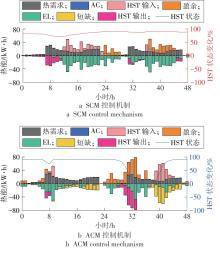
Fig.10
Input, output, and state variations of HST under different control mechanisms
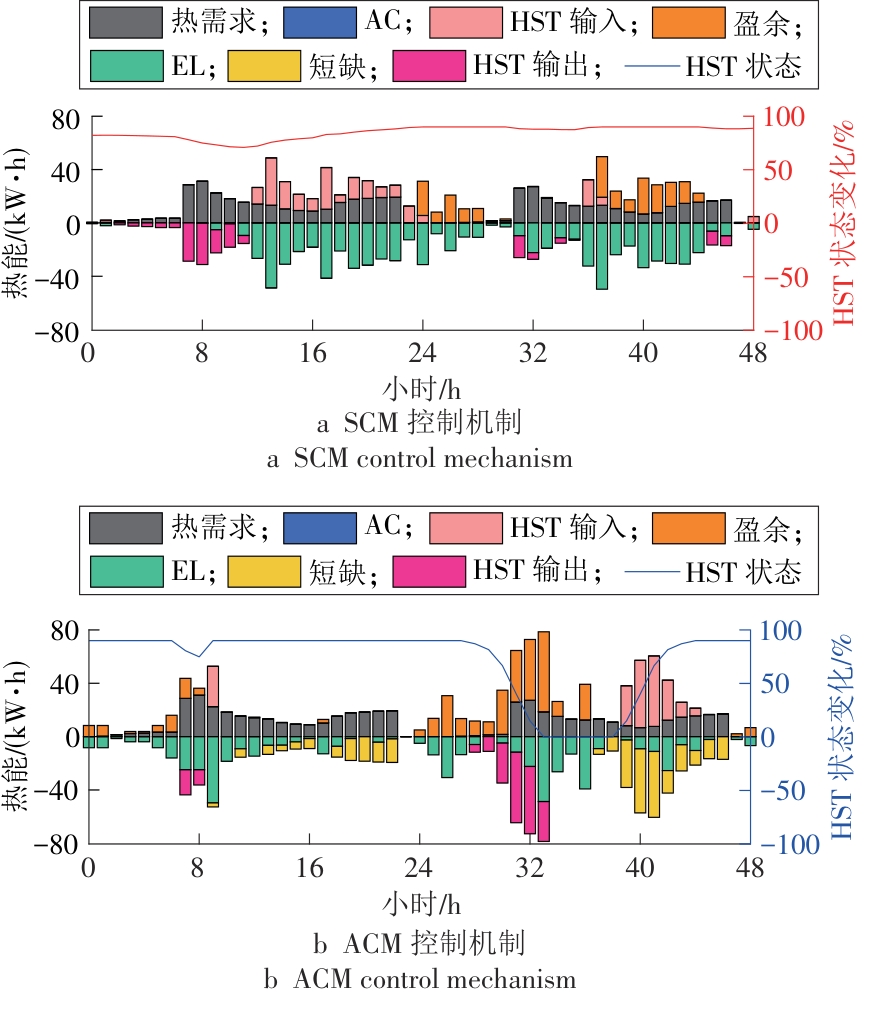
Fig.11
Input,output,and state variations of HT under different control mechanisms
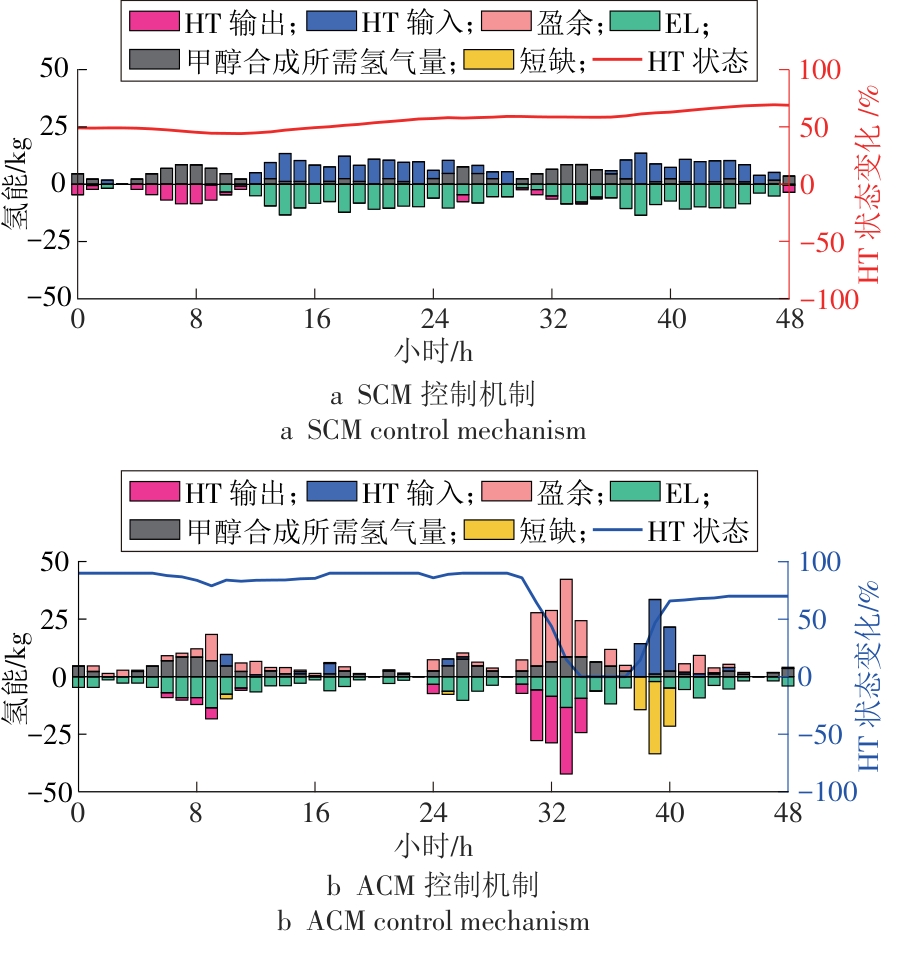
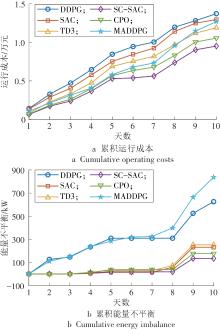
Fig.12
Cumulative operating costs and cumulative energy imbalance over 10 days
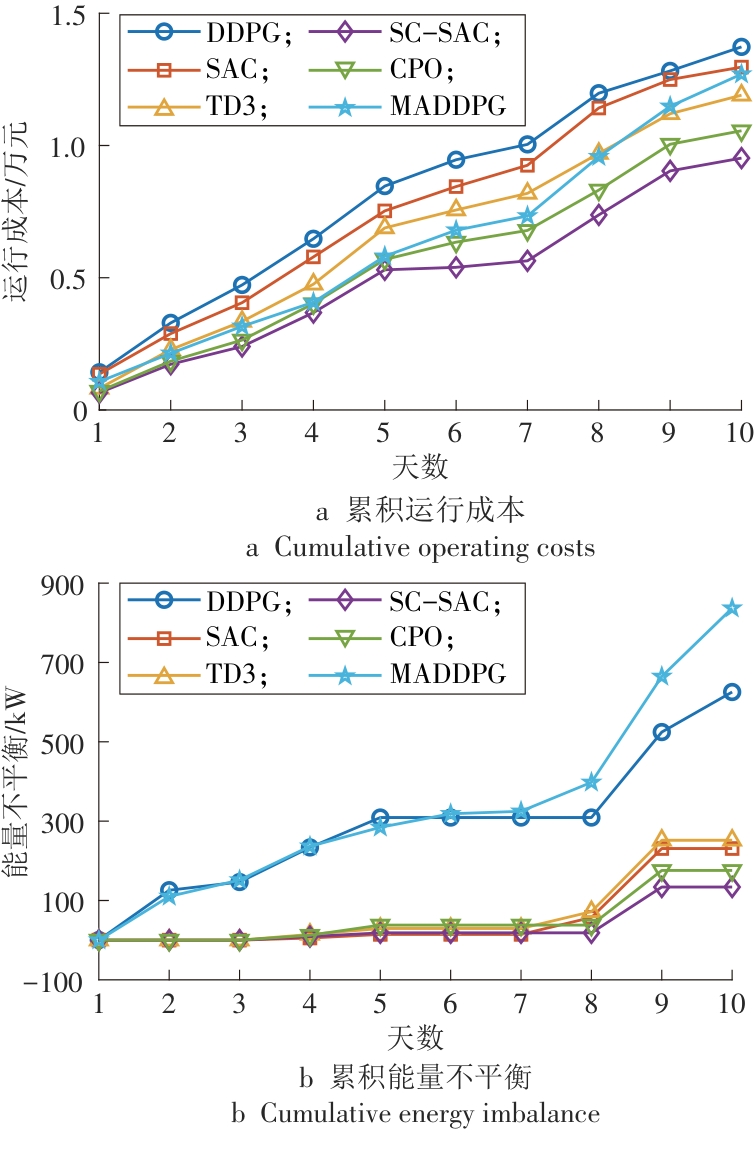
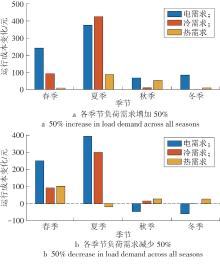
Fig.13
Impact of multi-energy load demand on operating costs
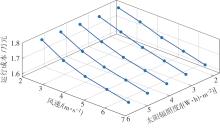
Fig.14
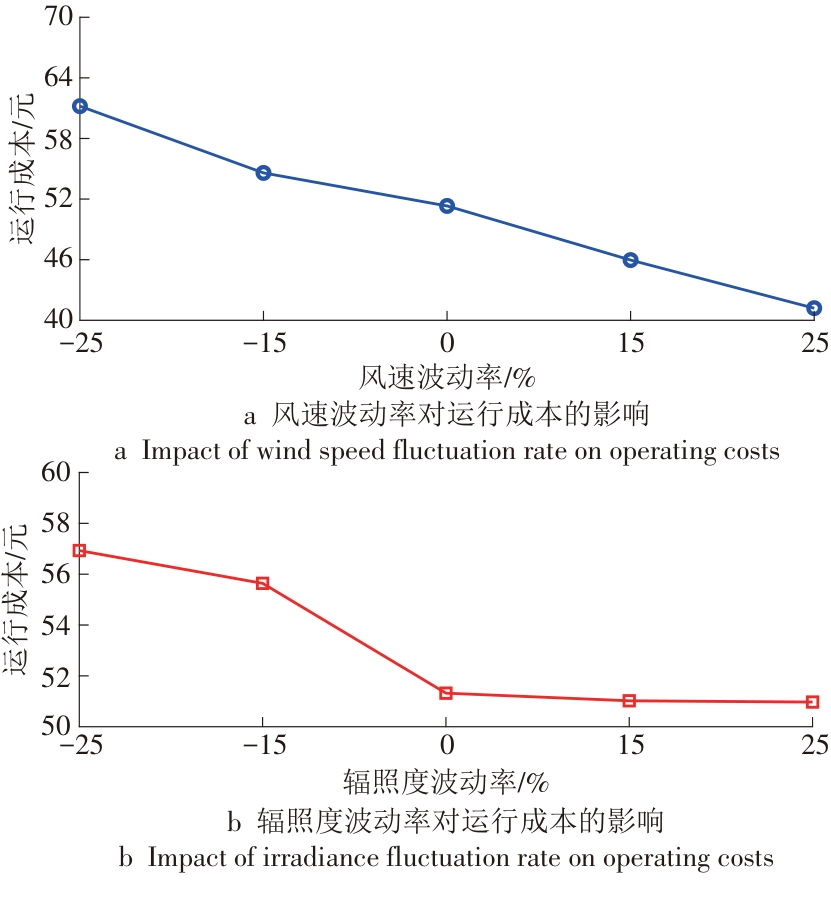
Impact of wind speed and solar irradiance fluctuation on operating costs
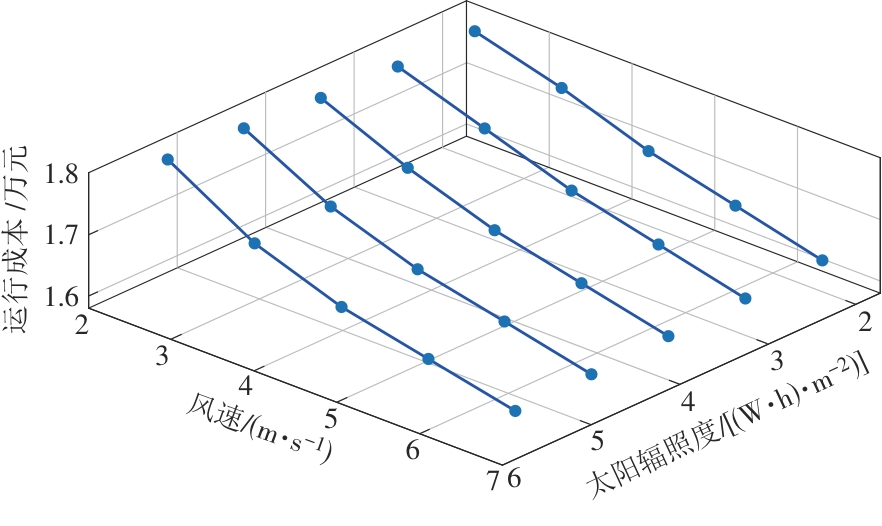
Fig.15
Impact of electricity price fluctuations on operating costs
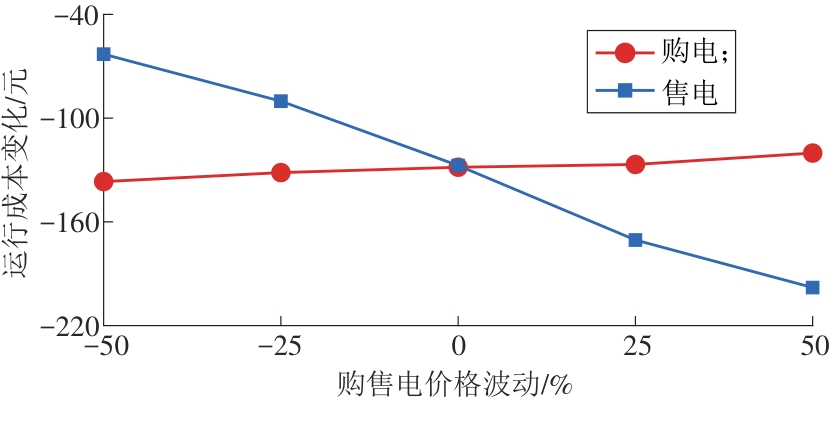
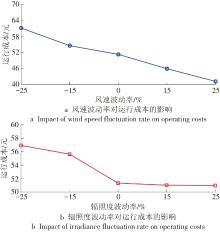
Fig.16
Impact of wind-solar fluctuation rate on operating costs
| [1] | 张普育. 双碳背景下风光储一体化可再生能源绿色标准化发展及实践[J]. 中国标准化, 2024(S2): 72-76. |
| ZHANG Puyu. Development and practice of green standardization of renewable energy with integration of wind, solar energy and storage under the background of double carbon[J]. China Standardization, 2024(S2): 72-76. | |
| [2] | 武魏楠. 风光氢融合,开启双万亿级绿色燃料市场[J]. 能源, 2025(3): 62-64. |
| WU Weinan. Wind, light and hydrogen fusion, opening up the double trillion-level green fuel market[J]. Energy, 2025(3): 62-64. | |
| [3] | 张晓峰, 艾芊, 陈旻昱. 基于风-氢-甲醇-碳捕集一体化的综合能源系统经济运行建模分析[J]. 现代电力, 2024, 41(4): 699-709. |
| ZHANG Xiaofeng, AI Qian, CHEN Minyu. Economic operation modeling analysis of integrated energy system based on integration of wind-hydrogen-methanol-carbon capture[J]. Modern Electric Power, 2024, 41(4): 699-709. | |
| [4] | 王金龙. 考虑电转甲醇技术的园区级综合能源系统优化配置研究[J]. 节能, 2023, 42(11): 78-80. |
| WANG Jinlong. Study on optimal allocation of park-level comprehensive energy system considering electricity-to-methanol technology[J]. Energy Conservation, 2023, 42(11): 78-80. | |
| [5] | 张润之, 周家辉, 梁士兴, 等. 离网式风光氢醇一体化系统容量配置运行调度优化及经济性分析[J]. 热力发电, 2024, 53(2): 48-58. |
| ZHANG Runzhi, ZHOU Jiahui, LIANG Shixing, et al. Capacity configuration-operation scheduling optimization and economic analysis of the off grid wind and solar hydrogen alcohol integrated system[J]. Thermal Power Generation, 2024, 53(2): 48-58. | |
| [6] | 吕志鹏, 宋振浩, 李立生, 等. 含电动汽车的工业园区综合能源系统优化调度[J]. 中国电力, 2024, 57(4): 25-31. |
| LYU Zhipeng, SONG Zhenhao, LI Lisheng, et al. Optimization scheduling of integrated energy system scheduling in industrial park containing electric vehicles[J]. Electric Power, 2024, 57(4): 25-31. | |
| [7] |
燕兵, 杨志林, 张岩, 等. 含海上风电制氢和多重响应的综合能源系统源-荷多时间尺度优化调度[J]. 南方电网技术, 2025, 19(6): 105-118.
doi: 10.13648/j.cnki.issn1674-0629.2025.06.010 |
|
YAN Bing, YANG Zhilin, ZHANG Yan, et al. Optimization of source-charge multi-time scale for hydrogen integrated energy system including hydrogen production from offshore wind power and multiple responses[J]. Southern Power System Technology, 2025, 19(6):105-118.
doi: 10.13648/j.cnki.issn1674-0629.2025.06.010 |
|
| [8] | 安源, 李洋, 赵亭玉, 等. 考虑氨能多元利用与混合储能的综合能源系统双层优化调度[J]. 太阳能学报, 2025, 46(6): 89-98. |
| AN Yuan, LI Yang, ZHAO Tingyu, et al. Double-layer optimal scheduling of integrated energy system considering ammonia energy multiple utilization and hybrid energy storage[J]. Acta Energiae Solaris Sinica, 2025, 46(6): 89-98. | |
| [9] |
谭甲群, 吕如轩, 鞠洪晋, 等. 基于改进秃鹰搜索算法的风光火储综合能源系统优化调度策略研究[J]. 综合智慧能源, 2025, 47(8): 68-76.
doi: 10.3969/j.issn.2097-0706.2025.08.008 |
|
TAN Jiaqun, RuxuanLYU, JU Hongjin, et al. Research on optimal scheduling strategy of wind-photovoltaic-thermal-storage integrated energy system based on IBES[J]. Integrated Intelligent Energy, 2025, 47(8): 68-76.
doi: 10.3969/j.issn.2097-0706.2025.08.008 |
|
| [10] |
REN P, DONG Y C, ZHANG H L, et al. A unified robust planning framework for hydrogen energy multi-scale regulation of integrated energy system[J]. Energy, 2025, 314: 134325.
doi: 10.1016/j.energy.2024.134325 |
| [11] | 李天明, 王小君, 窦嘉铭, 等. 基于约束强化学习的综合能源系统优化调度研究[J]. 电力系统保护与控制, 2025, 53(6): 1-14. |
| LI Tianming, WANG Xiaojun, DOU Jiaming, et al. Research on optimal dispatch of integrated energy systems based on constrained reinforcement learning[J]. Power System Protection and Control, 2025, 53(6): 1-14. | |
| [12] |
LIU F, LIU Q Y, TAO Q, et al. Deep reinforcement learning based energy storage management strategy considering prediction intervals of wind power[J]. International Journal of Electrical Power & Energy Systems, 2023, 145: 108608.
doi: 10.1016/j.ijepes.2022.108608 |
| [13] | 杨挺, 刘豪, 王静, 等. 基于深度强化学习的园区综合能源系统低碳经济调度[J]. 电网技术, 2024, 48(9): 3604-3613. |
| YANG Ting, LIU Hao, WANG Jing, et al. Deep reinforcement learning-based low-carbon economic dispatch of park integrated energy system[J]. Power System Technology, 2024, 48(9): 3604-3613. | |
| [14] | 梁涛, 柴露露, 谭建鑫, 等. 基于深度强化学习算法的氢耦合电-热综合能源系统优化调度[J]. 电力自动化设备, 2025, 45(1): 59-66. |
| LIANG Tao, CHAI Lulu, TAN Jianxin, et al. Optimal scheduling of hydrogen coupled electrothermal integrated energy system based on deep reinforcement learning algorithm[J]. Electric Power Automation Equipment, 2025, 45(1): 59-66. | |
| [15] |
包义辛, 徐椤赟, 杨强. 基于MADDPG算法的建筑群柔性负荷优化调控方法[J]. 综合智慧能源, 2023, 45(7): 61-69.
doi: 10.3969/j.issn.2097-0706.2023.07.007 |
|
BAO Yixin, XU Luoyun, YANG Qiang. Optimized control method for flexible load of a building complex based on MADDPG reinforcement learning[J]. Integrated Intelligent Energy, 2023, 45(7): 61-69.
doi: 10.3969/j.issn.2097-0706.2023.07.007 |
|
| [16] |
DONG Y C, ZHANG H H, WANG C, et al. Soft actor-critic DRL algorithm for interval optimal dispatch of integrated energy systems with uncertainty in demand response and renewable energy[J]. Engineering Applications of Artificial Intelligence, 2024, 127: 107230.
doi: 10.1016/j.engappai.2023.107230 |
| [17] |
李明扬, 窦梦园. 基于强化学习的含电动汽车虚拟电厂优化调度[J]. 综合智慧能源, 2024, 46(6): 27-34.
doi: 10.3969/j.issn.2097-0706.2024.06.004 |
|
LI Mingyang, DOU Mengyuan. Optimal scheduling of virtual power plants integrating electric vehicles based on reinforcement learning[J]. Integrated Intelligent Energy, 2024, 46(6): 27-34.
doi: 10.3969/j.issn.2097-0706.2024.06.004 |
|
| [18] | 张磊, 吴红斌, 何叶, 等. 基于深度强化学习的氢能综合能源系统优化调度方法[J]. 电力系统自动化, 2024, 48(16): 132-141. |
| ZHANG Lei, WU Hongbin, HE Ye, et al. Optimal scheduling method of hydrogen comprehensive energy system based on deep reinforcement learning[J]. Automation of Electric Power Systems, 2024, 48(16): 132-141. | |
| [19] |
LU Y, XIANG Y, HUANG Y, et al. Deep reinforcement learning based optimal scheduling of active distribution system considering distributed generation, energy storage and flexible load[J]. Energy, 2023, 271: 127087.
doi: 10.1016/j.energy.2023.127087 |
| [20] |
LIANG T, ZHANG X C, TAN J X, et al. Deep reinforcement learning-based optimal scheduling of integrated energy systems for electricity, heat, and hydrogen storage[J]. Electric Power Systems Research, 2024, 233:110480.
doi: 10.1016/j.epsr.2024.110480 |
| [21] | 王永利, 向皓, 李淑清. 考虑冷热电三联供系统耦合特性的区域综合能源系统运行优化[J]. 科学技术与工程, 2023, 23(18): 7787-7797. |
| WANG Yongli, XIANG Hao, LI Shuqing. Regional integrated energy system considering combined cooling heating and power system coupling characteristics on operation optimization[J]. Science Technology and Engineering, 2023, 23(18): 7787-7797. | |
| [22] |
郑昊宇, 周家辉, 仝冰, 等. 配置压缩空气储能的绿氢系统容量配置和运行调度优化研究[J]. 综合智慧能源, 2025, 47(7): 64-70.
doi: 10.3969/j.issn.2097-0706.2025.07.007 |
|
ZHENG Haoyu, ZHOU Jiahui, TONG Bing, et al. Research on capacity allocation and operation scheduling optimization of green hydrogen system with compressed air energy storage[J]. Integrated Intelligent Energy, 2025, 47(7): 64-70.
doi: 10.3969/j.issn.2097-0706.2025.07.007 |
|
| [23] | ALI F, AHMAR M, JIANG Y X, et al. A techno-economic assessment of hybrid energy systems in rural Pakistan[J]. Energy, 2021, 215: 119103. DOI:10.1016/j.energy.2020.119103. |
| [24] |
GHORBANI B, ZENDEHBOUDI S, MORADI M. Development of an integrated structure of hydrogen and oxygen liquefaction cycle using wind turbines, Kalina power generation cycle, and electrolyzer[J]. Energy, 2021, 221: 119653.
doi: 10.1016/j.energy.2020.119653 |
| [25] |
LIANG T, CHEN M J, TAN J X, et al. Large-scale off-grid wind power hydrogen production multi-tank combination operation law and scheduling strategy taking into account alkaline electrolyzer characteristics[J]. Renewable Energy, 2024, 232: 121122.
doi: 10.1016/j.renene.2024.121122 |
| [26] |
BHOGILLA S S, NIYAS H. Design of a hydrogen compressor for hydrogen fueling stations[J]. International Journal of Hydrogen Energy, 2019, 44(55): 29329-29337.
doi: 10.1016/j.ijhydene.2019.02.171 |
| [27] | 岑增光, 耿斌, 高明海, 等. 考虑天然气混氢的园区综合能源系统电制氢优化配置[J]. 电力工程技术, 2024, 43(2): 55-64. |
| CEN Zengguang, GENG Bin, GAO Minghai, et al. Optimal configuration of P2H in the park integrated energy system considering natural gas mixed with hydrogen[J]. Electric Power Engineering Technology, 2024, 43(2): 55-64. | |
| [28] |
ZHOU Y, WANG J J, LIU Y, et al. Incorporating deep learning of load predictions to enhance the optimal active energy management of combined cooling, heating and power system[J]. Energy, 2021, 233: 121134.
doi: 10.1016/j.energy.2021.121134 |
| [29] | CECCON F, JALVING J, HADDAD J, et al. OMLT: optimization & machine learning toolkit[J]. Journal of Machine Learning Research, 2022,23:1-8. |
| [30] |
FISCHETTI M, JO J. Deep neural networks and mixed integer linear optimization[J]. Constraints, 2018, 23(3): 296-309.
doi: 10.1007/s10601-018-9285-6 |
| [31] | Optimization Gurobi. Gurobi官方网站[EB/OL]. [2025-07-31]. https://www.gurobi.com. |
| [32] | Department of Energy. Commercial reference buildings[EB/OL].[2025-07-31]. https://www.energy.gov/eere/buildings/commercial-reference-buildings. |
| [33] | PEEL M C, FINLAYSON B L, MCMAHON T A. Updated world map of the Köppen-Geiger climate classification[J]. Hydrology & Earth System Sciences, 2007, 11(3):259-263. |
| [34] |
陈志鼎, 董亿, 滕明月. 考虑风-光不确定性的风-光-蓄-火联合调度研究[J]. 中国农村水利水电, 2024(8): 208-215.
doi: 10.12396/znsd.232067 |
|
CHEN Zhiding, DONG Yi, TENG Mingyue. Hybrid generation of wind-solar-pumped storage-thermal systems considering wind-solar uncertainties[J]. China Rural Water and Hydropower, 2024(8): 208-215.
doi: 10.12396/znsd.232067 |
| [1] | XU Cong, XU Jingjing, JIANG Ting, XUE Dong, YAN Lichen. Research on data-driven operation optimization of integrated energy systems [J]. Integrated Intelligent Energy, 2026, 48(1): 34-42. |
| [2] | XUE Dong, XU Jingjing, JIANG Ting, WANG Xiaohai, XU Cong. Research on heat load prediction of integrated energy systems in parks based on dual feature processing [J]. Integrated Intelligent Energy, 2026, 48(1): 59-66. |
| [3] | LIANG Fuguang, MA Zhongqiang. Load prediction for island microgrids based on evaluation factor reconstruction and DECN-BiGRU [J]. Integrated Intelligent Energy, 2026, 48(1): 85-97. |
| [4] | DOU Xiang, LI Zhuoqun, ZHANG Zhe, WEN Xin, ZHAO Bo, HAN Yan, ZHONG Sheng. Load forecasting for integrated energy systems based on CNN-BiLSTM-RF-KDE [J]. Integrated Intelligent Energy, 2025, 47(9): 60-70. |
| [5] | ZHANG Yuanxi, YANG Guohua, MA Longteng, MA Xin, LIU Yaoze. Optimized wind-solar-storage configuration of industrial park microgrids based on improved differential evolution algorithm [J]. Integrated Intelligent Energy, 2025, 47(9): 71-79. |
| [6] | ZHOU Kai, WU Yanxi, HUANG Yuxiang, YANG Jinghao, FAN Xiaochao, LI Jianwei, WEI Zhizong, TENG Jian, CHEN Li, YE Qin, ZHANG Hao, JIANG Junnan. Large-scale gravity energy storage technology for solid flow in areas with large altitude differences [J]. Integrated Intelligent Energy, 2025, 47(8): 1-9. |
| [7] | ZHEN Wenxi, MA Xiping, DAI Yuehong, NIU Wei, CHEN Baixu, ZENG Gui. Research on wind-storage self-synchronizing frequency regulation strategy based on intermediate layer control [J]. Integrated Intelligent Energy, 2025, 47(8): 21-29. |
| [8] | CHU Longhao, LI Xiaozhu. Bidding strategies and value allocation mechanism for multi-type electric energy trading with participation of shared energy storage [J]. Integrated Intelligent Energy, 2025, 47(8): 30-39. |
| [9] | TAN Jiaqun, LYU Ruxuan, JU Hongjin, HONG Chunxue, XIAO Haiping, LEI Jing, HAN Zhenxing. Research on optimal scheduling strategy of wind-photovoltaic-thermal-storage integrated energy system based on IBES [J]. Integrated Intelligent Energy, 2025, 47(8): 68-76. |
| [10] | SONG Kun, GU Wenbo. Research progress on modeling and optimization of integrated energy systems considering uncertainty [J]. Integrated Intelligent Energy, 2025, 47(7): 32-43. |
| [11] | CHEN Liang, LIU Guiying, SU Shiping, TANG Changjiu, WANG Chenhao, GUO Sitong. Coordinated optimization scheduling of integrated energy system based on PER-MADDPG algorithm with two-layer network [J]. Integrated Intelligent Energy, 2025, 47(7): 44-54. |
| [12] | ZHENG Haoyu, ZHOU Jiahui, TONG Bin, WANG Haiming, XU Gang, ZHANG Ziyue. Research on capacity allocation and operation scheduling optimization of green hydrogen system with compressed air energy storage [J]. Integrated Intelligent Energy, 2025, 47(7): 64-70. |
| [13] | XING Zuoxia, ZHAO Ziyi, SUN Hao, ZHANG Pengfei, FU Qitong. Research on low-carbon economic operation optimization of integrated energy systems based on multi-level utilization of hydrogen production from electricity [J]. Integrated Intelligent Energy, 2025, 47(7): 71-81. |
| [14] | ZHANG Debin, LIN Wenye, HE Zixuan, YUE Xinru, SONG Wenji, FENG Ziping, FARID Mohammed Mehdi, USHAK DE GRAGEDA Svetlana Nikolaevna. Day-ahead dispatch optimization for integrated energy system in building prosumer community using generalized energy storage [J]. Integrated Intelligent Energy, 2025, 47(7): 82-92. |
| [15] | WANG Cheng, SHAO Chong, HE Xin, DONG Haiying. Optimal power allocation for electrochemical energy storage power stations based on MOIBKA algorithm [J]. Integrated Intelligent Energy, 2025, 47(6): 74-84. |
| Viewed | ||||||
|
Full text |
|
|||||
|
Abstract |
|
|||||