Integrated Intelligent Energy ›› 2026, Vol. 48 ›› Issue (3): 15-26.doi: 10.3969/j.issn.2097-0706.2026.03.002
• Power System Modeling and Control • Previous Articles Next Articles
CHEN Feng1,2( ), LU Xiaomin3(), LI Mengyang4(), ZHANG Tao1,2(), YANG Fan1,2()
Received:2025-07-18
Revised:2025-12-08
Published:2026-03-25
Supported by:CLC Number:
CHEN Feng, LU Xiaomin, LI Mengyang, ZHANG Tao, YANG Fan. Optimization operation of multi-energy complementary system based on multi-agent reinforcement learning[J]. Integrated Intelligent Energy, 2026, 48(3): 15-26.
Add to citation manager EndNote|Ris|BibTeX
URL: https://www.hdpower.net/EN/10.3969/j.issn.2097-0706.2026.03.002
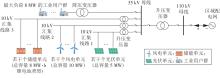
Fig.1
Structure of a multi-energy complementary system
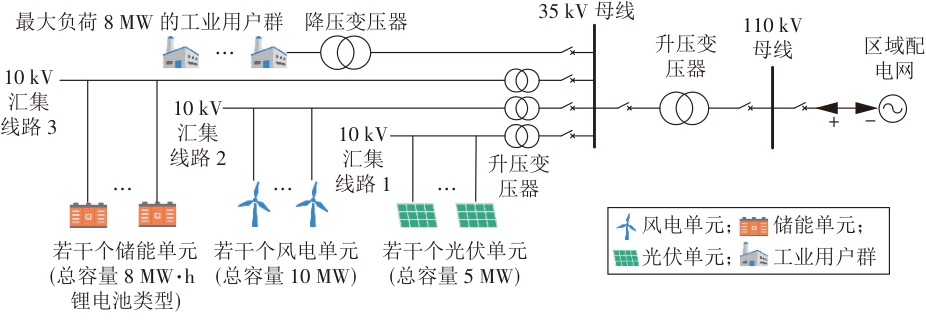
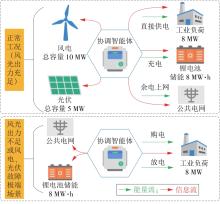
Fig.2
Schematic energy flow between sources
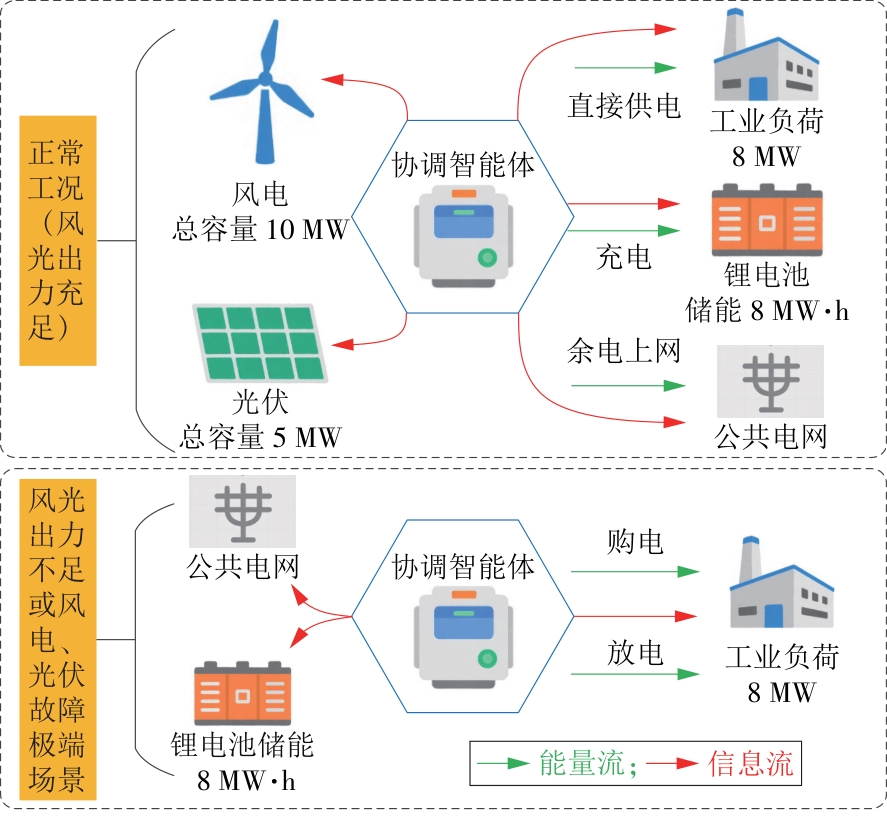
Table 1
Classification of multi-agent types
| 智能体 | 目标 |
|---|---|
| DER智能体(风电/光伏) | 最大化出力预测精度 |
| 负荷智能体(工业/商业用户) | 最小化用电成本 |
| 系统协调智能体 | 全局经济性与低碳性最优 |
Table 2
Weight values under typical scenarios
| 项目 | 场景1:高电价+中等负荷(经济优先) | 场景2:低电价+高负荷(稳定性优先) | 场景3:环保红线+任意负荷(环保优先) | 场景4:极端负荷+普通电价(稳定性优先) |
|---|---|---|---|---|
| 背景 | 工作日10:00—15:00,尖峰电价(1.5 元/(kW·h)),负荷率70%,污染物排放正常 | 00:00—06:00,低谷电价(0.5 元/(kW·h)),负荷率90%,接近稳定临界点 | 重污染预警( | 夏季16:00—20:00,负荷率95%,平段电价(0.8 元/(kW·h)) |
| 核心目标 | 最小化购电成本,兼顾基础环保与稳定性 | 保障系统稳定,防止负荷超限跳闸 | 严格控制污染物排放,牺牲部分经济收益 | 防止系统崩溃(电压跌落/线路过载) |
| 权重取值 | α=0.60,β=0.20,γ=0.20 | α=0.25,β=0.05,γ=0.70 | α=0.15,β=0.7,γ=0.15 | α=0.20,β=0.10,γ=0.70 |
| 关键激励动作 | 负荷转移至低谷时段、高性价比电源出力 | 分散式电源协同平抑波动、负荷错峰 | 清洁能源优先出力、高污染机组降负荷 | 可中断负荷切除、储能紧急放电支撑 |
| 时变策略 | 电价降至1.2 元/(kW·h)时,α降至0.4,β,γ相应提升 | 负荷率>95%时,γ临时提升至0.85 | 负荷率<80%时,γ降至0.3,α回升至0.5 |
Table 3
Comparison of PPO algorithm before and after improvement
| 模块 | 原PPO算法 | 改进PPO算法 |
|---|---|---|
| 决策架构 | 单智能体/集中式决策 | CTDE框架(Actor分散决+ Critic集中评估) |
| 特征处理 | 无差别处理所有节点特征 | 注意力机制动态加权关键节点(权重 |
| 多目标平衡 | 固定权重奖励函数 | 冲突协调因子λ平衡经济性和稳定性 |
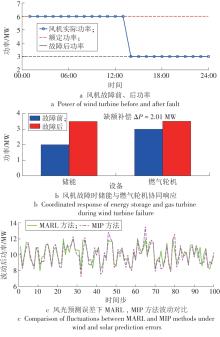
Fig.3
Response of typical scenarios
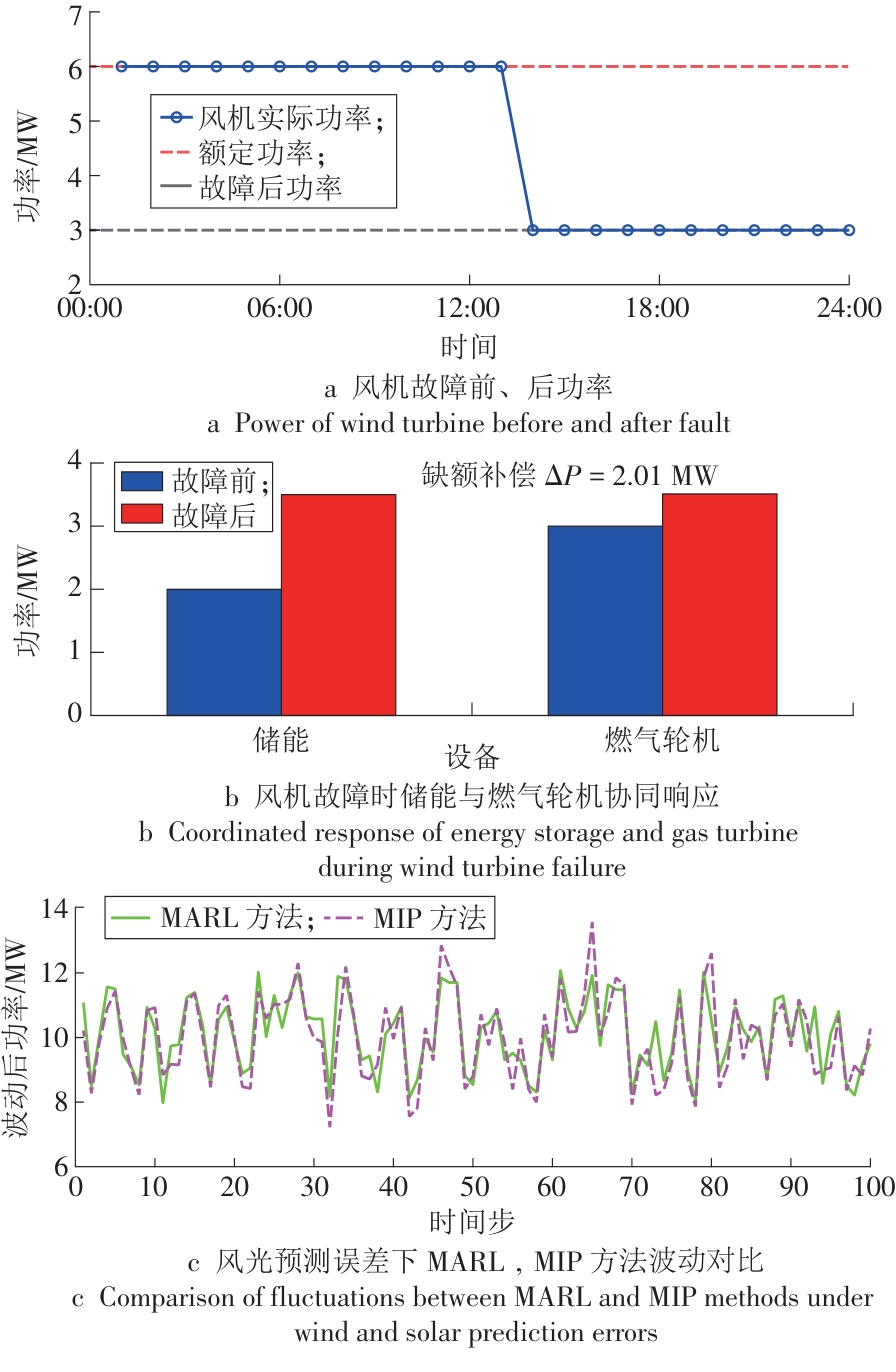
Table 4
Comparison of system performance improvement data
| 评价指标 | 改进PPO算法 | 传统MIP方法 |
|---|---|---|
| 负荷满足率/% | 98.70 | 89.30 |
| 决策延迟/s | 4.2 | 28.6 |
| 风光消纳率/% | 96.50 | 82.30 |
| 设备故障恢复时间/mim | 15 | 47 |
Fig.4
"Star-mesh" hybrid communication topology
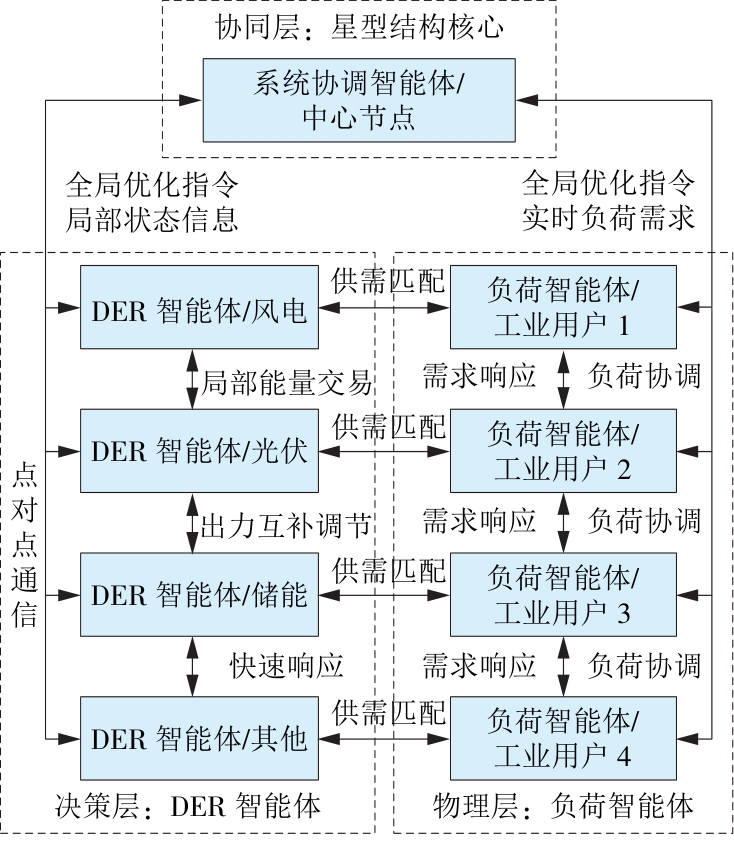
Table 5
Test results of encrypted transmission mechanism based on federated learning
| 指标 | 测试结果 | 说明 |
|---|---|---|
| 加密传输延迟 | 平均5.5 ms,最大8.0 ms | 基于园区级算例的1 000次通信测试结果 |
| 加密强度 | AES-256+SHA-256,抗暴力破解时间≥1038 a | 符合ISO 27001信息安全标准 |
| 数据泄露风险 | 0次原始数据泄露(鲁棒性验证中未发现) | 联邦学习框架下原始数据仅保留在本地智能体 |
| 局部响应延迟 | 45 ms(含加密) | 较传统集中式加密(120 ms)降低62.5% |
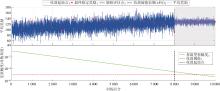
Fig.5
Convergence curve of MARL algorithm
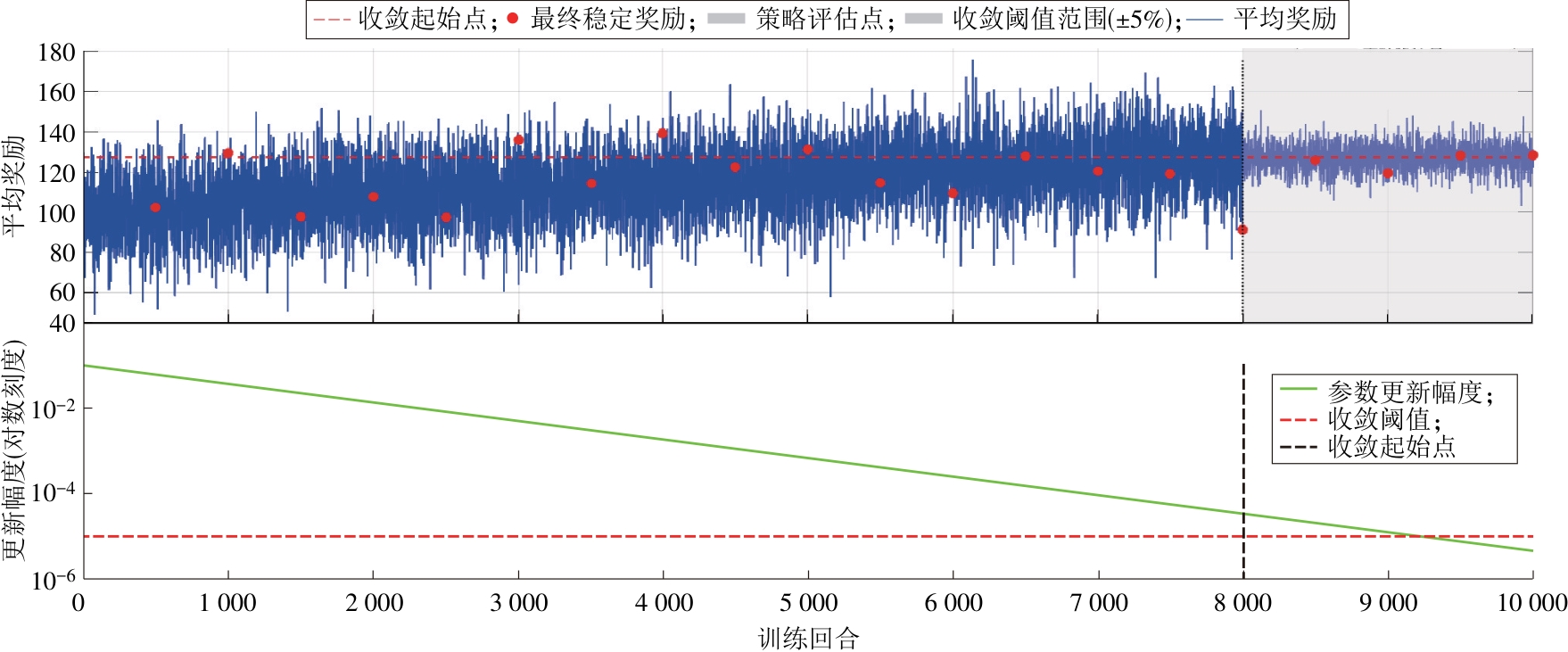
Table 6
Key system equipment parameters
| 设备 | 容量 | 效率 | 参数 |
|---|---|---|---|
| 风电 | 10 MW | 0.92 | 运维成本0.05 元/(kW·h) |
| 光伏 | 5 MW | 0.85 | |
| 锂电池 | 8 MW·h | 0.95 | 充放电成本0.1 元/(kW·h) |
| 工业负荷 | 最大8 MW | 峰谷电价差0.5 元/(kW·h) |
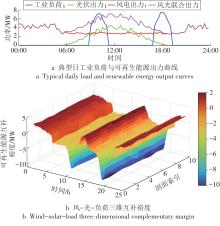
Fig.6
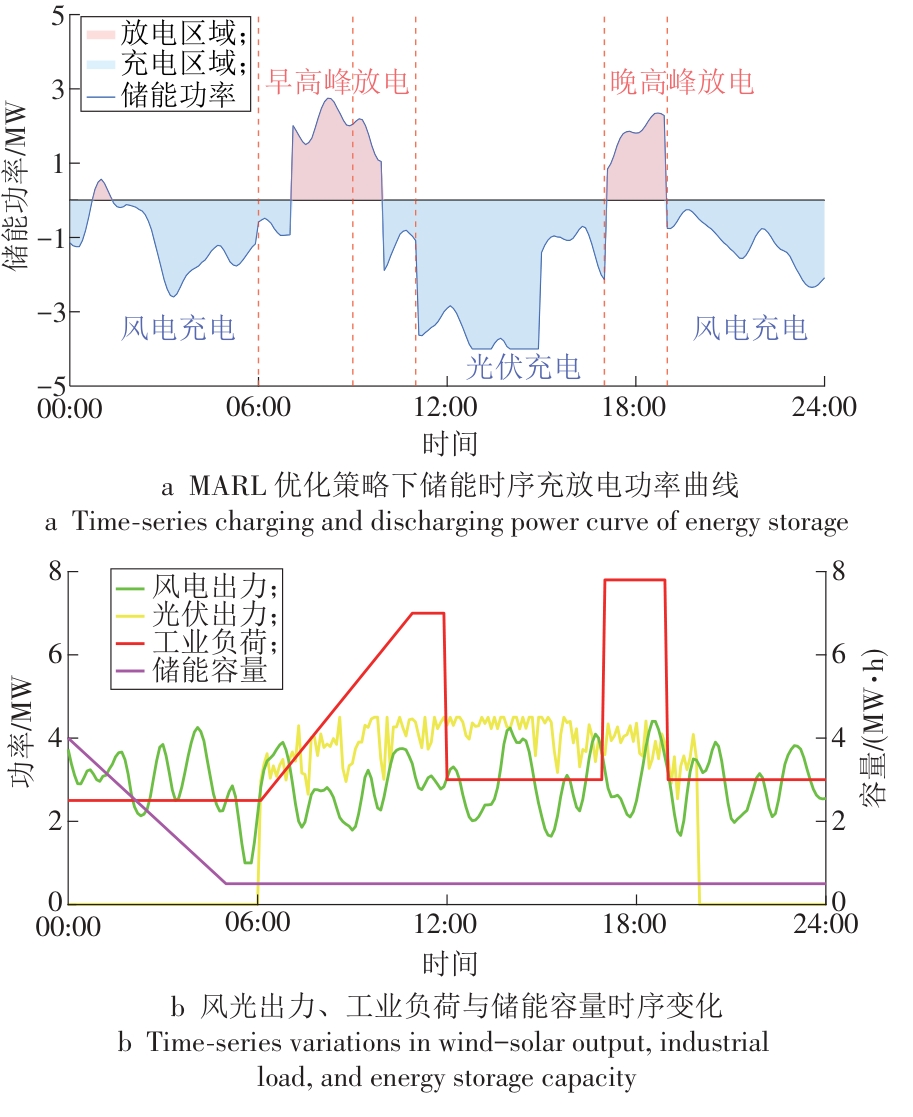
Typical daily load and renewable energy output curves
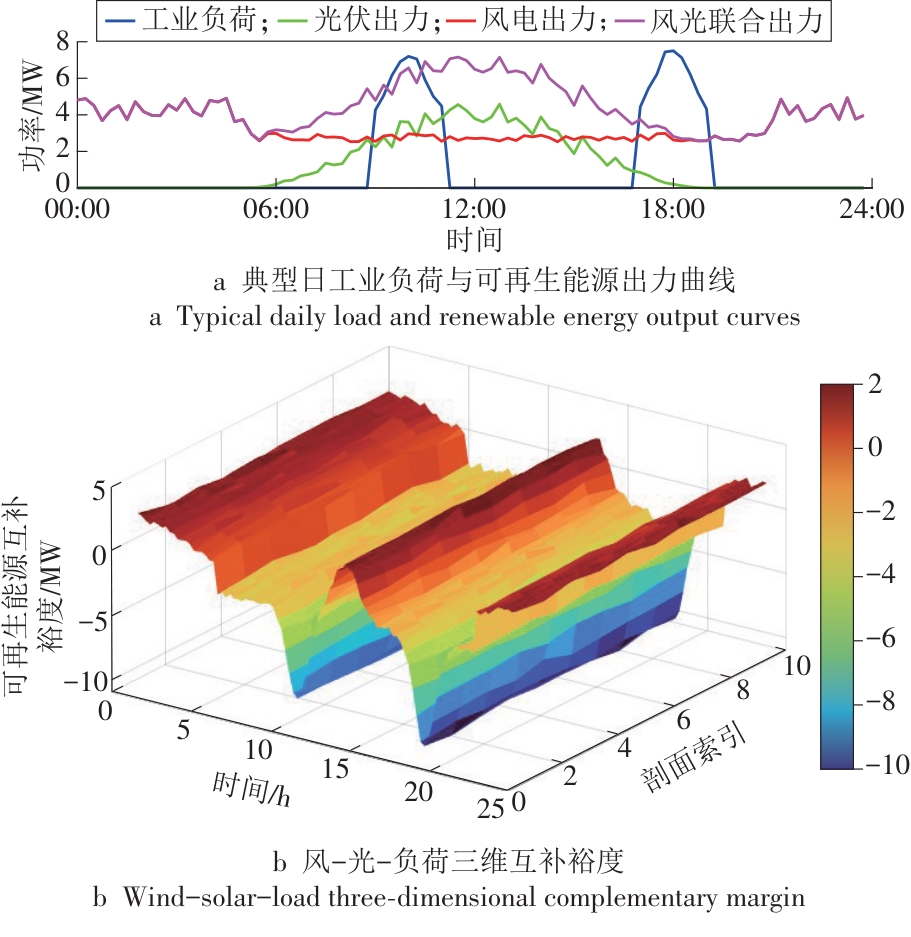
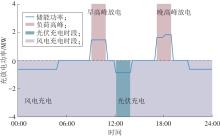
Fig.7
Time-series charging and discharging power curve of energy storage under MARL optimization strategy
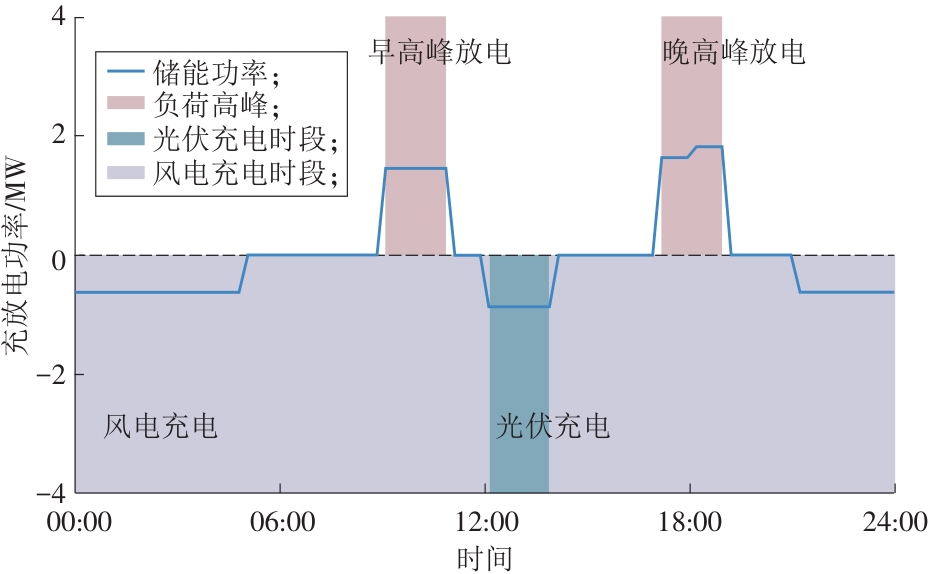
Table 7
Comparison of economic efficiency
| 指标 | MIP方法 | DQN方法 | 本文MARL方法 |
|---|---|---|---|
| 日均运行成本/元 | 12 850 | 10 620 | 8 940 |
| 单位电量成本/ [元·(kW·h)-1] | 0.38 | 0.32 | 0.27 |
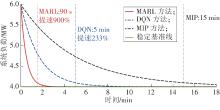
Fig.8
Dynamic response curve
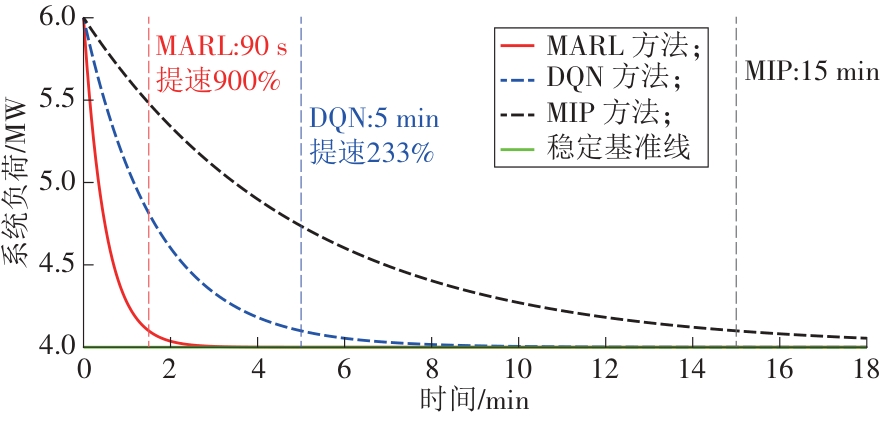
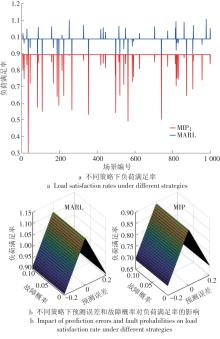
Fig.9
Robustness verification
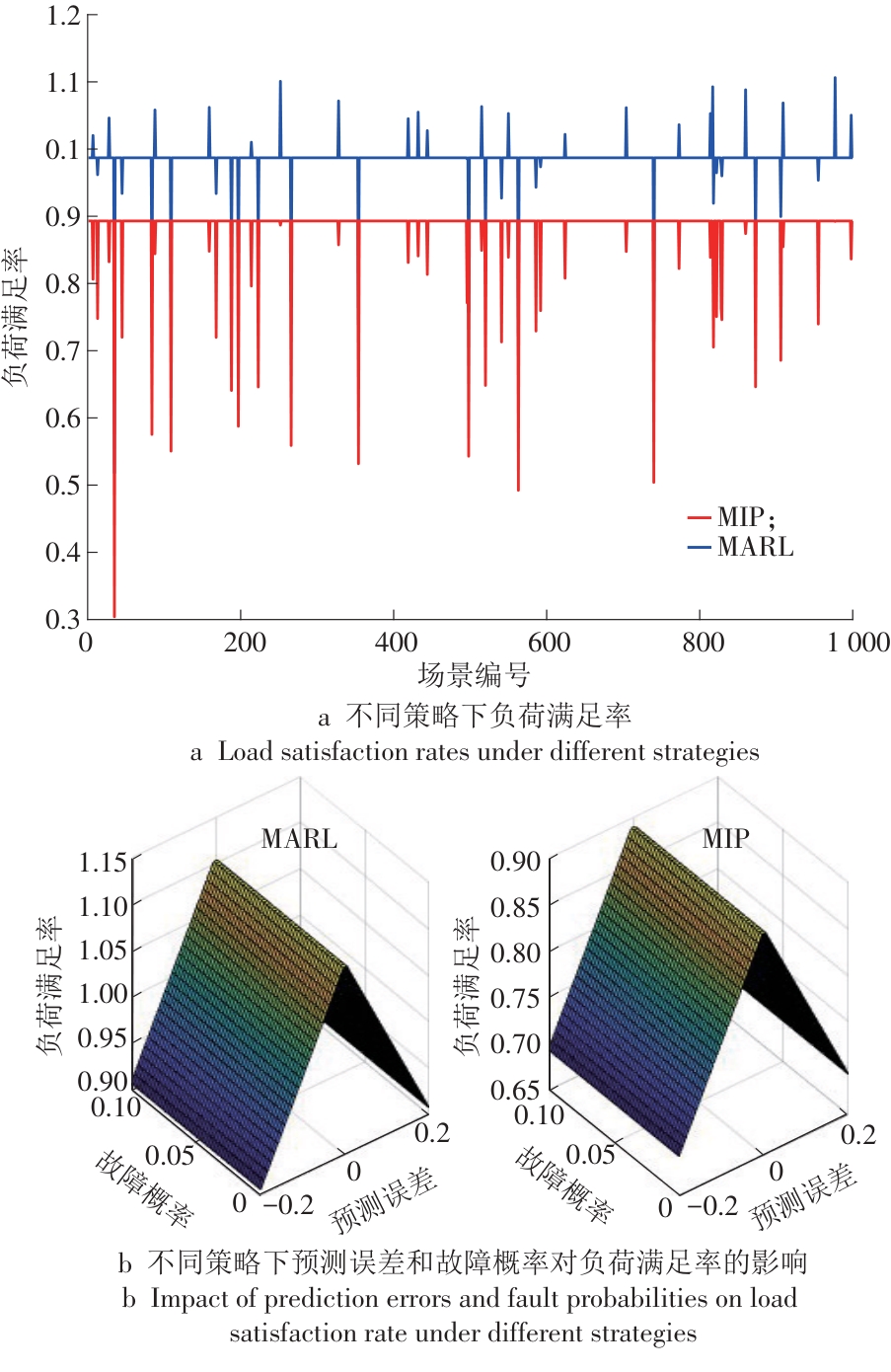
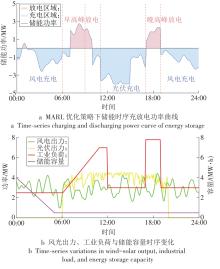
Fig.10
Time-series curves of energy storage, wind and solar power under uncertain scenario
| [1] | 肖玲娟, 李润祥. 以风电为主的新能源电站源-储协调优化调度方法[J]. 自动化与仪器仪表, 2025(7): 97-102. |
| XIAO Lingjuan, LI Runxiang. Optimization and scheduling method for source storage coordination of new energy power stations mainly based on wind power[J]. Automation & Instrumentation, 2025(7): 97-102. | |
| [2] | 郭少臣. 风电储能系统中的能量管理效率技术优化路径[J]. 电气技术与经济, 2024(12): 69-72. |
| GUO Shaochen. Technical optimization path of energy management efficiency in wind energy storage system[J]. Electrical Equipment and Economy, 2024(12): 69-72. | |
| [3] |
赵书强, 吴博, 李志伟, 等. 风电-储能参与调频的高比例风电电力系统运行经济性分析[J]. 南方电网技术, 2023, 17(4): 69-76, 89.
doi: 10.13648/j.cnki.issn1674-0629.2023.04.007 |
|
ZHAO Shuqiang, WU Bo, LI Zhiwei, et al. Operational economic analysis of high-proportion wind power system with wind power and energy storage participating in frequency regulation[J]. Southern Power System Technology, 2023, 17(4): 69-76, 89.
doi: 10.13648/j.cnki.issn1674-0629.2023.04.007 |
|
| [4] | 徐楠, 陈斌, 黄伟, 等. 基于滚动优化的电-热-气-冷系统多时间尺度低碳运行[J]. 电网与清洁能源, 2024, 40(7): 95-106, 113. |
| XU Nan, CHEN Bin, HUANG Wei, et al. Multi-timescale low-carbon operation of the electric-heat-gas-cooling combined supply system based on rolling optimization[J]. Advances of Power System & Hydroelectric Engineering, 2024, 40(7): 95-106, 113. | |
| [5] | 周益民, 杨博, 胡袁炜骥, 等. 考虑绿证-碳交易的多能互补综合能源系统电-热-气协同低碳优化调度[J]. 电网技术, 2025, 49(6): 2428-2435. |
| ZHOU Yimin, YANG Bo, HU Yuanweiji, et al. Electricity-heat-gas collaborative low-carbon optimal dispatch of multi-energy complementary integrated energy system considering green certificate and carbon emission trading[J]. Power System Technology, 2025, 49(6): 2428-2435. | |
| [6] | 刘毓伶, 赵兴勇, 刘立. 含信息间隙决策理论的电热气联合系统优化调度[J]. 电力系统及其自动化学报, 2024, 36(12): 45-53. |
| LIU Yuling, ZHAO Xingyong, LIU Li. Optimization and scheduling of power, heat and gas combination system based on information gap decision theory[J]. Proceedings of the CSU-EPSA, 2024, 36(12): 45-53. | |
| [7] | 徐新宇, 秦伟, 李楠, 等. 基于强化学习的马尔科夫决策过程电网侧储能系统的智能调度优化[J]. 电工技术, 2025(13): 94-96. |
| XU Xinyu, QIN Wei, LI Nan, et al. Intelligent scheduling optimization of power grid side energy storage system based on reinforcement learning Markov decision process[J]. Electric Engineering, 2025(13): 94-96. | |
| [8] | 张硕, 袁春辉, 李英姿, 等. 新型电力系统演化趋优下多元负荷绿色协同市场行为DQN仿真模型[J]. 电力建设, 2025, 46(7): 191-204. |
| ZHANG Shuo, YUAN Chunhui, LI Yingzi, et al. DQN simulation model of green cooperative market behavior of multi-load users for optimal evolution of new-type power system[J]. Electric Power Construction, 2025, 46(7): 191-204. | |
| [9] | 周雪松, 韩静, 马幼捷, 等. 基于DQN算法的直流微电网负载接口变换器自抗扰控制策略[J]. 电力系统保护与控制, 2025, 53(1): 95-103. |
| ZHOU Xuesong, HAN Jing, MA Youjie, et al. Active disturbance rejection control strategy of a DC microgrid load interface converter based on a DQN algorithm[J]. Power System Protection and Control, 2025, 53(1): 95-103. | |
| [10] | 王仁浚, 高红均, 罗龙波, 等. 基于深度强化学习的新型配电系统优化运行研究综述[J]. 电力自动化设备, 2025, 45(9): 152-164. |
| WANG Renjun, GAO Hongjun, LUO Longbo, et al. Review of research on new distribution system optimization operation based on deep reinforcement learning[J]. Electric Power Automation Equipment, 2025, 45(9): 152-164. | |
| [11] | 青辰, 魏震波, 刘洋, 等. 基于双时间尺度模型预测控制的灵活性资源动态调度[J]. 高压电器, 2025, 61(5): 31-40, 52. |
| QING Chen, WEI Zhenbo, LIU Yang, et al. Dynamic scheduling of flexible resources based on dual-time scale model predictive control[J]. High Voltage Apparatus, 2025, 61(5): 31-40, 52. | |
| [12] | 江美慧, 许镇江, 张其朴, 等. 面向综合能源系统的综合需求响应策略及其建模技术[J]. 电力建设, 2024, 45(12): 65-82. |
| JIANG Meihui, XU Zhenjiang, ZHANG Qipu, et al. Integrated demand response strategy and modeling technology for integrated energy systems[J]. Electric Power Construction, 2024, 45(12): 65-82. | |
| [13] | 蒋明轩, 卞艺衡, 李更丰, 等. 面向能源互联网的电-碳-氢耦合交易市场研究综述[J]. 电力建设, 2025, 46(8): 150-165. |
| JIANG Mingxuan, BIAN Yiheng, LI Gengfeng, et al. Review of the research on the electricity-carbon-hydrogen coupling trading market under the energy Internet[J]. Electric Power Construction, 2025, 46(8): 150-165. | |
| [14] | 李民, 周博宇, 蒋雷雷, 等. 基于多智能体强化学习的电池一致性充放电控制策略[J]. 武汉大学学报(理学版), 2025, 71(3): 395-403. |
| LI Min, ZHOU Boyu, JIANG Leilei, et al. Battery consistency charge-discharge control strategy based on multi-agent reinforcement learning[J]. Journal of Wuhan University (Natural Science Edition), 2025, 71(3): 395-403. | |
| [15] | 徐慧慧, 田云飞, 赵宇洋, 等. 基于条件生成对抗网络与多智能体强化学习的配电网可靠性评估方法[J]. 中国电力, 2025, 58(4): 230-236. |
| XU Huihui, TIAN Yunfei, ZHAO Yuyang, et al. A reliability assessment method for distribution networks based on conditional generative adversarial network and multi-agent reinforcement learning[J]. Electric Power, 2025, 58(4): 230-236. | |
| [16] | 李峥嵘, 刘雨欣, 朱晗, 等. 面向“双碳”目标的光储一体化建筑集群电力协同调度方法研究综述[J]. 建筑节能, 2023, 51(8): 1-10. |
| LI Zhengrong, LIU Yuxin, ZHU Han, et al. Review on power cooperative scheduling method for building cluster integrated PV and storage dual to the carbon peaking and carbon neutrality goals[J]. Building Energy Efficiency, 2023, 51(8): 1-10. | |
| [17] | 于小唐, 覃智君, 梁志坚. 需求响应的园区综合能源系统优化运行方式研究[J]. 广西大学学报(自然科学版), 2024, 49(4): 788-798. |
| YU Xiaotang, QIN Zhijun, LIANG Zhijian. Research on optimization operation mode of park integrated energy system for demand response[J]. Journal of Guangxi University (Natural Science Edition), 2024, 49(4): 788-798. | |
| [18] | 葛文超, 任洪波, 朱跃钊, 等. 镇级可再生能源多能互补系统优化配置与调度探索[J]. 太阳能学报, 2025, 46(3): 168-176. |
| GE Wenchao, REN Hongbo, ZHU Yuezhao, et al. Optimized allocation and scheduling of renewable energy in multi-energy complementary system at township level[J]. Acta Energiae Solaris Sinica, 2025, 46(3): 168-176. | |
| [19] |
洪春雪, 肖海平, 谭甲群, 等. 考虑容量电价的风光火储能源基地多目标优化调度[J]. 综合智慧能源, 2025, 47(7): 1-11.
doi: 10.3969/j.issn.2097-0706.2025.07.001 |
|
HONG Chunxue, XIAO Haiping, TAN Jiaqun, et al. Multi-objective optimal schedule of a wind-photovoltaic-thermal-storage energy base considering capacity tariffs[J]. Integrated Intelligent Energy, 2025, 47(7): 1-11.
doi: 10.3969/j.issn.2097-0706.2025.07.001 |
|
| [20] |
钟永洁, 王紫东, 左建勋, 等. 计及多时段尺度与地域分层的多能互补系统经济调度[J]. 综合智慧能源, 2024, 46(4): 52-59.
doi: 10.3969/j.issn.2097-0706.2024.04.007 |
|
ZHONG Yongjie, WANG Zidong, ZUO Jianxun, et al. Economic dispatch of multi-energy complementary systems considering multi-period scales and regional stratification[J]. Integrated Intelligent Energy, 2024, 46(4): 52-59.
doi: 10.3969/j.issn.2097-0706.2024.04.007 |
|
| [21] |
王心玉, 李金航, 陈衡, 等. 同时参与绿证交易-碳交易的区域多能互补电力系统优化调度[J]. 动力工程学报, 2025, 45(2): 315-324.
doi: 10.19805/j.cnki.jcspe.2025.230749 |
|
WANG Xinyu, LI Jinhang, CHEN Heng, et al. Optimization scheduling of regional multi-energy complementary power system participating simultaneously in green certificate trading-carbon trading[J]. Journal of Chinese Society of Power Engineering, 2025, 45(2): 315-324.
doi: 10.19805/j.cnki.jcspe.2025.230749 |
|
| [22] | 曹猛, 解超, 尹纯亚, 等. 计及源荷不确定性的多综合能源微网协同优化运行策略[J]. 电网与清洁能源, 2025, 41(3): 112-124. |
| CAO Meng, XIE Chao, YIN Chunya, et al. Co-optimized operation strategy for multiple integrated energy microgrids considering source-load uncertainty[J]. Power System and Clean Energy, 2025, 41(3): 112-124. | |
| [23] | 何良策, 王宇, 卢志刚, 等. 面向多区域综合能源系统低碳运行的共享电-氢储能优化配置[J]. 电力系统保护与控制, 2025, 53(18): 52-63. |
| HE Liangce, WANG Yu, LU Zhigang, et al. Optimal allocation of shared electricity-hydrogen storage for low-carbon operation of multiple regional integrated energy systems[J]. Power System Protection and Control, 2025, 53(18): 52-63. | |
| [24] | 蒋灵慧, 冯霞, 崔凯平, 等. 面向联邦学习的油电混合电动汽车站点推荐算法研究[J]. 重庆理工大学学报(自然科学版), 2025, 39(3): 113-119. |
| JIANG Linghui, FENG Xia, CUI Kaiping, et al. Research on hybrid electric vehicle station recommendation algorithm based on federated learning[J]. Journal of Chongqing Institute of Technology, 2025, 39(3): 113-119. | |
| [25] |
吴润泽, 霍金鑫, 郭昊博. 基于DQN的电力协同计算与缓存的任务卸载策略[J]. 电力建设, 2024, 45(8): 149-158.
doi: 10.12204/j.issn.1000-7229.2024.08.014 |
|
WU Runze, HUO Jinxin, GUO Haobo. DQN-based task offloading strategy for power co-computing and caching[J]. Electric Power Construction, 2024, 45(8): 149-158.
doi: 10.12204/j.issn.1000-7229.2024.08.014 |
|
| [26] | 乔艺林, 王楚通, 熊厚博, 等. 基于发电侧共建共享的季节性-短期混合储能系统优化配置[J]. 可再生能源, 2025, 43(5): 654-662. |
| QIAO Yilin, WANG Chutong, XIONG Houbo, et al. Optimization of seasonal and short-term hybrid energy storage system based on co-construction and sharing of power generation side[J]. Renewable Energy Resources, 2025, 43(5): 654-662. | |
| [27] | 马爽, 张弘毅, 马炜翔, 等. 基于沙戈荒地区源荷随机特性的多能源优化运行研究综述[J]. 高电压技术, 2025, 51(2): 507-519. |
| MA Shuang, ZHANG Hongyi, MA Weixiang, et al. Research review on the optimal operation of multi-energy system in gobi and desert areas based on stochastic characteristics of source-load[J]. High Voltage Engineering, 2025, 51(2): 507-519. | |
| [28] | 黄晟, 潘丽君, 屈尹鹏, 等. 基于改进深度Q网络的无预测风电场日前拓扑优化[J]. 电力系统自动化, 2025, 49(2): 122-132. |
| HUANG Sheng, PAN Lijun, QU Yinpeng, et al. Day-ahead topology optimization for wind farm without forecasting based on improved deep Q network[J]. Automation of Electric Power Systems, 2025, 49(2): 122-132. | |
| [29] |
孙浩, 邢作霞, 吴维宁, 等. 计及电力市场交易机制的风-光-储-氢混合电厂配置策略研究[J]. 储能科学与技术, 2025, 14(7): 2801-2812.
doi: 10.19799/j.cnki.2095-4239.2025.0358 |
|
SUN Hao, XING Zuoxia, WU Weining, et al. Research on configuration strategies for wind-solar-battery-hydrogen hybrid power plants considering electricity market trading mechanisms[J]. Energy Storage Science and Technology, 2025, 14(7): 2801-2812.
doi: 10.19799/j.cnki.2095-4239.2025.0358 |
|
| [30] | 吴晨曦, 倪索引, 郑静, 等. 考虑能碳溯源的风储协同调度研究[J]. 电网与清洁能源, 2025, 41(2): 84-92. |
| WU Chenxi, NI Suoyin, ZHENG Jing, et al. Research on wind storage-energy co-scheduling considering energy-carbon traceability[J]. Power System and Clean Energy, 2025, 41(2): 84-92. |
| [1] | XIA Xiaoping, YAO Dehua, SONG Zongtao, WANG Yueyue, TAN Yifan, FANG Yiming, ZHANG Jun. Research on construction pathways for zero-carbon parks driven by data flywheel [J]. Integrated Intelligent Energy, 2026, 48(3): 65-75. |
| [2] | LI Kuo, TANG Yang, LIU Botao, HUANG Haocheng, SHAO Xianjie, YIN Gaojun, WEI Shangshang. Research on hierarchical optimization scheduling of multi-energy complementary adaptive variable step-size SMPC for energy island [J]. Integrated Intelligent Energy, 2026, 48(1): 23-33. |
| [3] | ZHANG Yuanxi, YANG Guohua, MA Longteng, MA Xin, LIU Yaoze. Optimized wind-solar-storage configuration of industrial park microgrids based on improved differential evolution algorithm [J]. Integrated Intelligent Energy, 2025, 47(9): 71-79. |
| [4] | TAN Jiaqun, LYU Ruxuan, JU Hongjin, HONG Chunxue, XIAO Haiping, LEI Jing, HAN Zhenxing. Research on optimal scheduling strategy of wind-photovoltaic-thermal-storage integrated energy system based on IBES [J]. Integrated Intelligent Energy, 2025, 47(8): 68-76. |
| [5] | ZHANG Zhongming, YI Bingxing, ZHAO Hailing, ZHAO Xiaoye, LI Changfeng, SUN Jiang, ZHAO Qihe. Optimization of renewable energy consumption strategies in electricity trading market based on particle swarm optimization algorithm [J]. Integrated Intelligent Energy, 2025, 47(5): 84-90. |
| [6] | LI Menglu, Degejirifu . Research on coordinated optimized operation of microgrids in industrial parks considering energy storage operators [J]. Integrated Intelligent Energy, 2025, 47(12): 57-65. |
| [7] | JIANG Yan, SONG Chenhui, ZHANG Ning, HE Bo, LU Yuting. Study on optimized operation model and strategy for virtual power plants considering multi-energy coupling [J]. Integrated Intelligent Energy, 2025, 47(1): 34-41. |
| [8] | NIE Xueying, CHENG Maosong, ZUO Xiandi, DAI Zhimin. Capacity optimization of wind-solar-nuclear-energy storage hybrid system considering wind and solar energy consumption [J]. Integrated Intelligent Energy, 2025, 47(1): 51-61. |
| [9] | WANG Zening, LI Wenzhong, LI Donghui, XU Taishan, YU Jun. Construction of the hierarchical autonomous power balance model for software-defined new power systems [J]. Integrated Intelligent Energy, 2024, 46(7): 1-11. |
| [10] | HE Fangbo, PEI Ligeng, ZHENG Rui, FAN Kangjian, ZHANG Xiaoman, LI Gengfeng. Construction of new power system in Shaanxi Province with the collaboration of source-network-load-storage [J]. Integrated Intelligent Energy, 2024, 46(7): 40-46. |
| [11] | YU Sheng, ZHOU Xia, SHEN Xicheng, DAI Jianfeng, LIU Zengji. Risk analysis on the source-grid-load-storage system affected by cyber attacks [J]. Integrated Intelligent Energy, 2024, 46(5): 41-49. |
| [12] | ZHONG Yongjie, WANG Zidong, ZUO Jianxun, WANG Changqing, LI Jingxia, JI Ling. Economic dispatch of multi-energy complementary systems considering multi-period scales and regional stratification [J]. Integrated Intelligent Energy, 2024, 46(4): 52-59. |
| [13] | KONG Huichao, WANG Wenzhong, LEI Yi, PENG Jing, LI Haibo. Electric power and energy rebalancing method for new power systems at receiving ends of industrial parks [J]. Integrated Intelligent Energy, 2024, 46(2): 68-74. |
| [14] | LI Bo, CAO Yue, XU Jingyi, SI Fengqi. Energy dispatch of wind-photovoltaic-thermal-storage considering the coupling characteristics of thermal power and molten salt heat storage [J]. Integrated Intelligent Energy, 2024, 46(12): 55-63. |
| [15] | LI Qinggen, SUN Na, DONG Haiying. Optimal configuration for shared energy storage based on improved whale optimization algorithm [J]. Integrated Intelligent Energy, 2023, 45(9): 65-76. |
| Viewed | ||||||
|
Full text |
|
|||||
|
Abstract |
|
|||||