Integrated Intelligent Energy ›› 2026, Vol. 48 ›› Issue (3): 27-36.doi: 10.3969/j.issn.2097-0706.2026.03.003
• Power System Modeling and Control • Previous Articles Next Articles
ZENG Yunrui( ), WANG Zeqi*(), XU Bo(), JIANG Tianyu(), LI Xijun(), LI Tingyi()
Received:2024-08-28
Revised:2024-11-12
Published:2026-03-25
Contact:
WANG Zeqi
E-mail:zengyunrui97@163.com;295353451@qq.com;15801486809@qq.com;360166898@qq.com;daphne_epic@163.com;651558105@qq.com
CLC Number:
ZENG Yunrui, WANG Zeqi, XU Bo, JIANG Tianyu, LI Xijun, LI Tingyi. Modeling and stability analysis of grid-forming energy storage systems based on dynamic phasors[J]. Integrated Intelligent Energy, 2026, 48(3): 27-36.
Add to citation manager EndNote|Ris|BibTeX
URL: https://www.hdpower.net/EN/10.3969/j.issn.2097-0706.2026.03.003
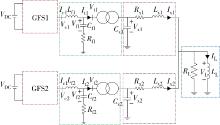
Fig.1
GFS parallel system
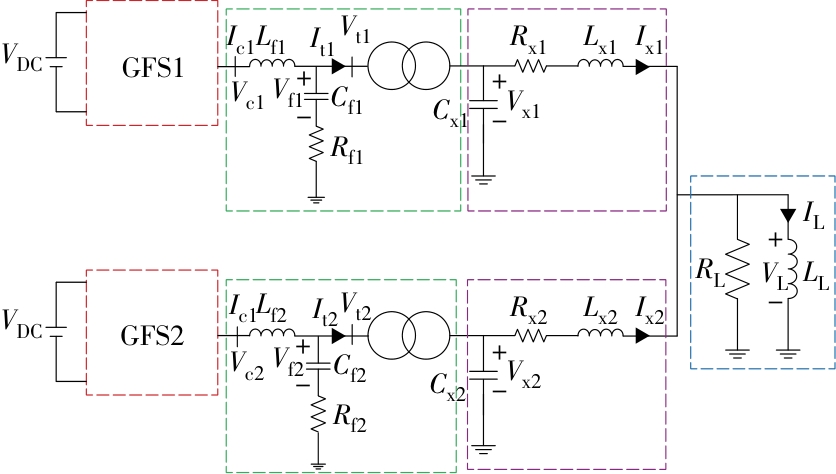
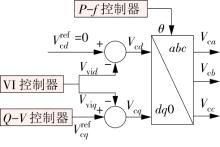
Fig.2
GFS control
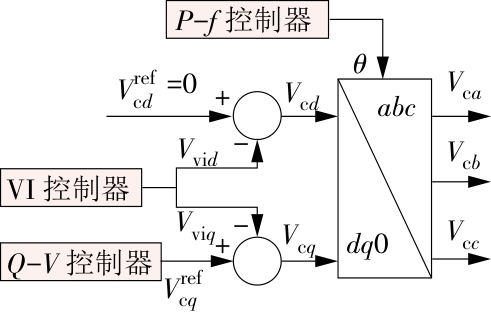
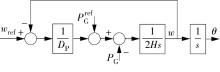
Fig.3
P-f droop control
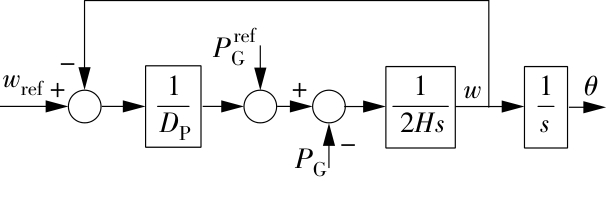
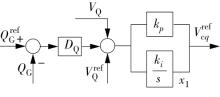
Fig.4
Q-V droop control
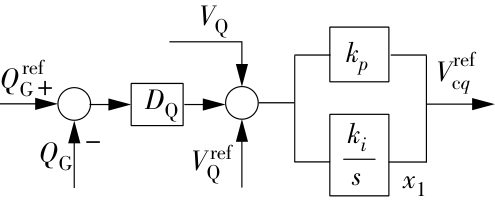
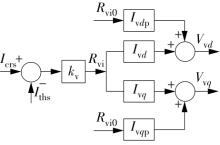
Fig.5
VI controller
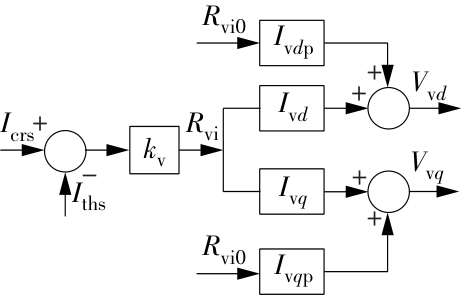
Table 1
System parameters
| 变量 | 数值 | 变量 | 数值 |
|---|---|---|---|
| VDC(标幺值) | 1 | Rvi0/Ω | 2.2 |
| H | 5 | kp | 0.2 |
| Lf/μH | 80 | ki | 4 |
| RL/Ω | 100 | DP | 0.5 |
| LL/H | 2 | DQ | 0.5 |
| Cf/μF | 500 | P | 1 |
| Rf/Ω | 0.5 | Q | 0.1 |
| Lx/H | 2 | Rx/Ω | 0.8 |
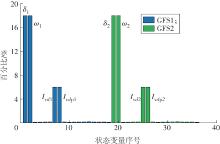
Fig.6
Participation factors of dominant oscillation modes
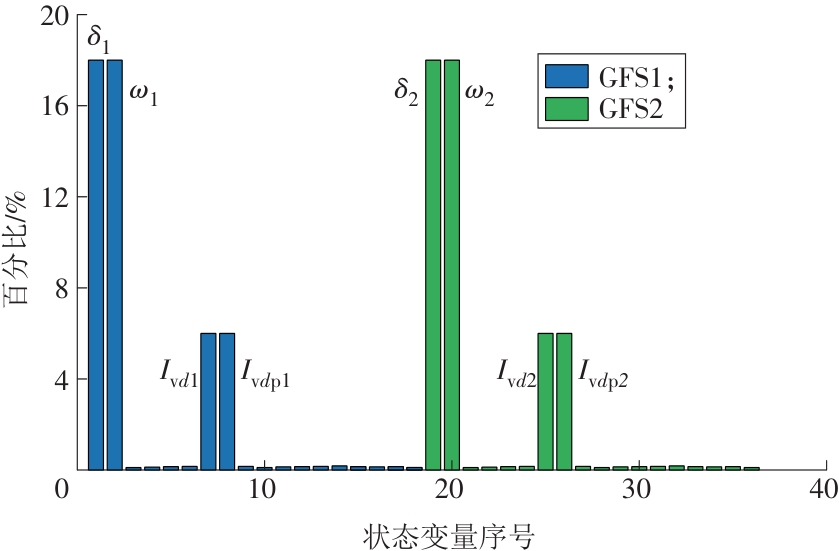
Fig.7
Nonlinear simulation results
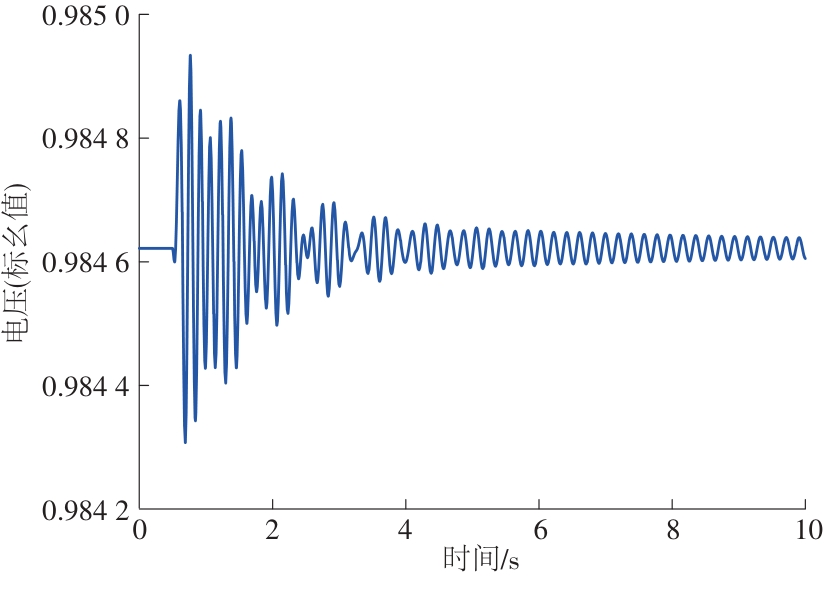
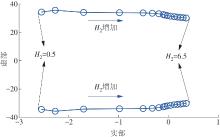
Fig.8
Movement trajectory of dominant oscillation modes varying with H2
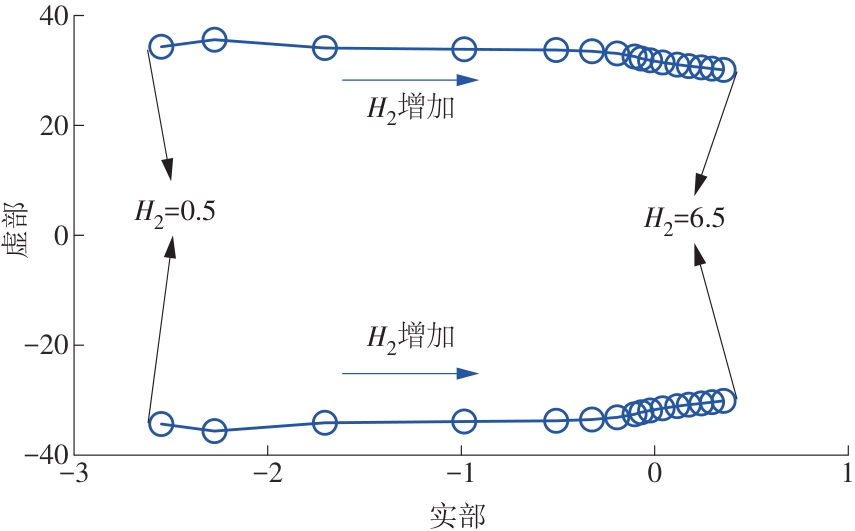
Fig.9
Nonlinear simulation results under different H2
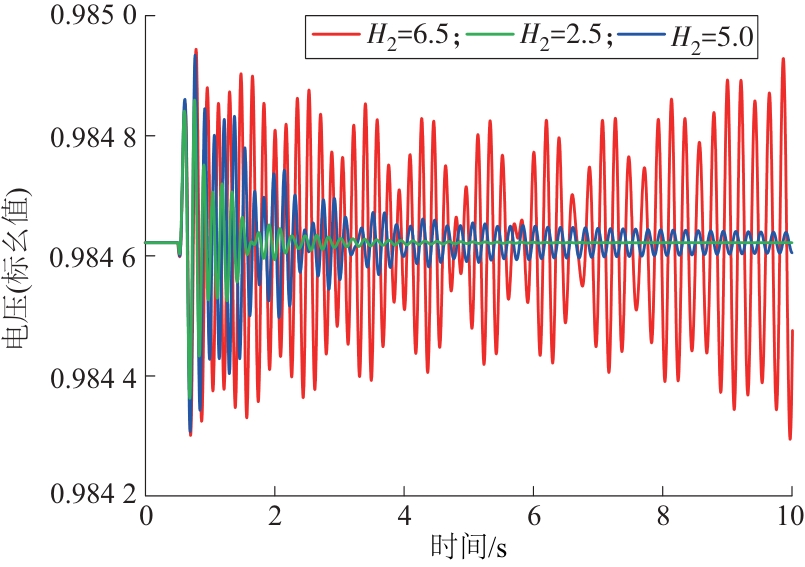
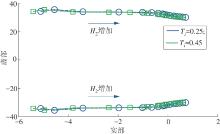
Fig.10
Trajectory of dominant eigenvalues varying with H2
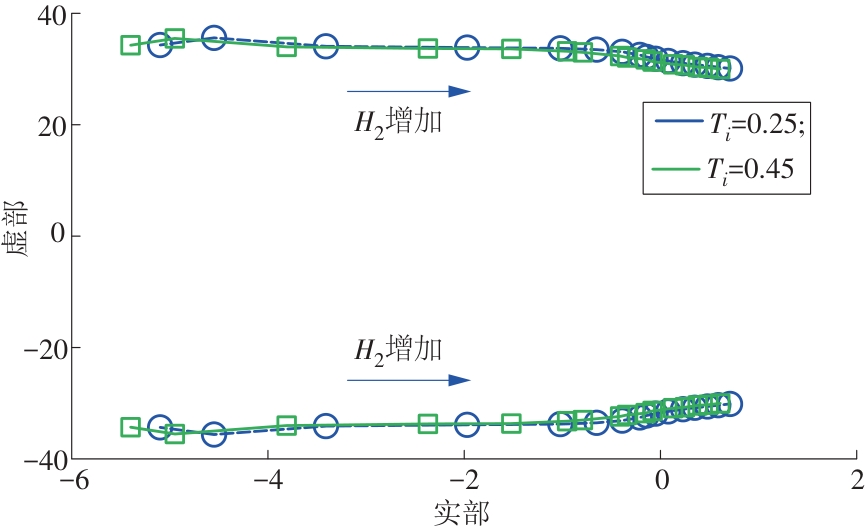
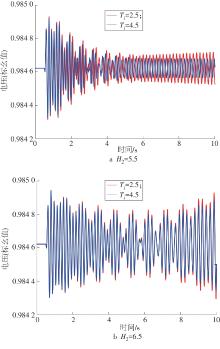
Fig.11
Nonlinear simulation results under different H and Ti
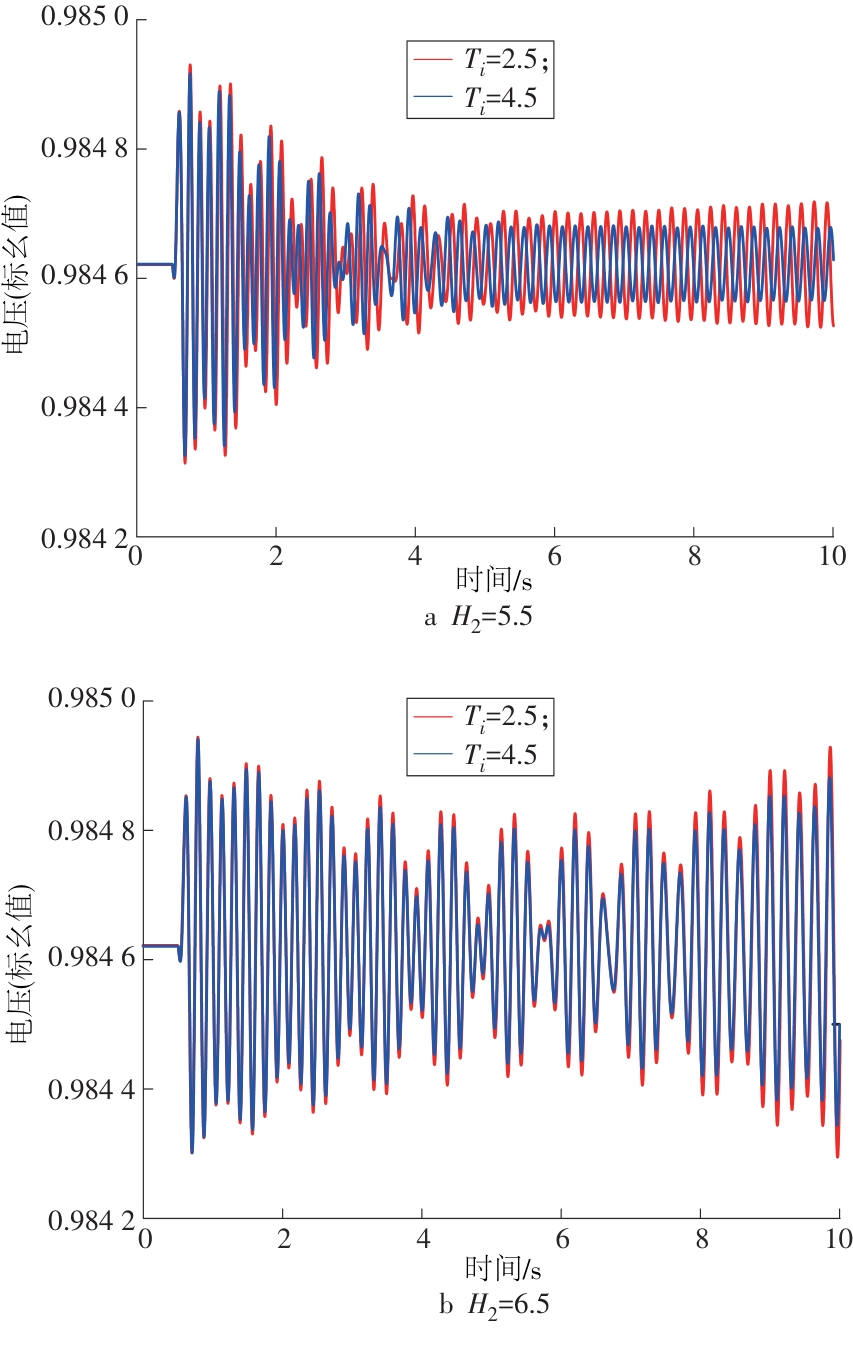
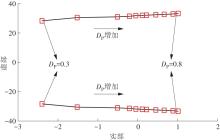
Fig.12
Trajectory of dominant oscillation modes with DP variation
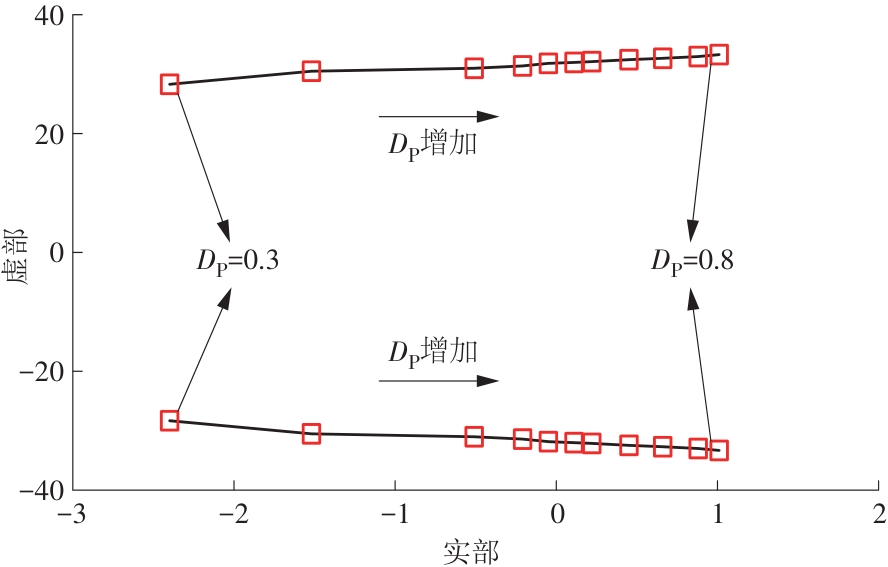
Fig.13
Nonlinear simulation results under different DP
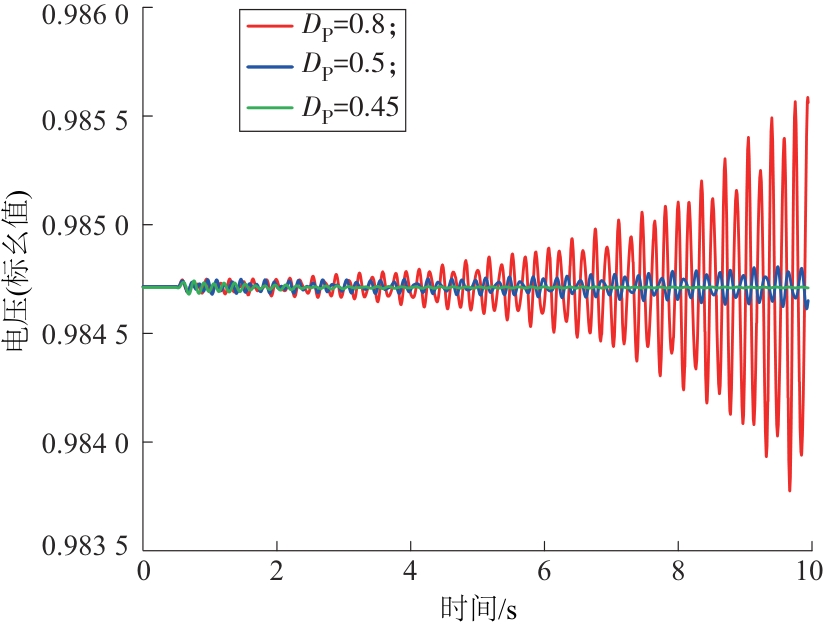
Fig.14
Trajectory of dominant oscillation modes with Rvi0 variation
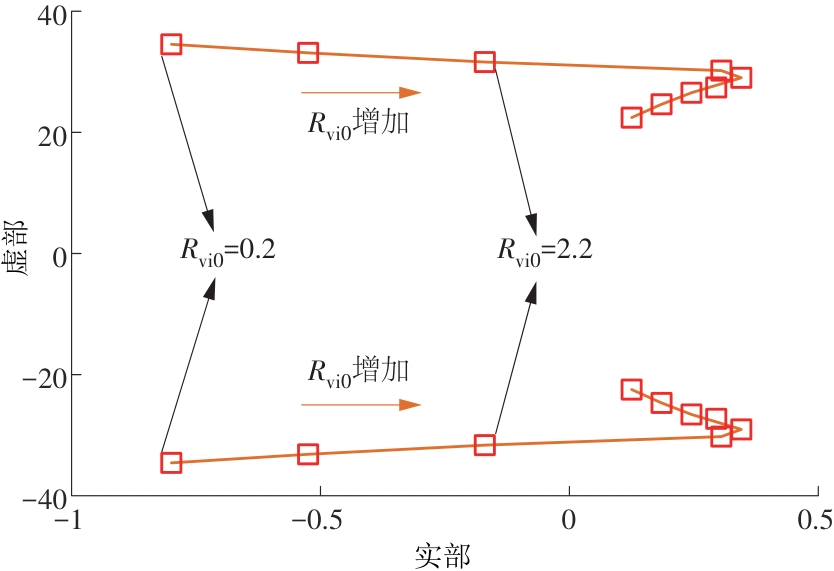
Fig.15
Nonlinear simulation results under different Rvi0
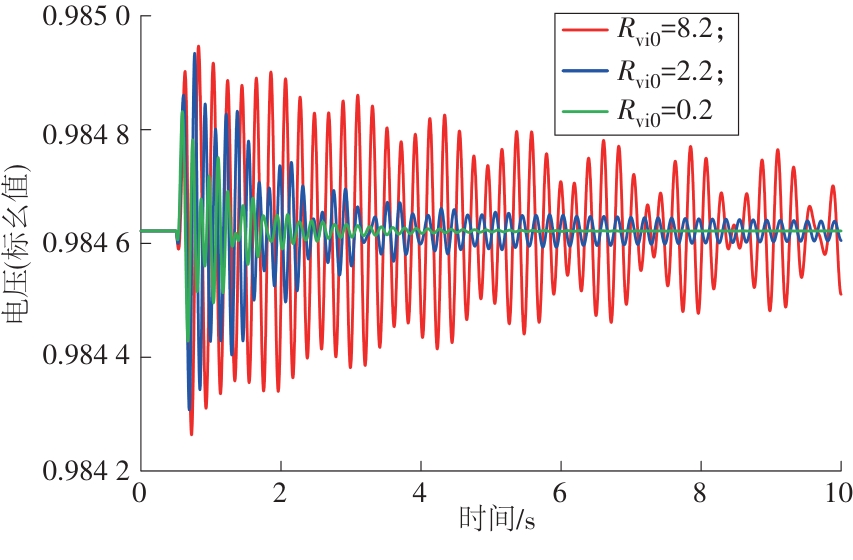
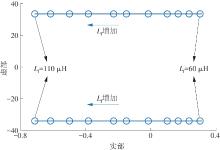
Fig.16
Trajectory of dominant oscillation modes with Lf variation
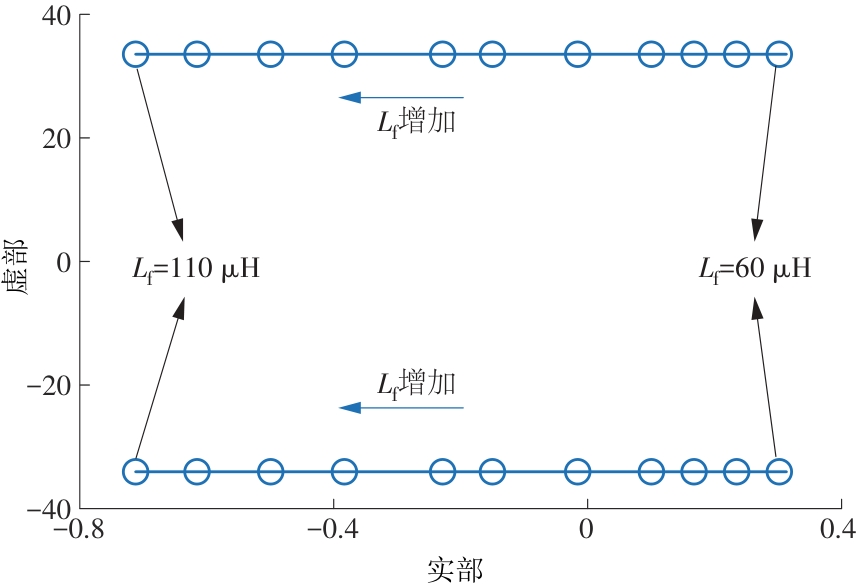
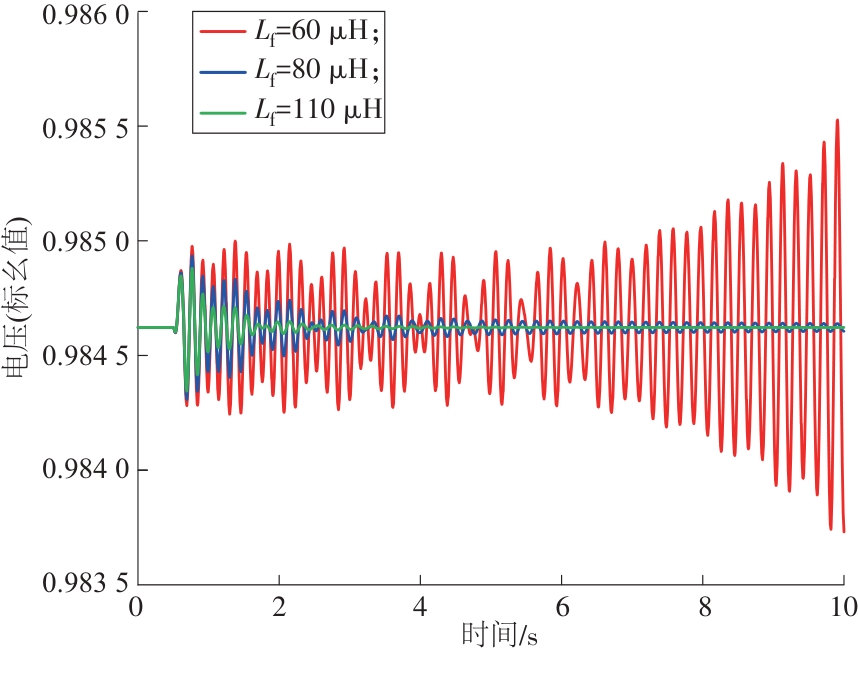
Fig.17
Nonlinear simulation results under different Lf
| [1] |
严文博, 黄云辉, 王栋, 等. 基于虚拟母线电压控制的构网型储能变流器稳定性优化研究[J]. 储能科学与技术, 2024, 13(5): 1532-1541.
doi: 10.19799/j.cnki.2095-4239.2023.0818 |
|
YAN Wenbo, HUANG Yunhui, WANG Dong, et al. Investigation of stability optimization of grid-forming energy storage converters based on virtual bus voltage control[J]. Energy Storage Science and Technology, 2024, 13(5): 1532-1541.
doi: 10.19799/j.cnki.2095-4239.2023.0818 |
|
| [2] |
卓超然, 辛杰, 洪涵卓, 等. 弱电网条件下并网逆变器阻抗模型的建立方法综述[J]. 综合智慧能源, 2024, 46(6): 88-101.
doi: 10.3969/j.issn.2097-0706.2024.06.010 |
|
ZHUO Chaoran, XIN Jie, HONG Hanzhuo, et al. Review on impedance modeling of grid-connected inverters under weak grid conditions[J]. Integrated Intelligent Energy, 2024, 46(6): 88-101.
doi: 10.3969/j.issn.2097-0706.2024.06.010 |
|
| [3] | 郑华, 伏睿, 张颖, 等. 构网型储能系统与风力发电的协同控制研究[J]. 电力信息与通信技术, 2023, 21(11): 48-54. |
| ZHENG Hua, FU Rui, ZHANG Ying, et al. Research on collaborative control of the grid-forming electrical storage system with the wind power plant[J]. Electric Power Information and Communication Technology, 2023, 21(11): 48-54. | |
| [4] | 武永强, 郭凯, 王宇强, 等. 构网型储能系统并网测试要求及测试实例分析[J]. 内蒙古电力技术, 2024, 42(2): 8-16. |
| WU Yongqiang, GUO Kai, WANG Yuqiang, et al. Testing requirements and case analysis of grid-forming energy storage system[J]. Inner Mongolia Electric Power, 2024, 42(2): 8-16. | |
| [5] | 朱子民, 张锦芳, 常清, 等. 大规模新能源接入弱同步支撑柔直系统的送端自适应VSG控制策略研究[J]. 中国电力, 2024, 57(5): 211-221. |
| ZHU Zimin, ZHANG Jinfang, CHANG Qing, et al. Adaptive VSG control strategy of sending end for large-scale renewable energy connected to weakly-synchronized support VSC-HVDC system[J]. Electric Power, 2025, 57(5): 211-221. | |
| [6] |
RATHNAYAKE D B, AKRAMI M, PHURAILATPAM C, et al. Grid forming inverter modeling, control, and applications[J]. IEEE Access, 2021, 9: 114781-114807.
doi: 10.1109/ACCESS.2021.3104617 |
| [7] | 温春雪, 毛健, 王鹏, 等. 基于虚拟同步发电机的构网型光储变流器控制策略研究[J]. 内蒙古电力技术, 2024, 42(1): 1-8. |
| WEN Chunxue, MAO Jian, WANG Peng, et al. Research on control strategy of grid-configured photovoltaic storage converters based on VSG[J]. Inner Mongolia Electric Power, 2024, 42(1): 1-8. | |
| [8] | 王盼宝, 王鹏, 李珅光, 等. 电网故障下构网型逆变器动态限流控制策略[J]. 高电压技术, 2022, 48(10): 3829-3837. |
| WANG Panbao, WANG Peng, LI Shenguang, et al. Dynamic current-limiting control strategy of grid-forming inverter under grid faults[J]. High Voltage Engineering, 2022, 48(10): 3829-3837. | |
| [9] | 陈薇, 徐佳红, 张亚丽, 等. 基于改进虚拟同步发电机的构网型并联储能逆变器控制研究[J]. 热力发电, 2024, 5308: 77-84. |
| CHEN Wei, XU Jiahong, ZHANG Yali, et al. Research on VSG control of grid-structured parallel fed inverter based on improved virtual synchronous generator[J]. Thermal Power Generation, 2024, 53(8): 77-84. | |
| [10] |
D'ARCO S, SUUL J A, FOSSO O B. A virtual synchronous machine implementation for distributed control of power converters in Smart Grids[J]. Electric Power Systems Research, 2015, 122: 180-197.
doi: 10.1016/j.epsr.2015.01.001 |
| [11] |
SHUAI Z K, HUANG W, SHEN Z J, et al. Active power oscillation and suppression techniques between two parallel synchronverters during load fluctuations[J]. IEEE Transactions on Power Electronics, 2020, 35(4): 4127-4142.
doi: 10.1109/TPEL.63 |
| [12] |
赵金鑫, 苗虹, 曾成碧. 基于改进虚拟同步发电机控制技术的低压微电网功率分配策略[J]. 电力建设, 2020, 41(7): 42-48.
doi: 10.12204/j.issn.1000-7229.2020.07.006 |
|
ZHAO Jinxin, MIAO Hong, ZENG Chengbi. Microgrid power distribution strategy based on improved control strategy of virtual synchronous generator[J]. Electric Power Construction, 2020, 41(7): 42-48.
doi: 10.12204/j.issn.1000-7229.2020.07.006 |
|
| [13] | ROSSO R, ENGELKEN S, LISERRE M. Analysis of the behavior of synchronverters operating in parallel by means of component connection method(CCM)[C]//2018 IEEE Energy Conversion Congress and Exposition(ECCE). IEEE, 2018: 2228-2235. |
| [14] | 邢光正, 吴琛, 陈磊, 等. 电压源变换器接入电网的小扰动稳定机理分析[J]. 电力自动化设备, 2020, 40(9): 42-52, 193. |
| XING Guangzheng, WU Chen, CHEN Lei, et al. Analysis of small disturbance stability mechanism for grid-connected voltage source converter[J]. Electric Power Automation Equipment, 2020, 40(9): 42-52, 193. | |
| [15] |
李立, 王佳明, 张青蕾, 等. 兼顾系统频率稳定性和小干扰稳定性的构网型储能参数优化方法[J]. 电力建设, 2023, 44(12): 125-135.
doi: 10.12204/j.issn.1000-7229.2023.12.011 |
|
LI Li, WANG Jiaming, ZHANG Qinglei, et al. Parameter optimization method of grid-forming energy storage considering system frequency stability and small signal stability[J]. Electric Power Construction, 2023, 44(12): 125-135.
doi: 10.12204/j.issn.1000-7229.2023.12.011 |
|
| [16] |
张心怡, 杨波. 考虑构网型和跟网型变流器的孤岛微电网小信号稳定性分析[J]. 综合智慧能源, 2024, 46(2): 12-18.
doi: 10.3969/j.issn.2097-0706.2024.02.002 |
|
ZHANG Xinyi, YANG Bo. Stability analysis on islanded microgrids with grid-forming and grid-following converters[J]. Integrated Intelligent Energy, 2024, 46(2): 12-18.
doi: 10.3969/j.issn.2097-0706.2024.02.002 |
|
| [17] |
POGAKU N, PRODANOVIC M, GREEN T C. Modeling, analysis and testing of autonomous operation of an inverter-based microgrid[J]. IEEE Transactions on Power Electronics, 2007, 22(2): 613-625.
doi: 10.1109/TPEL.2006.890003 |
| [18] |
WANG X F, BLAABJERG F. Harmonic stability in power electronic-based power systems: Concept, modeling, and analysis[J]. IEEE Transactions on Smart Grid, 2019, 10(3): 2858-2870.
doi: 10.1109/TSG.5165411 |
| [19] | 王玉坤, 张慕婕, 李壮, 等. 构网型直驱风电机组间控制相互作用研究[J]. 电力自动化设备, 2024, 44(3): 82-90. |
| WANG Yukun, ZHANG Mujie, LI Zhuang, et al. Research on control interaction between grid forming direct-drive wind turbines[J]. Electric Power Automation Equipment, 2024, 44(3): 82-90. | |
| [20] | 王海鑫, 刘铭崎, 董鹤楠, 等. 含高比例新能源的电力系统低频振荡分析与抑制综述[J]. 电力自动化设备, 2023, 43(9): 152-163. |
| WANG Haixin, LIU Mingqi, DONG Henan, et al. Review on analysis and suppression of low-frequency oscillation in power system with high penetration of renewable energy sources[J]. Electric Power Automation Equipment, 2023, 43(9): 152-163. | |
| [21] |
邱晓燕, 闫幸, 周毅, 等. 基于自适应虚拟阻抗的构网型与跟网型逆变器主导微网系统无功功率均分控制策略[J]. 电力建设, 2024, 45(1): 22-32.
doi: 10.12204/j.issn.1000-7229.2024.01.003 |
|
QIU Xiaoyan, YAN Xing, ZHOU Yi, et al. Reactive power sharing control strategy for microgrids dominated by grid-forming and grid-following inverters based on adaptive virtual impedance[J]. Electric Power Construction, 2024, 45(1): 22-32.
doi: 10.12204/j.issn.1000-7229.2024.01.003 |
|
| [22] | 符杨, 陈禹瑾, 季亮, 等. 考虑功率解耦的构网型逆变器的低电压穿越控制策略[J]. 电力系统保护与控制, 2024, 52(15): 1-13. |
| FU Yang, CHEN Yujun, JI Liang, et al. Low voltage ride-through control strategy of a grid-forming inverter considering power decoupling[J]. Power System Protection and Control, 2024, 52(15): 1-13. | |
| [23] | 叶伟豪, 郭强, 赵兵, 等. 新能源并网换流器功率控制稳定机理分析及改进控制策略[J]. 高电压技术, 2024, 50(8): 3736-3744. |
| YE Weihao, GUO Qiang, ZHAO Bing, et al. Mechanism analysis and improved strategy of power control stability of renewable energy grid-connected converters[J]. High Voltage Engineering, 2024, 50(8): 3736-3744. | |
| [24] | 龚梓威, 王海风, 陈珏, 等. 直流电压时间尺度下光伏并网控制系统稳定性分析[J]. 电力工程技术, 2023, 42(6): 2-13. |
| GONG Ziwei, WANG Haifeng, CHEN Yu, et al. Stability analysis of grid-connected photovoltaic generation control system under DC voltage timescale[J]. Electric Power Engineering Technology, 2023, 42(6): 2-13. | |
| [25] |
董文凯, 王海风. 基于小信号模型的风电场同调等值理论[J]. 南方电网技术, 2021, 15(11): 9-21.
doi: 10.13648/j.cnki.issn1674-0629.2021.11.002 |
|
DONG Wenkai, WANG Haifeng. Coherency-based dynamic equivalent theory of wind farm based on small-signal model[J]. Southern Power System Technology, 2021, 15(11): 9-21.
doi: 10.13648/j.cnki.issn1674-0629.2021.11.002 |
|
| [26] | 刘文元, 任必兴, 李海峰, 等. 直驱风电场和串补之间的次同步振荡风险[J]. 电力工程技术, 2022, 41(4): 25-32. |
| LIU Wenyuan, REN Bixing, LI Haifeng, et al. Sub-synchronous oscillation risk between PMSG farm and series complement[J]. Electric Power Engineering Technology, 2022, 41(4): 25-32. | |
| [27] | 董文凯, 杜文娟, 王海风. 用于振荡稳定性分析的并网风电场动态等效模型[J]. 中国电机工程学报, 2021, 41(1): 75-87. |
| DONG Wenkai, DU Wenjuan, WANG Haifeng. Dynamic equivalent model of a grid-connected wind farm for oscillation stability analysis[J]. Proceedings of the CSEE, 2021, 41(1): 75-87. | |
| [28] | 李彦, 王海风. 含并联直驱风电机组并网的风电场多开环模式谐振[J]. 现代电力, 2022, 39(1): 19-25. |
| LI Yan, WANG Haifeng. Multi open-loop mode resonance of wind farm with grid-connected parallel permanent magnet synchronous generators[J]. Modern Electric Power, 2022, 39(1): 19-25. |
| [1] | YU Guo, WU Jun, XIA Re, CHEN Yihui, GUO Zihui, HUANG Wenxin. Study on the status quo and development trend of grid-forming converter technology [J]. Integrated Intelligent Energy, 2022, 44(9): 65-70. |
| [2] | WANG Kangping, ZHANG Xingke, LIU Caihua, SHEN Xicheng, ZHOU Xia. Reactive power and voltage control strategy based on adaptive droop control for wind power plants [J]. Integrated Intelligent Energy, 2022, 44(4): 12-19. |
| Viewed | ||||||
|
Full text |
|
|||||
|
Abstract |
|
|||||