Integrated Intelligent Energy ›› 2025, Vol. 47 ›› Issue (11): 14-23.doi: 10.3969/j.issn.2097-0706.2025.11.002
• Control and Coordinated Optimization of Flexible Resources • Previous Articles Next Articles
ZHANG Zhihong1( ), HU Xuguang1,*(), WU Enkai2(), ZHANG Chi1(), ZHOU Chenghao1()
Received:2025-06-16
Revised:2025-08-04
Published:2025-09-30
Contact:
HU Xuguang
E-mail:zhihongxuexi@163.com;huxuguang@mail.neu.edu.cn;wuenkai1977@163.com;wuenkai1977@163.com;2400739@stu.neu.edu.cn;2371042@stu.neu.edu.cn
Supported by:CLC Number:
ZHANG Zhihong, HU Xuguang, WU Enkai, ZHANG Chi, ZHOU Chenghao. Wind-solar-load scenario generation method based on adaptive multi-task diffusion model[J]. Integrated Intelligent Energy, 2025, 47(11): 14-23.
Add to citation manager EndNote|Ris|BibTeX
URL: https://www.hdpower.net/EN/10.3969/j.issn.2097-0706.2025.11.002
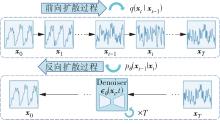
Fig.1
Forward noising and reverse denoising processes of DDPM
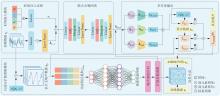
Fig.2
AMDM scenario generation framework
Table 1
Node information of IES-134 power network
| 项目 | 节点数 | 峰值运行功率/MW | 工作模式 |
|---|---|---|---|
| 用户负荷 | 58 | 81.4 | PQ |
| 光伏出力 | 15 | 15.3 | PQ |
| 风机出力 | 5 | 37.0 | PV,PQ |
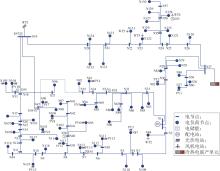
Fig.3
Topology of IES-134 power network
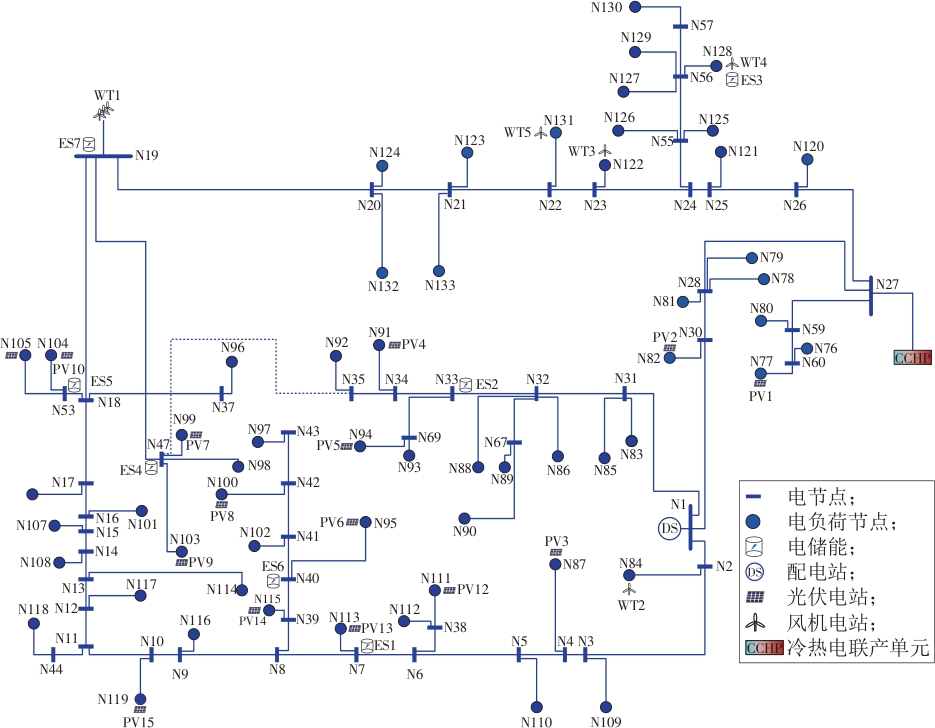
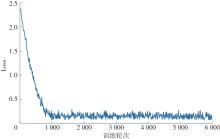
Fig.4
Joint loss function curves
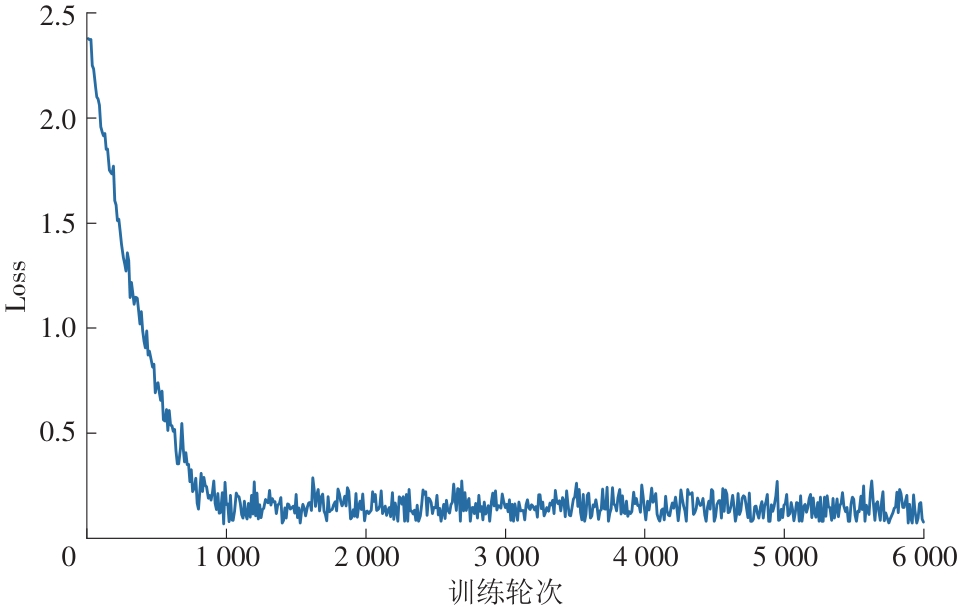
Fig.5
Generation of wind-solar-load single-day output scenarios
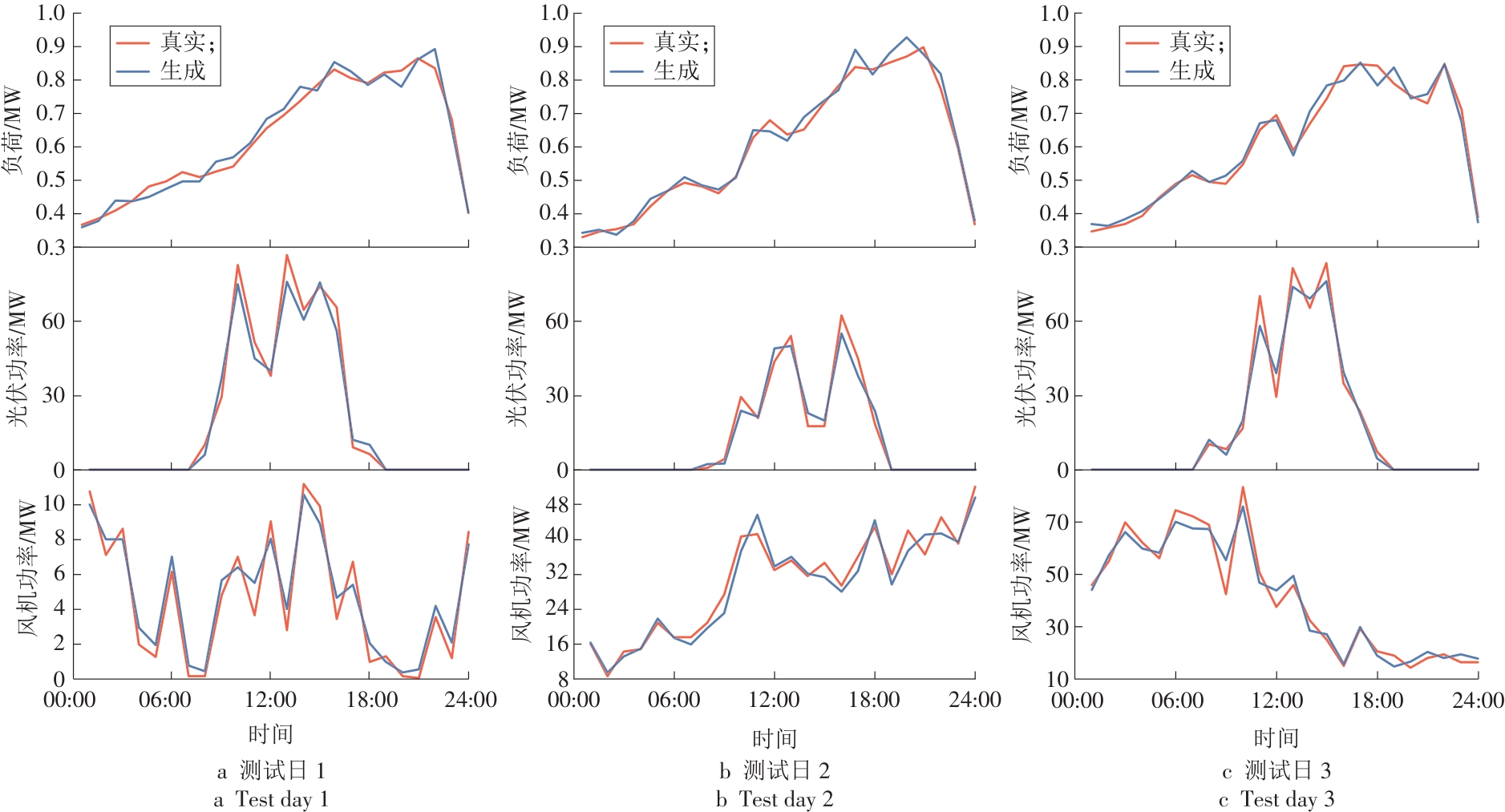
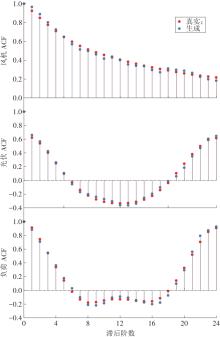
Fig.6
Comparison of ACF for joint scenario output
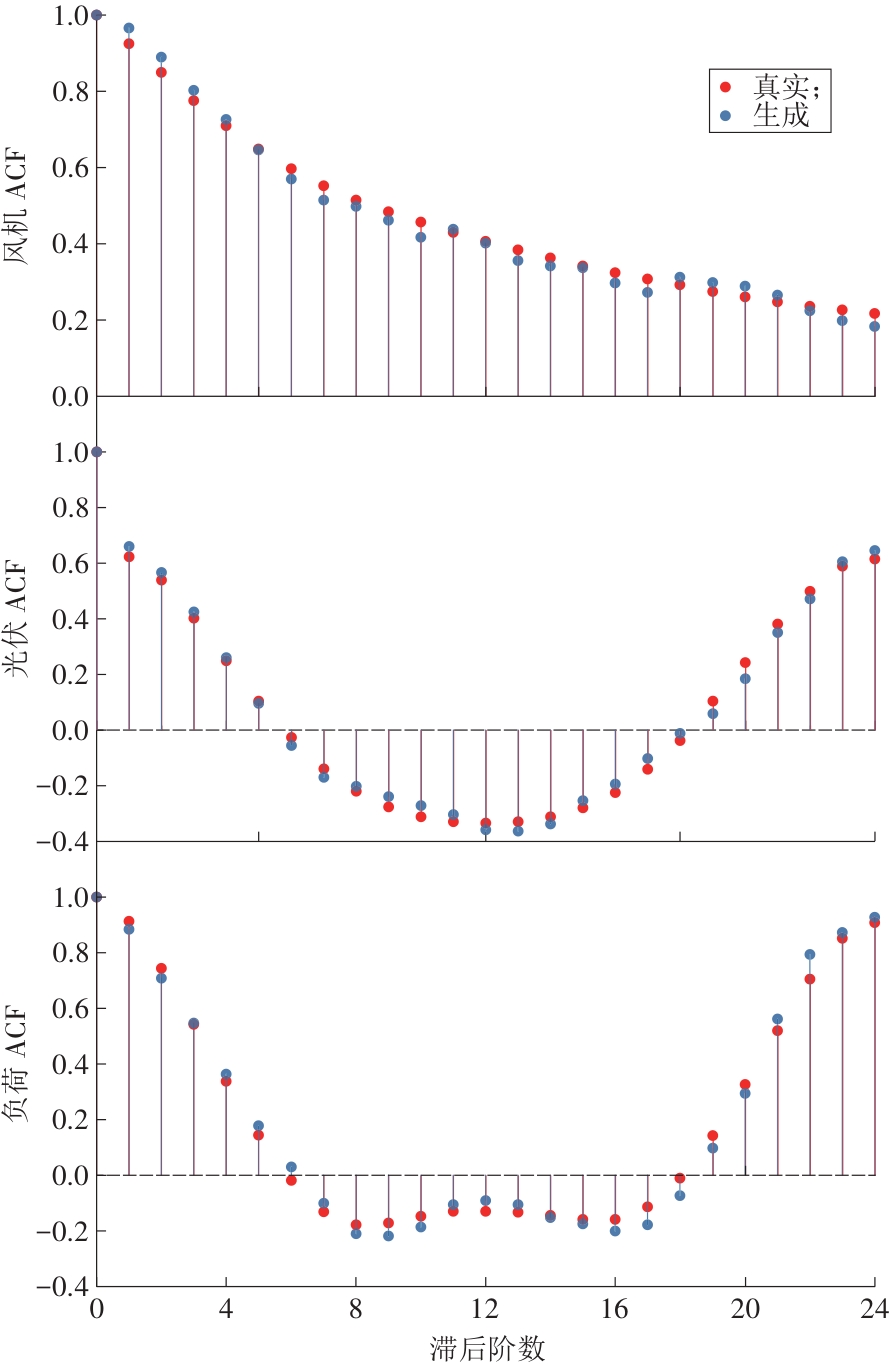
Table 2
Quantitative evaluation results of marginal distribution
| 模型 | 变量 | KL散度 | JS散度 | MAE/MW | RMSE/MW |
|---|---|---|---|---|---|
| VAE | 负荷 | 0.426 | 0.146 | 0.402 | 0.751 |
| 风电 | 0.534 | 0.234 | 0.550 | 1.024 | |
| 光伏 | 0.521 | 0.177 | 0.523 | 0.951 | |
| T-Copula | 负荷 | 0.433 | 0.126 | 0.386 | 0.705 |
| 风电 | 0.558 | 0.193 | 0.522 | 0.985 | |
| 光伏 | 0.473 | 0.187 | 0.485 | 0.895 | |
| GAN | 负荷 | 0.379 | 0.098 | 0.347 | 0.663 |
| 风电 | 0.484 | 0.176 | 0.489 | 0.894 | |
| 光伏 | 0.427 | 0.154 | 0.438 | 0.823 | |
| IDDPM | 负荷 | 0.365 | 0.088 | 0.341 | 0.650 |
| 风电 | 0.450 | 0.162 | 0.475 | 0.868 | |
| 光伏 | 0.408 | 0.135 | 0.433 | 0.805 | |
| ICGDM | 负荷 | 0.371 | 0.091 | 0.344 | 0.658 |
| 风电 | 0.462 | 0.168 | 0.480 | 0.877 | |
| 光伏 | 0.415 | 0.141 | 0.436 | 0.811 | |
| CLDM | 负荷 | 0.360 | 0.085 | 0.338 | 0.644 |
| 风电 | 0.441 | 0.159 | 0.470 | 0.859 | |
| 光伏 | 0.401 | 0.131 | 0.431 | 0.799 | |
| NICE | 负荷 | 0.375 | 0.094 | 0.351 | 0.670 |
| 风电 | 0.478 | 0.172 | 0.495 | 0.901 | |
| 光伏 | 0.420 | 0.148 | 0.442 | 0.836 | |
| AMDM | 负荷 | 0.352 | 0.080 | 0.335 | 0.635 |
| 风电 | 0.425 | 0.154 | 0.464 | 0.847 | |
| 光伏 | 0.394 | 0.127 | 0.429 | 0.792 |
Fig.7
t-SNE visualization results
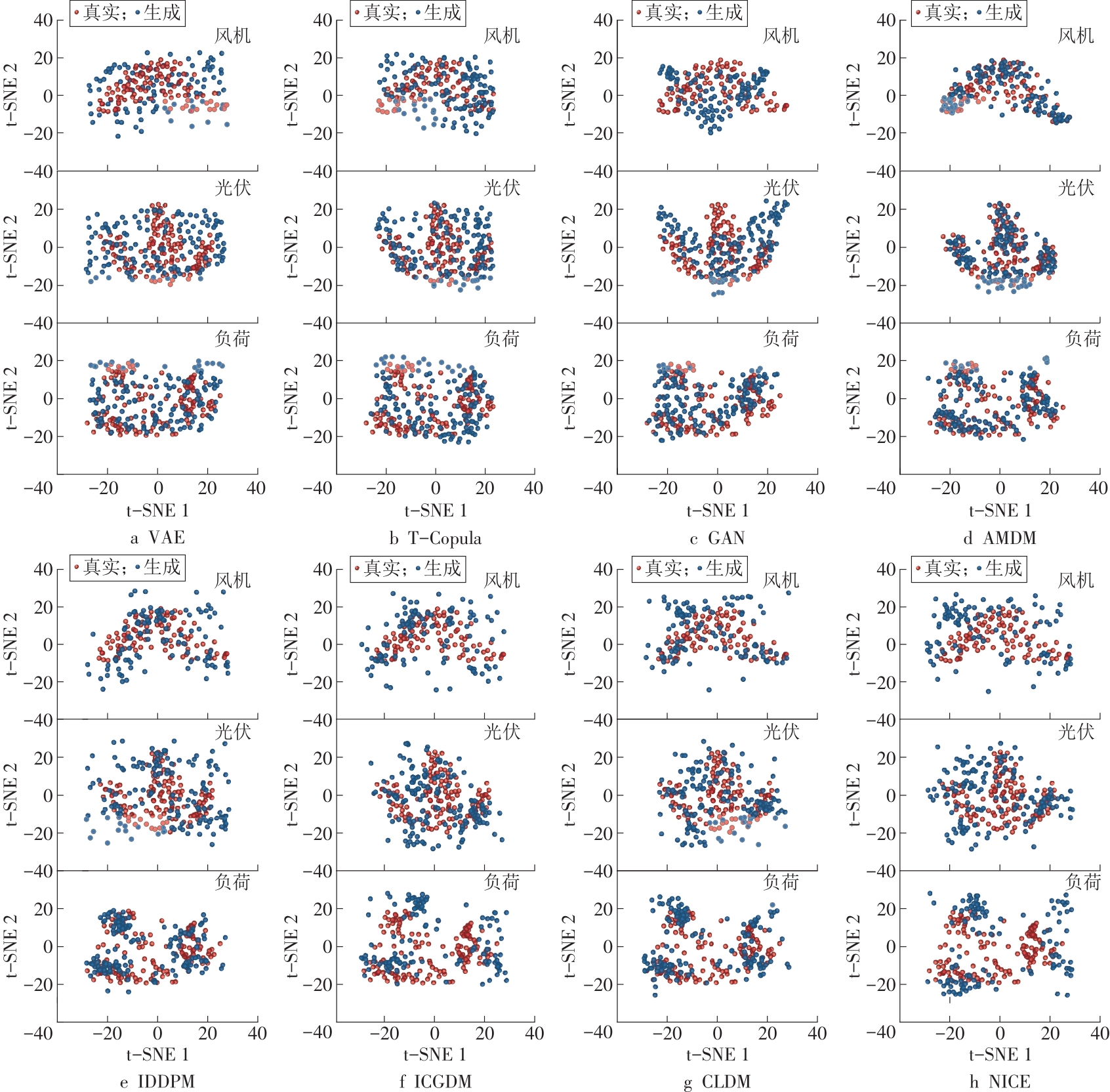
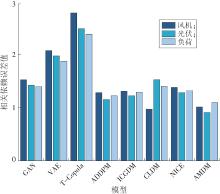
Fig.8
Comparison of inter-model dependency error values
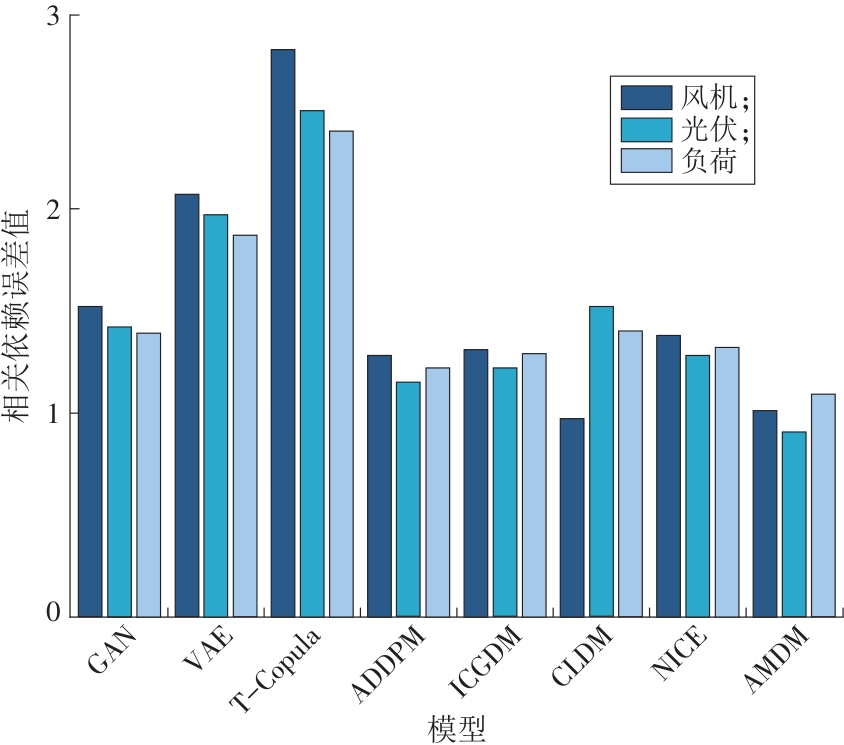
Table 3
Comparison of scenario generation efficiency
| 模型 | 训练时间/min | 场景推理时间/s |
|---|---|---|
| VAE | 27.26 | 0.032 |
| T-Copula | 4.87 | 0.007 |
| GAN | 56.32 | 0.019 |
| IDDPM | 147.45 | 1.312 |
| ICGDM | 137.35 | 1.782 |
| CLDM | 112.24 | 1.145 |
| NICE | 40.52 | 0.025 |
| AMDM | 117.12 | 1.082 |
| [1] | LI Z, YE L, SONG X R, et al. Heterogeneous spatiotemporal graph convolution network for multi-modal wind-PV power collaborative prediction[J]. IEEE Transactions on Power Systems, 2024, 39(4): 5591-5608. |
| [2] | 张冬冬, 单琳珂, 刘天皓. 人工智能技术在风力与光伏发电数据挖掘及功率预测中的应用综述[J]. 综合智慧能源, 2025, 47(3): 32-46. |
| ZHANG Dongdong, SHAN Linke, LIU Tianhao. Review on the application of artificial intelligence in data mining and wind and photovoltaic power forecasting[J]. Integrated Intelligent Energy, 2025, 47(3): 32-46. | |
| [3] | 孙秋野, 于潇寒, 王靖傲. “双高” 配电系统的挑战与应对措施探讨[J]. 中国电机工程学报, 2024, 44(18): 7115-7136. |
| SUN Qiuye, YU Xiaohan, WANG Jing'ao. Discussion on challenges and countermeasures of "double high" power distribution system[J]. Proceedings of the CSEE, 2024, 44(18): 7115-7136. | |
| [4] | 翁志鹏, 周京华, 李津, 等. 含风光接入的微电网可靠性影响分析[J]. 综合智慧能源, 2023, 45(1): 67-74. |
| WENG Zhipeng, ZHOU Jinghua, LI Jin, et al. Impact of wind and solar power grid connection on microgrid reliability[J]. Integrated Intelligent Energy, 2023, 45(1): 67-74. | |
| [5] | 欧阳婷, 蔡晔, 王炜宇, 等. 计及风电、光伏预测不确定性的抽水蓄能日前全调度优化[J]. 综合智慧能源, 2022, 44(11): 20-27. |
| OUYANG Ting, CAI Ye, WANG Weiyu, et al. Overall day-ahead scheduling optimization for pumped-storage power stations considering the uncertainty of wind and photovoltaic power prediction[J]. Integrated Intelligent Energy, 2022, 44(11): 20-27. | |
| [6] | 王利利, 王皓, 任洲洋, 等. 计及灵活资源调节潜力的高压配电网新能源接纳能力评估[J]. 中国电力, 2022, 55(10): 124-131. |
| WANG Lili, WANG Hao, REN Zhouyang, et al. Evaluation of renewable energy accommodation capacity of high voltage distribution networks considering regulation potential of flexible resources[J]. Electric Power, 2022, 55(10): 124-131. | |
| [7] | ZHENG K, SUN Z Y, SONG Y, et al. Stochastic scenario generation methods for uncertainty in wind and photovoltaic power outputs: A comprehensive review[J]. Energies, 2025, 18(3): 503. |
| [8] | RAYATI M, BOZORG M, CARPITA M, et al. Stochastic optimization and Markov chain-based scenario generation for exploiting the underlying flexibilities of an active distribution network[J]. Sustainable Energy, Grids and Networks, 2023, 34: 100999. |
| [9] | BECKER R. Generation of time-coupled wind power infeed scenarios using pair-copula construction[J]. IEEE Transactions on Sustainable Energy, 2018, 9(3): 1298-1306. |
| [10] | 王玲玲, 王昕, 郑益慧, 等. 计及多个风电机组出力相关性的配电网无功优化[J]. 电网技术, 2017, 41(11): 3463-3469. |
| WANG Lingling, WANG Xin, ZHENG Yihui, et al. Reactive power optimization of distribution network considering output correlation of multiple wind turbines[J]. Power System Technology, 2017, 41(11): 3463-3469. | |
| [11] | 胡旭光, 张化光, 孙秋野, 等. 基于异构数据模型的电-气耦合网络状态感知方法研究[J]. 中国科学: 技术科学, 2020, 50(3): 346-360. |
| HU Xuguang, ZHANG Huaguang, SUN Qiuye, et al. Research on situation awareness of electricity-gas coupling network based on a heterogeneous data model[J]. Scientia Sinica (Technologica), 2020, 50(3): 346-360. | |
| [12] | WANG C G, SHARIFNIA E, GAO Z, et al. Generating multivariate load states using a conditional variational autoencoder[J]. Electric Power Systems Research, 2022, 213: 108603. |
| [13] | 胡旭光, 马大中, 郑君, 等. 基于关联信息对抗学习的综合能源系统运行状态分析方法[J]. 自动化学报, 2020, 46(9): 1783-1797. |
| HU Xuguang, MA Dazhong, ZHENG Jun, et al. An operation state analysis method for integrated energy system based on correlation information adversarial learning[J]. Acta Automatica Sinica, 2020, 46(9): 1783-1797. | |
| [14] | HO J, JAIN A, ABBEEL P. Denoising diffusion probabilistic models[J]. Advances in Neural Information Processing Systems, 2020, 33: 6840-6851. |
| [15] | 黄越辉, 孙亚南, 李驰, 等. 基于条件生成对抗网络的多区域风电短期出力场景生成方法[J]. 电网技术, 2023, 47(1): 63-77. |
| HUANG Yuehui, SUN Yanan, LI Chi, et al. Constructing method of short-term output scenarios for multi-regional wind power based on conditional generative adversarial network[J]. Power System Technology, 2023, 47(1): 63-77. | |
| [16] | 詹兆康, 胡旭光, 赵浩然, 等. 基于多变量时空融合网络的风机数据缺失值插补研究[J]. 自动化学报, 2024, 50(6): 1171-1184. |
| ZHAN Zhaokang, HU Xuguang, ZHAO Haoran, et al. Study of missing value imputation in wind turbine data based on multivariate spatiotemporal integration network[J]. Acta Automatica Sinica, 2024, 50(6): 1171-1184. | |
| [17] | 戴宇欣, 张俊, 乔骥, 等. 基于改进去噪扩散概率模型和模型迁移的新能源场站超短期出力场景生成[J]. 电网技术, 2025, 49(2): 511-521. |
| DAI Yuxin, ZHANG Jun, QIAO Ji, et al. Ultra-short-term output scenario generation for renewable energy plants based on improved denoising diffusion probabilistic models and model-based transfer learning[J]. Power System Technology, 2025, 49(2): 511-521. | |
| [18] | 王长刚, 刘伟, 曹宇, 等. 基于改进条件生成扩散模型的新能源日前场景生成方法[J]. 电网技术, 2025, 49(4): 1358-1368. |
| WANG Changgang, LIU Wei, CAO Yu, et al. The day-ahead scenario generation method for new energy based on an improved conditional generative diffusion model[J]. Power System Technology, 2025, 49(4): 1358-1368. | |
| [19] | DONG X C, MAO Z H, SUN Y Y, et al. Short-term wind power scenario generation based on conditional latent diffusion models[J]. IEEE Transactions on Sustainable Energy, 2024, 15(2): 1074-1085. |
| [20] | SILVA W N, BANDÓRIA L H T, DIAS B H, et al. Generating realistic load profiles in smart grids: An approach based on nonlinear independent component estimation (NICE) and convolutional layers[J]. Applied Energy, 2023, 351: 121902. |
| [21] | 宋晓维. 基于变分自编码高斯混合模型的海量新能源出力场景生成方法[J]. 电气自动化, 2024, 46(3): 1-3. |
| SONG Xiaowei. Method for generating massive new energy output scenarios based on variational autocoding and hidden variable modeling[J]. Electrical Automation, 2024, 46(3): 1-3. | |
| [22] | 许琴, 刘一鸣, 陈志刚, 等. 负荷水平约束条件下新能源出力场景生成新方法[J]. 南方电网技术, 2025, 19(1): 51-62. |
| XU Qin, LIU Yiming, CHEN Zhigang, et al. A new method for generating new energy output scenarios with load level constraints[J]. Southern Power System Technology, 2025, 19(1): 51-62. |
| [1] | HONG Liu, LYU Daoxin, YANG Zhongtao, MA Shaowu, JIANG Xue. Linearized calculation method of critical inertia in energy power systems with renewable energy and its application [J]. Integrated Intelligent Energy, 2025, 47(9): 10-17. |
| [2] | CHU Longhao, LI Xiaozhu. Bidding strategies and value allocation mechanism for multi-type electric energy trading with participation of shared energy storage [J]. Integrated Intelligent Energy, 2025, 47(8): 30-39. |
| [3] | ZHAI Shuo, ZHANG Zhiyuan, WANG Weisheng, TIAN Runduo, ZHANG Weizhi, WANG Rui. Vehicle-vehicle energy mutual aid control strategy for electric vehicles [J]. Integrated Intelligent Energy, 2025, 47(8): 40-48. |
| [4] | TAN Jiaqun, LYU Ruxuan, JU Hongjin, HONG Chunxue, XIAO Haiping, LEI Jing, HAN Zhenxing. Research on optimal scheduling strategy of wind-photovoltaic-thermal-storage integrated energy system based on IBES [J]. Integrated Intelligent Energy, 2025, 47(8): 68-76. |
| [5] | LI Xiaoning, SUN Na, HUANG Amin, DONG Haiying. Fuzzy active disturbance rejection control of PEMFC air intake unit based on snake optimization algorithm [J]. Integrated Intelligent Energy, 2025, 47(6): 57-73. |
| [6] | YE Xing, QIU Chen, AI Lin, XIN Songxu, GUO Yanheng. Connection mechanism between green certificates and carbon trading mechanism under the "double carbon" target [J]. Integrated Intelligent Energy, 2025, 47(5): 12-20. |
| [7] | CHEN Hao, MA Gang, QIAN Da, MA Jian, PENG Leyao. Optimization of regional integrated energy systems under green certificate and carbon trading mechanism considering tiered demand response [J]. Integrated Intelligent Energy, 2025, 47(5): 21-30. |
| [8] | ZHANG Wenbo, QIN Wenping, LIU Jiaxin, CHEN Yumei, LIU Boyang, ZHAO Anting. Robust optimization scheduling strategy for virtual power plants considering demand response and leasing shared energy storage under the green certificate-electricity- carbon coupled market [J]. Integrated Intelligent Energy, 2025, 47(5): 31-40. |
| [9] | ZHANG Zhongming, YI Bingxing, ZHAO Hailing, ZHAO Xiaoye, LI Changfeng, SUN Jiang, ZHAO Qihe. Optimization of renewable energy consumption strategies in electricity trading market based on particle swarm optimization algorithm [J]. Integrated Intelligent Energy, 2025, 47(5): 84-90. |
| [10] | ZHANG Dongdong, SHAN Linke, LIU Tianhao. Review on the application of artificial intelligence in data mining and wind and photovoltaic power forecasting [J]. Integrated Intelligent Energy, 2025, 47(3): 32-46. |
| [11] | ZHANG Min, WANG Yanhe, SUN Zhou, LIU Bin, JIANG Zhiwei, CAO Can, GAO Feng. Research on application scenarios and technical system for transportation-energy integration [J]. Integrated Intelligent Energy, 2025, 47(2): 13-28. |
| [12] | ZHUANG Fuhao, WU Jun, ZHU Ruijin, WU Hongmei, TIAN Run, XUE Yurun. Current status and prospects of key technologies in green hydrogen production industry [J]. Integrated Intelligent Energy, 2025, 47(10): 1-9. |
| [13] | SU Rui, WANG Xilong, JIANG Yan, SONG Chenhui. Scheduling planning for virtual power plants based on an improved cost allocation method [J]. Integrated Intelligent Energy, 2025, 47(1): 10-17. |
| [14] | XU Qiang. Optimization configuration method of distributed photovoltaic energy storage systems based on NSGA-Ⅲ algorithm [J]. Integrated Intelligent Energy, 2025, 47(1): 26-33. |
| [15] | JIANG Yan, SONG Chenhui, ZHANG Ning, HE Bo, LU Yuting. Study on optimized operation model and strategy for virtual power plants considering multi-energy coupling [J]. Integrated Intelligent Energy, 2025, 47(1): 34-41. |
| Viewed | ||||||
|
Full text |
|
|||||
|
Abstract |
|
|||||