Integrated Intelligent Energy ›› 2026, Vol. 48 ›› Issue (3): 56-64.doi: 10.3969/j.issn.2097-0706.2026.03.006
• Low-carbon Optimization for Energy Systems • Previous Articles Next Articles
ZHANG Yang( ), TAO Shenghu, LIU Qi
Received:2024-11-25
Revised:2025-02-24
Published:2026-03-25
Supported by:CLC Number:
ZHANG Yang, TAO Shenghu, LIU Qi. Carbon pathway analysis and integrated energy management strategy considering rural energy consumption diversity[J]. Integrated Intelligent Energy, 2026, 48(3): 56-64.
Add to citation manager EndNote|Ris|BibTeX
URL: https://www.hdpower.net/EN/10.3969/j.issn.2097-0706.2026.03.006
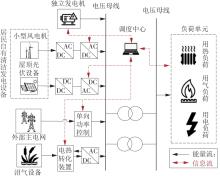
Fig.1
Schematic diagram of a rural micro-integrated energy system
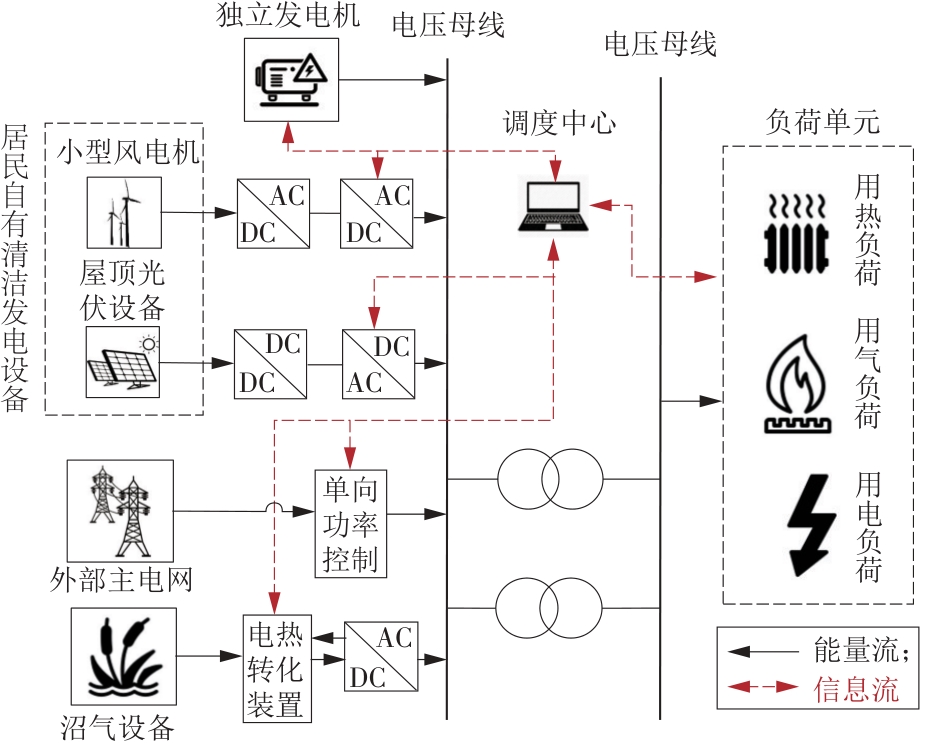
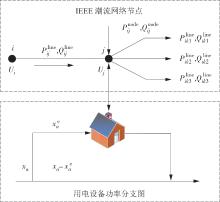
Fig.2
Parameter deviation of power flow system
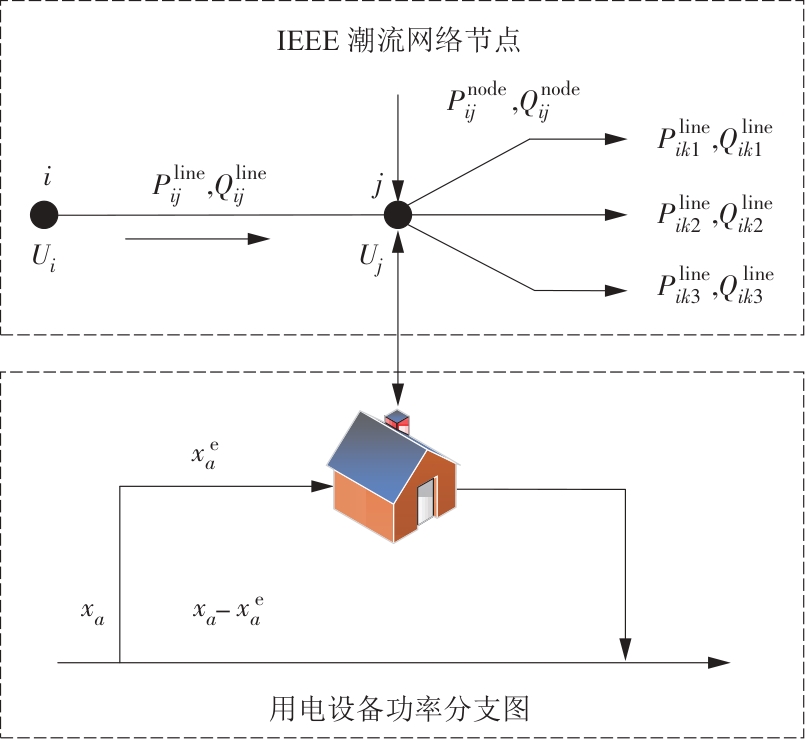
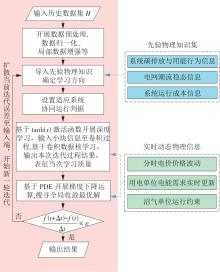
Fig.3
Operational flowchart of PI-CNN network
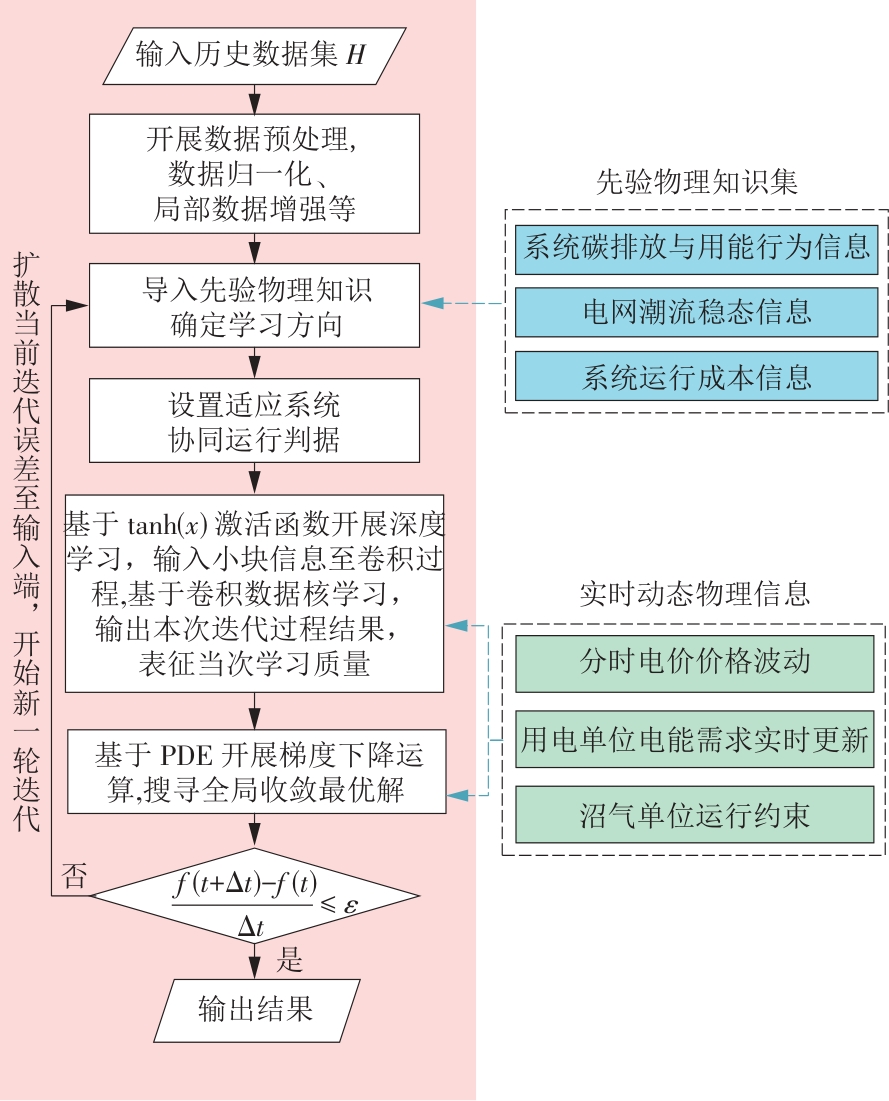
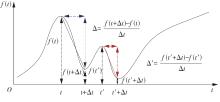
Fig.4
Gradient descent of function
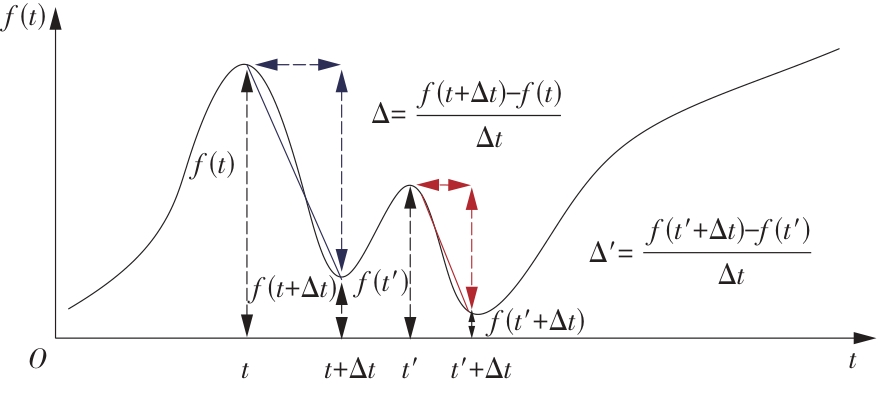
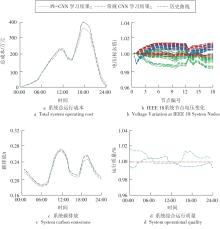
Fig.5
Energy consumption curves and learning outcomes in scenario 1
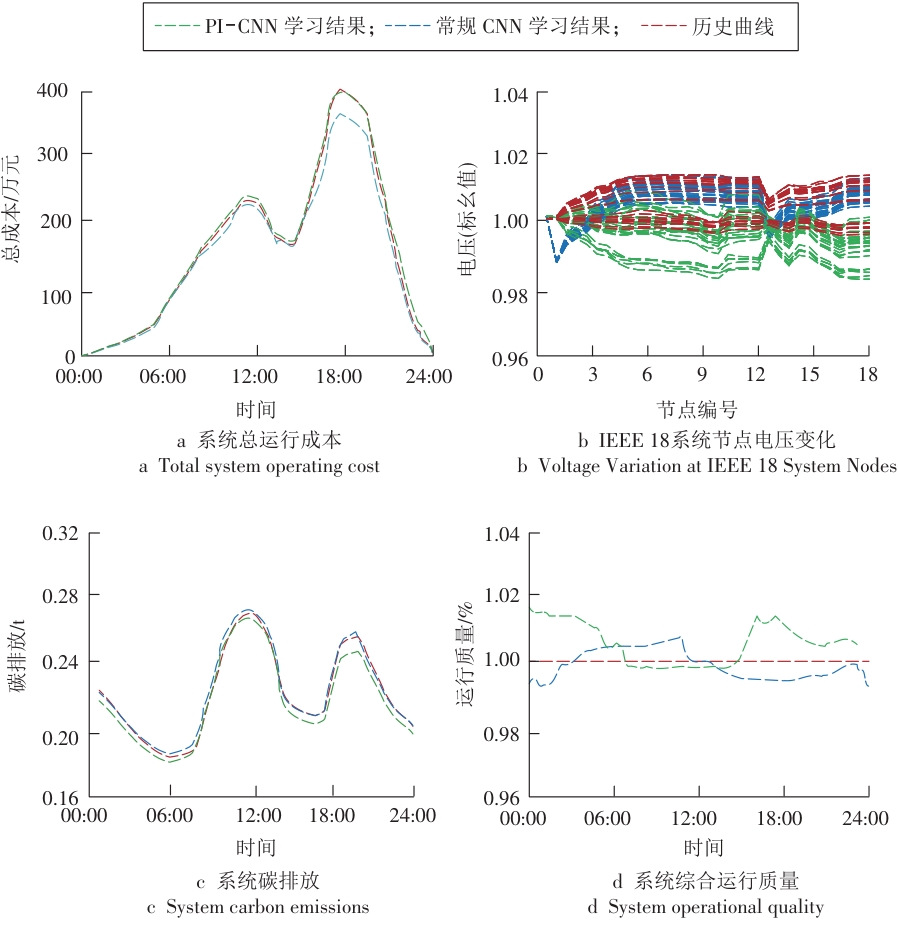
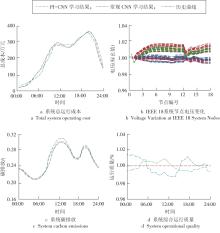
Fig.6
Energy consumption curves and learning outcomes in scenario 2
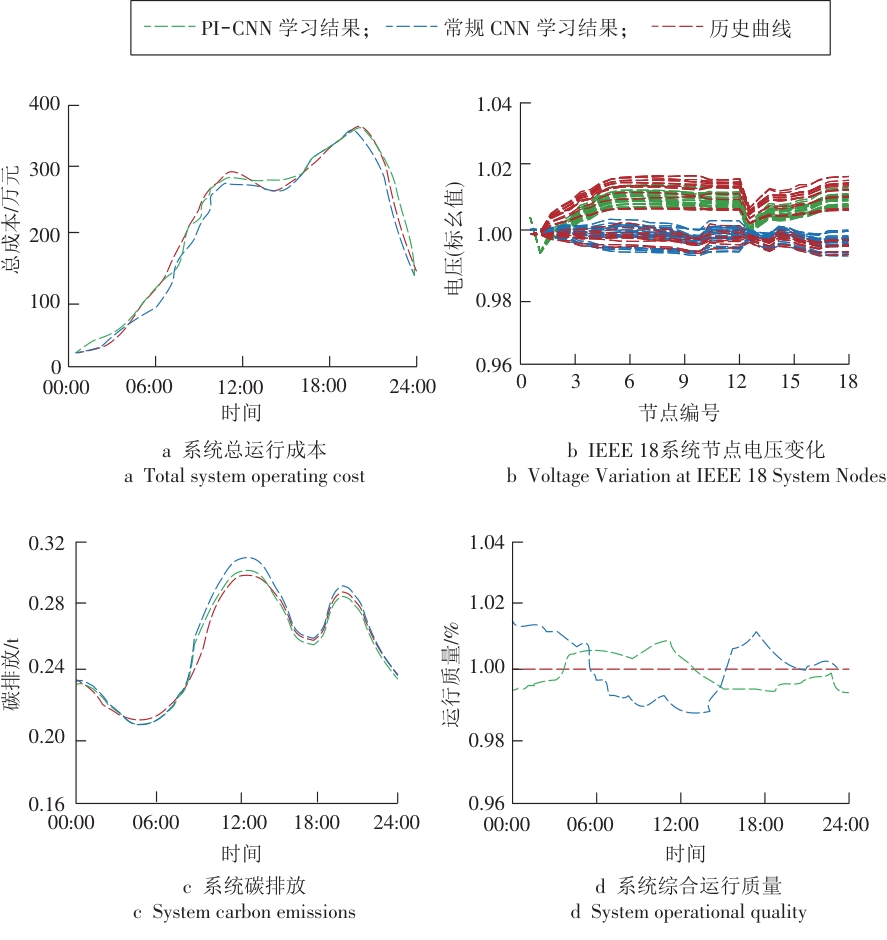
Table 1
Weight configuration for multi-objective optimization
| 方法 | Etotal权重 | Ctotal权重 | Uij权重 |
|---|---|---|---|
| 试凑法 | 0.11 | 0.37 | 0.52 |
| BP神经网络 | 0.17 | 0.34 | 0.49 |
| 常规CNN | 0.16 | 0.42 | 0.44 |
| 深度学习网络 | 0.15 | 0.40 | 0.45 |
| 遗传算法 | 0.14 | 0.38 | 0.48 |
| PI-CNN | 0.21 | 0.42 | 0.37 |
Table 2
Results of multi-objective optimization
| 方法 | Etotal/kg | Ctotal/万元 | Uij(标幺值) |
|---|---|---|---|
| 试凑法 | 10.60 | 100.21 | 0.992 |
| BP神经网络 | 9.84 | 103.65 | 0.997 |
| 常规CNN | 9.71 | 101.72 | 0.996 |
| 深度学习网络 | 9.80 | 102.50 | 0.995 |
| 遗传算法 | 9.75 | 101.50 | 0.994 |
| PN-CNN | 9.66 | 101.84 | 0.996 |
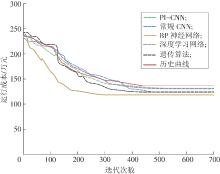
Fig.7
Optimization performance of different methods
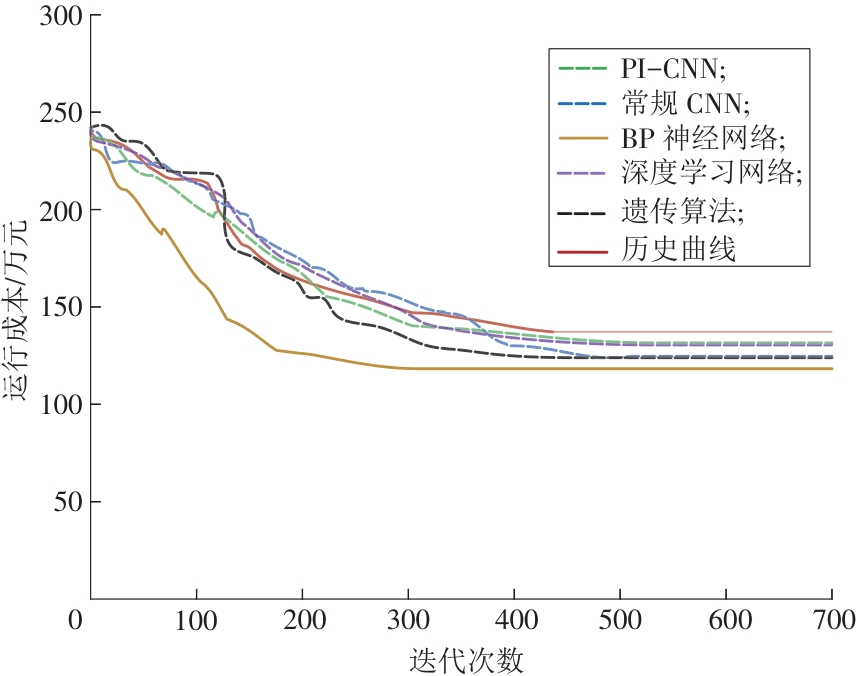
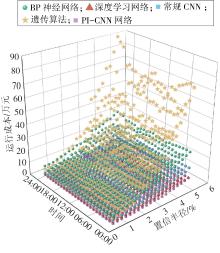
Fig.8
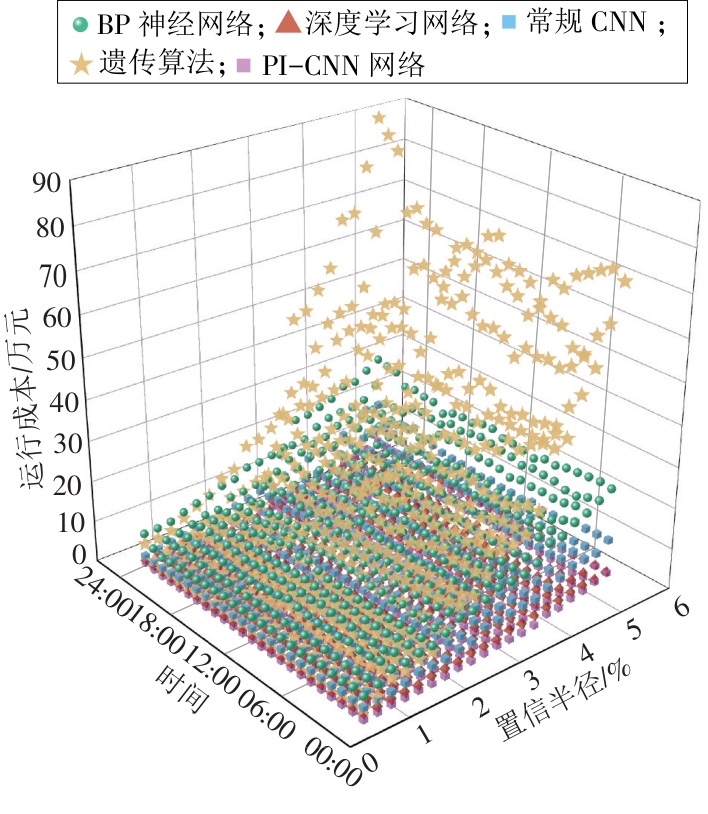
Scatter plot of system operating costs under dynamic confidence intervals
| [1] | 张玉清. 实现“双碳” 目标构建新型能源体系的初步思考[J]. 石油科技论坛, 2024, 43(2): 8-14. |
| ZHANG Yuqing. Thinking of constructing new-type energy system for fulfillment of carbon peak and carbon neutrality goals[J]. Petroleum Science and Technology Forum, 2024, 43(2): 8-14. | |
| [2] |
WU S. The evolution of rural energy policies in China: A review[J]. Renewable and Sustainable Energy Reviews, 2020, 119: 109584.
doi: 10.1016/j.rser.2019.109584 |
| [3] |
俞发强, 张名捷, 程语, 等. 需求响应下的并网型风-光-沼微能源网优化配置[J]. 上海交通大学学报, 2023, 57(1): 10-16.
doi: 10.16183/j.cnki.jsjtu.2022.017 |
| YU Faqiang, ZHANG Mingjie, CHENG Yu, et al. Optimal sizing of grid-connected wind-solar-biogas integrated energy system considering demand response[J]. Journal of Shanghai Jiao Tong University, 2023, 57(1): 10-16. | |
| [4] | 钟永洁, 孙永辉, 谢东亮, 等. 含电-热-气-冷子系统的区域综合能源系统多场景优化调度[J]. 电力系统自动化, 2019, 43(12): 76-84. |
| ZHONG Yongjie, SUN Yonghui, XIE Dongliang, et al. Multi-scenario optimal dispatch of regional integrated energy system with power-heating-gas-cooling subsystems[J]. Automation of Electric Power Systems, 2019, 43(12): 76-84. | |
| [5] |
REN L, ZHOU S, PENG T D, et al. A review of CO2 emissions reduction technologies and low-carbon development in the iron and steel industry focusing on China[J]. Renewable and Sustainable Energy Reviews, 2021, 143: 110846.
doi: 10.1016/j.rser.2021.110846 |
| [6] | ZHANG Z D, ZHANG D X, QIU R C. Deep reinforcement learning for power system applications: An overview[J]. CSEE Journal of Power and Energy Systems, 2020, 6(1): 213-225. |
| [7] | 黎晨阳, 张沈习, 程浩忠, 等. 计及相关性的电-气互联区域综合能源系统概率多能流计算[J]. 电力系统自动化, 2020, 44(21): 42-49. |
| LI Chenyang, ZHANG Shenxi, CHENG Haozhong, et al. Correlation-based probabilistic multi-energy flow calculation of regional integrated energy system with combined electricity and natural gas[J]. Automation of Electric Power Systems, 2020, 44(21): 42-49. | |
| [8] | 穆云飞, 唐志鹏, 吴志军, 等. 计及虚拟储能的电-水-热综合能源系统日前优化调度方法[J]. 电力系统自动化, 2023, 47(24): 11-21. |
| MU Yunfei, TANG Zhipeng, WU Zhijun, et al. Optimal day-ahead scheduling method for electricity-water-heat integrated energy system considering virtual energy storage[J]. Automation of Electric Power Systems, 2023, 47(24): 11-21. | |
| [9] |
李铂航, 李宏仲, 张民元. 计及负荷特性的综合能源系统低碳经济调度[J]. 综合智慧能源, 2023, 45(8): 72-79.
doi: 10.3969/j.issn.2097-0706.2023.08.009 |
|
LI Bohang, LI Hongzhong, ZHANG Minyuan. Low-carbon economic dispatch of integrated energy systems considering load characteristics[J]. Integrated Intelligent Energy, 2023, 45(8): 72-79.
doi: 10.3969/j.issn.2097-0706.2023.08.009 |
|
| [10] |
ZHANG Y M, SUN P K, JI X Q, et al. Low-carbon economic dispatch of integrated energy systems considering full-process carbon emission tracking and low carbon demand response[J]. IEEE Transactions on Network Science and Engineering, 2024, 11(6):5417-5431.
doi: 10.1109/TNSE.2024.3420771 |
| [11] |
SANG Y J, ZHANG W Z, MA J, et al. Low carbon optimization scheduling of micro grid based on improved particle swarm optimization algorithm[J]. IEEE Access, 2024, 12: 76432-76441.
doi: 10.1109/ACCESS.2024.3406036 |
| [12] |
陈勇, 肖雷鸣, 王井南, 等. 基于场景扩充的低碳综合能源系统高可靠性容量规划方法[J]. 综合智慧能源, 2024, 46(4): 24-33.
doi: 10.3969/j.issn.2097-0706.2024.04.004 |
|
CHEN Yong, XIAO Leiming, WANG Jingnan, et al. Capacity planning method with high reliability for integrated energy systems with low-carbon emissions based on scenario expansion[J]. Integrated Intelligent Energy, 2024, 46(4): 24-33.
doi: 10.3969/j.issn.2097-0706.2024.04.004 |
|
| [13] | 戴嘉彤, 董海鹰. 基于抽水蓄能电站的风光互补发电系统容量优化研究[J]. 电网与清洁能源, 2019, 35(6): 76-82. |
| DAI Jiatong, DONG Haiying. Research on the capacity optimization of the wind-solar hybrid power supply system based on pumped storage power station[J]. Power System and Clean Energy, 2019, 35(6): 76-82. | |
| [14] | 徐弘升, 陆继翔, 杨志宏, 等. 基于深度强化学习的激励型需求响应决策优化模型[J]. 电力系统自动化, 2021, 45(14): 97-103. |
| XU Hongsheng, LU Jixiang, YANG Zhihong, et al. Decision optimization model of incentive demand response based on deep reinforcement learning[J]. Automation of Electric Power Systems, 2021, 45(14): 97-103. | |
| [15] | 苏永新, 吴泽旋, 谭貌, 等. 基于深度强化学习的家庭综合需求响应在线优化[J]. 中国电机工程学报, 2021, 41(16): 5581-5593. |
| SU Yongxin, WU Zexuan, TAN Mao, et al. Online optimization for home integrated demand response based on deep reinforcement learning[J]. Proceedings of the CSEE, 2021, 41(16): 5581-5593. | |
| [16] |
TAN J J, LI Y, ZHANG X P, et al. Operation of a commercial district integrated energy system considering dynamic integrated demand response: A Stackelberg game approach[J]. Energy, 2023, 274: 126888.
doi: 10.1016/j.energy.2023.126888 |
| [17] | 王婧婷, 王宇扬, 周明, 等. 考虑绿电交易的用户间接碳排放核算方法[J]. 电网技术, 2024, 48(1): 29-39. |
| WANG Jingting, WANG Yuyang, ZHOU Ming, et al. Accounting method of users' indirect carbon emissions considering green electricity trading[J]. Power System Technology, 2024, 48(1): 29-39. | |
| [18] | 郭尊, 李庚银, 周明, 等. 考虑网络约束和源荷不确定性的区域综合能源系统两阶段鲁棒优化调度[J]. 电网技术, 2019, 43(9): 3090-3100. |
| GUO Zun, LI Gengyin, ZHOU Ming, et al. Two-stage robust optimal scheduling of regional integrated energy system considering network constraints and uncertainties in source and load[J]. Power System Technology, 2019, 43(9): 3090-3100. | |
| [19] | 李国庆, 赵妍辉, 成龙. 基于支路模型的交直流混合配电网统一潮流计算[J]. 电网技术, 2023, 47(10): 4302-4313. |
| LI Guoqing, ZHAO Yanhui, CHENG Long. Branch model-based unified power flow calculation of hybrid AC/DC distribution networks[J]. Power System Technology, 2023, 47(10): 4302-4313. | |
| [20] |
WU L, YIN X Y, PAN L, et al. Economic model predictive control of integrated energy systems: A multi-time-scale framework[J]. Applied Energy, 2022, 328: 120187.
doi: 10.1016/j.apenergy.2022.120187 |
| [21] | DENG Y, LIU Y. Forecasting renewable energy generation using convolutional neural networks: A case study of wind and solar energy[J]. Renewable Energy, 2021, 162:1445-1455. |
| [22] | 阮乐笑. 用于训练神经网络的自适应梯度下降优化算法[J]. 哈尔滨商业大学学报(自然科学版), 2024, 40(1): 25-31. |
| RUAN Lexiao. Adaptive gradient descent optimization algorithm for training neural networks[J]. Journal of Harbin University of Commerce (Natural Sciences Edition), 2024, 40(1): 25-31. | |
| [23] | 高雅. 智能电网负荷预测的常用方法分析与选择[J]. 电工技术, 2024(9): 4-6. |
| GAO Ya. Analysis and selection of common methods for smart grid load prediction[J]. Electric Engineering, 2024(9): 4-6. |
| [1] | WANG Zixuan, HAO Yu, LIU Xingchen, SUN Weinan, LIU Lin, ZHANG Yi. Distributed robust low-carbon optimization model for integrated energy systems driven by historical data [J]. Integrated Intelligent Energy, 2026, 48(3): 47-55. |
| [2] | ZHANG Ping, WU Zhang, LIU Feng, LIU Feng, LI Jian. Transformer fault diagnosis method based on multiple-level denoising and recursive graph [J]. Integrated Intelligent Energy, 2026, 48(2): 59-67. |
| [3] | XU Cong, XU Jingjing, JIANG Ting, XUE Dong, YAN Lichen. Research on data-driven operation optimization of integrated energy systems [J]. Integrated Intelligent Energy, 2026, 48(1): 34-42. |
| [4] | PAN Lei, DING Yunfei, PANG Yi, WANG Yuxuan, CHEN Jianwei, GAO Rui, ZHANG Liyang. Optimal scheduling strategy for REHMIS-IES based on SC-SAC algorithm [J]. Integrated Intelligent Energy, 2026, 48(1): 43-58. |
| [5] | XUE Dong, XU Jingjing, JIANG Ting, WANG Xiaohai, XU Cong. Research on heat load prediction of integrated energy systems in parks based on dual feature processing [J]. Integrated Intelligent Energy, 2026, 48(1): 59-66. |
| [6] | LI Zhen, YANG Guohua, ZHANG Yuanxi, MA Xin, YANG Na, LIU Haorui, MA Longteng. Hybrid prediction of photovoltaic power generation based on modal secondary decomposition and OOA-CNN-BiLSTM-Attention [J]. Integrated Intelligent Energy, 2025, 47(9): 28-37. |
| [7] | HUANGFU Chenmeng, RUAN Hebin, XU Junjun. Power regression prediction for wind turbines in multi-meteorological scenarios based on CEEMDAN-CNN-LSTM integration [J]. Integrated Intelligent Energy, 2025, 47(9): 38-50. |
| [8] | DOU Xiang, LI Zhuoqun, ZHANG Zhe, WEN Xin, ZHAO Bo, HAN Yan, ZHONG Sheng. Load forecasting for integrated energy systems based on CNN-BiLSTM-RF-KDE [J]. Integrated Intelligent Energy, 2025, 47(9): 60-70. |
| [9] | TAN Jiaqun, LYU Ruxuan, JU Hongjin, HONG Chunxue, XIAO Haiping, LEI Jing, HAN Zhenxing. Research on optimal scheduling strategy of wind-photovoltaic-thermal-storage integrated energy system based on IBES [J]. Integrated Intelligent Energy, 2025, 47(8): 68-76. |
| [10] | SONG Kun, GU Wenbo. Research progress on modeling and optimization of integrated energy systems considering uncertainty [J]. Integrated Intelligent Energy, 2025, 47(7): 32-43. |
| [11] | CHEN Liang, LIU Guiying, SU Shiping, TANG Changjiu, WANG Chenhao, GUO Sitong. Coordinated optimization scheduling of integrated energy system based on PER-MADDPG algorithm with two-layer network [J]. Integrated Intelligent Energy, 2025, 47(7): 44-54. |
| [12] | XING Zuoxia, ZHAO Ziyi, SUN Hao, ZHANG Pengfei, FU Qitong. Research on low-carbon economic operation optimization of integrated energy systems based on multi-level utilization of hydrogen production from electricity [J]. Integrated Intelligent Energy, 2025, 47(7): 71-81. |
| [13] | ZHANG Debin, LIN Wenye, HE Zixuan, YUE Xinru, SONG Wenji, FENG Ziping, FARID Mohammed Mehdi, USHAK DE GRAGEDA Svetlana Nikolaevna. Day-ahead dispatch optimization for integrated energy system in building prosumer community using generalized energy storage [J]. Integrated Intelligent Energy, 2025, 47(7): 82-92. |
| [14] | YIN Linfei, ZHANG Yiling. Photovoltaic power output prediction based on variational mode decomposition and triple convolutional neural networks [J]. Integrated Intelligent Energy, 2025, 47(6): 11-19. |
| [15] | CHEN Hao, MA Gang, QIAN Da, MA Jian, PENG Leyao. Optimization of regional integrated energy systems under green certificate and carbon trading mechanism considering tiered demand response [J]. Integrated Intelligent Energy, 2025, 47(5): 21-30. |
| Viewed | ||||||
|
Full text |
|
|||||
|
Abstract |
|
|||||