综合智慧能源 ›› 2025, Vol. 47 ›› Issue (11): 36-51.doi: 10.3969/j.issn.2097-0706.2025.11.004
刘海涛a,b( ), 张文霄a, 杨陈晨a, 马珺锴a, 乔治铭a, 夏洋a, 许伦a,*
收稿日期:2025-05-12
修回日期:2025-08-11
出版日期:2025-10-20
通讯作者:
*许伦(1993),男,博士,从事微电网运行与控制关键技术方面的研究,2694909131@qq.com。作者简介:刘海涛(1972),女,教授,博士,从事微电网运行与控制关键技术方面的研究,13851424346@163.com;基金资助:
LIU Haitaoa,b(), ZHANG Wenxiaoa, YANG Chenchena, MA Junkaia, QIAO Zhiminga, XIA Yanga, XU Luna,*
Received:2025-05-12
Revised:2025-08-11
Published:2025-10-20
Supported by:摘要:
在新型电力系统建设背景下,构网型技术已成为解决微电网惯量缺失、频率波动和电压失稳等核心问题的关键技术。系统梳理了构网型控制策略的技术原理与发展路径,并基于典型工程案例分析了构网型装备从示范验证到智能化发展的3个阶段;聚焦微电网孤岛运行、并网切换及多微网协同3大典型场景,深入探讨了构网型技术在提升系统稳定性方面的功能优势与实现机制;针对控制实时性、设备可靠性和经济性等现存挑战,提出了智能算法优化、新型拓扑开发和多能域协同等未来发展方向,为构网型技术在微电网中的规模化应用提供理论支撑。
刘海涛, 张文霄, 杨陈晨, 马珺锴, 乔治铭, 夏洋, 许伦. 构网型技术在微电网中的应用与发展综述[J]. 综合智慧能源, 2025, 47(11): 36-51.
LIU Haitao, ZHANG Wenxiao, YANG Chenchen, MA Junkai, QIAO Zhiming, XIA Yang, XU Lun. Review on application and development of grid-forming technology in microgrids[J]. Integrated Intelligent Energy, 2025, 47(11): 36-51.
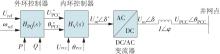
图1
构网型并网控制结构
表1
GFM与GFL技术特性对比
| 比较维度 | GFL | GFM |
|---|---|---|
| 控制目标 | 跟随主电网电压和频率运行 | 自主建立电压和频率 |
| 同步方式 | 依赖PLL同步 | 内部频率生成器、无需外部参考 |
| 频率/电压支撑能力 | 被动提供,响应延迟,电压控制弱 | 主动调节输出电压,具备强无功支撑能力 |
| 惯量特性 | 无惯量响应功能 | 可模拟惯量与阻尼,增强频率稳定性 |
| 故障穿越能力 | 容易失稳 | 能主动控制电压、电流限幅,具备一定故障穿越能力 |
| 适应性与鲁棒性 | 对弱电网适应性差,受系统阻抗影响大 | 可主动稳定弱电网,鲁棒性强 |
| 典型应用场景 | 常用于强网接入的光伏、风电等变流器 | 适用于孤岛运行、弱电网支撑、多微网协调 |
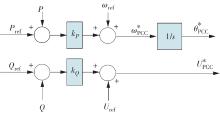
图2
下垂控制功率外环结构
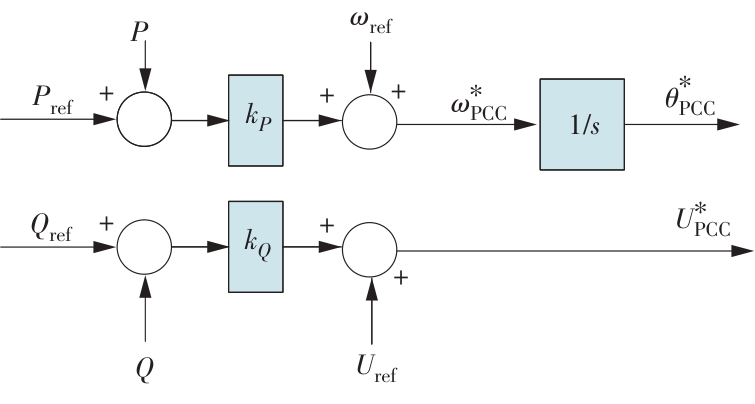
表2
VSG控制模拟的同步机特征
| 同步机特性 | GFM模块 | 对应VSG算法 |
|---|---|---|
| 转子惯性 | 有功功率环的积分环节 | 虚拟转子运动方程 |
| 调频调压特性 | 有功/无功下垂控制 | 模拟调速器与励磁调节器 |
| 电压源输出 | 电压内环的幅值/相位控制 | 同步机定子电动势模型 |
表3
构网型装备在微电网中的技术演进实例
| 发展阶段 | 工程名称 | 地区 | 时间 | 主要的构网型装备配置 | 主要控制策略 | 创新点/突破 |
|---|---|---|---|---|---|---|
| 初期示范阶段 | 南麂岛 微电网[ | 中国 | 2012年 | 锂电储能(变流器) | 下垂控制 | 验证海岛微电网可行性 |
| 珠海东澳岛 微电网[ | 中国 | 2009年 | 储能系统(变流器) | 下垂控制 | 实现海岛微电网平滑模式切换 | |
| Kalaeloa 微电网[ | 美国 | 2011年 | 储能系统(变流器) | 下垂控制 | 首个兆瓦级储能主导的微电网 | |
| 曼海姆 微电网[ | 德国 | 2012年 | 传统同步电源(柴油机组)+电力电子变流器 | 下垂控制 | 传统同步电源参与微电网的早期示范 | |
| 技术突破阶段 | 江苏大丰 微电网[ | 中国 | 2017年 | 风机(逆变器)+储能(变流器) | VSG控制 | 实现风机构网型改造 |
| MIGRATE 项目[ | 欧盟 | 2019年 | 风电集群(逆变器) | VSG控制 | 风电场集群构网型应用 | |
| Hornsdale 储能[ | 澳大利亚 | 2017年 | 锂电池(变流器) | VSG+MPC混合控制 | 大型构网型储能应用 | |
| 智能化发展阶段 | 福建湄洲岛 微电网[ | 中国 | 2021年 | 光伏(逆变器)+风电(逆变器)+ 混合储能系统(变流器) | 自适应VSG | 实现VSG控制和智能调节的联合应用 |
| NREL实验 平台[48 | 美国 | 2021年 | 多类型逆变器集群 | 数字优化控制 | 数字生成技术验证 | |
| Orkney 微电网[ | 英国 | 2022年 | 潮汐发电+储能(变流器) | 阻抗重塑VSG | 海洋能源构网型应用和智能调节的联合应用 |
表4
构网型技术在微电网不同场景中的对比
| 应用场景 | 核心需求 | 关键技术手段 | 典型设备 |
|---|---|---|---|
| 孤岛运行 | 自主建压/频率稳定 | VSG控制、复合电压启动 | GF-PCS、构网型逆变器 |
| 并网切换 | 柔性并网/故障穿越 | VSG与其他技术的混合控制 | 构网型逆变器、静止同步补偿器 |
| 多微网协同 | 跨微网功率互济 | 虚拟电阻预同步、阻抗重塑 | 柔性直流换流站、储能系统 |
| [1] | 王永利, 王亚楠, 马子奔, 等. 面向区块链技术应用的能源交易系统效果评价[J]. 综合智慧能源, 2024, 46(4): 78-84. |
| WANG Yongli, WANG Yanan, MA Ziben, et al. Effectiveness evaluation on energy trading systems taking blockchain technology[J]. Integrated Intelligent Energy, 2024, 46(4): 78-84. | |
| [2] | 李亚楼, 赵飞, 樊雪君. 构网型储能及其应用综述[J]. 发电技术, 2025, 46(2): 386-398. |
| LI Yalou, ZHAO Fei, FAN Xuejun. Review of grid-forming energy storage and its applications[J]. Power Generation Technology, 2025, 46(2): 386-398. | |
| [3] | 韩峰, 张衍国, 严矫平, 等. 综合能源服务业务和合作模式[J]. 华电技术, 2019, 41(11): 1-4. |
| HAN Feng, ZHANG Yanguo, YAN Jiaoping, et al. Integrated energy service and cooperation modes[J]. Huadian Technology, 2019, 41(11): 1-4. | |
| [4] | RATHNAYAKE D B, AKRAMI M, PHURAILATPAM C, et al. Grid forming inverter modeling, control, and applications[J]. IEEE Access, 2021, 9: 114781-114807. |
| [5] | YUAN G H. Grid-forming technologies enabling a decarbonized power system[J]. IEEE Electrification Magazine, 2022, 10(1): 7-9. |
| [6] | UNRUH P, NUSCHKE M, STRAUSS P, et al. Overview on grid-forming inverter control methods[J]. Energies, 2020, 13(10): 13102589. |
| [7] | DUCION E A S, GU Y J, CHAUDHURI B, et al. Analytical design of contributions of grid-forming and grid-following inverters to frequency stability[J]. IEEE Transactions on Power Systems, 2024, 39(5): 6345-6358. |
| [8] | 吴鸣, 张楠春, 梁英, 等. 新型电力系统背景下微电网技术研究与发展[J]. 新型电力系统, 2024(3): 251-271. |
| WU Ming, ZHANG Nanchun, LIANG Ying, et al. Research and development of microgrid technology in the context of new type power system[J]. New Type Power Systems, 2024(3): 251-271. | |
| [9] | OBARA S, FUJIMOTO S, SATO K, et al. Planning renewable energy introduction for a microgrid without battery storage[J]. Energy, 2021, 215: 119176. |
| [10] | XUE A C, ZHANG J H, ZHANG L J, et al. Transient frequency stability emergency control for the power system interconnected with offshore wind power through VSC-HVDC[J]. IEEE Access, 2020, 8: 53133-53140. |
| [11] | FREYTES J, ROSSE A, COSTAN V, et al. Grid-forming control based on emulated synchronous condenser strategy compliant with challenging grid code requirements[J]. arXiv, 2023: 2303.00391. |
| [12] | SUBOTIC I, GROSS D. Universal dual-port grid-forming control: Bridging the gap between grid-forming and grid-following control[J]. IEEE Transactions on Power Systems, 2024, 39(6): 6861-6875. |
| [13] | MULLER C M, SAND S E. A study of microgrids in Norway[D]. Trondheim: Norwegian University of Science and Technology, 2021. |
| [14] | 高本锋, 刘培鑫, 孙大卫, 等. 构网/跟网型混合风电场次同步振荡特性与机理分析[J]. 电工技术学报, 2025, 40(6): 1945-1959. |
| GAO Benfeng, LIU Peixin, SUN Dawei, et al. Analysis of subsynchronous oscillation characteristics and mechanism of grid-forming/grid-following hybrid wind farms[J]. Transactions of China Electrotechnical Society, 2025, 40(6): 1945-1959. | |
| [15] | REISSNER F, WEISS G. Robust and adaptive tuning of PI current controllers for grid forming inverters[J]. IEEE Open Journal of the Industrial Electronics Society, 2024, 6: 115-129. |
| [16] | 王盼宝, 王鹏, 李珅光, 等. 电网故障下构网型逆变器动态限流控制策略[J]. 高电压技术, 2022, 48(10): 3829-3837. |
| WANG Panbao, WANG Peng, LI Shenguang, et al. Dynamic current-limiting control strategy of grid-forming inverter under grid faults[J]. High Voltage Engineering, 2022, 48(10): 3829-3837. | |
| [17] | 马秀达, 卢宇, 田杰, 等. 柔性直流输电系统的构网型控制关键技术与挑战[J]. 电力系统自动化, 2023, 47(3): 1-11. |
| MA Xiuda, LU Yu, TIAN Jie, et al. Key technologies and challenges of grid-forming control for flexible DC transmission system[J]. Automation of Electric Power Systems, 2023, 47(3): 1-11. | |
| [18] | 贾科, 刘芸, 毕天姝, 等. 基于自适应虚拟阻抗的构网型新能源电源不对称故障穿越控制[J]. 中国电机工程学报, 2025, 45(8): 2946-2956. |
| JIA Ke, LIU Yun, BI Tianshu, et al. Asymmetric fault ride through of grid-forming control of renewable energy based on adaptive virtual impedance[J]. Proceedings of the CSEE, 2025, 45(8): 2946-2956. | |
| [19] | WESTMAN J, HADIDI R. Investigation on tuning power-frequency droop for improved grid-forming inverter and synchronous generator transient load sharing[J]. Energies, 2023, 16(18): 6758. |
| [20] | FAN C H, QIN X H, QI L, et al. The function mechanism of virtual impedance in grid-forming droop control and an adaptive parameter tuning method for virtual impedance based on network equivalent identification[C]//2024 IEEE 2nd International Conference on Power Science and Technology (ICPST). IEEE, 2024: 2171-2176. |
| [21] | MALAKONDAIAH M, BODDETI K K, NAIDU B R, et al. Second harmonic voltage injection-based self impedance estimation for effective decoupled droop control in a microgrid[J]. Energy Conversion and Economics, 2022, 3(4): 227-243. |
| [22] | 熊亮雳, 游力, 韩刚, 等. 基于统一电压-电流下垂的构网型变流器不平衡与谐波控制[J/OL]. 电源学报, 2024: 1-16( 2024-10-21)[2025-05-01]. https://kns.cnki.net/kcms/detail/12.1420.TM.20241018.1421.009.html. |
| XIONG Liangli, YOU Li, HAN Gang, et al. Unbalanced and harmonic control for grid-forming converters based on unified voltage-current droop[J/OL]. Journal of Power Supply, 2024: 1-16( 2024-10-21)[2025-05-01]. https://kns.cnki.net/kcms/detail/12.1420.TM.20241018.1421.009.html. | |
| [23] | YUAN W B, WANG Y B, LIU D, et al. Adaptive droop control strategy of autonomous microgrid for efficiency improvement[C]//2019 IEEE 10th International Symposium on Power Electronics for Distributed Generation Systems (PEDG). IEEE, 2019: 972-977. |
| [24] | ZHU Z B, SUN S M, LIU Y Y, et al. Research on resonance suppression method of grid-forming VSG converter[J]. Electrical Engineering, 2024, 106(4): 3921-3931. |
| [25] | 丁乐言, 柯松, 杨军, 等. 基于自适应控制参数整定的虚拟同步发电机控制策略[J]. 综合智慧能源, 2024, 46(3): 35-44. |
| DING Leyan, KE Song, YANG Jun, et al. Control strategy of virtual synchronous generators based on adaptive control parameter setting[J]. Integrated Intelligent Energy, 2024, 46(3): 35-44. | |
| [26] | WANG L, ZHOU H, HU X K, et al. Adaptive inertia and damper coordination (AIDC) control for grid-forming VSG to improve transient stability[J]. Electronics, 2023, 12(9): 12092060. |
| [27] | 尹军, 克帕依吐·吐尔逊, 支志远, 等. 虚拟同步机稳定性分析及其参数自适应调节策略研究[J]. 上海理工大学学报, 2024, 46(5): 494-501. |
| YIN Jun, KEPAIYITULLA Tursun, ZHI Zhiyuan, et al. Stability analysis of virtual synchronous generator and its parameter adaptive adjustment strategy[J]. Journal of University of Shanghai for Science and Technology, 2024, 46(5): 494-501. | |
| [28] | MOHAMED M M, EI ZOGHBY H M, SHARAF S M, et al. Optimal virtual synchronous generator control of battery/supercapacitor hybrid energy storage system for frequency response enhancement of photovoltaic/diesel microgrid[J]. Journal of Energy Storage, 2022, 51: 104317. |
| [29] | ZHANG M, WANG J H, ZHANG S F, et al. Harmonic resonance analysis and impedance remodeling method of multi-inverter grid-connected system[J]. Electronics, 2023, 12(17): 12173684. |
| [30] | PANG B, NIAN H, XU Y Y. Mechanism analysis and damping method for high frequency resonance between VSC-HVDC and the wind farm[J]. IEEE Transactions on Energy Conversion, 2020, 36(2): 984-994. |
| [31] | 吴丹丹, 葛强, 徐金, 等. 基于虚拟功率的VSG并网控制策略[J]. 江苏大学学报(自然科学版), 2022, 43(4): 458-463. |
| WU Dandan, GE Qiang, XU Jin, et al. Grid-connected control strategy of virtual synchronous generator based on virtual power[J]. Journal of Jiangsu University (Natural Science Edition), 2022, 43(4): 458-463. | |
| [32] | 方正, 黄云辉, 严文博, 等. 构网型变流器功率同步控制稳定性机理分析[J]. 电力系统自动化, 2024, 48(19): 101-108. |
| FANG Zheng, HUANG Yunhui, YAN Wenbo, et al. Stability mechanism analysis of power synchronization control for grid-forming converters[J]. Automation of Electric Power Systems, 2024, 48(19): 101-108. | |
| [33] | 邱晓燕, 林号缙, 周毅, 等. 基于混合同步控制的构网型逆变器并网系统小扰动稳定性分析[J]. 电力自动化设备, 2023, 43(9): 172-178, 185. |
| QIU Xiaoyan, LIN Haojin, ZHOU Yi, et al. Study on small-signal stability of grid-connected grid-forming inverter system based on hybrid-synchronous control[J]. Electric Power Automation Equipment, 2023, 43(9): 172-178, 185. | |
| [34] | 董存, 陶以彬, 张牟发, 等. 基于虚拟同步发电机的逆变器类电源频率特性及重塑技术[J]. 电力建设, 2022, 43(2): 109-116. |
| DONG Cun, TAO Yibin, ZHANG Moufa, et al. Frequency characteristics and reshaping technology for inveter-based generators based on virtual synchronous generator[J]. Electric Power Construction, 2020, 43(2): 109-116. | |
| [35] | 温春雪, 黄耀智, 胡长斌, 等. 虚拟同步发电机接口变换器并联运行虚拟阻抗自适应控制[J]. 电工技术学报, 2020, 35(S2): 494-502. |
| WEN Chunxue, HUANG Yaozhi, HU Changbin, et al. Adaptive control of virtual impedance in parallel operation of virtual synchronous generator interface converter[J]. Transactions of China Electrotechnical Society, 2020, 35(S2): 494-502. | |
| [36] | LU M H. An inrush current limiting strategy for virtual-oscillator-controlled grid-forming inverters[J]. IEEE Transactions on Energy Conversion, 2023, 38(3): 1501-1510. |
| [37] | AWAL M A, BIPU M R H, CHEN S Y, et al. A grid-forming multi-port converter using unified virtual oscillator control[C]//2020 IEEE Energy Conversion Congress and Exposition (ECCE). IEEE, 2020: 4300-4307. |
| [38] | 姜汉周, 潘欢, 纳春宁. 混合负载下基于虚拟振荡器控制的离网逆变器控制策略研究[J]. 电力系统保护与控制, 2023, 51(9): 88-96. |
| JIANG Hanzhou, PAN Huan, NA Chunning. Island inverter control strategy based on improved virtual oscillator control under mixed load[J]. Power System Protection and Control, 2023, 51(9): 88-96. | |
| [39] | 王伟, 周少泽, 黄萌, 等. 构网型技术: 演进历程、功能定位与应用展望[J]. 电力系统自动化, 2025, 49(1): 1-13. |
| WANG Wei, ZHOU Shaoze, HUANG Meng, et al. Grid-forming technologies: Evolution history, function, and application prospects[J]. Automation of Electric Power Systems, 2025, 49(1): 1-13. | |
| [40] | 中关村储能产业技术联盟. 四方股份中标南麂岛风光柴储工程储能项目[EB/OL]. ( 2013-05-02)[2025-05-01]. https://www.cnesa.org/information/detail/?column_id=58&id=3205. |
| [41] | 中关村储能产业技术联盟. 东澳智能微电网新增子网并网成功[EB/OL]. ( 2011-09-28)[2025-05-01]. https://www.cnesa.org/information/detail/?column_id=58&id=3839. |
| [42] | HIGHTOWER M M, BACA M J, VANDERMEY C. Kalaeloa energy system redevelopment options including advanced microgrids[R]. New Mexico: Sandia National Laboratories, 2017. |
| [43] | KIESSLING A, NIEMANN M U, SCHMITT F. Why smart grids? Smart grids-pillar of the transformation of the energy system/warum smart grids?[J]. IT-Information Technology, 2013, 55(2): 52-62. |
| [44] | 盐城市人民政府. 大丰绿色发展之路越走越宽[EB/OL]. ( 2023-05-21)[2025-05-01]. https://www.yancheng.gov.cn/art/2023/5/21/art_93_4005486.html. |
| [45] | YAN R W, LIU Y Z, YU N. A new migration and reproduction intelligence algorithm: Case study in cloud-based microgrid[J]. Information, 2023, 14(10): 14100562. |
| [46] | OJO O T, SALMAN M B, AGBANUSI I L, et al. Enhancing power grid resilience through energy storage and demand response[J]. Path of Science, 2025, 11(1): 8023-8029. |
| [47] | 福建省人民政府. 全省首个“多端互联低压柔性微电网”在湄洲岛并网[EB/OL]. ( 2022-06-07)[2025-05-01]. https://www.fujian.gov.cn/xwdt/fjyw/202206/t20220607_5925750.htm. |
| [48] | BENJAMIN K, GREGORY M. Hybrid renewable energy and microgrid research work at NREL[C]// IEEE PES General Meeting. IEEE, 2010: 1-4. |
| [49] | VICENTE M, IMPERADORE A, DA FONSECA F X C, et al. Enhancing islanded power systems: Microgrid modeling and evaluating system benefits of ocean renewable energy integration[J]. Energies, 2023, 16(22): 7517. |
| [50] | ZHONG Q C, WEISS G. Synchronverters: Inverters that mimic synchronous generators[J]. IEEE Transactions on Industrial Electronics, 2010, 58(4): 1259-1267. |
| [51] | DE ARAUJO RIBEIRO R L, OSHNOEI A, ANVARIMOGHADDAM A, et al. Adaptive grid impedance shaping approach applied for grid-forming power converters[J]. IEEE Access, 2022, 10: 83096-83110. |
| [52] | MAHMUD R, HOKE A, NARANG D. Fault response of distributed energy resources considering the requirements of IEEE 1547-2018[C]//2020 IEEE Power & Energy Society General Meeting (PESGM). IEEE, 2020: 1-5. |
| [53] | 马立红, 梁亚峰, 程西, 等. 计及构网型储能稳定拓展的微电网群优化运行[J]. 电力工程技术, 2024, 43(6): 214-222. |
| MA Lihong, LIANG Yafeng, CHENG Xi, et al. Optimal operation of microgrids considering stabilized expansion of grid-forming energy storage[J]. Electric Power Engineering Technology, 2024, 43(6): 214-222. | |
| [54] | LI G D, ZHANG Y D, SHI Y N, et al. Distributed coordinated control strategy for grid-forming-type hybrid energy storage systems[J]. Sustainability, 2025, 17(4): 17041436. |
| [55] | 何启晨, 阮浩洁, 王劲松, 等. 台区低压柔性互联技术在新农村配电网的实践应用[J]. 农村电气化, 2023(3): 32-38. |
| HE Qichen, RUAN Haojie, WANG Jinsong, et al. Practical application of low-voltage flexible interconnection technology of station area for new rural distribution network[J]. Rural Electrification, 2023(3): 32-38. | |
| [56] | 王新宝, 葛景, 韩连山, 等. 构网型储能支撑新型电力系统建设的思考与实践[J]. 电力系统保护与控制, 2023, 51(5): 172-179. |
| WANG Xinbao, GE Jing, HAN Lianshan, et al. Theory and practice of grid-forming BESS supporting the construction of a new type of power system[J]. Power System Protection and Control, 2023, 51(5): 172-179. | |
| [57] | 刘千杰, 刘云, 吉小鹏, 等. 西藏阿里地区光储型微电网示范工程与应用[J]. 供用电, 2015, 32(1): 44-49. |
| LIU Qianjie, LIU Yun, JI Xiaopeng, et al. Demonstration project and application of optical storage microgrid in Ali area of Xizang[J]. Distribution & Utilization, 2015, 32(1): 44-49. | |
| [58] | 詹长江, 吴恒, 王雄飞, 等. 构网型变流器稳定性研究综述[J]. 中国电机工程学报, 2023, 43(6): 2339-2359. |
| ZHAN Changjiang, WU Heng, WANG Xiongfei, et al. An overview of stability studies of grid-forming voltage source converters[J]. Proceedings of the CSEE, 2023, 43(6): 2339-2359. | |
| [59] | 范宸珲, 秦晓辉, 齐磊, 等. 构网型下垂控制中虚拟阻抗的作用、改进及研究前景分析[J]. 电网技术, 2024, 48(6): 2237-2250. |
| FAN Chenhui, QIN Xiaohui, QI Lei, et al. Analysis of the role, improvement, and research prospects of virtual impedance in grid-forming droop control[J]. Power System Technology, 2024, 48(6): 2237-2250. | |
| [60] | 蔡海青, 郭琦, 杨仁炘, 等. 用于弱电网互联的柔性直流输电系统双端构网型控制[J]. 电力自动化设备, 2023, 43(9): 202-209. |
| CAI Haiqing, GUO Qi, YANG Renxin, et al. Dual-end grid-forming control of flexible DC transmission system for weak grid interconnection[J]. Electric Power Automation Equipment, 2023, 43(9): 202-209. | |
| [61] | 付熙坤, 黄萌, 凌扬坚, 等. 功率耦合和电流限幅影响下构网型变流器的暂态同步稳定分析[J]. 中国电机工程学报, 2024, 44(7): 2815-2825. |
| FU Xikun, HUANG Meng, LING Yangjian, et al. Transient synchronization stability analysis of grid-forming converter influenced by power-coupling and current-limiting[J]. Proceedings of the CSEE, 2024, 44(7): 2815-2825. | |
| [62] | KENYON R W, SAJADI A, BOSSART M, et al. Interactive power to frequency dynamics between grid-forming inverters and synchronous generators in power electronics-dominated power systems[J]. IEEE Systems Journal, 2023, 17(3): 3456-3467. |
| [63] | 贺之渊, 刘栋, 朱琳. 提升新疆东部以及青海新能源外送能力的±800 kV四端柔性直流电网方案初设[J]. 电网技术, 2023, 47(6): 2443-2453. |
| HE Zhiyuan, LIU Dong, ZHU Lin. Preliminary design of novel four-terminal VSC-HVDC grid for improving power transfer capability of renewable energy in Xinjiang-Qinghai region[J]. Power System Technology, 2023, 47+(6): 2443-2453. | |
| [64] | 张伟. 微电网孤岛运行的控制策略研究[J]. 中国高新科技, 2024(11): 53-56. |
| ZHANG Wei. Research on control strategies for island operation of microgrids[J]. China High-Tech, 2024(11): 53-56. | |
| [65] | ZHANG, H B, WANG X, LIN W X, et al. Grid forming converters in renewable energy sources dominated power grid: Control strategy, stability, application, and challenges[J]. Journal of Modern Power Systems and Clean Energy, 2021, 9(6): 1239-1256. |
| [66] | REVATHI V M, SASIKALA R, GEETHA B, et al. Grid-forming converters: Stability and control in islanded power systems[C]// E3S Web of Conferences. EDP Sciences, 2024, 540: 06004. |
| [67] | 贾焦心, 沈钟毓, 秦本双, 等. 构网型和跟网型电力电子装备混联系统惯量响应的匹配问题综述[J]. 电力自动化设备, 2024, 44(6): 77-89. |
| JIA Jiaoxin, SHEN Zhongyu, QIN Benshuang, et al. Review on inertia response matching problem of hybrid power systems with grid-forming and grid-following power electronic devices[J]. Electric Power Automation Equipment, 2024, 44(6): 77-89. | |
| [68] | WARD L, SUBBURAJ A, DEMIR A, et al. Analysis of grid-forming inverter controls for grid-connected and islanded microgrid integration[J]. Sustainability, 2024, 16(5): 16052148. |
| [69] | AREVALO P, RAMOS C, ROCHA A. A systematic review of grid-forming control techniques for modern power systems and microgrids[J]. Energies, 2025, 18(14): 18143888. |
| [70] | TIAN J B, ZENG G H, ZHAO J B, et al. A data-driven modeling method of virtual synchronous generator based on LSTM neural network[J]. IEEE Transactions on Industrial Informatics, 2024, 20(4): 5428-5439. |
| [71] | 王冠淇, 裴玮, 熊佳旺, 等. 跟网型和构网型变流器混合系统稳定性分析方法[J]. 中国电机工程学报, 2025, 45(1): 25-38. |
| WANG Guanqi, PEI Wei, XIONG Jiawang, et al. Stability analysis method for hybrid systems of grid-following and grid-forming inverters[J]. Proceedings of the CSEE, 2025, 45(1): 25-38. | |
| [72] | LUO X, BATZELIS E, SINGH A, et al. Stability boundary analysis of grid-forming and grid-following inverters[C]// IET Conference Proceedings CP904. The Institution of Engineering and Technology, 2024: 245-250. |
| [1] | 洪鎏, 吕道鑫, 杨忠涛, 马少武, 姜雪. 新能源并网电力系统临界惯量线性化计算方法及应用[J]. 综合智慧能源, 2025, 47(9): 10-17. |
| [2] | 张元曦, 杨国华, 马龙腾, 马鑫, 刘耀泽. 基于改进DE算法的园区微电网风光储优化配置[J]. 综合智慧能源, 2025, 47(9): 71-79. |
| [3] | 褚龙浩, 李笑竹. 共享储能参与下的多类型电能交易投标策略及价值分配机制[J]. 综合智慧能源, 2025, 47(8): 30-39. |
| [4] | 王宇轩, 郝宁, 赵峰, 蒋俊, 张国坤, 边文杰, 尚恒. 面向微网的源网荷储一体化功率分配策略研究[J]. 综合智慧能源, 2025, 47(8): 58-67. |
| [5] | 王俊, 杜炜, 王馨, 窦迅, 窦真兰, 徐臣. 考虑剩余可用调节能力主动恢复的虚拟电厂优化运行[J]. 综合智慧能源, 2025, 47(7): 55-63. |
| [6] | 王成, 邵冲, 何欣, 董海鹰. 基于MOIBKA算法的电化学储能电站最优功率分配[J]. 综合智慧能源, 2025, 47(6): 74-84. |
| [7] | 曾浩政, 殷林飞. 基于NSMFO-BERT算法的电力系统多目标优化经济调度研究[J]. 综合智慧能源, 2025, 47(4): 98-106. |
| [8] | 张冬冬, 李芳凝, 刘天皓. 新型电力系统负荷预测关键技术及多元场景应用[J]. 综合智慧能源, 2025, 47(3): 47-61. |
| [9] | 刘斌, 罗异, 孙周, 陈晓祺, 姜之未, 蒋春, 陈明桃. 基于用能自洽的高速服务区微网光储组合优化配置[J]. 综合智慧能源, 2025, 47(2): 50-59. |
| [10] | 李彬, 张文艳, 王庆宇, 任婕, 康毅. 支撑新型电力系统客户侧互动业务的融合通信发展及展望[J]. 综合智慧能源, 2025, 47(11): 72-86. |
| [11] | 张凯, 王金袖, 杨雪峰, 王强, 肖盛忠, 李鹏, 孙成武. 基于二次EMD分解的风电场混合储能系统配置优化[J]. 综合智慧能源, 2025, 47(10): 45-51. |
| [12] | 高建生, 汪马翔, 邢鹏生, 肖柱. 计及钢铁企业参与的含风电电力系统协同调度策略[J]. 综合智慧能源, 2025, 47(10): 52-59. |
| [13] | 张华钦, 刘伟, 王慧, 李雷孝, 莎仁高娃. 基于深度强化学习的风电场功率多变量综合优化控制[J]. 综合智慧能源, 2025, 47(1): 18-25. |
| [14] | 曲琪, 滕菲, 郭禹辛, 张琳雪. 考虑算力需求的港口综合能源系统分布式能源管理[J]. 综合智慧能源, 2025, 47(1): 42-50. |
| [15] | 彭乐瑶, 马刚, 陈永华, 颜云松, 赖业宁, 李祝昆, 刘东洋, 唐靖. 考虑碳交易体系的微电网多阶段鲁棒优化运行[J]. 综合智慧能源, 2024, 46(9): 9-19. |
| 阅读次数 | ||||||
|
全文 |
|
|||||
|
摘要 |
|
|||||