综合智慧能源 ›› 2026, Vol. 48 ›› Issue (5): 64-73.doi: 10.3969/j.issn.2097-0706.2026.05.007
岳柏杨( ), 耿士敏*(), 程思远()
收稿日期:2025-09-25
修回日期:2025-11-09
出版日期:2025-12-25
通讯作者:
*耿士敏(1987),女,讲师,硕士,从事电厂热力系统及节能等方面的研究,gengsm@hebust.edu.cn。作者简介:岳柏杨(2000),男,硕士生,从事能源系统设计与优化及热物理测量等方面的研究,resbaiyang@163.com;基金资助:
YUE Baiyang(), GENG Shimin*(), CHENG Siyuan()
Received:2025-09-25
Revised:2025-11-09
Published:2025-12-25
Supported by:摘要:
为实现“双碳”目标下火电机组的深度调峰与灵活运行,提升大功率凝汽式机组的电网适应性,针对一台600 MW凝汽式机组,开展熔盐储热系统的耦合设计与经济性分析,旨在提出一种兼顾调峰能力与热经济性的技术改造方案。基于EBSILON软件构建机组热力系统仿真模型,并验证了其准确性。提出2种抽汽储热方案:方案1抽取再热蒸汽,方案2抽取主蒸汽。在额定工况下,以90 MW储热负荷为基础,建立储热-释热耦合系统模型,并从调峰容量、全厂热效率、绝对电效率、系统循环效率及工程适用性5个维度进行对比分析。结合河北省峰谷电价政策,估算系统的日均收益与静态投资回收期。仿真结果表明:方案1与方案2的调峰容量分别为38.85 MW与54.70 MW;系统循环效率分别为84.6%与60.1%;在典型峰谷电价下,方案1与方案2的日均净收益分别为9.81万元与7.05万元;静态投资回收期分别为2.08 a与3.53 a。方案1在系统循环效率、绝对电效率及经济性等方面均表现更优。对于大功率凝汽式机组的熔盐储热改造,抽取再热蒸汽的方案在保证显著调峰能力的同时,具有更优的热经济性与更短的投资回收期,综合性能更佳,可作为同类机组灵活性改造的推荐技术路线。
中图分类号:
岳柏杨, 耿士敏, 程思远. 600 MW凝汽式机组熔盐储热系统设计及经济性分析[J]. 综合智慧能源, 2026, 48(5): 64-73.
YUE Baiyang, GENG Shimin, CHENG Siyuan. Design and economic analysis of molten salt thermal storage system for 600 MW condensing unit[J]. Integrated Intelligent Energy, 2026, 48(5): 64-73.
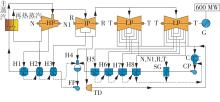
图1
600 MW凝汽式机组全厂原则性热力系统(截图)
表1
600 MW凝汽式机组原始参数
| 参数 | 数值 |
|---|---|
| 主蒸汽压力p0/MPa | 16.702 0 |
| 主蒸汽温度t0/℃ | 531.80 |
| 高压缸排汽压力p2/MPa | 3.828 0 |
| 高压缸排汽温度t2/℃ | 301.72 |
| 再热蒸汽进口压力 | 3.218 0 |
| 再热蒸汽进口温度 | 300.94 |
| 再热蒸汽出口压力 | 3.218 0 |
| 再热蒸汽出口温度 | 531.80 |
| 低压缸排汽压力pc/MPa | 0.004 5 |
| 低压缸排汽干度xc | 0.905 6 |
| 给水泵出口压力 | 18.784 0 |
| 给水泵出口温度 | 171.88 |
| 小汽轮机排汽压力pc,xj/MPa | 0.006 0 |
| 小汽轮机排汽比焓hc,xj/(kJ·kg-1) | 2 422.6 |
表2
二元熔盐与三元熔盐物理特性参数对比
| 项目 | 三元熔盐(Hitec) | 二元熔盐(Solar Salt) |
|---|---|---|
| 成分 | 53% KNO3,7% NaNO3,40% NaNO2 | 60% NaNO3, 40% KNO3 |
| 密度/(kg·m-3) | 1 983 (150 ℃) | 1 899 (300 ℃) |
| 比热容/[kJ·(kg·℃)-1] | 1.55 | 1.46 |
| 热导率/[W·(m·℃)-1] | 0.570 | 0.520 |
| 热稳定性温度/℃ | 454 | 600 |
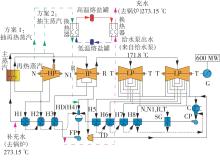
图2
抽汽供热方案具体过程
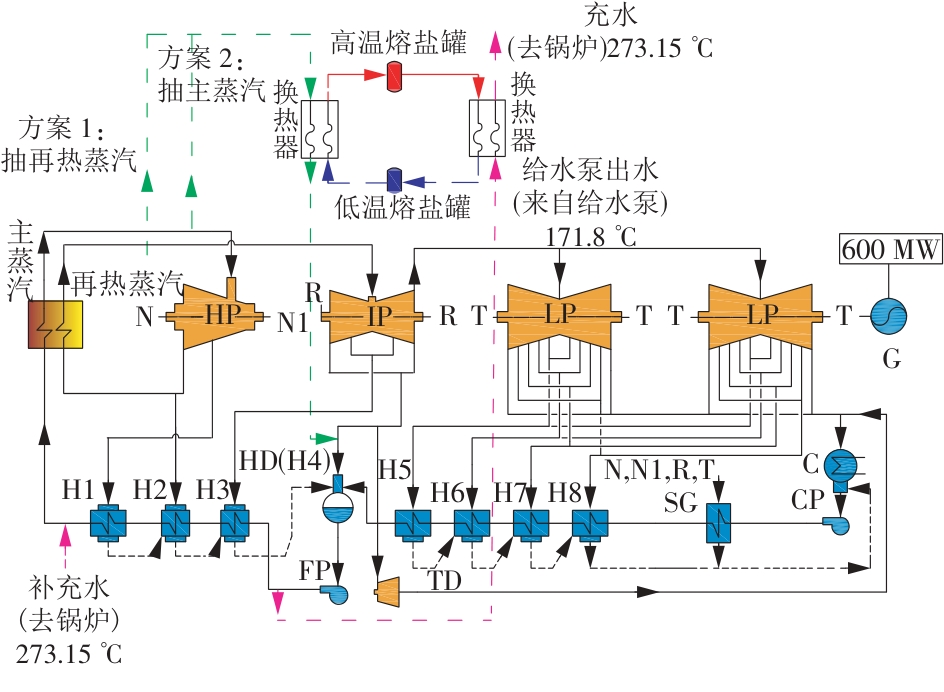
图3
原始系统仿真模拟图(截图)
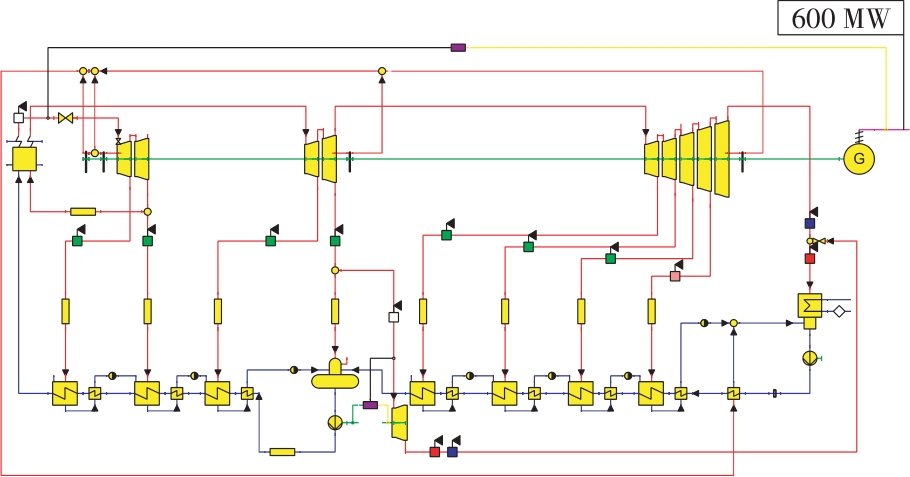
表3
仿真值与设计值对比
| 设备 | 抽汽换热仿真值/(kJ·kg-1) | 抽汽换热设计值/(kJ·kg-1) | 相对误差/% |
|---|---|---|---|
| H1 | 253.1 | 261.5 | 3.2 |
| H2 | 390.9 | 378.4 | 3.3 |
| H3 | 573.7 | 597.3 | 3.9 |
| H4 | 755.0 | 806.8 | 6.4 |
| H5 | 912.9 | 1 002.0 | 8.9 |
| H6 | 1 062.5 | 1 165.5 | 8.8 |
| H7 | 1 257.1 | 1 265.5 | 0.6 |
| H8 | 1 336.6 | 14.0 | 6.1 |
表4
不同参数仿真值与设计值对比
| 参数 | 仿真值 | 设计值 | 相对误差/% |
|---|---|---|---|
| 再热器换热量/(kJ·kg-1) | 536.4 | 527.0 | 1.7 |
| 主蒸汽质量流量/(t·h-1) | 1 784.7 | 1 818.8 | 1.8 |
图4
储热工况系统仿真建模方案1(截图)
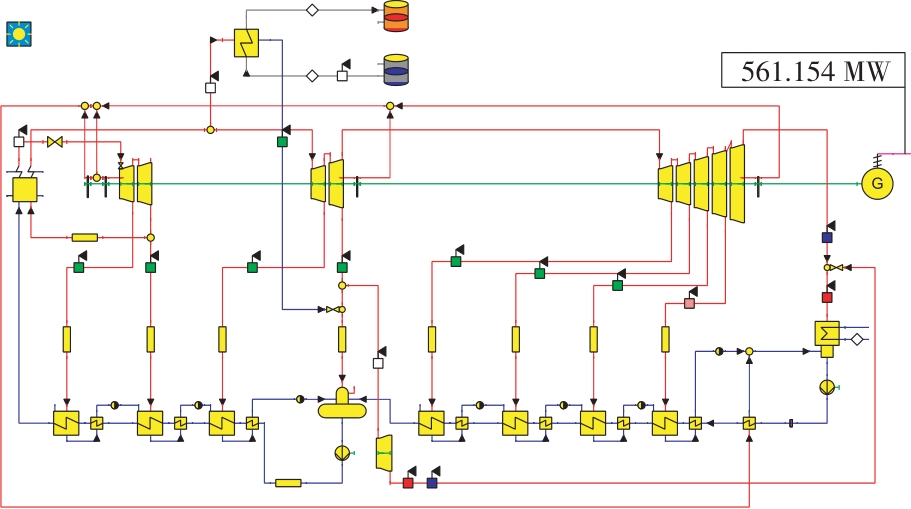
图5
储热工况系统仿真建模方案2(截图)
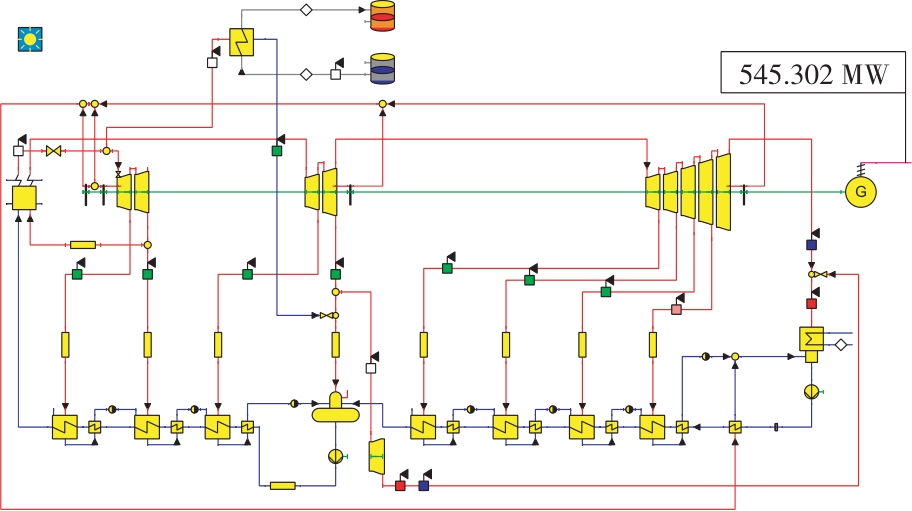
表5
再热蒸汽及回水参数(方案1)
| 参数 | 压力/MPa | 温度/℃ | 比焓/(kJ·kg-1) |
|---|---|---|---|
| 再热蒸汽 | 3.218 | 531.8 | 3 526.35 |
| 回水 | 3.218 | 205.0 | 875.55 |
表6
主蒸汽及回水参数(方案2)
| 参数 | 压力/MPa | 温度/℃ | 比焓/(kJ·kg-1) |
|---|---|---|---|
| 主蒸汽 | 16.7 | 531.8 | 3 380.85 |
| 回水 | 16.7 | 205.0 | 881.00 |
图6
释热工况系统仿真建模(截图)
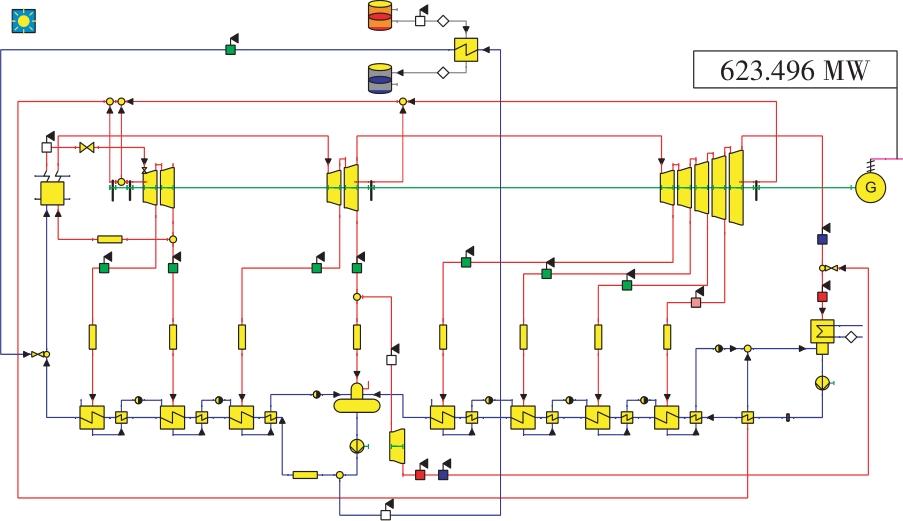
表7
给水泵出水及锅炉给水参数
| 参数 | 压力/MPa | 温度/℃ | 比焓/(kJ·kg-1) |
|---|---|---|---|
| 给水泵出水 | 18.784 | 171.88 | 737.41 |
| 锅炉给水 | 18.779 | 273.15 | 1 197.59 |
表8
技术指标对比
| 技术指标 | 原始机组 | 方案1 | 方案2 |
|---|---|---|---|
| 高/低温熔盐罐 温度/℃ | 268.5/150.0 | 323.5/205.0 | |
| 熔盐流量/(kg·h-1) | 1.75×10⁶ | 1.75×10⁶ | |
| 抽汽量/(t·h-1) | 122.230 | 129.607 | |
| 调峰容量/MW | 38.846 | 54.698 | |
| 储/释热阶段发电功率/MW | 600.00 | 561.15/623.49 | 545.30/623.49 |
| 储/释热过程全厂 热效率 | 0.412 0 | 0.498 7/0.554 2 | 0.484 7/0.554 2 |
| 储/释热过程 绝对电效率 | 0.456 0 | 0.552 5/0.613 9 | 0.536 9/0.613 9 |
| 系统循环效率 | 0.846 | 0.601 |
表9
平段电价与峰谷段电价
| 方案 | 谷段(22:00 —次日08:00) | 峰段(08:00 —22:00) |
|---|---|---|
| 1 | 0.415 50 | 0.415 50 |
| 2 | 0.124 65 | 0.706 35 |
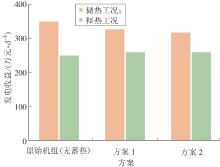
图7
平段电价各方案每日发电收益
图8
峰谷段电价各方案每日发电收益
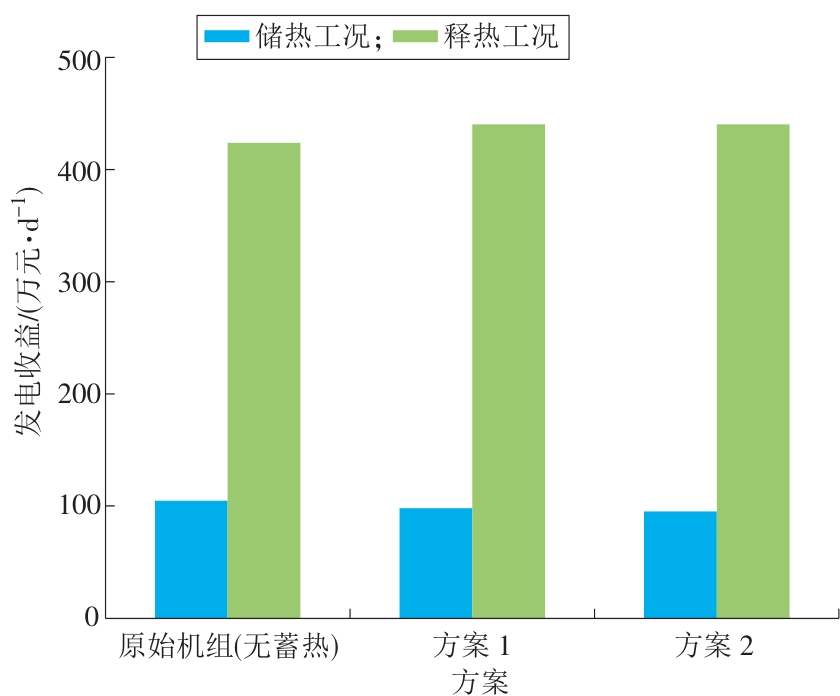
表10
各方案投资回收周期
| 项目 | 方案1 | 方案2 |
|---|---|---|
| 静态总投资/万元 | 6 720 | 8 220 |
| 净收益/(万元·d-1) | 9.81 | 7.05 |
| 投资回收期/a | 2.08 | 3.53 |
| [1] | 钟财富. 新能源跨越式发展有力推动我国绿色低碳转型: 2024年我国可再生能源发展形势与2025年展望[J]. 中国能源, 2025, 47(S1): 33-41. |
| ZHONG Caifu. Leap-forward development of new energy strongly promotes China's green and low-carbon transformation: The development situation of renewable energy in China in 2024 and its prospect in 2025[J]. Energy of China, 2025, 47(S1): 33-41. | |
| [2] | 马汀山, 王妍, 吕凯, 等. “双碳” 目标下火电机组耦合储能的灵活性改造技术研究进展[J]. 中国电机工程学报, 2022, 42(S1): 136-148. |
| MA Tingshan, WANG Yan, LYU Kai, et al. Research progress on flexible transformation technology of thermal power unit coupled energy storage under the goal of "double carbon"[J]. Proceedings of the CSEE, 2022, 42(S1): 136-148. | |
| [3] | 韩旭, 赵文强, 范彩兄, 等. 火电机组耦合多级熔盐储热系统热力学性能研究[J]. 热能动力工程, 2025, 40(7): 106-112. |
| HAN Xu, ZHAO Wenqiang, FAN Caixiong, et al. Research on thermodynamic performance of multi-stage molten salt thermal storage system coupled with thermal power units[J]. Journal of Engineering for Thermal Energy and Power, 2025, 40(7): 106-112. | |
| [4] | 丁天阳, 陈辉, 张超群, 等. 熔盐储热用于煤电机组灵活性改造的研究进展[J]. 电力科技与环保, 2025, 41(4): 528-541. |
| DING Tianyang, CHEN Hui, ZHANG Chaoqun, et al. Research progress on molten salt thermal energy storage for flexibility retrofit of coal-fired power units[J]. Electric Power Technology and Environmental Protection, 2025, 41(4): 528-541. | |
| [5] | 闫亚龙, 张进华, 黄艳, 等. 火电机组深度调峰背景下储热技术应用现状及进展[J]. 洁净煤技术, 2025, 31(S1): 495-506. |
| YAN Yalong, ZHANG Jinhua, HUANG Yan, et al. Application status and progress of thermal storage technology under the background of deep peak shaving of thermal power units[J]. Clean Coal Technology, 2025, 31(S1): 495-506. | |
| [6] | 刘吉臻, 王庆华, 张效宁, 等. 支撑我国能源转型的灵活燃煤发电新技术: 燃煤耦合储能系统及智能控制系统[J]. 中国电机工程学报, 2024, 44(17): 6855-6883. |
| LIU Jizhen, WANG Qinghua, ZHANG Xiaoning, et al. Novel technologies of flexible coal-fired power generation to support China energy transition: Coal-fired coupled energy storage system and smart control system[J]. Proceedings of the CSEE, 2024, 44(17): 6855-6883. | |
| [7] |
姜竹, 邹博杨, 丛琳, 等. 储热技术研究进展与展望[J]. 储能科学与技术, 2022, 11(9): 2746-2771.
doi: 10.19799/j.cnki.2095-4239.2021.0538 |
|
JIANG Zhu, ZOU Boyang, CONG Lin, et al. Recent progress and outlook of thermal energy storage technologies[J]. Energy Storage Science and Technology, 2022, 11(9): 2746-2771.
doi: 10.19799/j.cnki.2095-4239.2021.0538 |
|
| [8] | 樊星, 周健铿, 王晓斐. 基于耦合熔融盐储热的火电机组灵活调峰系统设计与实现[J]. 中国机械, 2024(20): 56-59. |
| FAN Xing, ZHOU Jiankeng, WANG Xiaofei. Design and implementation of flexible peak regulation system for thermal power units based on coupled molten salt thermal storage[J]. Machine China, 2024(20): 56-59. | |
| [9] |
景玉博, 邹璐垚, 蒋佳月, 等. 碳捕集燃煤机组耦合储能技术的研究进展[J]. 综合智慧能源, 2024, 46(9): 20-27.
doi: 10.3969/j.issn.2097-0706.2024.09.003 |
|
JING Yubo, ZOU Luyao, JIANG Jiayue, et al. Research progress on the coupling of energy storage technology with carbon capture in coal-fired units[J]. Integrated Intelligent Energy, 2024, 46(9): 20-27.
doi: 10.3969/j.issn.2097-0706.2024.09.003 |
|
| [10] | 刘亨. 熔盐储热耦合煤电机组研究进展与应用现状[J]. 东北电力技术, 2025, 46(4): 18-22. |
| LIU Heng. Research progress and application status of molten salt thermal storage coupled coal-fired power units[J]. Northeast Electric Power Technology, 2025, 46(4): 18-22. | |
| [11] | 李学军, 姜景芮, 李金泽, 等. 旁路蓄热对凝汽式机组调峰容量的影响[J]. 电网与清洁能源, 2024, 40(2): 56-62. |
| LI Xuejun, JIANG Jingrui, LI Jinze, et al. A study on influence of the bypass heat storage on the peak shaving capacity of the condensing unit[J]. Power System and Clean Energy, 2024, 40(2): 56-62. | |
| [12] | 李峻, 祝培旺, 王辉, 等. 基于高温熔盐储热的火电机组灵活性改造技术及其应用前景分析[J]. 南方能源建设, 2021, 8(3): 63-70. |
| LI Jun, ZHU Peiwang, WANG Hui, et al. Flexible modification technology and application prospect of thermal power unit based on high temperature molten salt heat storage[J]. Southern Energy Construction, 2021, 8(3): 63-70. | |
| [13] | 宋晓辉, 韩伟, 王兴, 等. 基于高温熔盐储热系统的火电机组深度调峰方案对比及分析[J]. 热能动力工程, 2023, 38(11): 63-74, 83. |
| SONG Xiaohui, HAN Wei, WANG Xing, et al. Comparison and analysis of deep peak shaving schemes for thermal power units based on high-temperature molten salt heat storage system[J]. Journal of Engineering for Thermal Energy and Power, 2023, 38(11): 63-74, 83. | |
| [14] | 赵春昊, 程超, 乌晓江, 等. 燃煤机组耦合熔融盐储能系统性能分析及灵活性提升研究[J/OL]. 中国电机工程学报, 2025: 1-10 (2025-02-06)[2025-10-15]. https://kns.cnki.net/KCMS/detail/detail.aspx?filename=ZGDC20250205002&dbname=CJFD&dbcode=CJFQ. |
| ZHAO Chunhao, CHENG Chao, WU Xiaojiang, et al. Performance analysis and flexibility improvement research on the molten salt energy storage system of coal-fired power plant[J/OL]. Proceedings of the CSEE, 2025: 1-10 (2025-02-06)[2025-10-15]. https://kns.cnki.net/KCMS/detail/detail.aspx?filename=ZGDC20250205002&dbname=CJFD&dbcode=CJFQ. | |
| [15] |
赵大周, 谢玉荣, 张钟平, 等. 300 MW燃煤供热机组熔盐储热系统设计及经济性分析[J]. 综合智慧能源, 2024, 46(9): 45-52.
doi: 10.3969/j.issn.2097-0706.2024.09.006 |
|
ZHAO Dazhou, XIE Yurong, ZHANG Zhongping, et al. Design and economic analysis of the molten salt heat storage system for a 300 MW coal-fired heating unit[J]. Integrated Intelligent Energy, 2024, 46(9): 45-52.
doi: 10.3969/j.issn.2097-0706.2024.09.006 |
|
| [16] | 李仁杰. 热电机组耦合熔盐储能系统调峰特性研究[D]. 吉林: 东北电力大学, 2025. |
| LI Renjie. Study on the peak-shaving characteristics of a thermal power unit coupled with a molten salt energy storage system[D]. Jilin: Northeast Electric Power University, 2025. | |
| [17] | 段丽, 郭爱武, 梁双荣. 熔盐储热技术在火电机组调峰顶峰的应用研究[J]. 节能技术, 2024, 42(6): 487-490. |
| DUAN Li, GUO Aiwu, LIANG Shuangrong. Application of molten salt heat storage technology in peak shaving of thermal power units[J]. Energy Conservation Technology, 2024, 42(6): 487-490. | |
| [18] | 张军辉, 王鲁玉, 姚森. 350 MW煤电机组耦合熔盐储热系统的经济性分析[J]. 节能, 2025, 44(3): 139-141. |
| ZHANG Junhui, WANG Luyu, YAO Sen. Economic analysis of coupled molten salt heat storage system for 350 MW coal power unit[J]. Energy Conservation, 2025, 44(3): 139-141. | |
| [19] |
LIU M, MIAO L, WANG Z, et al. Design and thermo-economic analysis on molten salt thermal energy storage system integrated within coal-fired power plant: Co-storing energy from live and reheat steam[J]. Journal of Energy Storage, 2025, 131: 117637.
doi: 10.1016/j.est.2025.117637 |
| [20] |
SONG X Y, ZHANG G Q, TAN H, et al. Review on thermophysical properties and corrosion performance of molten salt in high temperature thermal energy storage[J]. IOP Conference Series: Earth and Environmental Science, 2020, 474(5): 052071.
doi: 10.1088/1755-1315/474/5/052071 |
| [21] | 初泰青, 王钰森, 庞开安, 等. 高温熔融盐储热技术常见材料分析[J]. 沈阳工程学院学报(自然科学版), 2018, 14(1): 91-96. |
| CHU Taiqing, WANG Yusen, PANG Kaian, et al. Analysis of common materials for high temperature molten salt heat storage technology[J]. Journal of Shenyang Institute of Engineering (Natural Science), 2018, 14(1): 91-96. | |
| [22] | 朱胤龙, 闫霆, 潘卫国, 等. 熔盐储热耦合燃煤机组灵活调峰技术研究进展[J/OL]. 上海交通大学学报, 2025: 1-26 (2025-10-11)[2025-10-15]. https://link.cnki.net/doi/10.16183/j.cnki.jsjtu.2025.160. |
| ZHU Yinlong, YAN Ting, PAN Weiguo, et al. Research progress on flexible peak shaving technology of molten salt thermal storage coupled thermal power units[J/OL]. Journal of Shanghai Jiao Tong University, 2025: 1-26 (2025-10-11)[2025-10-15]. https://link.cnki.net/doi/10.16183/j.cnki.jsjtu.2025.160. | |
| [23] |
张显荣, 徐玉杰, 杨立军, 等. 多类型火电-储热耦合系统性能分析与比较[J]. 储能科学与技术, 2021, 10(5): 1565-1578.
doi: 10.19799/j.cnki.2095-4239.2021.0347 |
|
ZHANG Xianrong, XU Yujie, YANG Lijun, et al. Performance analysis and comparison of multi-type thermal power-heat storage coupling systems[J]. Energy Storage Science and Technology, 2021, 10(5): 1565-1578.
doi: 10.19799/j.cnki.2095-4239.2021.0347 |
|
| [24] |
ZHOU X M, ZHANG Z, JIANG Y N. Design and thermodynamic analysis of 1050 MW coal-fired power unit coupled with molten salt thermal energy storage system[J]. Energy, 2025, 320: 135292.
doi: 10.1016/j.energy.2025.135292 |
| [25] | 刘子勋, 张勇杰, 高亭亭, 等. “双碳”目标下火电机组灵活性改造技术分析[J]. 电站辅机, 2023, 44(3): 40-45. |
| LIU Zixun, ZHANG Yongjie, GAO Tingting, et al. Analysis of flexibility improvement technology for thermal power generating units under the "dual carbon" goal[J]. Power Station Auxiliary Equipment, 2023, 44(3): 40-45. | |
| [26] | 祁艳超. 火电机组集成熔盐储能热力性能及经济性研究[D]. 吉林: 东北电力大学, 2025. |
| QI Yanchao. Research on thermal performance and economic viability of motion salt storage integrated coal-fired power units[D]. Jilin: Northeast Electric Power University, 2025. | |
| [27] | 汉京晓, 穆世慧. 典型蓄热技术在供热领域的应用分析[J]. 能源与节能, 2019(4): 54-57, 153. |
| HAN Jingxiao, MU Shihui. Application analysis of typical thermal storage technology in heating field[J]. Energy and Energy Conservation, 2019(4): 54-57, 153. | |
| [28] | 巩志强, 商攀峰, 徐明新, 等. 煤电机组耦合储热系统的灵活性调峰特性研究及其性能评价[J]. 中国电机工程学报, 2024, 44(12): 4837-4850. |
| GONG Zhiqiang, SHANG Panfeng, XU Mingxin, et al. Research and evaluation on the flexible peaking performance of coal-fired power plants coupled with thermal storage[J]. Proceedings of the CSEE, 2024, 44(12): 4837-4850. | |
| [29] |
WANG C Y, CHEN F F, WANG L Y, et al. The flexibility of a molten salt thermal energy storage (TES)-integrated coal-fired power plant[J]. Applied Energy, 2025, 402: 126876.
doi: 10.1016/j.apenergy.2025.126876 |
| [30] | 慈俊昌. 熔融盐储热技术在光热发电领域的工程应用进展[J]. 南方能源建设, 2025, 12(5): 85-99. |
| CI Junchang. Progress in the engineering application of molten salt thermal storage technology in the field of solar thermal power generation[J]. Southern Energy Construction, 2025, 12(5): 85-99. | |
| [31] |
吉斌, 李永刚, 昌力, 等. 火电主体参与“电能-碳权”市场决策逻辑及策略分析[J]. 综合智慧能源, 2025, 47(5): 51-61.
doi: 10.3969/j.issn.2097-0706.2025.05.006 |
|
JI Bin, LI Yonggang, CHANG Li, et al. Analysis of the logic and strategies for thermal power entities' participation in electricity-carbon market decision making[J]. Integrated Intelligent Energy, 2025, 47(5): 51-61.
doi: 10.3969/j.issn.2097-0706.2025.05.006 |
| [1] | 张永剑, 李彬, 邢阁玉, 孙俊鹏, 徐钢, 薛小军. 基于熔盐储能的热电联产供汽扩容可行性研究[J]. 综合智慧能源, 2026, 48(5): 74-82. |
| [2] | 崔雅茹, 鹿院卫, 王子瑄, 杨涵, 吴玉庭. 基于风光上网量的抽汽-熔盐储热光煤耦合调峰系统运行策略经济性分析[J]. 综合智慧能源, 2026, 48(5): 83-94. |
| [3] | 黄帅, 向新宇, 李昂, 金旭, 阿如娜, 张家鹏. 跨临界CO2热泵供暖系统循环优化与环境经济性评估[J]. 综合智慧能源, 2026, 48(4): 81-89. |
| [4] | 蒋泽龄, 熊亚选, 白银雷, 耿博辰. 储热硝酸熔盐研究进展[J]. 综合智慧能源, 2025, 47(12): 14-24. |
| [5] | 陈袁, 郭潇涵, 王廷鉴, 徐佩芸, 陈鹏, 王迪, 邓良胜. 基于磷酸燃料电池的三联供系统经济性测算及价格成本分析[J]. 综合智慧能源, 2025, 47(10): 26-33. |
| [6] | 赵大周, 谢玉荣, 张钟平, 邓睿锋, 刘丽丽. 300 MW燃煤供热机组熔盐储热系统设计及经济性分析[J]. 综合智慧能源, 2024, 46(9): 45-52. |
| [7] | 刘亨, 于洋, 李明航, 梁猛, 闫霆, 赵大周. 熔盐纳米流体比热容提升研究进展[J]. 综合智慧能源, 2024, 46(12): 45-54. |
| [8] | 李博, 曹越, 徐景怡, 司风琪. 考虑火电-熔盐储热耦合特性的风光火储能源调度[J]. 综合智慧能源, 2024, 46(12): 55-63. |
| [9] | 白章, 郝文杰, 李琦, 郝洪亮, 温彩凤, 郭苏, 黄贤坤. 基于全生命周期评价的风光制氢综合系统容量配置优化研究[J]. 综合智慧能源, 2024, 46(10): 1-11. |
| [10] | 李琦, 王放放, 杨鹏威, 赵光金, 刘晓娜, 马双忱. 火电厂灵活性改造背景下储能技术应用现状与发展[J]. 综合智慧能源, 2023, 45(3): 66-73. |
| [11] | 赵永亮, 刘明, 王朝阳, 孙瑞强, 种道彤, 严俊杰. 基于固体填料床的泵热储能系统热-经济性分析[J]. 华电技术, 2021, 43(7): 1-8. |
| [12] | 周楠, 梁秀进, 李壮. 燃煤机组白色烟羽治理方案经济性分析[J]. 华电技术, 2020, 42(9): 63-68. |
| [13] | 孙海峰, 王兆辉, 王建峰, 胡妲, 朱跃. 600MW超临界机组深度调峰安全可靠运行解析[J]. 华电技术, 2020, 42(12): 94-100. |
| [14] | 江婷1,2,徐静静1,2,马琴1,2,余莉1,2. 分布式能源系统低温烟气余热利用经济性分析[J]. 华电技术, 2019, 41(5): 46-49. |
| [15] | 吴少璟,周长友,陈彬,陆刚. 固定可调支架系统调节策略改进分析[J]. 华电技术, 2019, 41(4): 56-58. |
| 阅读次数 | ||||||
|
全文 |
|
|||||
|
摘要 |
|
|||||