综合智慧能源 ›› 2025, Vol. 47 ›› Issue (12): 25-33.doi: 10.3969/j.issn.2097-0706.2025.12.003
胡林静( ), 李在伟()
收稿日期:2025-08-28
修回日期:2025-09-19
出版日期:2025-12-25
作者简介:胡林静(1975),女,副教授,硕士,从事热工过程控制、新能源利用等方面的研究hulinjing666@163.com;基金资助:
HU Linjing(), LI Zaiwei()
Received:2025-08-28
Revised:2025-09-19
Published:2025-12-25
Supported by:摘要:
准确地预测锂离子电池剩余使用寿命(RUL)可以帮助用户制定合理的维护策略。高斯过程回归(GPR)算法作为一种数据驱动方法能够很好地捕捉特征和变量之间的非线性关系,被广泛应用于锂电池RUL估计。传统的单核GPR对特征捕捉能力不足,为此提出一种基于灰狼优化算法(GWO)的组合核GPR模型。通过组合核函数来增强模型对非线性特征的捕捉能力,同时利用GWO解决组合核函数超参数优化中的困难。采用美国国家航空航天局(NASA)锂电池循环老化数据集进行对该模型进行验证,并将其与基于粒子群优化(PSO)的单核GPR模型进行对比。试验结果显示:GWO优化的组合核GPR模型较PSO优化的单核GPR模型的均方根误差(RMSE)下降了37.89%,平均绝对误差(MAE)下降了70.42%,对容量衰减的捕捉能力更强。结果表明相比于传统GPR模型,灰狼优化的组合核GPR模型对锂电池RUL预测的准确性更高。
中图分类号:
胡林静, 李在伟. 基于灰狼优化算法和组合核函数GPR模型的锂电池剩余使用寿命预测[J]. 综合智慧能源, 2025, 47(12): 25-33.
HU Linjing, LI Zaiwei. Prediction of remaining useful life of lithium batteries based on grey wolf optimization and combined kernel function GPR model[J]. Integrated Intelligent Energy, 2025, 47(12): 25-33.
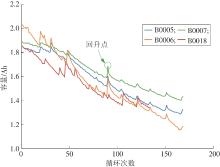
图1
电池容量下降曲线
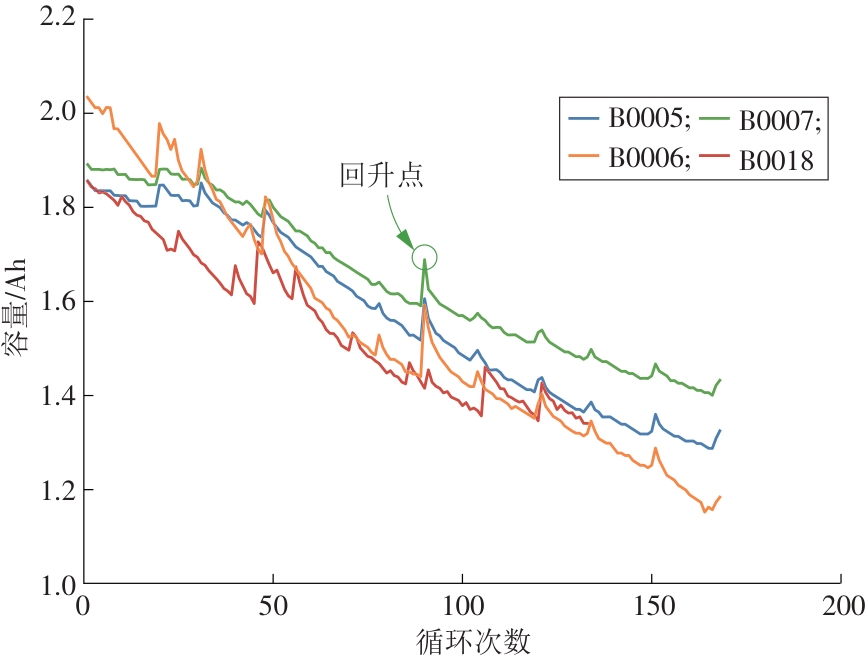
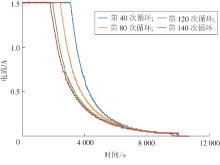
图2
充电过程电流
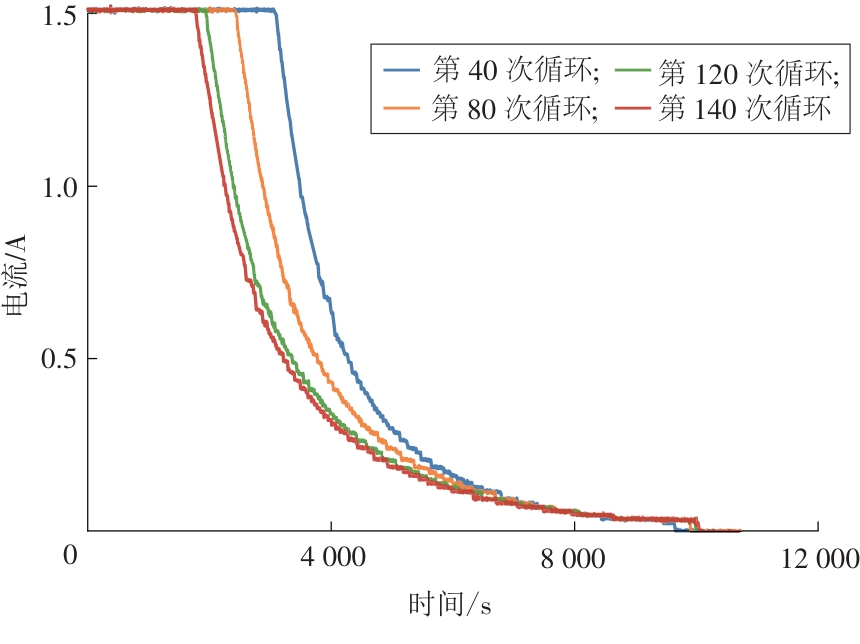
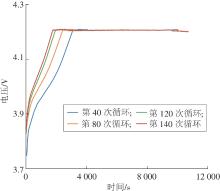
图3
充电过程电压
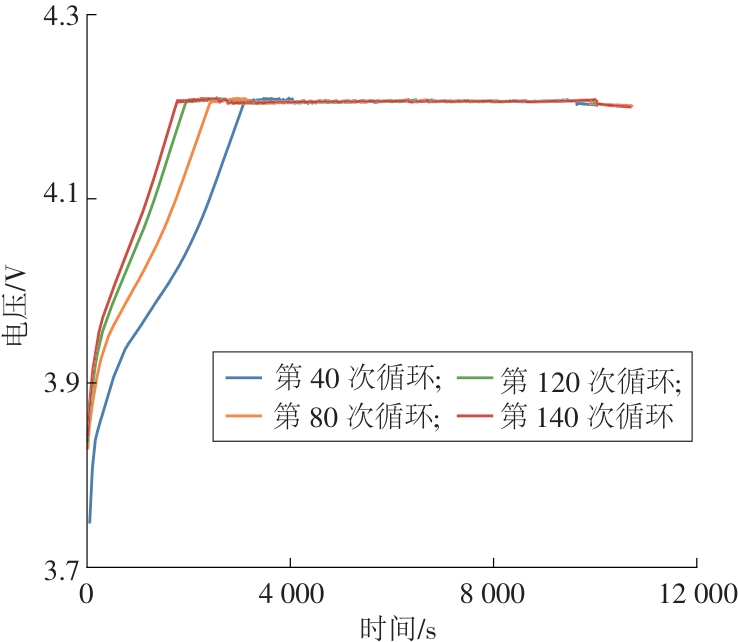
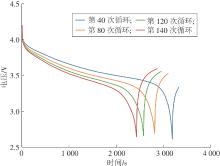
图4
放电过程电压
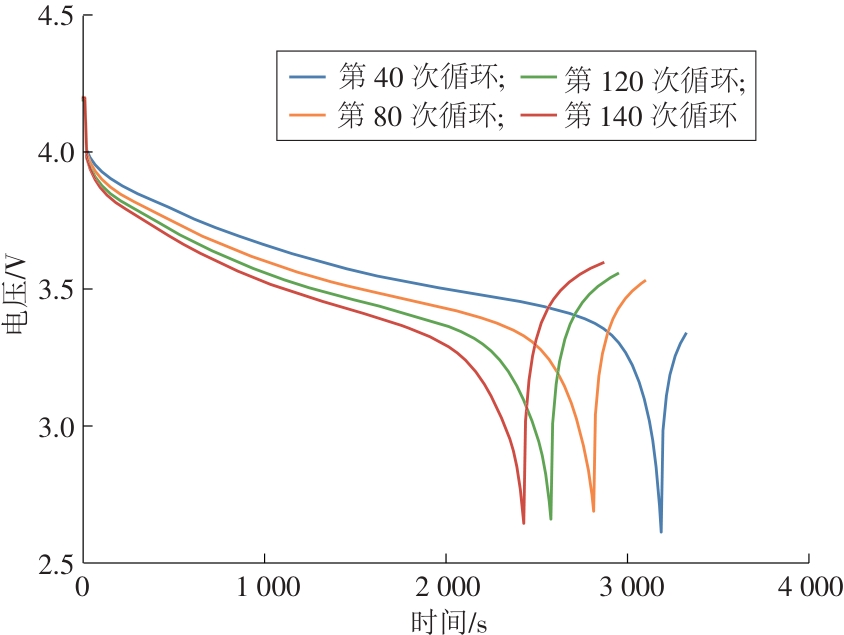
表1
特征与容量的Pearson相关性
| 电池编号 | 与容量的Pearson相关性 | |||
|---|---|---|---|---|
| B0005 | 0.908 | 0.982 | 0.988 | -0.972 |
| B0006 | 0.918 | 0.971 | 0.983 | -0.970 |
| B0007 | 0.785 | 0.978 | 0.979 | -0.959 |
表2
各主成分方差贡献率
| 电池编号 | 主成分1 | 主成分2 | 主成分3 | 主成分4 |
|---|---|---|---|---|
| B0005 | 0.804 1 | 0.169 0 | 0.014 4 | 0.012 5 |
| B0006 | 0.900 0 | 0.090 1 | 0.007 9 | 0.002 1 |
| B0007 | 0.692 3 | 0.246 2 | 0.033 2 | 0.028 2 |
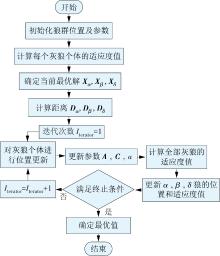
图5
GWO算法流程
表3
常见单一核函数
| 函数 | 数学表达式 |
|---|---|
| 高斯核 | |
| 马顿核 | |
| 线性核 | |
| 周期核 | |
| 指数核 | |
| 拉普拉斯核 |
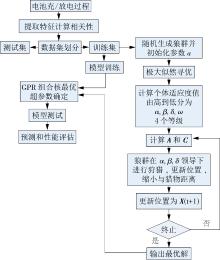
图6
LIN+RBF组合核函数计算流程
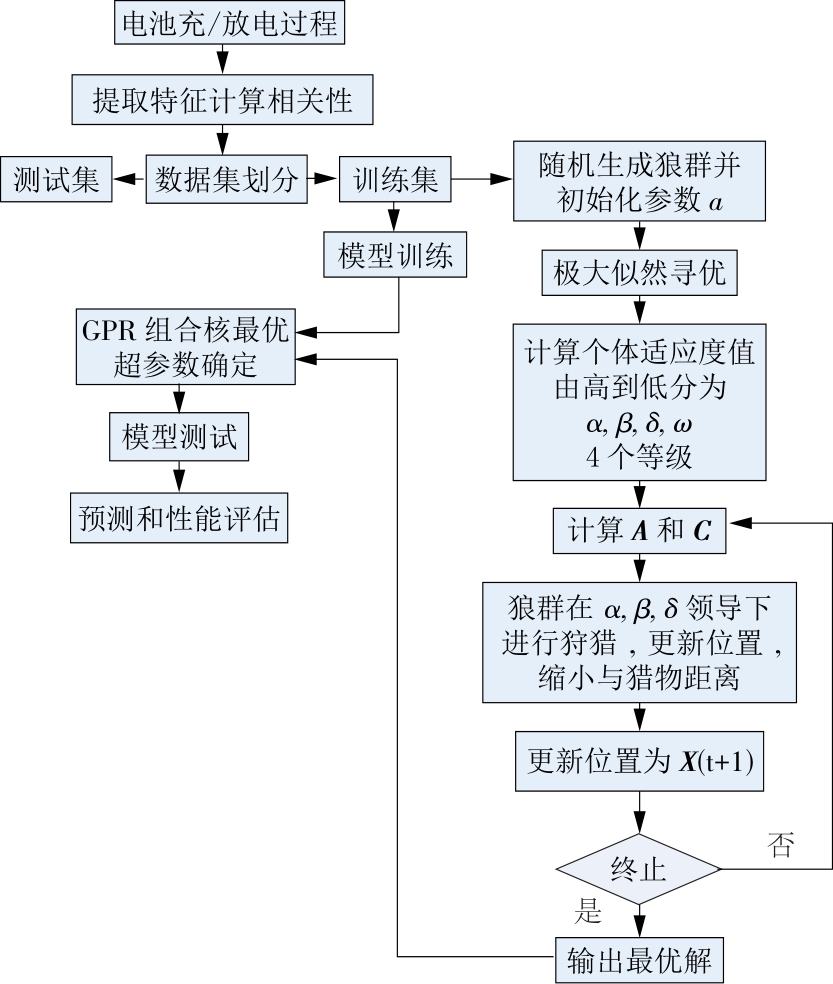
图7
以循环次数80为预测起点的预测结果
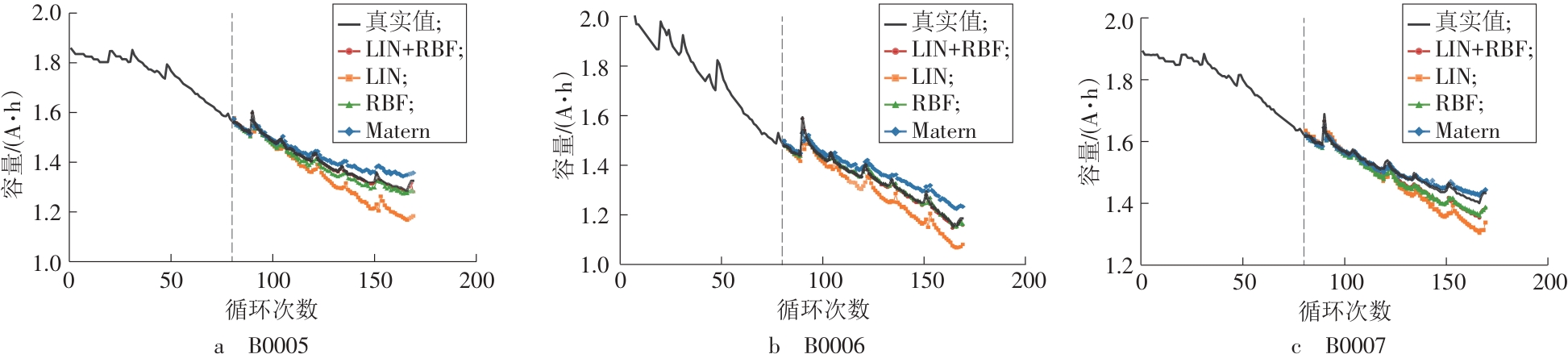
图8
以循环次数100为预测起点的预测结果
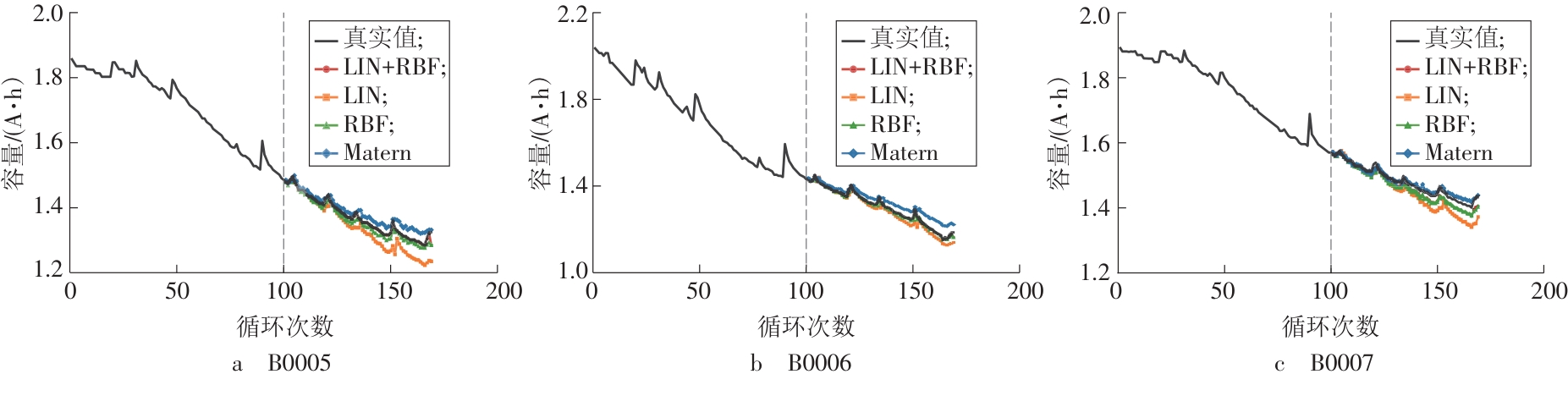
图9
以循环次数120为预测起点的预测结果
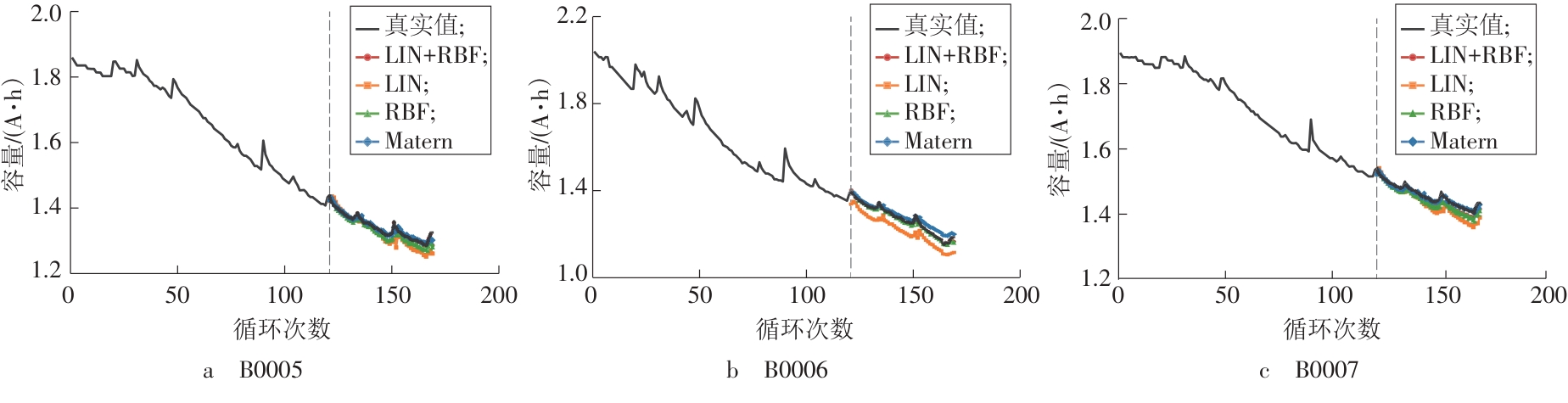
表4
不同核函数的预测结果误差
| 项目 | RMSE | MAE | |||||
|---|---|---|---|---|---|---|---|
| 以80为起点 | 以100为起点 | 以120为起点 | 以80为起点 | 以100为起点 | 以120为起点 | ||
| LIN+RBF 核模型 | B0005 | 0.006 1 | 0.005 1 | 0.005 9 | 0.003 7 | 0.001 8 | 0.002 1 |
| B0006 | 0.005 9 | 0.004 3 | 0.004 1 | 0.004 6 | 0.003 2 | 0.002 8 | |
| B0007 | 0.027 3 | 0.016 2 | 0.012 4 | 0.023 2 | 0.014 0 | 0.011 1 | |
| LIN核模型 | B0005 | 0.070 9 | 0.039 6 | 0.025 0 | 0.058 4 | 0.031 9 | 0.019 6 |
| B0006 | 0.059 5 | 0.022 8 | 0.052 6 | 0.051 4 | 0.018 7 | 0.051 0 | |
| B0007 | 0.052 6 | 0.035 2 | 0.028 6 | 0.041 9 | 0.028 9 | 0.024 6 | |
| RBF核模型 | B0005 | 0.019 4 | 0.013 2 | 0.015 0 | 0.017 5 | 0.011 0 | 0.012 6 |
| B0006 | 0.011 6 | 0.008 0 | 0.010 2 | 0.008 2 | 0.005 9 | 0.008 1 | |
| B0007 | 0.028 6 | 0.018 9 | 0.017 0 | 0.025 4 | 0.016 7 | 0.015 5 | |
| Matern核模型 | B0005 | 0.058 7 | 0.029 9 | 0.009 1 | 0.048 6 | 0.026 3 | 0.008 0 |
| B0006 | 0.053 5 | 0.035 4 | 0.021 4 | 0.046 6 | 0.030 7 | 0.018 6 | |
| B0007 | 0.026 5 | 0.016 2 | 0.008 3 | 0.020 0 | 0.013 1 | 0.007 2 | |
图10
不同优化算法下的预测结果
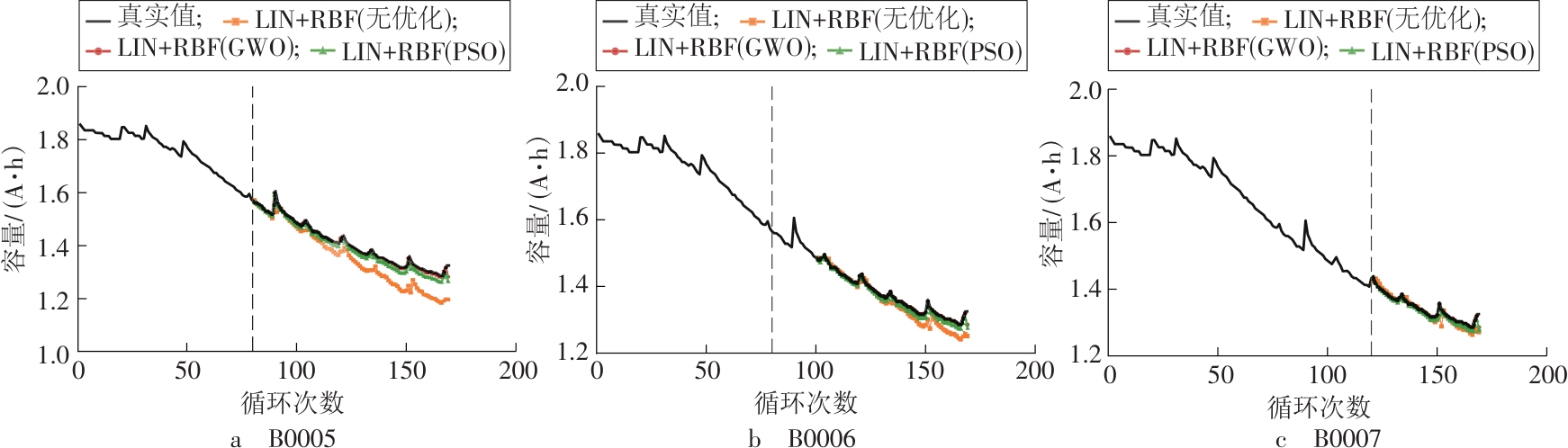
表5
不同优化算法下的预测误差
| 起始循环 次数 | RMSE | MAE | ||||
|---|---|---|---|---|---|---|
| GWO | 无优化 | PSO | GWO | 无优化 | PSO | |
| 80 | 0.006 1 | 0.062 6 | 0.016 7 | 0.003 7 | 0.052 3 | 0.013 9 |
| 100 | 0.005 1 | 0.028 0 | 0.010 9 | 0.001 8 | 0.012 5 | 0.008 6 |
| 120 | 0.005 9 | 0.018 0 | 0.009 5 | 0.002 1 | 0.013 0 | 0.007 1 |
| [1] |
喻子逸, 黄晓凡, 李佳瑞, 等. 梯次利用动力电池储能系统综合效益分析[J]. 综合智慧能源, 2024, 46(7): 63-73.
doi: 10.3969/j.issn.2097-0706.2024.07.008 |
|
HUANG Xiaofan, LI Jiarui, LIU Hui, et al. Comprehensive benefit analysis on the cascade utilization of a power battery system[J]. Integrated Intelligent Energy, 2024, 46(7): 63-73.
doi: 10.3969/j.issn.2097-0706.2024.07.008 |
|
| [2] | 刘月峰, 张公, 张晨荣, 等. 锂离子电池RUL预测方法综述计算机工程[J]. 2020, 46 (4): 11-18. |
| LIU Yuefeng, ZHANG Gong, ZHANG Chenrong, et al. Review of RUL prediction method for lithium-ion batteries[J]. 2020, 46 (4): 11-18. | |
| [3] |
张若可, 郭永芳, 余湘媛, 等. 基于数据驱动的锂离子电池RUL预测综述[J]. 电源学报, 2023, 21(5): 182-190.
doi: 10.13234/j.issn.2095-2805.2023.5.182 |
|
ZHANG Ruoke, GUO Yongfang, YU Xiangyuan, et al. Summary of data-driven prediction of RUL for lithium-ion batteries[J]. Journal of Power Supply, 2023, 21(5): 182-190.
doi: 10.13234/j.issn.2095-2805.2023.5.182 |
|
| [4] | 刘大同, 宋宇晨, 武巍, 等. 锂离子电池组健康状态估计综述[J]. 仪器仪表学报, 2020, 41(11): 1-18. |
| LIU Datong, SONG Yuchen, WU Wei, et al. Review of state of health estimation for lithium-ion battery pack[J]. Chinese Journal of Scientific Instrument, 2020, 41(11): 1-18. | |
| [5] | LI L, SONG Y C, PENG Y, et al. Lithium-ion battery remaining useful life prognostics using data-driven deep learning algorithm[C]// Prognostics and System Health Management Conference, 2018. |
| [6] | 熊庆, 邸振国, 汲胜昌. 锂离子电池健康状态估计及寿命预测研究进展综述[J]. 高电压技术, 2024, 50(3): 1182-1195. |
| XIONG Qing, DI Zhenguo, JI Shengchang. Review on health state estimation and life prediction of lithium-ion batteries[J]. High Voltage Engineering, 2024, 50(3): 1182-1195. | |
| [7] | 胡晓亚, 郭永芳, 张若可. 锂离子电池健康状态估计方法研究综述[J]. 电源学报, 2022, 20(1): 126-133. |
|
HU Xiaoya, GUO Yongfang, ZHANG Ruoke. Review of state-of-health estimation methods for lithium-ion battery[J]. Journal of Power Supply, 2022, 20(1): 126-133.
doi: 10.13234/j.issn.2095-2805.2022.1.126 |
|
| [8] |
韦海燕, 安晶晶, 陈静, 等. 基于改进粒子滤波算法实现锂离子电池RUL预测[J]. 汽车工程, 2019, 41(12): 1377-1383.
doi: 10.19562/j.chinasae.qcgc.2019.012.005 |
| WEI Haiyan, AN Jingjing, CHEN Jing, et al. RUL prediction of lithium-ion battery based on improved particle filtering algorithm[J]. Automotive Engineering, 2019, 41(12): 1377-1383. | |
| [9] | FANG P Y, SUI X X, ZHANG A H, et al. Fusion model based RUL prediction method of lithium-ion battery under working conditions[J]. Maintenance and Reliability, 2024, 26(3):186537 |
| [10] | PANG X Q, HUANG R, WEN J, et al. A lithium-ion battery RUL prediction method considering the capacity regeneration phenomenon[J]. Energies, 2019, 12(12). :12122247. |
| [11] |
冯娜娜, 杨明, 惠周利, 等. 基于蚁狮优化高斯过程回归的锂电池剩余使用寿命预测[J]. 储能科学与技术, 2024, 13(5): 1643-1652.
doi: 10.19799/j.cnki.2095-4239.2023.0865 |
|
FENG Nana, YANG Ming, HUI Zhouli, et al. Prediction of the remaining useful life of lithium batteries based on antlion optimization Gaussian process regression[J]. Energy Storage Science and Technology, 2024, 13(5): 1643-1652.
doi: 10.19799/j.cnki.2095-4239.2023.0865 |
|
| [12] |
刘迎迎, 张孝远, 刘梦楠, 等. 基于自适应最优组合核函数高斯过程回归的锂电池健康状态区间估计[J]. 储能科学与技术, 2025, 14(1): 346-357.
doi: 10.19799/j.cnki.2095-4239.2024.0473 |
|
LIU Yingying, ZHANG Xiaoyuan, LIU Mengnan, et al. State of health interval estimation for lithium battery via Gaussian process regression with adaptive optimal combination kernel function[J]. Energy Storage Science and Technology, 2025, 14(1): 346-357.
doi: 10.19799/j.cnki.2095-4239.2024.0473 |
|
| [13] | 周洪宇, 肖佳鹏. 基于高斯过程回归组合核函数的磷酸铁锂电池荷电状态估算[J]. 农业装备与车辆工程, 2020, 58(8): 87-91, 111. |
| ZHOU Hongyu, XIAO Jiapeng. Estimation for state of charge of lithium iron phosphate battery based on Gaussian process regression with composite kernel function[J]. Agricultural Equipment & Vehicle Engineering, 2020, 58(8): 87-91, 111. | |
| [14] |
GUO Y, YU X, WANG Y, et al. Health prognostics of lithium-ion batteries based on universal voltage range features mining and adaptive multi-Gaussian process regression with harris hawks optimization algorithm[J]. Reliability Engineering & System Safety, 2024, 244: 109913.
doi: 10.1016/j.ress.2023.109913 |
| [15] |
王琛, 闵永军. 基于容量增量曲线与GWO-GPR的锂离子电池SOH估计[J]. 储能科学与技术, 2023, 12(11): 3508-3518.
doi: 10.19799/j.cnki.2095-4239.2023.0458 |
|
WANG Chen, MIN Yongjun. SOH estimation of lithium-ion batteries based on capacity increment curve and GWO-GPR[J]. Energy Storage Science and Technology, 2023, 12(11): 3508-3518.
doi: 10.19799/j.cnki.2095-4239.2023.0458 |
|
| [16] | 庞景月, 马云彤, 刘大同, 等. 锂离子电池剩余寿命间接预测方法[J]. 中国科技论文, 2014, 9(1): 28-36. |
| PANG Jingyue, MA Yuntong, LIU Datong, et al. Indirect remaining useful life prognostics for lithium-ion battery[J]. China Science Paper, 2014, 9(1): 28-36. | |
| [17] | 陈毅, 黄妙华, 王树坤. 基于数据驱动的锂电池剩余容量估计[J]. 自动化与仪表, 2017, 32(8): 69-73. |
| CHEN Yi, HUANG Miaohua, WANG Shukun. Lithium battery residual capacity estimation based on the data-driven[J]. Automation & Instrumentation, 2017, 32(8): 69-73. | |
| [18] | ZHOU Y, HUANG M. On-board capacity estimation of lithiumion batteries based on charge phase[J]. Journal of Electrical Engineering and Technology, 2018, 13(2):733-741. |
| [19] |
朱振威, 苗嘉伟, 祝夏雨, 等. 基于机器学习方法的锂电池剩余寿命预测研究进展[J]. 储能科学与技术, 2024(9): 3134-3149.
doi: 10.19799/j.cnki.2095-4239.2024.0713 |
|
ZHU Zhenwei, MIAO Jiawei, ZHU Xiayu, et al. Research progress of residual life prediction of lithium batteries based on machine learning method[J]. Energy Storage Science and Technology, 2024(9): 3134-3149.
doi: 10.19799/j.cnki.2095-4239.2024.0713 |
|
| [20] | 陈璐, 于仲安, 熊莹燕. 不同温度下基于PSO-LSSVM的锂电池SOH估计与RUL预测[J]. 传感器与微系统, 2023, 42(6): 141-145. |
| CHEN Lu, YU Zhongan, XIONG Yingyan. SOH estimation and RUL prediction of Li battery based on PSO-LSSVM at different temperatures[J]. Transducer and Microsystem Technologies, 2023, 42(6): 141-145. | |
| [21] | 赵靖华, 闻龙, 汪守丰, 等. 基于改进组合核函数高斯过程回归的车速预测[J]. 吉林大学学报(理学版), 2025, 63(2): 454-464. |
| ZHAO Jinghua, WEN Long, WANG Shoufeng, et al. Vehicle speed prediction based on Gaussian process regression with improved combination kernel function[J]. Journal of Jilin University (Science Edition), 2025, 63(2): 454-464. | |
| [22] |
PAN Y, ZENG X K, XU H X, et al. Evaluation of Gaussian process regression kernel functions for improving groundwater prediction[J]. Journal of Hydrology, 2021, 603:126960.
doi: 10.1016/j.jhydrol.2021.126960 |
| [23] |
DEND T Q, YE D S, MA R, et al. Low-rank local tangent space embedding for subspace clustering[J]. Information Sciences, 2020, 508:1-21.
doi: 10.1016/j.ins.2019.08.060 |
| [24] |
YANG X H, JIANG X Y, TIAN C X, et al. Inverse projection group sparse representation for tumor classification: A low rank variation dictionary approach[J]. Knowledge-Based Systems, 2020, 196(4):105768.
doi: 10.1016/j.knosys.2020.105768 |
| [25] | SI S, HSIEH C J, DHILLON I S. Memory efficient kernel approximation[J]. Journal of Machine Learning Research, 2017, 18(20):1-32. |
| [26] |
蒋剑, 杜董生, 苏林. 基于改进HHO-LSTM-Self-Attention的质子交换膜燃料电池剩余使用寿命预测[J]. 综合智慧能源, 2025, 47(6): 47-56.
doi: 10.3969/j.issn.2097-0706.2025.06.006 |
|
JIANG Jian, DU Dongsheng, SU Lin. Remaining useful life prediction of proton exchange membrane fuel cells based on improved HHO-LSTM-Self-Attention[J]. Integrated Intelligent Energy, 2025, 47(6): 47-56.
doi: 10.3969/j.issn.2097-0706.2025.06.006 |
|
| [27] |
李云, 周世杰, 胡哲千, 等. 基于NSGA-Ⅱ-WPA的综合能源系统多目标优化调度[J]. 综合智慧能源, 2024, 46(4): 1-9.
doi: 10.3969/j.issn.2097-0706.2024.04.001 |
|
LI Yun, ZHOU Shijie, HU Zheqian, et al. Optimal scheduling of integrated energy systems based on NSGA-Ⅱ-WPA[J]. Integrated Intelligent Energy, 2024, 46(4): 1-9.
doi: 10.3969/j.issn.2097-0706.2024.04.001 |
| [1] | 喻子逸, 潘庭龙, 葛科, 窦真兰, 许德智. 基于电热耦合模型的锂离子电池故障诊断技术[J]. 综合智慧能源, 2025, 47(8): 10-20. |
| [2] | 蒋剑, 杜董生, 苏林. 基于改进HHO-LSTM-Self-Attention的质子交换膜燃料电池剩余使用寿命预测[J]. 综合智慧能源, 2025, 47(6): 47-56. |
| [3] | 白留星, 吴飞宇, 叶露阳, 蔡长林, 雷霞. 考虑风电不确定性的电力现货市场联合出清模型[J]. 综合智慧能源, 2025, 47(5): 73-83. |
| [4] | 张忠明, 易炳星, 赵海岭, 赵晓晔, 李长峰, 孙江, 赵麒贺. 基于粒子群算法的新能源消纳策略在电力交易市场的优化[J]. 综合智慧能源, 2025, 47(5): 84-90. |
| [5] | 刘斌, 罗异, 孙周, 陈晓祺, 姜之未, 蒋春, 陈明桃. 基于用能自洽的高速服务区微网光储组合优化配置[J]. 综合智慧能源, 2025, 47(2): 50-59. |
| [6] | 刘铠诚, 王松岑, 何桂雄, 贾晓强, 李佳昕, 王进, 续宏. 家庭用户燃料电池热电联供系统能量管理策略及配置优化[J]. 综合智慧能源, 2025, 47(10): 77-87. |
| [7] | 王晓燕, 吴书泉. 基于改进粒子群优化算法的源网荷储系统容量配置研究[J]. 综合智慧能源, 2024, 46(9): 28-36. |
| [8] | 任一鸣, 杜董生, 邓祥帅, 连贺, 赵哲敏. 基于GRU和GWO-KELM的电力线路故障诊断[J]. 综合智慧能源, 2024, 46(3): 54-62. |
| [9] | 王永旭, 周天羽, 邓庚庚, 徐钢, 王卓. 配置吸收式热泵的热电联产机组厂级智能运行优化[J]. 综合智慧能源, 2024, 46(3): 20-28. |
| [10] | 孙健, 张云帆, 蔡潇龙, 刘鼎群. 基于预测负荷的暖通空调系统优化调度[J]. 综合智慧能源, 2024, 46(3): 12-19. |
| [11] | 刘子祺, 苏婷婷, 何佳阳, 王裕. 基于多目标粒子群算法的配电网储能优化配置研究[J]. 综合智慧能源, 2023, 45(6): 9-16. |
| [12] | 陆潍潍, 殷林飞. 基于CEEMD与GWO-LSTM的精细非侵入性负荷监测[J]. 综合智慧能源, 2023, 45(11): 36-44. |
| [13] | 王鑫, 陈祖翠, 卞在平, 王业耀, 吴育苗. 基于粒子群优化算法的智慧微电网风光储容量优化配置[J]. 综合智慧能源, 2022, 44(6): 52-58. |
| [14] | 杜欣烨, 王建喜, 孙永辉, 何逸, 吴鹏鹏, 周伟. 计及海水淡化制氢的微电网混合储能优化规划[J]. 综合智慧能源, 2022, 44(5): 49-55. |
| [15] | 陈洋, 程乐峰, 邹涛. 一种基于蚁群算法的串联电池组路径规划策略[J]. 华电技术, 2021, 43(8): 27-32. |
| 阅读次数 | ||||||
|
全文 |
|
|||||
|
摘要 |
|
|||||