综合智慧能源 ›› 2026, Vol. 48 ›› Issue (2): 68-85.doi: 10.3969/j.issn.2097-0706.2026.02.007
纪方旭1( ), 苏营2(), 丁坤3,*(), 吴海飞2(), 陈翔3(), 何尧玺1(), 张经炜3()
收稿日期:2025-04-21
修回日期:2025-06-25
出版日期:2026-02-25
通讯作者:
*丁坤(1975),男,教授,博士,从事光伏发电技术、智能装备技术、机电一体化技术等方面的研究,dingk@hhu.edu.cn。作者简介:纪方旭(1991),男,高级工程师,博士,从事新能源智慧运营管理、硅基太阳电池制造技术等方面的研究,ji_fangxu@ctg.com.cn;基金资助:
JI Fangxu1(), SU Ying2(), DING Kun3,*(), WU Haifei2(), CHEN Xiang3(), HE Yaoxi1(), ZHANG Jingwei3()
Received:2025-04-21
Revised:2025-06-25
Published:2026-02-25
Supported by:摘要:
在全球化石能源短缺的背景下,光伏阵列作为光伏发电的核心部分,其健康运维愈发重要。系统梳理了光伏阵列的建模方法、参数辨识、特征提取与健康评估的研究现状。对比了基于等效电路、基于数值模拟和基于神经网络的建模方法:第1种建模方法的机理可解释但精度低;第2种方法适合复杂工况且精度较高;第3种方法属于黑箱模型,导致故障机理解释困难。参数辨识分为解析法和智能优化算法:前者模型参数辨识的精确度不足;后者利用解析初值缩小搜索空间,实现元启发算法优化目的;提出的组合法通过解析初值优化迭代过程,可兼顾计算速度与精度。在特征提取层面,分析了统计特征、信号分解与深度学习的表征差异,强调了I-V曲线标准化对抑制环境噪声的作用。为阐明健康评估与故障诊断的逻辑关系,基于光伏能效性能比和五级健康状态划分体系,制定了高效、精准的光伏阵列状态监测与智能运维方案。所构建的“机理建模→参数辨识→特征提取→状态评估”四位一体技术闭环,可为光伏阵列智能运维提供完整的方法论支撑。
中图分类号:
纪方旭, 苏营, 丁坤, 吴海飞, 陈翔, 何尧玺, 张经炜. 光伏阵列数学建模与健康状态评估方法综述[J]. 综合智慧能源, 2026, 48(2): 68-85.
JI Fangxu, SU Ying, DING Kun, WU Haifei, CHEN Xiang, HE Yaoxi, ZHANG Jingwei. Review of mathematical modeling and health status evaluation methods for PV arrays[J]. Integrated Intelligent Energy, 2026, 48(2): 68-85.
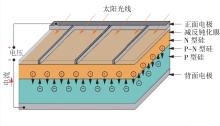
图1
光伏电池的典型非对称性结构
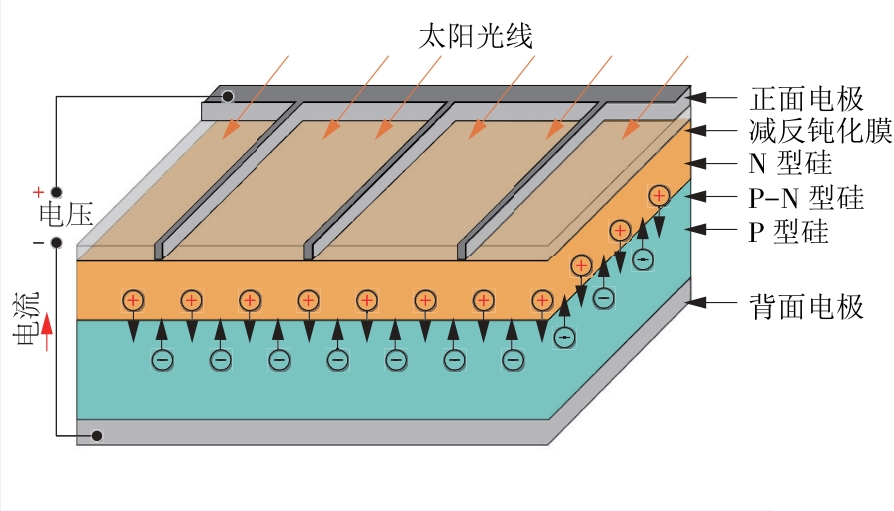
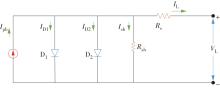
图2
光伏电池的双二极管模型等效电路
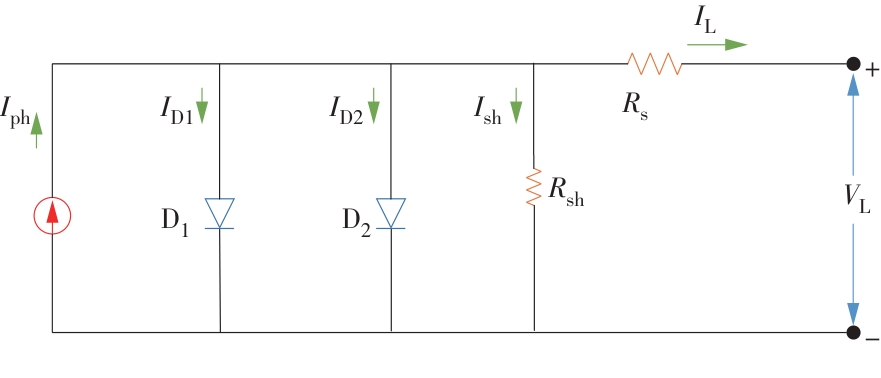
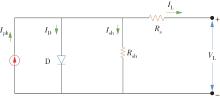
图3
光伏电池的SDM等效电路
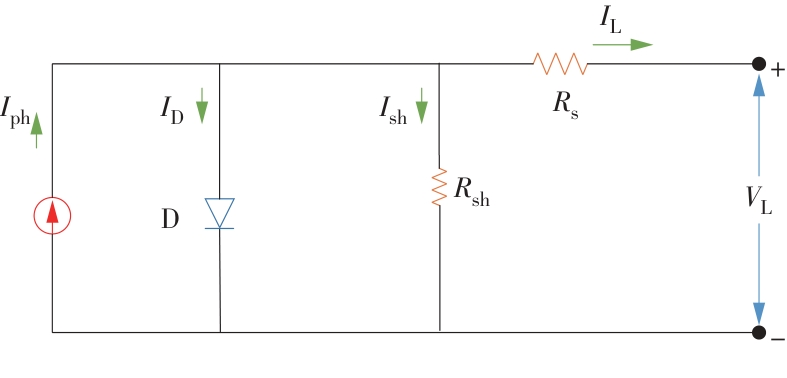
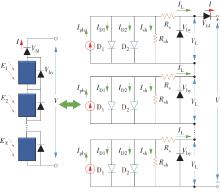
图4
光伏阵列的串联结构
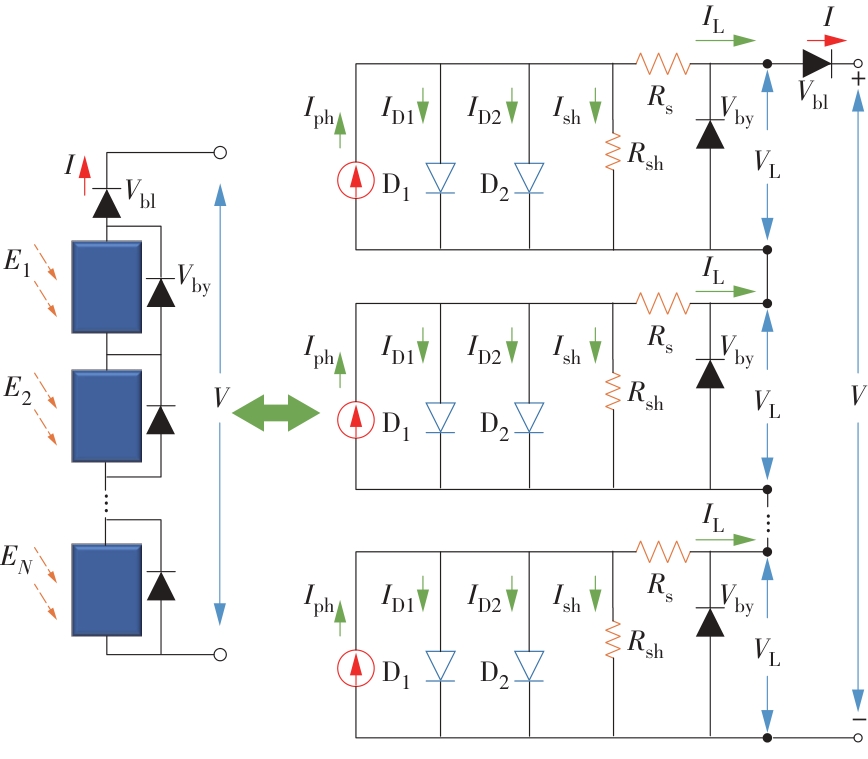
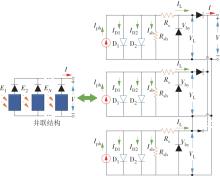
图5
光伏阵列的并联结构
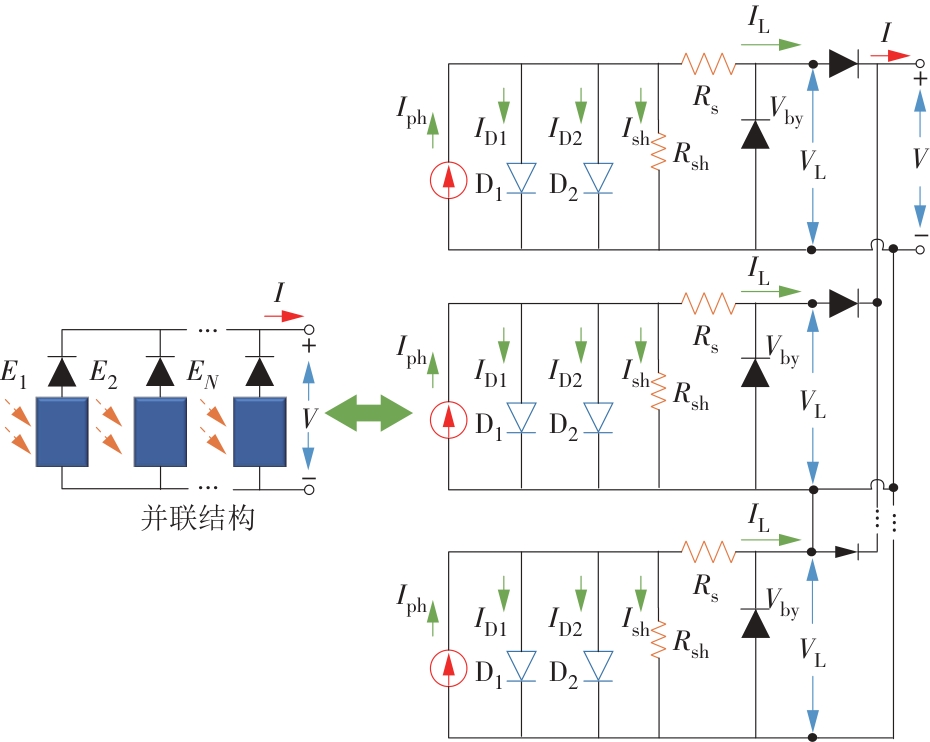
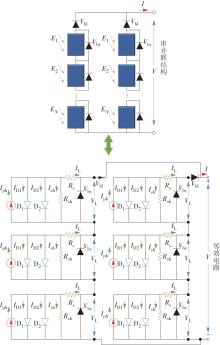
图6
光伏阵列的串并联结构
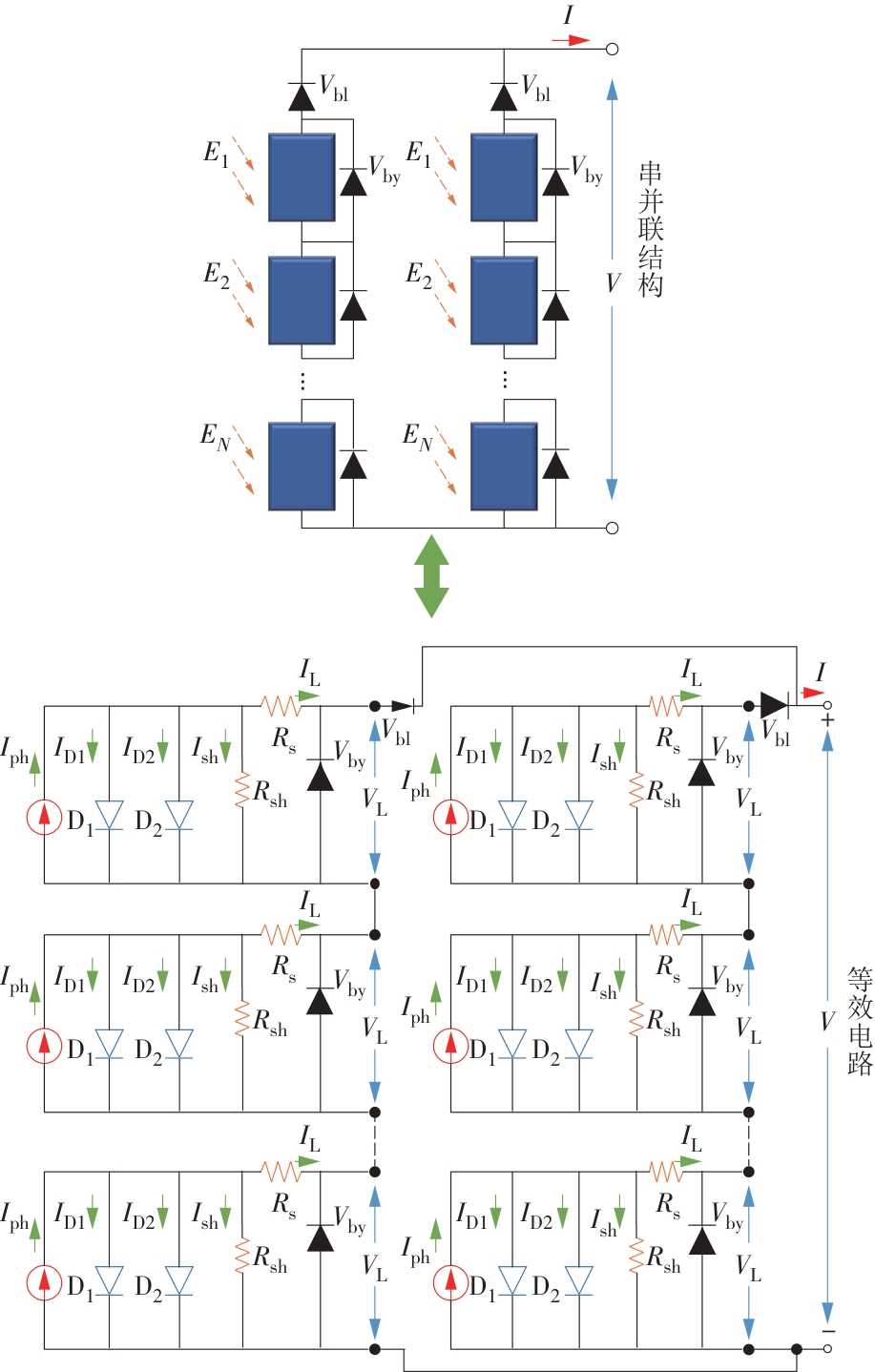
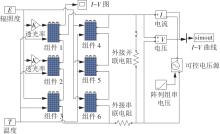
图7
串联形式的光伏阵列Simulink模型
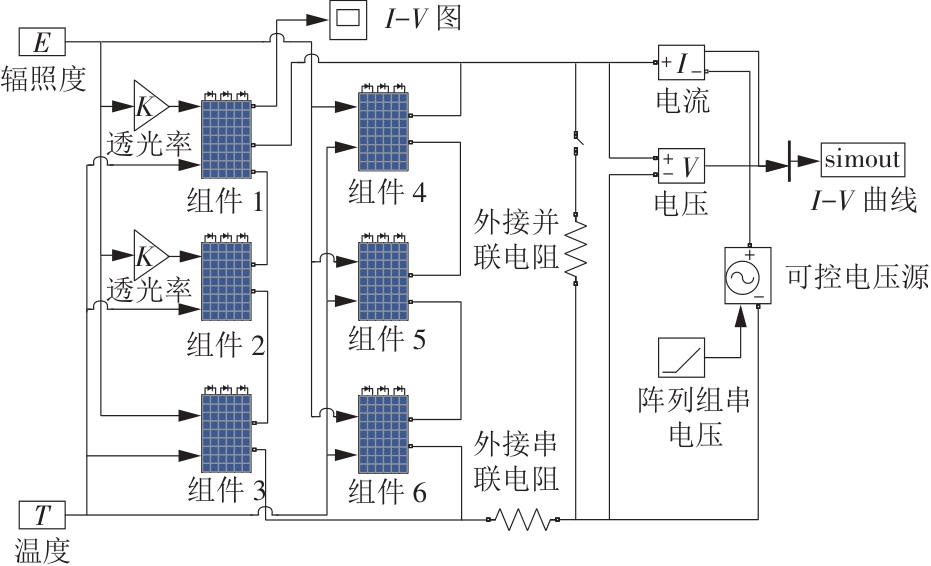
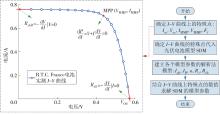
图8
基于解析法的模型参数辨识方法
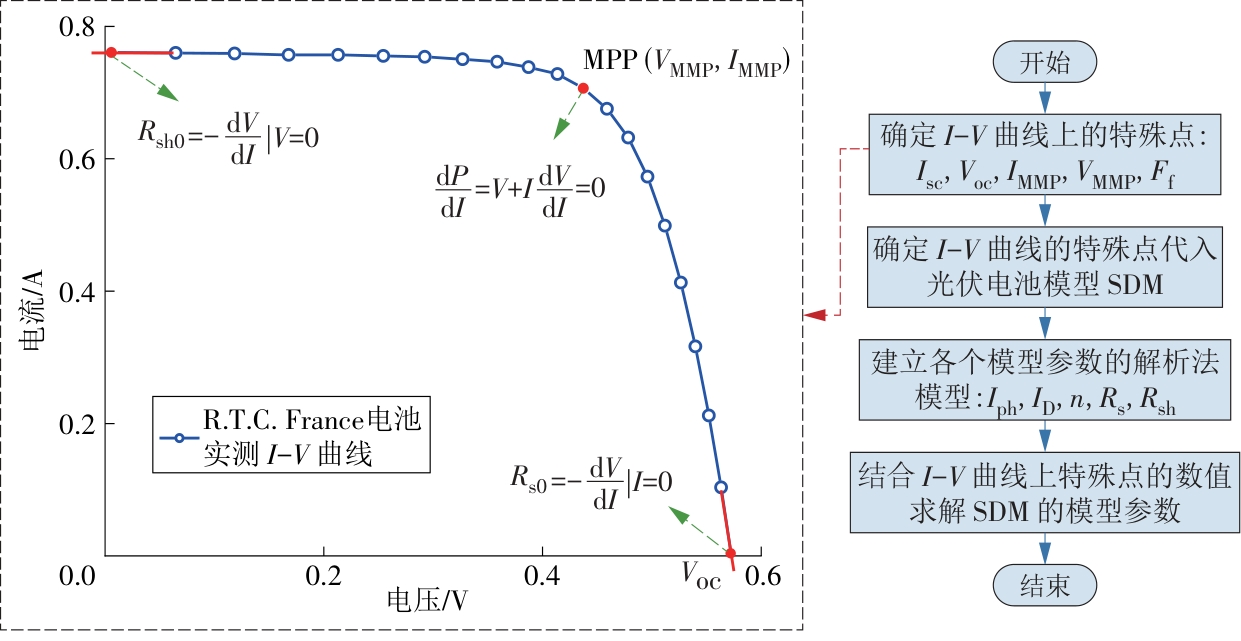
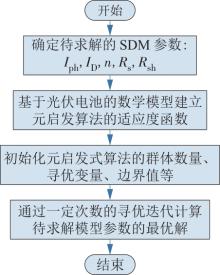
图9
基于元启发式寻优算法的模型参数辨识方法
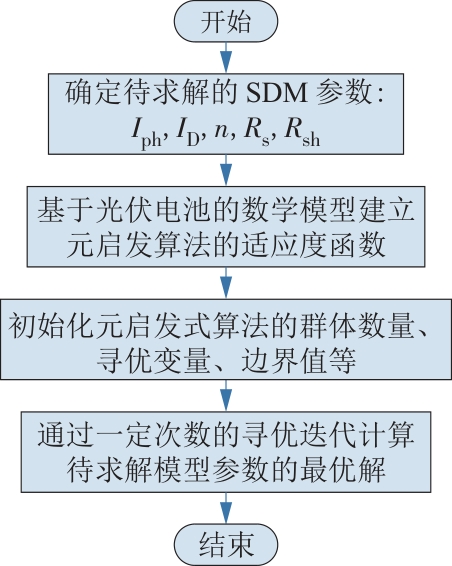
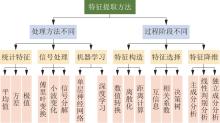
图10
特征提取方法的分类
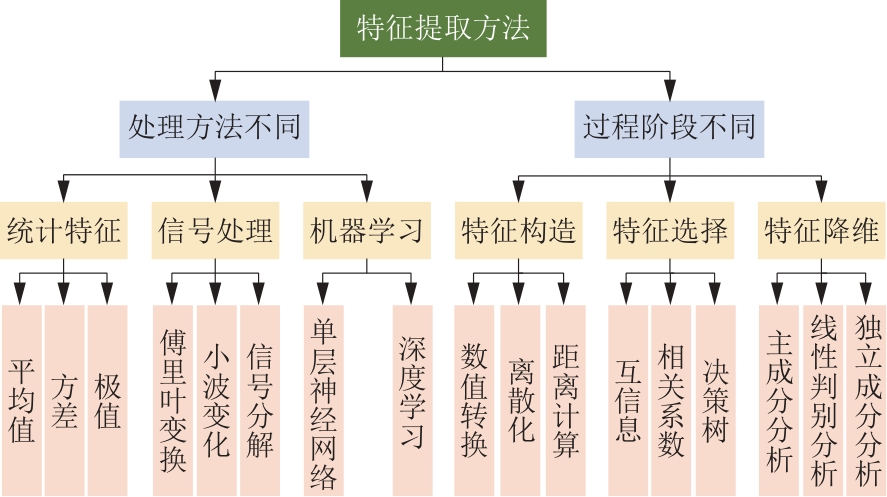
图11
VMD的流程与具体应用案例
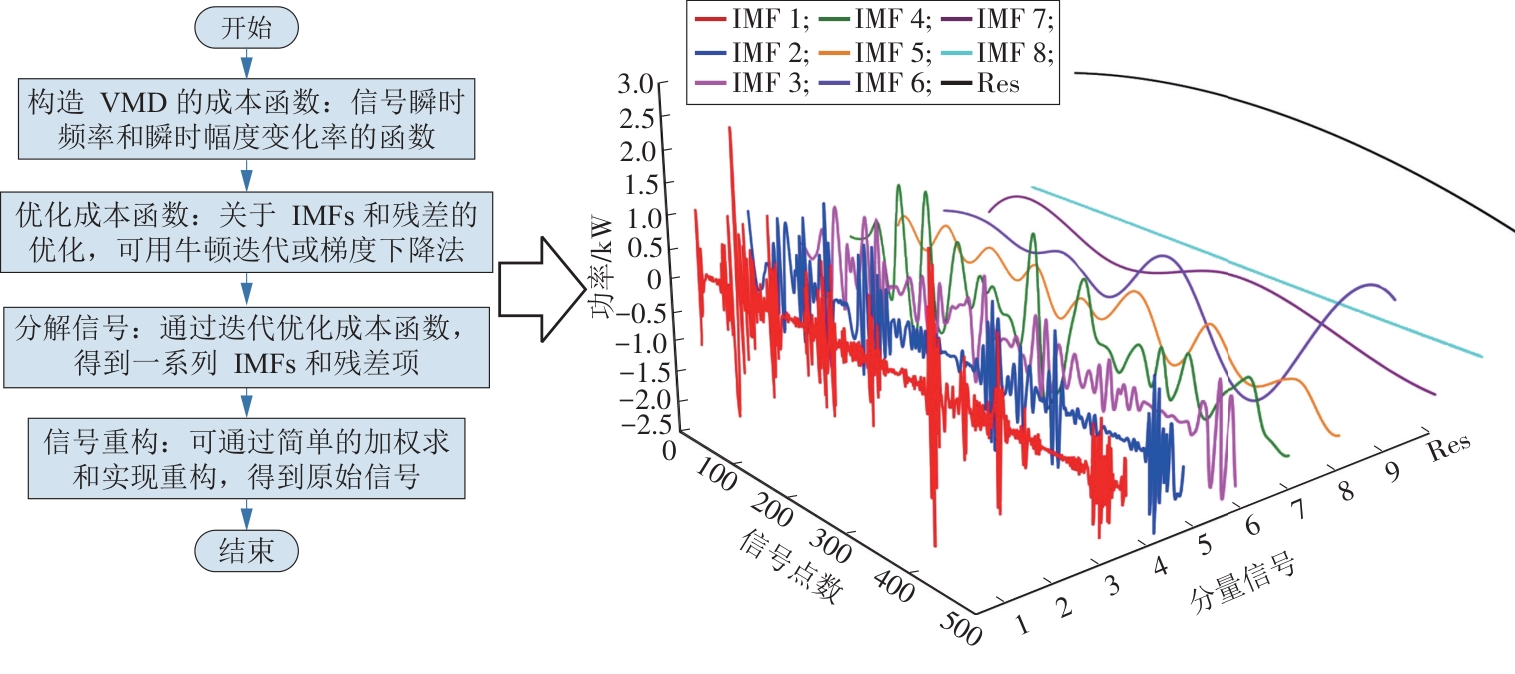
图12
基于DBN的特征提取
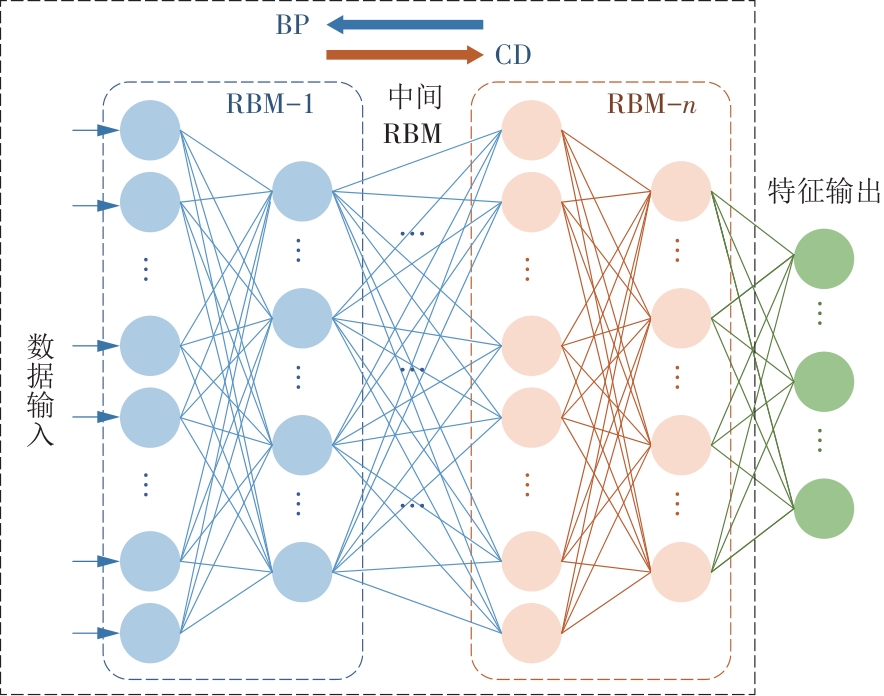
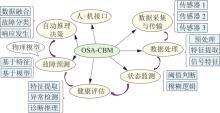
图13
OSA-CBM的典型结构
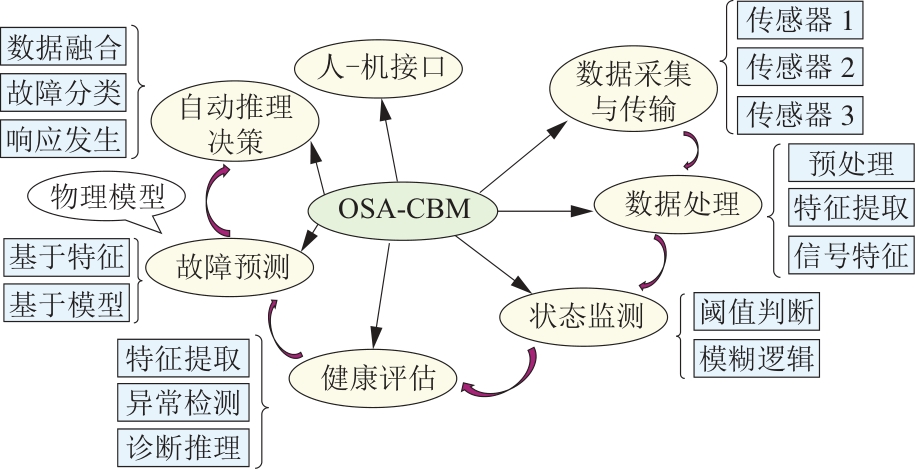
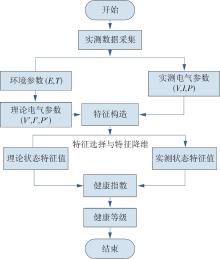
图14
光伏阵列健康状态评估方法流程
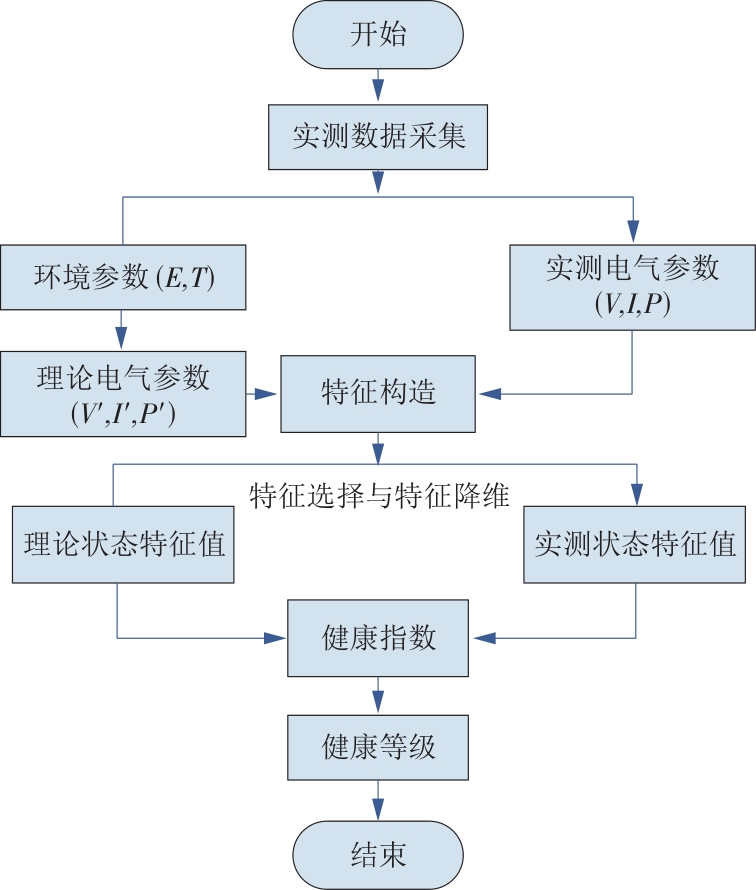
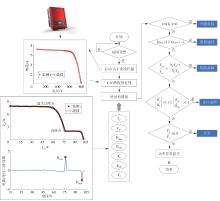
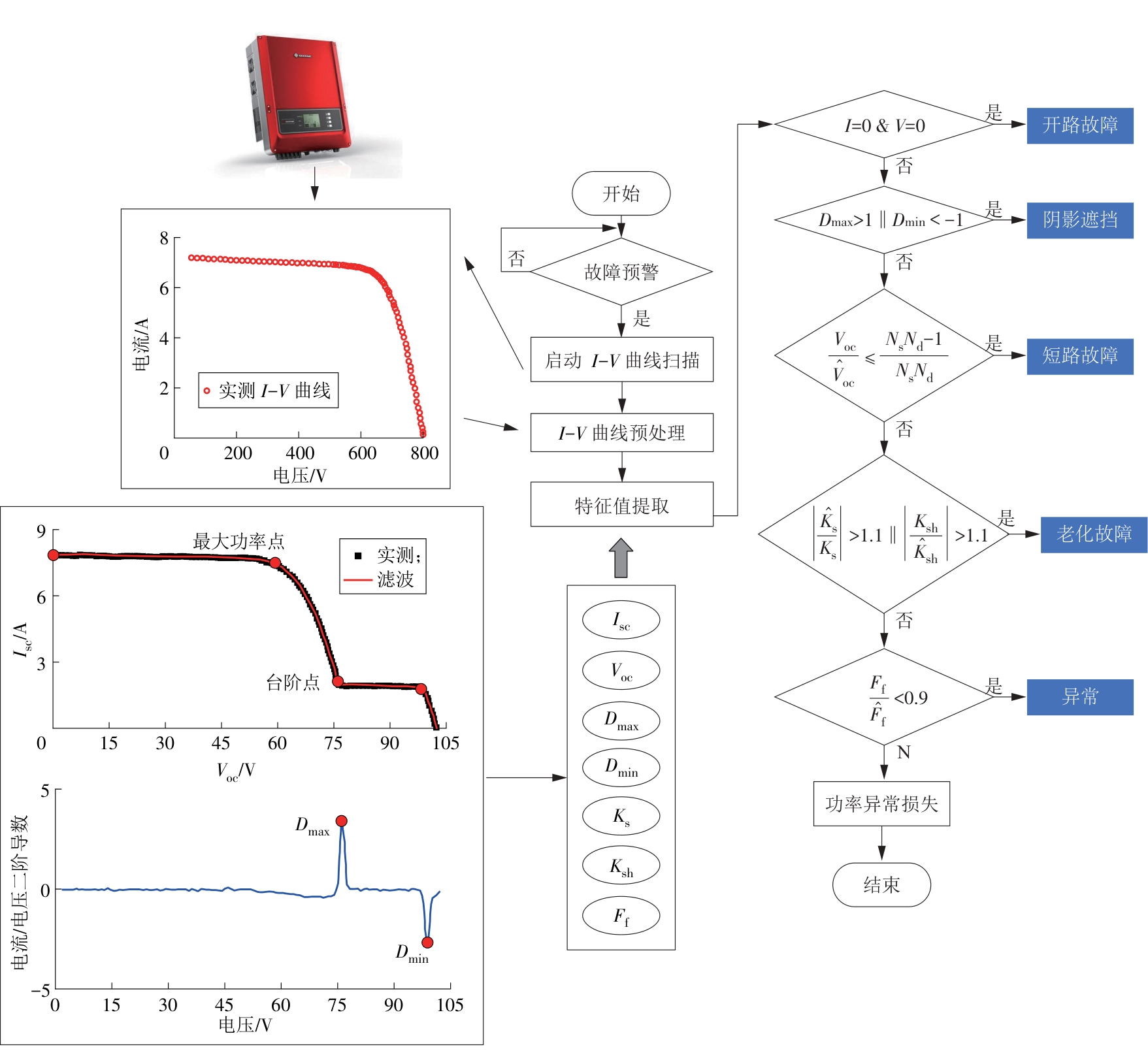
图15
光伏阵列故障诊断方法流程
| [1] | 陈伟, 丁聪, 裴婷婷, 等. 基于矩阵扰动法和传感器优化配置的光伏阵列故障定位方法[J]. 太阳能学报, 2025, 46(1): 641-653. |
| CHEN Wei, DING Cong, PEI Tingting, et al. Photovoltaic array fault location method based on matrix perturbation method and sensor optimal configuration[J]. Acta Energiae Solaris Sinica, 2025, 46(1): 641-653. | |
| [2] | 陈思源, 张玉坤, 张倩宁, 等. 基于能值分析的光伏电站选址方法[J]. 西南交通大学学报, 2024, 59(2): 447-455, 476. |
| CHEN Siyuan, ZHANG Yukun, ZHANG Qianning, et al. Emergy analysis based method for site selection of photovoltaic plants[J]. Journal of Southwest Jiaotong University, 2024, 59(2): 447-455, 476. | |
| [3] |
SOHANI A, SAYYAADI H, CORNARO C, et al. Using machine learning in photovoltaics to create smarter and cleaner energy generation systems: A comprehensive review[J]. Journal of Cleaner Production, 2022, 364: 132701.
doi: 10.1016/j.jclepro.2022.132701 |
| [4] |
REZAZADEH S, MORADZADEH A, POURHOSSEIN K, et al. Photovoltaic array reconfiguration under partial shading conditions for maximum power extraction: A state-of-the-art review and new solution method[J]. Energy Conversion and Management, 2022, 258: 115468.
doi: 10.1016/j.enconman.2022.115468 |
| [5] | TSANAKAS J A, HA L, BUERHOP C. Faults and infrared thermographic diagnosis in operating c-Si photovoltaic modules: A review of research and future challenges[J]. Renewable & Sustainable Energy Reviews, 2016, 62: 695-709. |
| [6] |
于守武, 赵泽文, 赵晋津, 等. 新型光伏储电原位集成电池研究进展[J]. 无机材料学报, 2020, 35(6): 623.
doi: 10.15541/jim20190342 |
|
YU Shouwu, ZHAO Zewen, ZHAO Jinjin, et al. Research progress in novel in situ integrative photovoltaic-storage tandem cells[J]. Journal of Inorganic Materials, 2020, 35(6): 623.
doi: 10.15541/jim20190342 |
|
| [7] |
ZHOU J K, SU X L, HUANG Q, et al. Approaching 23% efficient n-type crystalline silicon solar cells with a silicon oxide-based highly transparent passivating contact[J]. Nano Energy, 2022, 98: 107319.
doi: 10.1016/j.nanoen.2022.107319 |
| [8] |
XIAO J W, SHI C B, ZHOU C X, et al. Contact engineering: Electrode materials for highly efficient and stable perovskite solar cells[J]. Solar RRL, 2017, 1(9): 1700082.
doi: 10.1002/solr.201700082 |
| [9] |
WANG J Y, HUANG C S, OU S L, et al. One-step preparation of TiO2 anti-reflection coating and cover layer by liquid phase deposition for monocrystalline Si PERC solar cell[J]. Solar Energy Materials and Solar Cells, 2022, 234: 111433.
doi: 10.1016/j.solmat.2021.111433 |
| [10] | JORDEHI A R. Parameter estimation of solar photovoltaic (PV) cells: A review[J]. Renewable & Sustainable Energy Reviews, 2016, 61: 354-371. |
| [11] |
LI P D, LUO Y, XIA X, et al. Advancing photovoltaic panel temperature forecasting: A comparative study of numerical simulation and machine learning in two types of PV power plant[J]. Renewable Energy, 2024, 237: 121602.
doi: 10.1016/j.renene.2024.121602 |
| [12] |
SUN H J, FAN S Y, CAO S X, et al. Quantitative modeling and validation of the impact of border dust on photovoltaic panels: A piecewise single diode approach[J]. Energy, 2024, 291: 130285.
doi: 10.1016/j.energy.2024.130285 |
| [13] |
SENTURK A, EKE R. A new method to simulate photovoltaic performance of crystalline silicon photovoltaic modules based on datasheet values[J]. Renewable Energy, 2017, 103: 58-69.
doi: 10.1016/j.renene.2016.11.025 |
| [14] | ABBASSI R, ABBASSI A, JEMLI M, et al. Identification of unknown parameters of solar cell models: A comprehensive overview of available approaches[J]. Renewable & Sustainable Energy Reviews, 2018, 90: 453-474. |
| [15] | PEIBST R, LARIONOVA Y, REITER S, et al. Building blocks for industrial, screen-printed double-side contacted POLO cells with highly transparent ZnO: Al layers[J]. IEEE Journal of Photovoltaics, 2018, 8(3): 719-725. |
| [16] |
BI Z N, XU X Q, CHEN X, et al. High-performance large-area blade-coated perovskite solar cells with low ohmic loss for low lighting indoor applications[J]. Chemical Engineering Journal, 2022, 446: 137164.
doi: 10.1016/j.cej.2022.137164 |
| [17] | 李国荣, 张云鹏, 周海, 等. 基于有效辐照度修正的光伏电池模型参数辨识和输出特性建模研究[J]. 电工技术学报, 2024, 39(23): 7331-7340. |
| LI Guorong, ZHANG Yunpeng, ZHOU Hai, et al. Parameter identification and output characteristics modelling of photovoltaic module based on effective irradiance correction[J]. Transactions of China Electrotechnical Society, 2024, 39(23): 7331-7340. | |
| [18] | 陈玉洁, 孙以泽, 孟婥, 等. 太阳电池显式双二极管模型建立及其参数提取研究[J]. 太阳能学报, 2020, 41(7): 120-128. |
| CHEN Yujie, SUN Yize, MENG Zhuo, et al. An improved explicit double-diode modeling and parameter extracting method for solar cells[J]. Acta Energiae Solaris Sinica, 2020, 41(7): 120-128. | |
| [19] |
OLIVA D, CUEVAS E, PAJARES G. Parameter identification of solar cells using artificial bee colony optimization[J]. Energy, 2014, 72: 93-102.
doi: 10.1016/j.energy.2014.05.011 |
| [20] |
JHA V. Generalized modelling of PV module and different PV array configurations under partial shading condition[J]. Sustainable Energy Technologies and Assessments, 2023, 56: 103021.
doi: 10.1016/j.seta.2023.103021 |
| [21] |
唐圣学, 邢玥, 陈丽, 等. 太阳电池组串热斑防治策略研究[J]. 太阳能学报, 2022, 43(4): 226-235.
doi: 10.19912/j.0254-0096.tynxb.2020-0853 |
|
TANG Shengxue, XING Yue, CHEN Li, et al. Study on suppressing strategy of hot spot in solar cellseries[J]. Acta Energiae Solaris Sinica, 2022, 43(4): 226-235.
doi: 10.19912/j.0254-0096.tynxb.2020-0853 |
|
| [22] | 吕盛华, 王磊, 任春光, 等. 复杂光照条件下串联光伏阵列特性研究及最大功率跟踪[J]. 太阳能学报, 2017, 38(9): 2329-2336. |
| LYU Shenghua, WANG Lei, REN Chunguang, et al. Study on characteristics of series photovoltaic array and maximum power tracking under complex illumination[J]. Acta Energiae Solaris Sinica, 2017, 38(9): 2329-2336. | |
| [23] |
ABDULMAWJOOD K, ALSADI S, REFAAT S S, et al. Characteristic study of solar photovoltaic array under different partial shading conditions[J]. IEEE Access, 2022, 10: 6856-6866.
doi: 10.1109/ACCESS.2022.3142168 |
| [24] | BONTHAGORLA P K, MIKKILI S. Optimal PV array configuration for extracting maximum power under partial shading conditions by mitigating mismatching power losses[J]. CSEE Journal of Power and Energy Systems, 2022, 8(2): 499-510. |
| [25] | 孙英云, 侯建兰, 李润, 等. 基于隐互补问题的光伏阵列模型及其求解算法[J]. 中国电机工程学报, 2014, 34(34): 6066-6073. |
| SUN Yingyun, HOU Jianlan, LI Run, et al. A photovoltaic array model based on implicit complementarity problem and its algorithm[J]. Proceedings of the CSEE, 2014, 34(34): 6066-6073. | |
| [26] | JENA D, RAMANA V V. Modeling of photovoltaic system for uniform and non-uniform irradiance: A critical review[J]. Renewable & Sustainable Energy Reviews, 2015, 52: 400-417. |
| [27] |
YAQOOB S J, MOTAHHIR S, AGYEKUM E B. A new model for a photovoltaic panel using Proteus software tool under arbitrary environmental conditions[J]. Journal of Cleaner Production, 2022, 333: 130074.
doi: 10.1016/j.jclepro.2021.130074 |
| [28] |
LI B J, DIALLO D, MIGANDUBOIS A, et al. Performance evaluation of IEC 60891: 2021 procedures for correcting I-V curves of photovoltaic modules under healthy and faulty conditions[J]. Progress in Photovoltaics, 2023, 31(5): 474-493.
doi: 10.1002/pip.v31.5 |
| [29] |
LI X T, MI J W, ZHANG Y Q, et al. Current-injected photovoltaic array for concentrated space solar power station[J]. Frontiers in Energy Research, 2023, 11: 1140537.
doi: 10.3389/fenrg.2023.1140537 |
| [30] |
CHERUKURI S K, KUMAR B P, KANIGANTI K R, et al. A novel array configuration technique for improving the power output of the partial shaded photovoltaic system[J]. IEEE Access, 2022, 10: 15056-15067.
doi: 10.1109/ACCESS.2022.3148065 |
| [31] |
ZHANG Y T, GAO J Q, YU Y L, et al. Influence of incidence angle effects on the performance of bifacial photovoltaic modules considering rear-side reflection[J]. Solar Energy, 2022, 245: 404-409.
doi: 10.1016/j.solener.2022.08.027 |
| [32] |
LI Y L, DING K, ZHANG J W, et al. A fault diagnosis method for photovoltaic arrays based on fault parameters identification[J]. Renewable Energy, 2019, 143: 52-63.
doi: 10.1016/j.renene.2019.04.147 |
| [33] |
CHEN Z C, YU H, LUO L L, et al. Rapid and accurate modeling of PV modules based on extreme learning machine and large datasets of I-V curves[J]. Applied Energy, 2021, 292: 116929.
doi: 10.1016/j.apenergy.2021.116929 |
| [34] | 熊国江, 辜再宇. 基于强化学习知识获取共享算法的太阳电池模型参数辨识[J]. 太阳能学报, 2024, 45(9): 334-344. |
| XIONG Guojiang, GU Zaiyu. Reinforcement learning-based gaining-sharing knowledge algorithm for parameter identification of solar cell models[J]. Acta Energiae Solaris Sinica, 2024, 45(9): 334-344. | |
| [35] | RIDHA H M, HIZAM H, MIRJALILI S, et al. Zero root-mean-square error for single- and double-diode photovoltaic models parameter determination[J]. Neural Computing & Applications, 2022, 34(14): 11603-11624. |
| [36] |
LINEYKIN S, AVERBUKH M, KUPERMAN A. Issues in modeling amorphous silicon photovoltaic modules by single-diode equivalent circuit[J]. IEEE Transactions on Industrial Electronics, 2014, 61(12): 6785-6793.
doi: 10.1109/TIE.2014.2317138 |
| [37] |
LIU Y J, DING K, ZHANG J W, et al. Fault diagnosis approach for photovoltaic array based on the stacked auto-encoder and clustering with I-V curves[J]. Energy Conversion and Management, 2021, 245: 114603.
doi: 10.1016/j.enconman.2021.114603 |
| [38] |
BOUTANA N, MELLIT A, HADDAD S, et al. An explicit I-V model for photovoltaic module technologies[J]. Energy Conversion and Management, 2017, 138: 400-412.
doi: 10.1016/j.enconman.2017.02.016 |
| [39] |
SONG Z H, REN C L, MENG Z Y. Parameter identification of photovoltaic models using an improved differential evolution with selective perturbation[J]. IEEE Transactions on Industrial Informatics, 2025, 21(4): 2908-2916.
doi: 10.1109/TII.2024.3514155 |
| [40] | JORDEHI A R. Parameter estimation of solar photovoltaic (PV) cells: A review[J]. Renewable & Sustainable Energy Reviews, 2016, 61: 354-371. |
| [41] |
YANG B, WANG J B, ZHANG X S, et al. Comprehensive overview of meta-heuristic algorithm applications on PV cell parameter identification[J]. Energy Conversion and Management, 2020, 208: 112595.
doi: 10.1016/j.enconman.2020.112595 |
| [42] |
ABBASSI R, ABBASSI A, HEIDARI A A, et al. An efficient salp swarm-inspired algorithm for parameters identification of photovoltaic cell models[J]. Energy Conversion and Management, 2019, 179: 362-372.
doi: 10.1016/j.enconman.2018.10.069 |
| [43] | 康童, 姚建刚, 金敏, 等. 采用改进型SOS算法的光伏组件模型参数辨识[J]. 计算机应用研究, 2020, 37(4): 1034-1042. |
| KANG Tong, YAO Jiangang, JIN Min, et al. Parameter identification of photovoltaic module models using improved SOS algorithm[J]. Application Research of Computers, 2020, 37(4): 1034-1042. | |
| [44] |
ANGULO A, HUERTA M A, MANCILLA-DAVID F. Identification of the 11-parameter functional form model for photovoltaic modules using manufacturer-provided ratings[J]. IEEE Transactions on Industrial Informatics, 2025, 21(6): 4694-4702.
doi: 10.1109/TII.2025.3545086 |
| [45] |
KHAN F, BAEK S-H, PARK Y, et al. Extraction of diode parameters of silicon solar cells under high illumination conditions[J]. Energy Conversion and Management, 2013, 76: 421-429.
doi: 10.1016/j.enconman.2013.07.054 |
| [46] |
CUBAS J, PINDADO S, VICTORIA M. On the analytical approach for modeling photovoltaic systems behavior[J]. Journal of Power Sources, 2014, 247: 467-474.
doi: 10.1016/j.jpowsour.2013.09.008 |
| [47] |
BAI J B, LIU S, HAO Y Z, et al. Development of a new compound method to extract the five parameters of PV modules[J]. Energy Conversion and Management, 2014, 79: 294-303.
doi: 10.1016/j.enconman.2013.12.041 |
| [48] |
GAO X K, CUI Y, HU J J, et al. Lambert W-function based exact representation for double diode model of solar cells: Comparison on fitness and parameter extraction[J]. Energy Conversion and Management, 2016, 127: 443-460.
doi: 10.1016/j.enconman.2016.09.005 |
| [49] |
SONG S M, WANG P J, HEIDARI A A, et al. Adaptive Harris hawks optimization with persistent trigonometric differences for photovoltaic model parameter extraction[J]. Engineering Applications of Artificial Intelligence, 2022, 109: 104608.
doi: 10.1016/j.engappai.2021.104608 |
| [50] |
张国玉, 王宏华, 赵慧文. 光伏组件双二极管模型参数辨识混合方法研究[J]. 电源技术, 2021, 45(8): 1061-1065.
doi: 10.3969/j.issn.1002-087X.2021.08.027 |
|
ZHANG Guoyu, WANG Honghua, ZHAO Huiwen. Research on hybrid method for parameter identification of the two diode model of PV modules[J]. Chinese Journal of Power Sources, 2021, 45(8): 1061-1065.
doi: 10.3969/j.issn.1002-087X.2021.08.027 |
|
| [51] |
CHENNOUFI K, FERFRA M, MOKHLIS M. An accurate modelling of Photovoltaic modules based on two-diode model[J]. Renewable Energy, 2021, 167: 294-305.
doi: 10.1016/j.renene.2020.11.085 |
| [52] |
WANG H Y, YU X B. A ranking improved teaching-learning-based optimization algorithm for parameters identification of photovoltaic models[J]. Applied Soft Computing, 2024, 167: 112371.
doi: 10.1016/j.asoc.2024.112371 |
| [53] |
VILLALVA M G, GAZOLI J R, FILHO E R. Comprehensive approach to modeling and simulation of photovoltaic arrays[J]. IEEE Transactions on Power Electronics, 2009, 24(5): 1198-1208.
doi: 10.1109/TPEL.2009.2013862 |
| [54] | 朱晓荣, 王羽凝, 金绘民, 等. 基于马尔科夫链蒙特卡洛方法的光伏电站可靠性评估[J]. 高电压技术, 2017, 43(3): 1034-1042. |
| ZHU Xiaorong, WANG Yuning, JIN Huimin, et al. Reliability evaluation of photovoltaic power plant based on Markov chain Monte Carlo method[J]. High Voltage Engineering, 2017, 43(3): 1034-1042. | |
| [55] | 高献坤, 姚传安, 高向川, 等. 解析法-Nelder Mead单纯形算法确定太阳电池参数[J]. 农业工程学报, 2014, 30(6): 97-106. |
| GAO Xiankun, YAO Chuanan, GAO Xiangchuan, et al. Identification of solar cell model parameters by combining analytical method with Nelder-Mead simplex method[J]. Transactions of the Chinese Society of Agricultural Engineering, 2014, 30(6): 97-106. | |
| [56] |
ANANI N, IBRAHIM H. Performance evaluation of analytical methods for parameters extraction of photovoltaic generators[J]. Energies, 2020, 13(18): 4825.
doi: 10.3390/en13184825 |
| [57] | KUMARI P A, GEETHANJALI P. Parameter estimation for photovoltaic system under normal and partial shading conditions: A survey[J]. Renewable & Sustainable Energy Reviews, 2018, 84: 1-11. |
| [58] |
ABDOLLAHZADEH B, SOLEIMANIAN GHAREHCHOPOGH F, MIRJALILI S. Artificial gorilla troops optimizer: A new nature-inspired metaheuristic algorithm for global optimization problems[J]. International Journal of Intelligent Systems, 2021, 36(10): 5887-5958.
doi: 10.1002/int.v36.10 |
| [59] |
BASTIDAS-RODRIGUEZ J D, PETRONE G, RAMOS-PAJA C A, et al. A genetic algorithm for identifying the single diode model parameters of a photovoltaic panel[J]. Mathematics and Computers in Simulation, 2017, 131: 38-54.
doi: 10.1016/j.matcom.2015.10.008 |
| [60] | 刘宜罡, 邹应全, 张晓强, 等. 基于差分进化的光伏MPPT算法改进[J]. 太阳能学报, 2020, 41(6): 264-271. |
| LIU Yigang, ZOU Yingquan, ZHANG Xiaoqiang, et al. An improved photovoltaic MPPT algorithm based on differential evolution algorithm[J]. Acta Energiae Solaris Sinica, 2020, 41(6): 264-271. | |
| [61] |
DEVARAPALLI R, RAO B V, ALDURRA A. Optimal parameter assessment of solar photovoltaic module equivalent circuit using a novel enhanced hybrid GWO-SCA algorithm[J]. Energy Reports, 2022, 8: 12282-12301.
doi: 10.1016/j.egyr.2022.09.069 |
| [62] |
WANG J B, YANG B, LI D Y, et al. Photovoltaic cell parameter estimation based on improved equilibrium optimizer algorithm[J]. Energy Conversion and Management, 2021, 236(3): 114051.
doi: 10.1016/j.enconman.2021.114051 |
| [63] | 丁坤, 翁帅, 张经炜, 等. 基于改进混沌粒子群算法的光伏阵列建模方法研究[J]. 可再生能源, 2021, 39(3): 324-332. |
| DING Kun, WENG Shuai, ZHANG Jingwei, et al. Research on PV array modeling method based on improved chaotic particle swarm optimization algorithm[J]. Renewable Energy Resources, 2021, 39(3): 324-332. | |
| [64] |
毛明轩, 许钊, 崔立闯, 等. 基于改进灰狼优化算法的光伏阵列多峰MPPT研究[J]. 太阳能学报, 2023, 44(3): 450-456.
doi: 10.19912/j.0254-0096.tynxb.2021-1261 |
|
MAO Mingxuan, XU Zhao, CUI Lichuang, et al. Research on multi-peak MPPT of photovoltaic array based on modified gray wolf optimization algorithm[J]. Acta Energiae Solaris Sinica, 2023, 44(3): 450-456.
doi: 10.19912/j.0254-0096.tynxb.2021-1261 |
|
| [65] | COTFAS D T, COTFAS P A, OPROIU M P, et al. Analytical versus metaheuristic methods to extract the photovoltaic cells and panel parameters[J]. International Journal of Photoenergy, 2021, 2021: 3608138. |
| [66] | HOUSSEIN E H, NAGEH G, ABD ELAZIZ M, et al. An efficient equilibrium optimizer for parameters identification of photovoltaic modules[J]. PeerJ Computer Science, 2021, 7: e708. |
| [67] |
ARABSHAHI M R, TORKAMAN H, KEYHANI A. A method for hybrid extraction of single-diode model parameters of photovoltaics[J]. Renewable Energy, 2020, 158: 236-252.
doi: 10.1016/j.renene.2020.05.035 |
| [68] | PILLAI D S, RAJASEKAR N. Metaheuristic algorithms for PV parameter identification: A comprehensive review with an application to threshold setting for fault detection in PV systems[J]. Renewable & Sustainable Energy Reviews, 2018, 82: 3503-3525. |
| [69] |
ALI E E, EL-HAMEED M A, EL-FERGANY A A, et al. Parameter extraction of photovoltaic generating units using multi-verse optimizer[J]. Sustainable Energy Technologies and Assessments, 2016, 17: 68-76.
doi: 10.1016/j.seta.2016.08.004 |
| [70] |
OLIV D, ABD EL AZIZ M, HASSANIEN A E. Parameter estimation of photovoltaic cells using an improved chaotic whale optimization algorithm[J]. Applied Energy, 2017, 200: 141-154.
doi: 10.1016/j.apenergy.2017.05.029 |
| [71] |
ELAZIZ M A, THANIKANTI S B, IBRAHIM I A, et al. Enhanced marine predators algorithm for identifying static and dynamic photovoltaic models parameters[J]. Energy Conversion and Management, 2021, 236: 113971.
doi: 10.1016/j.enconman.2021.113971 |
| [72] | 潘侃, 尹春林, 王磊, 等. 基于特征工程的重要节点挖掘方法[J]. 电子科技大学学报, 2021, 50(6): 930-937. |
| PAN Kan, YIN Chunlin, WANG Lei, et al. Identifying critical nodes based on feature engineering[J]. Journal of University of Electronic Science and Technology of China, 2021, 50(6): 930-937. | |
| [73] |
LEI Y G, JIA F, LIN J, et al. An intelligent fault diagnosis method using unsupervised feature learning towards mechanical big data[J]. IEEE Transactions on Industrial Electronics, 2016, 63(5): 3137-3147.
doi: 10.1109/TIE.41 |
| [74] | 唐志国, 唐铭泽, 李金忠, 等. 电气设备局部放电模式识别研究综述[J]. 高电压技术, 2017, 43(7): 2263-2277. |
| TANG Zhiguo, TANG Mingze, LI Jinzhong, et al. Review on partial discharge pattern recognition of electrical equipment[J]. High Voltage Engineering, 2017, 43(7): 2263-2277. | |
| [75] | 高晨, 赵勇, 汪德良, 等. 海上风电机组电气设备状态检修技术研究现状与展望[J]. 电工技术学报, 2022, 37(S1): 30-42. |
| GAO Chen, ZHAO Yong, WANG Deliang, et al. Research status and prospect of condition based maintenance technology for offshore wind turbine electrical equipment[J]. Transactions of China Electrotechnical Society, 2022, 37(S1): 30-42. | |
| [76] | 曾军, 陈艳峰, 杨苹, 等. 大型风力发电机组故障诊断综述[J]. 电网技术, 2018, 42(3): 849-860. |
| ZENG Jun, CHEN Yanfeng, YANG Ping, et al. Review of fault diagnosis methods of large-scale wind turbines[J]. Power System Technology, 2018, 42(3): 849-860. | |
| [77] | 张淑清, 宿新爽, 陈荣飞, 等. 基于变分模态分解和FABP的短期电力负荷预测[J]. 仪器仪表学报, 2018, 39(4): 67-73. |
| ZHANG Shuqing, SU Xinshuang, CHEN Rongfei, et al. Short-term load forecasting based on the VMD and FABP[J]. Chinese Journal of Scientific Instrument, 2018, 39(4): 67-73. | |
| [78] | XIE T, ZHANG G, LIU H C, et al. A hybrid forecasting method for solar output power based on variational mode decomposition, deep belief networks and auto-regressive moving average[J]. Applied Sciences-Basel, 2018, 8(10): 1901. |
| [79] |
DASH P K, MISHRA S P, PRASAD E N V D V, et al. Multiple power quality disturbances analysis in photovoltaic integrated direct current microgrid using adaptive morphological filter with deep learning algorithm[J]. Applied Energy, 2022, 309: 118454.
doi: 10.1016/j.apenergy.2021.118454 |
| [80] | 黄新波, 蒋卫涛, 朱永灿, 等. 基于时间序列和支持向量机的变压器故障预测[J]. 高电压技术, 2020, 46(7): 2530-2538. |
| HUANG Xinbo, JIANG Weitao, ZHU Yongcan, et al. Transformer fault prediction based on time series and support vector machine[J]. High Voltage Engineering, 2020, 46(7): 2530-2538. | |
| [81] |
DE OLIVEIRA R A, RAVINDRAN V, RONNBERG S K, et al. Deep learning method with manual post-processing for identification of spectral patterns of waveform distortion in PV installations[J]. IEEE Transactions on Smart Grid, 2021, 12(6): 5444-5456.
doi: 10.1109/TSG.2021.3107908 |
| [82] |
REN X Y, ZHANG F, ZHU H L, et al. Quad-kernel deep convolutional neural network for intra-hour photovoltaic power forecasting[J]. Applied Energy, 2022, 323: 119682.
doi: 10.1016/j.apenergy.2022.119682 |
| [83] |
DING K, CHEN X, WENG S, et al. Health status evaluation of photovoltaic array based on deep belief network and Hausdorff distance[J]. Energy, 2023, 262: 125539.
doi: 10.1016/j.energy.2022.125539 |
| [84] |
CHENG L L, ZANG H X, DING T, et al. Multi-meteorological-factor-based graph modeling for photovoltaic power forecasting[J]. IEEE Transactions on Sustainable Energy, 2021, 12(3): 1593-1603.
doi: 10.1109/TSTE.2021.3057521 |
| [85] |
ESKANDARI A, AGHAEI M, MILIMONFARED J, et al. A weighted ensemble learning-based autonomous fault diagnosis method for photovoltaic systems using genetic algorithm[J]. International Journal of Electrical Power & Energy Systems, 2023, 144: 108591.
doi: 10.1016/j.ijepes.2022.108591 |
| [86] |
WANG Q L, CHAI S J, LIU Y, et al. GTFD-XTNet: A tabular learning-based ensemble approach for short-term prediction of photovoltaic power[J]. IET Renewable Power Generation, 2022, 16(12): 2682-2693.
doi: 10.1049/rpg2.v16.12 |
| [87] |
CHEN X, DING K, ZHANG J W, et al. Online prediction of ultra-short-term photovoltaic power using chaotic characteristic analysis, improved PSO and KELM[J]. Energy, 2022, 248: 123574.
doi: 10.1016/j.energy.2022.123574 |
| [88] |
ESKANDARI A, MILIMONFARED J, AGHAEI M. Fault detection and classification for photovoltaic systems based on hierarchical classification and machine learning technique[J]. IEEE Transactions on Industrial Electronics, 2021, 68(12): 12750-12759.
doi: 10.1109/TIE.2020.3047066 |
| [89] |
ZHU H L, SHI Y C, WANG H Z, et al. New feature extraction method for photovoltaic array output time series and its application in fault diagnosis[J]. IEEE Journal of Photovoltaics, 2020, 10(4): 1133-1141.
doi: 10.1109/JPHOTOV.5503869 |
| [90] | 纪德洋, 金锋, 冬雷, 等. 基于皮尔逊相关系数的光伏电站数据修复[J]. 中国电机工程学报, 2022, 42(4): 1514-1523. |
| JI Deyang, JIN Feng, DONG Lei, et al. Data repairing of photovoltaic power plant based on Pearson correlation coefficient[J]. Proceedings of the CSEE, 2022, 42(4): 1514-1523. | |
| [91] | 张维, 张浩晨. 一种基于最优集成随机森林的小样本数据特征提取方法[J]. 西北工业大学学报, 2022, 40(6): 1261-1268. |
|
ZHANG Wei, ZHANG Haochen. A feature extraction method for small sample data based on optimal ensemble random forest[J]. Journal of Northwestern Polytechnical University, 2022, 40(6): 1261-1268.
doi: 10.1051/jnwpu/20224061261 |
|
| [92] | 李元良, 丁坤, 陈富东, 等. 基于快速过采样主成分分析法的光伏阵列故障诊断[J]. 电网技术, 2019, 43(1): 308-315. |
| LI Yuanliang, DING Kun, CHEN Fudong, et al. Fault diagnosis method of PV array based on fast OS-PCA[J]. Power System Technology, 2019, 43(1): 308-315. | |
| [93] |
OVIEDO E H S, TRAVE-MASSUYES L, SUBIAS A, et al. Feature extraction and health status prediction in PV systems[J]. Advanced Engineering Informatics, 2022, 53: 101696.
doi: 10.1016/j.aei.2022.101696 |
| [94] |
DU B L, HE Y G, HE Y Z, et al. Intelligent classification of silicon photovoltaic cell defects based on eddy current thermography and convolution neural network[J]. IEEE Transactions on Industrial Informatics, 2020, 16(10): 6242-6251.
doi: 10.1109/TII.9424 |
| [95] |
ZHU H L, AHMED S A Z, ALFAKIH M A, et al. Photovoltaic failure diagnosis using sequential probabilistic neural network model[J]. IEEE Access, 2020, 8: 220507-220522.
doi: 10.1109/Access.6287639 |
| [96] |
YI Z H, ETEMADI A H. Line-to-line fault detection for photovoltaic arrays based on multiresolution signal decomposition and two-stage support vector machine[J]. IEEE Transactions on Industrial Electronics, 2017, 64(11): 8546-8556.
doi: 10.1109/TIE.2017.2703681 |
| [97] | 丁坤, 陈富东, 李元良. 基于希尔伯特黄变换和灰色关联度的光伏系统健康状态研究[J]. 可再生能源, 2019, 37(3): 342-348. |
| DING Kun, CHEN Fudong, LI Yuanliang. Research on the health status of photovoltaic system based on Hilbert-Huang transform and grey relational degree[J]. Renewable Energy Resources, 2019, 37(3): 342-348. | |
| [98] | 郎荣玲, 范亚. 单层神经网络分类过程的分析[J]. 高等数学研究, 2020, 23(5): 45-47, 50. |
| LANG Rongling, FAN Ya. On classification process of single layer neural network[J]. Studies in College Mathematics, 2020, 23(5): 45-47, 50. | |
| [99] | 彭维锋, 董树锋, 邱剑. 基于特征约束与目标驱动的WGAN-GP光伏特定多场景生成方法[J/OL]. 中国电机工程学报, 2025: 1-15(2025-04-17)[2025-04-20]. https://kns.cnki.net/KCMS/detail/detail.aspx?filename=ZGDC20250415008&dbname=CJFD&dbcode=CJFQ. |
| PENG Weifeng, DONG Shufeng, QIU Jian. A WGAN-GP approach for multi-scenario specific photovoltaic generation with feature-constrained and target-driven optimization[J/OL]. Proceedings of the CSEE, 2025: 1-15(2025-04-17)[2025-04-20]. https://kns.cnki.net/KCMS/detail/detail.aspx?filename=ZGDC20250415008&dbname=CJFD&dbcode=CJFQ. | |
| [100] |
LU X Y, LIN P J, CHENG S Y, et al. Fault diagnosis for photovoltaic array based on convolutional neural network and electrical time series graph[J]. Energy Conversion and Management, 2019, 196: 950-965.
doi: 10.1016/j.enconman.2019.06.062 |
| [101] | 王道累, 姚勇, 张世恒, 等. 基于红外热图像的光伏组件热斑深度学习检测方法[J]. 中国电机工程学报, 2023, 43(24):9608-9615.1-9. |
| WANG Daolei, YAO Yong, ZHANG Shiheng, et al. Deep learning detection method of photovoltaic module hot spot based on infrared thermal image[J]. Proceedings of the CSEE, 2023, 43(24):9608-9615.1-9. | |
| [102] | 黎新川, 方艺, 方涛, 等. 深度学习在自然语言处理中的运用[J]. 电子技术, 2022, 51(12): 206-207. |
| LI Xinchuan, FANG Yi, FANG Tao, et al. Application of deep learning in natural language processing[J]. Electronic Technology, 2022, 51(12): 206-207. | |
| [103] |
袁俊球, 王迪, 谢小锋, 等. 基于广义天气分类的ICEEMDAN-LSTM网络光伏发电功率短期预测[J]. 综合智慧能源, 2024, 46(9): 53-60.
doi: 10.3969/j.issn.2097-0706.2024.09.007 |
|
YUAN Junqiu, WANG Di, XIE Xiaofeng, et al. Study of short-term PV power prediction based on ICEEMDAN-LSTM networks under generalized weather classifications[J]. Integrated Intelligent Energy, 2024, 46(9): 53-60.
doi: 10.3969/j.issn.2097-0706.2024.09.007 |
|
| [104] | 昌千琳, 罗永捷, 王强钢, 等. 基于I-V曲线全局特征提取的光伏组串Swin-Transformer故障诊断方法[J/OL]. 电工技术学报, 2025: 1-13(2025-03-06)[2025-04-20]. https://link.cnki.net/doi/10.19595/j.cnki.1000-6753.tces.242073. |
| CHANG Qianlin, LUO Yongjie, WANG Qianggang, et al. Swin-Transformer fault diagnosis method of photovoltaic string based on global feature extraction of I-V curve[J/OL]. Transactions of China Electrotechnical Society, 2025: 1-13(2025-03-06)[2025-04-20]. https://link.cnki.net/doi/10.19595/j.cnki.1000-6753.tces.242073. | |
| [105] |
AMROUCHE B, GUESSOUM A, BELHAMEL M. A simple behavioural model for solar module electric characteristics based on the first order system step response for MPPT study and comparison[J]. Applied Energy, 2012, 91(1): 395-404.
doi: 10.1016/j.apenergy.2011.09.036 |
| [106] |
CAMPANELLI M B, OSTERWALD C R. Effective irradiance ratios to improve I-V curve measurements and diode modeling over a range of temperature and spectral and total irradiance[J]. IEEE Journal of Photovoltaics, 2016, 6(1): 48-55.
doi: 10.1109/JPHOTOV.2015.2489866 |
| [107] |
LI B, HANSEN C W, CHEN X, et al. A robust I-V curve correction procedure for degraded photovoltaic modules[J]. Renewable Energy, 2024, 224: 120108.
doi: 10.1016/j.renene.2024.120108 |
| [108] |
LI B J, DELPHA C, MIGANDUBOIS A, et al. Fault diagnosis of photovoltaic panels using full I-V characteristics and machine learning techniques[J]. Energy Conversion and Management, 2021, 248: 114785.
doi: 10.1016/j.enconman.2021.114785 |
| [109] |
LUCIANI S, COCCIA G, TOMASSETTI S, et al. Correction procedures for temperature and irradiance of photovoltaic modules: Determination of series resistance and temperature coefficients by means of an indoor solar flash test device[J]. Tecnica Italiana-Italian Journal of Engineering Science, 2021, 65: 264-270.
doi: 10.18280/ti-ijes |
| [110] |
GOLIVE Y R, KOTTANTHARAYIL A, VASI J, et al. Determining the optimal standard test condition correction procedure for high-throughput field I-V measurements of photovoltaic modules[J]. Progress in Photovoltaics, 2022, 30(1): 13-26.
doi: 10.1002/pip.v30.1 |
| [111] |
RAINA G, VIJAY R, SINHA S. Assessing the suitability of I-V curve translation at varying irradiance and temperature range[J]. Sustainable Energy Technologies and Assessments, 2022, 51: 101925.
doi: 10.1016/j.seta.2021.101925 |
| [112] | DO M H, SOFFKER D. State-of-the-art in integrated prognostics and health management control for utility-scale wind turbines[J]. Renewable & Sustainable Energy Reviews, 2021, 145: 111102. |
| [113] | CAMPOS J, SHARMA P, ALBANO M, et al. An open source framework approach to support condition monitoring and maintenance[J]. Applied Sciences-Basel, 2020, 10(18): 6360. |
| [114] |
VOGL G W, WEISS B A, HELU M. A review of diagnostic and prognostic capabilities and best practices for manufacturing[J]. Journal of Intelligent Manufacturing, 2019, 30(1): 79-95.
doi: 10.1007/s10845-016-1228-8 pmid: 30820072 |
| [115] |
GENG Q H, LIANG C. Turbine health evaluation based on degradation degree[J]. Energy Reports, 2022, 8: 435-444.
doi: 10.1016/j.egyr.2022.01.214 |
| [116] |
ZHANG S H, XIANG M S, XU Z, et al. Evaluation of water cycle health status based on a cloud model[J]. Journal of Cleaner Production, 2019, 245(12): 118850.
doi: 10.1016/j.jclepro.2019.118850 |
| [117] |
张文强, 李加树, 宣洋, 等. 基于多尺度融合和改进YOLOv8n的光伏缺陷检测方法[J]. 综合智慧能源, 2024, 46(11): 29-37.
doi: 10.3969/j.issn.2097-0706.2024.11.004 |
|
ZHANG Wenqiang, LI Jiashu, XUAN Yang, et al. Defect detection method of PV panels based on multi-scale fusion and improved YOLOv8n[J]. Integrated Intelligent Energy, 2024, 46(11): 29-37.
doi: 10.3969/j.issn.2097-0706.2024.11.004 |
|
| [118] |
VAN GOMPEL J, SPINA D, DEVELDER C. Satellite based fault diagnosis of photovoltaic systems using recurrent neural networks[J]. Applied Energy, 2022, 305: 117874.
doi: 10.1016/j.apenergy.2021.117874 |
| [119] |
KAWAHARA Y, SAKABE K, NAKAO R, et al. Development of status detection method of lithium-ion rechargeable battery for hybrid electric vehicles[J]. Journal of Power Sources, 2021, 481: 228760.
doi: 10.1016/j.jpowsour.2020.228760 |
| [120] |
LI C, CHEN X, LI Z, et al. Comprehensive evaluation method of transmission line operating status based on improved combination weighting evaluation model[J]. Energy Reports, 2022, 8: 387-397.
doi: 10.1016/j.egyr.2022.01.207 |
| [121] | LIU D. Value evaluation system of ecological environment damage compensation caused by air pollution[J]. Environmental Technology & Innovation, 2021, 22: 101473. |
| [122] | 陈雷, 刘波, 孙凯, 等. 基于改进DeepLabV3+网络的光伏组件热斑故障识别及状态量化评估方法研究[J]. 太阳能学报, 2025, 46(3): 445-453. |
| CHEN Lei, LIU Bo, SUN Kai, et al. Research on hot spot fault identification method and state quantitative evaluation of photovoltaic module based on improved DeepLabV3+ network[J]. Acta Energiae Solaris Sinica, 2025, 46(3): 445-453. | |
| [123] |
SCHARDT J, HEESEN HTE. Performance of roof-top PV systems in selected European countries from 2012 to 2019[J]. Solar Energy, 2021, 217: 235-244.
doi: 10.1016/j.solener.2021.02.001 |
| [124] |
YAICHI M, TAYEBI A, BOUTADARA A, et al. Monitoring of PV systems installed in an extremely hostile climate in southern Algeria: Performance evaluation extended to degradation assessment of various PV panel of single-crystalline technologies[J]. Energy Conversion and Management, 2023, 279: 116777.
doi: 10.1016/j.enconman.2023.116777 |
| [125] |
REHMAN S, EL-AMIN I. Performance evaluation of an off-grid photovoltaic system in Saudi Arabia[J]. Energy, 2012, 46(1): 451-458.
doi: 10.1016/j.energy.2012.08.004 |
| [126] |
SAMBARIYA D K, PRASAD R. Selection of membership functions based on fuzzy rules to design an efficient power system stabilizer[J]. International Journal of Fuzzy Systems, 2017, 19(3): 813-828.
doi: 10.1007/s40815-016-0197-6 |
| [127] |
LIU Y Q, WU Y Q. Fault diagnosis of photovoltaic modules: A review[J]. Solar Energy, 2025, 293: 113489.
doi: 10.1016/j.solener.2025.113489 |
| [128] |
FENG H, JIE S, HANG M, et al. A novel framework on intelligent detection for module defects of PV plant combining the visible and infrared images[J]. Solar Energy, 2022, 236: 406-416.
doi: 10.1016/j.solener.2022.03.018 |
| [129] |
ZHU H L, SHI Y C, WANG H Z, et al. New feature extraction method for photovoltaic array output time series and its application in fault diagnosis[J]. IEEE Journal of Photovoltaics, 2020, 10(4): 1133-1141.
doi: 10.1109/JPHOTOV.5503869 |
| [130] |
LI B J, DELPHA C, MIGANDUBOIS A, et al. Fault diagnosis of photovoltaic panels using full I-V characteristics and machine learning techniques[J]. Energy Conversion and Management, 2021, 248: 114785.
doi: 10.1016/j.enconman.2021.114785 |
| [131] |
SALEH M U, DELINE C, BENOIT E, et al. An overview of spread spectrum time domain reflectometry responses to photovoltaic faults[J]. IEEE Journal of Photovoltaics, 2020, 10(3): 844-851.
doi: 10.1109/JPHOTOV.5503869 |
| [132] |
ZHANG Z X, MA M Y, WANG H, et al. A fault diagnosis method for photovoltaic module current mismatch based on numerical analysis and statistics[J]. Solar Energy, 2021, 225: 221-236.
doi: 10.1016/j.solener.2021.07.037 |
| [133] |
CHEN X, JIANG M, DING K, et al. Fault prediagnosis, type identification, and degree diagnosis method of the photovoltaic array based on the current-voltage conversion[J]. IEEE Transactions on Power Electronics, 2024, 39(12): 16708-16719.
doi: 10.1109/TPEL.2024.3427649 |
| [134] |
KARMAKAR B K, PRADHAN A K. Detection and classification of faults in solar PV array using thevenin equivalent resistance[J]. IEEE Journal of Photovoltaics, 2020, 10(2): 644-654.
doi: 10.1109/JPHOTOV.5503869 |
| [135] |
HASAN A A Q, ALKAHTANI A A, ISLAM M A, et al. Impact analysis of potential induced degradation on crystalline silicon solar cell performance by correlating practical diagnosis with Matlab simulation[J]. Materials, 2022, 15(22): 8056.
doi: 10.3390/ma15228056 |
| [136] |
CHAIBI Y, MALVONI M, CHOUDER A, et al. Simple and efficient approach to detect and diagnose electrical faults and partial shading in photovoltaic systems[J]. Energy Conversion and Management, 2019, 196: 330-343.
doi: 10.1016/j.enconman.2019.05.086 |
| [137] | LI B, DELPHA C, DIALLO D, et al. Application of artificial neural networks to photovoltaic fault detection and diagnosis: A review[J]. Renewable & Sustainable Energy Reviews, 2021, 138: 110512. |
| [1] | 张萍, 伍掌, 刘凤, 刘峰, 李键. 基于多重降噪与递归图的变压器故障诊断方法[J]. 综合智慧能源, 2026, 48(2): 59-67. |
| [2] | 吴小欢, 沈景贵, 张欣, 胡裕民, 徐烨玲, 石明玉. 基于BMF-GADF与改进Swin Transformer的配电网故障选线方法[J]. 综合智慧能源, 2026, 48(2): 86-95. |
| [3] | 喻子逸, 潘庭龙, 葛科, 窦真兰, 许德智. 基于电热耦合模型的锂离子电池故障诊断技术[J]. 综合智慧能源, 2025, 47(8): 10-20. |
| [4] | 宋坤, 顾文波. 考虑不确定性的综合能源系统建模及优化研究进展[J]. 综合智慧能源, 2025, 47(7): 32-43. |
| [5] | 冯剑冰, 余涛, 程乐峰. 自愈控制方法及其在地铁供电系统中的应用研究与展望[J]. 综合智慧能源, 2025, 47(4): 41-62. |
| [6] | 张冬冬, 单琳珂, 刘天皓. 人工智能技术在风力与光伏发电数据挖掘及功率预测中的应用综述[J]. 综合智慧能源, 2025, 47(3): 32-46. |
| [7] | 冯骥, 杨国华, 史磊, 潘欢, 陆宇翔, 张元曦, 李祯. 基于并行融合深度残差收缩网络的有源配电网故障诊断[J]. 综合智慧能源, 2024, 46(6): 8-15. |
| [8] | 任一鸣, 杜董生, 邓祥帅, 连贺, 赵哲敏. 基于GRU和GWO-KELM的电力线路故障诊断[J]. 综合智慧能源, 2024, 46(3): 54-62. |
| [9] | 杜董生, 连贺, 邓祥帅, 任一鸣, 赵哲敏. 基于MVMD和ISCSO-HKELM的质子交换膜燃料电池故障诊断[J]. 综合智慧能源, 2024, 46(12): 17-28. |
| [10] | 汪锦, 张啸宇. 基于LightGBM的家庭负荷虚假数据注入攻击检测模型[J]. 综合智慧能源, 2024, 46(11): 1-9. |
| [11] | 徐波, 魏艺君, 邓芳明. 基于改进TCN模型的变压器故障诊断方法研究[J]. 综合智慧能源, 2024, 46(11): 38-45. |
| [12] | 张考, 何凯琳, 杨沛豪. 基于模糊强化学习的电力变压器故障诊断算法研究[J]. 综合智慧能源, 2024, 46(10): 48-55. |
| [13] | 汪李忠, 池建飞, 丁叶强, 姚海燕, 唐志鹏, 吴同宇. 基于NNTR-SMOTE与GA-XGBoost的变压器故障诊断方法研究[J]. 综合智慧能源, 2024, 46(1): 84-93. |
| [14] | 肖宏磊, 留毅, 夏红军, 缪宇峰, 俞啸玲, 杨海琦. 基于PCA与SSA-LightGBM的油浸式变压器故障诊断方法[J]. 综合智慧能源, 2023, 45(3): 9-16. |
| [15] | 丁坤, 刘增泉, 张经炜, 杨泽南, 李喆雨. 基于图像奇异值分解的局部遮挡光伏阵列输出特性建模研究[J]. 综合智慧能源, 2023, 45(2): 53-60. |
| 阅读次数 | ||||||
|
全文 |
|
|||||
|
摘要 |
|
|||||