Integrated Intelligent Energy ›› 2025, Vol. 47 ›› Issue (12): 46-56.doi: 10.3969/j.issn.2097-0706.2025.12.005
• Energy Storage and Multi-energy Coupling • Previous Articles Next Articles
YAN Jing1( ), LI Meng2, GUAN Baoliang1, MENG Siyu1, FAN Yanbo2, WANG Fenglong1, YANG Shangfeng1, YANG Zhongyang1, XIONG Yaxuan2,*()
Received:2025-08-19
Revised:2025-10-10
Published:2025-12-25
Contact:
XIONG Yaxuan
E-mail:tyhgongnuan@163.com;xiongyaxuan@bucea.edu.cn
Supported by:CLC Number:
YAN Jing, LI Meng, GUAN Baoliang, MENG Siyu, FAN Yanbo, WANG Fenglong, YANG Shangfeng, YANG Zhongyang, XIONG Yaxuan. Multi-objective optimization of multi-energy supply for residential buildings in cold regions based on energy storage[J]. Integrated Intelligent Energy, 2025, 47(12): 46-56.
Add to citation manager EndNote|Ris|BibTeX
URL: https://www.hdpower.net/EN/10.3969/j.issn.2097-0706.2025.12.005
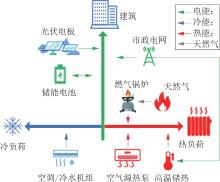
Fig.1
Structure of integrated energy system
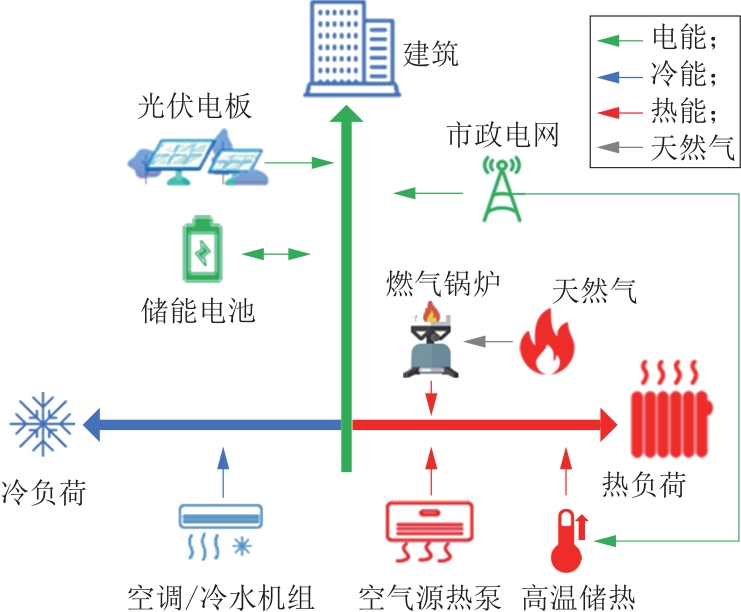
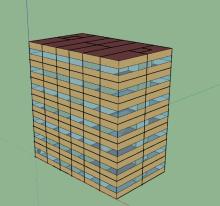
Fig.2
Residential building model
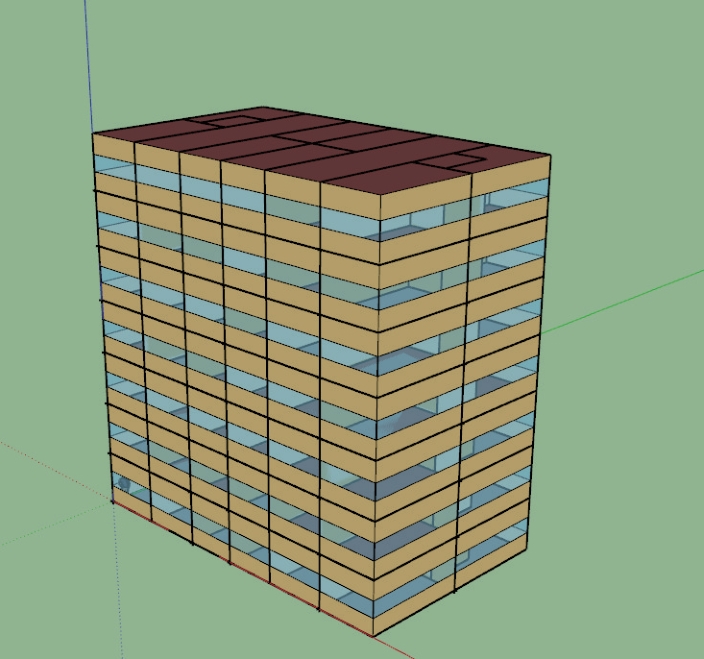
Table 1
Envelope structure parameters of residential building model
| 围护结构 | 具体构造 | 传热系数/[W∙(m2·K)-1] |
|---|---|---|
| 屋面 | 水泥砂浆20 mm+加气混凝土120 mm+水泥砂浆20 mm | 0.25 |
| 楼板 | 混凝土120 mm | 1.45 |
| 底板 | 水泥砂浆20 mm+加气混凝土150 mm | 1.45 |
| 外墙 | 水泥砂浆20 mm+空心砖200 mm+水泥砂浆20 mm | 0.45 |
| 内墙 | 水泥砂浆20 mm+空心砖100 mm+水泥砂浆20 mm | 1.45 |
| 外窗 | 3 mm双层透明玻璃 | 1.90 |
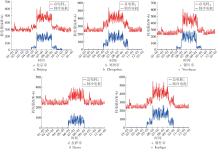
Fig.3
Original electricity consumption of residential buildings
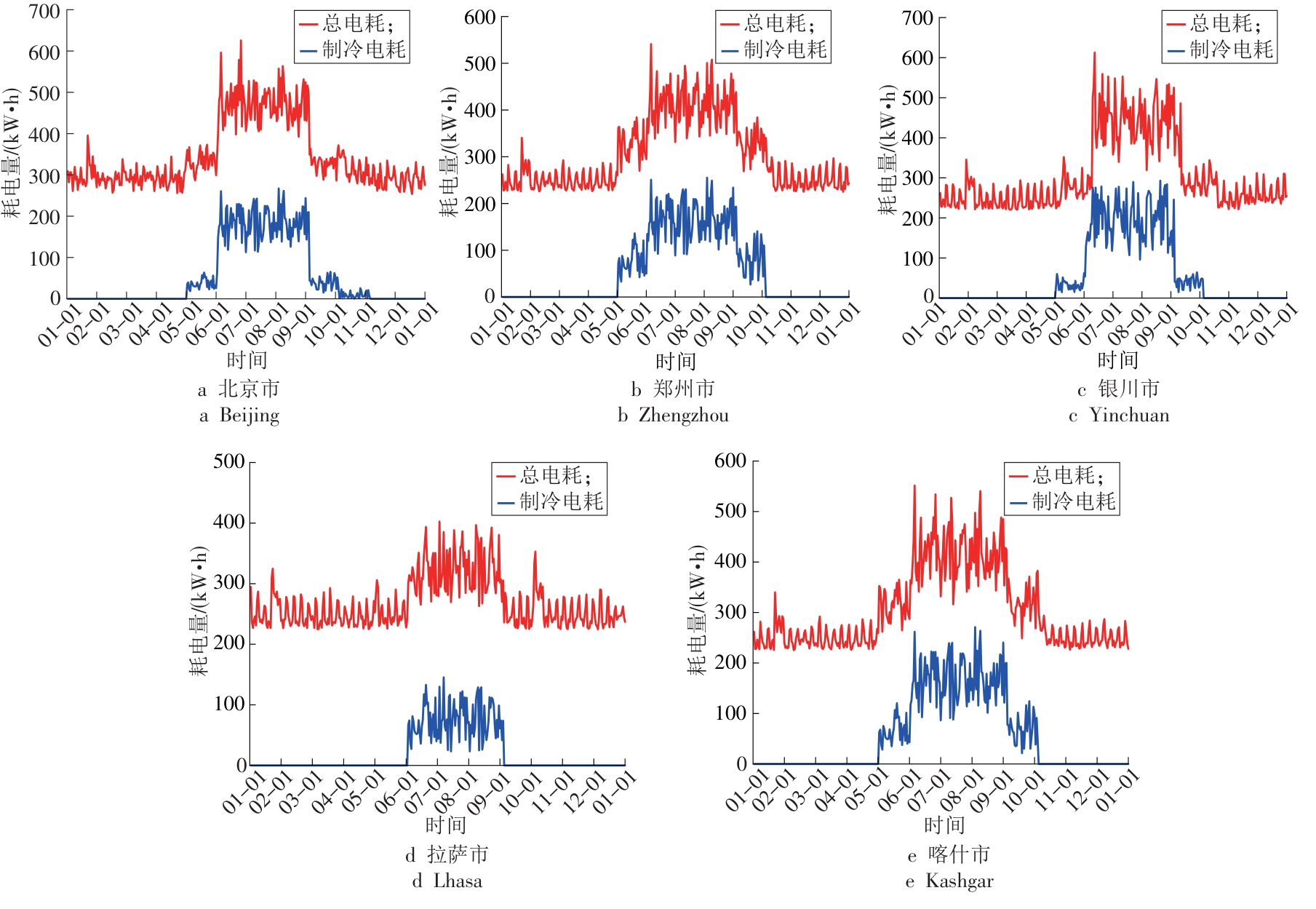
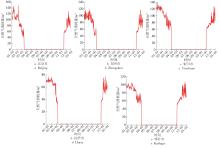
Fig.4
Original natural gas consumption for heating of residential buildings
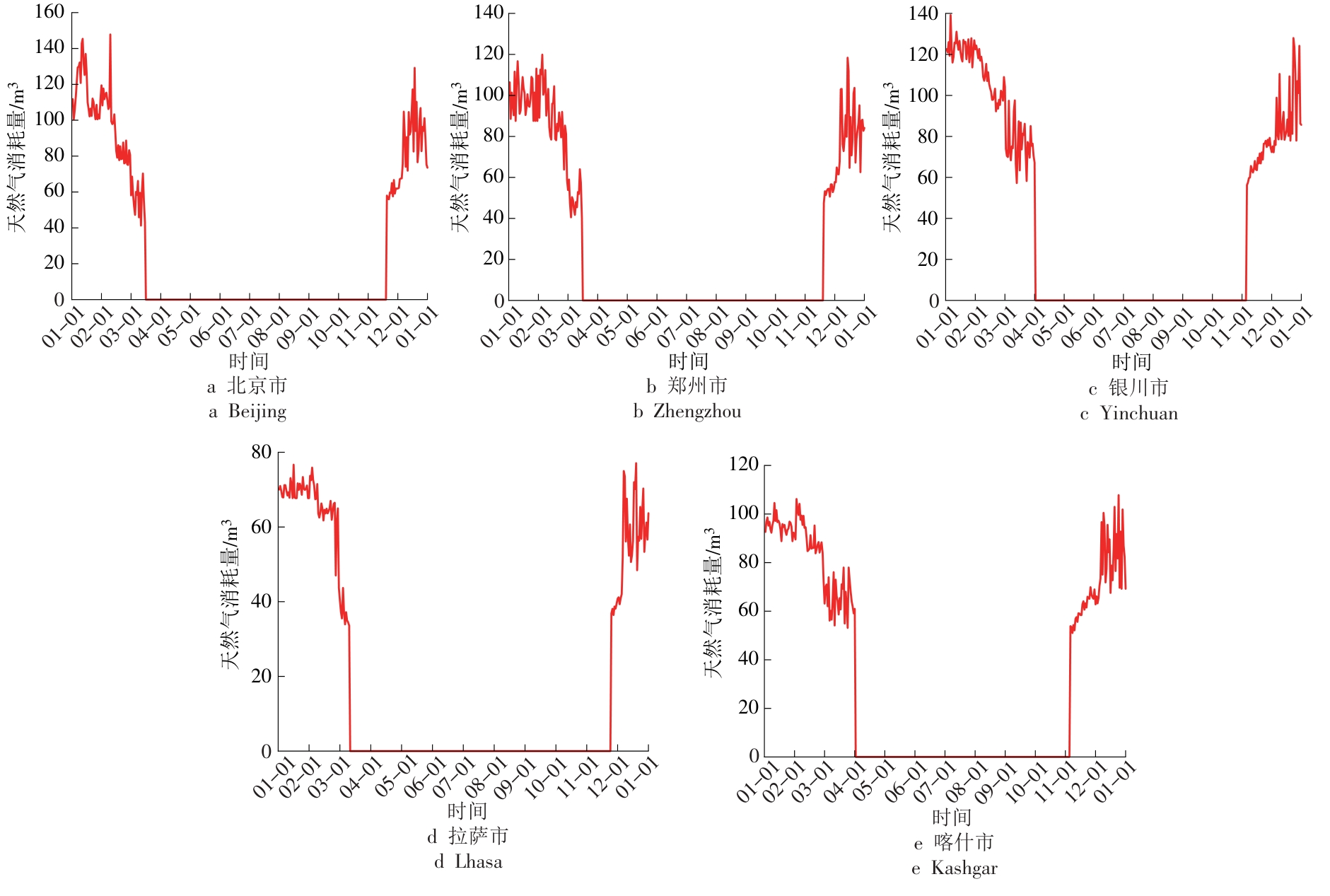
Table 2
Original heating energy consumption and carbon emissions on typical winter day for residential buildings
| 城市 | 典型日供热天然气消耗量/m³ | 典型日耗电量/(kW·h) | 碳排放量/kg | 能耗费用/元 |
|---|---|---|---|---|
| 北京 | 112 | 396 | 463.5 | 548 |
| 郑州 | 94 | 341 | 411.0 | 434 |
| 银川 | 118 | 346 | 477.0 | 420 |
| 拉萨 | 72 | 310 | 338.0 | 260 |
| 喀什 | 93 | 340 | 413.0 | 356 |
Table 3
Original electricity consumption and carbon emissions on typical summer day for residential buildings
| 城市 | 典型日耗电量/(kW·h) | 电力二氧化碳排放因子/[kg·(kW·h)-1] | 碳排放量/kg | 电价/[元·(kW·h)-1] | 电费/元 |
|---|---|---|---|---|---|
| 北京 | 495 | 0.558 0 | 276 | 0.558 3 | 276 |
| 郑州 | 443 | 0.605 8 | 268 | 0.560 0 | 249 |
| 银川 | 411 | 0.642 3 | 264 | 0.498 6 | 205 |
| 拉萨 | 360 | 0.585 6 | 211 | 0.490 0 | 176 |
| 喀什 | 460 | 0.623 1 | 286 | 0.500 0 | 230 |
Fig.5
Multi-objective optimization results using NSGA-Ⅱ
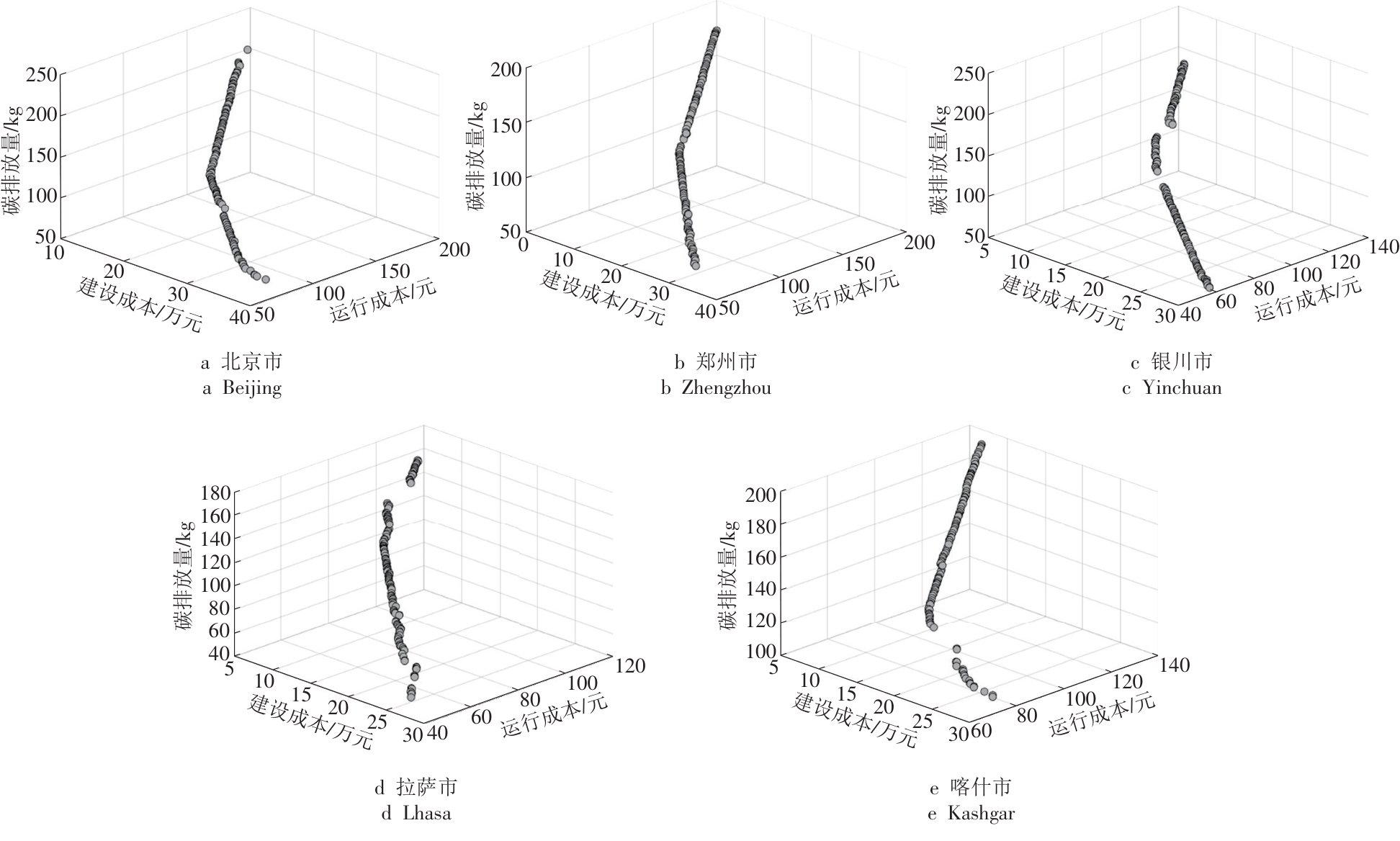
Fig.6
Multi-objective optimization results using PSO
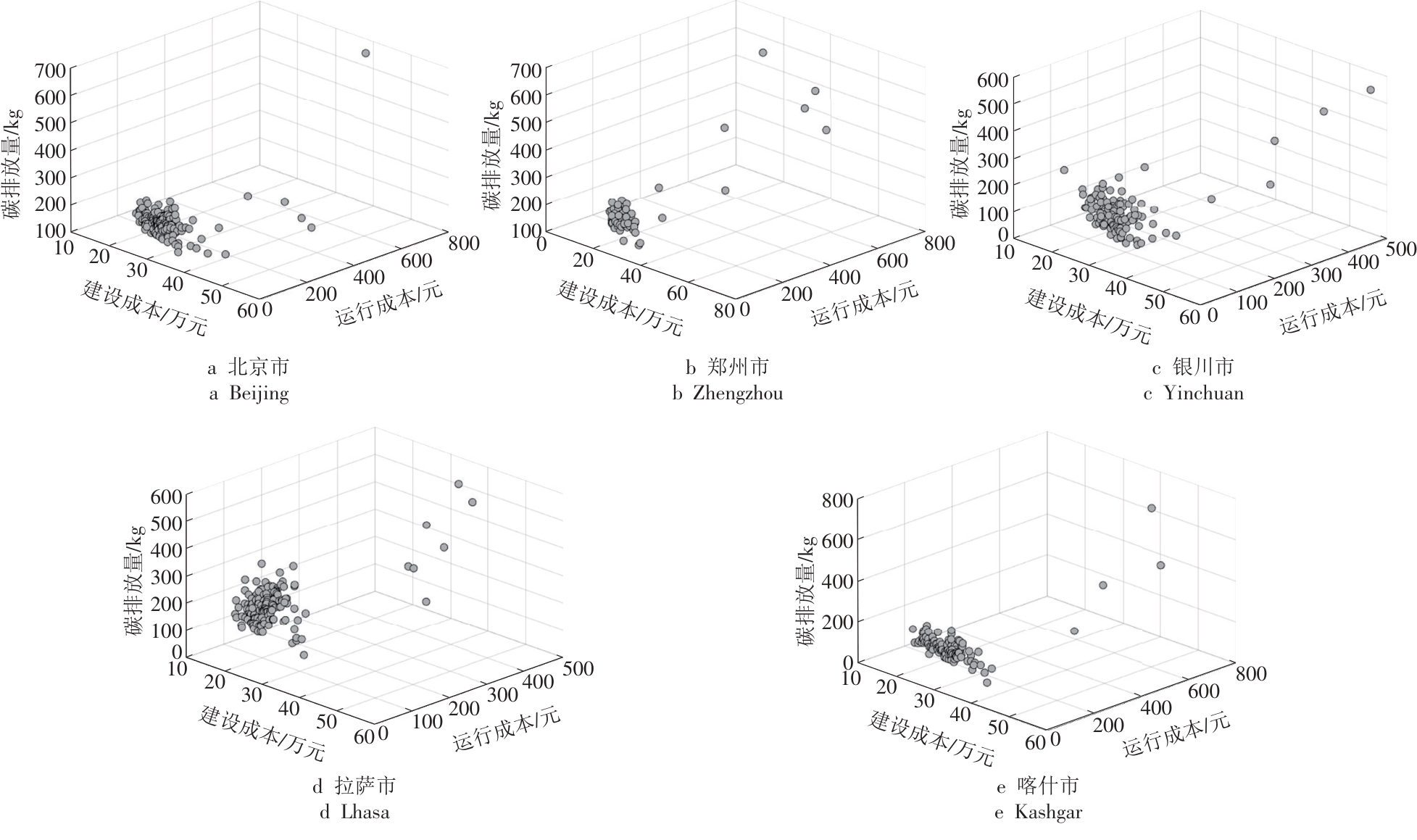
Fig.7
Multi-objective optimization results using SA
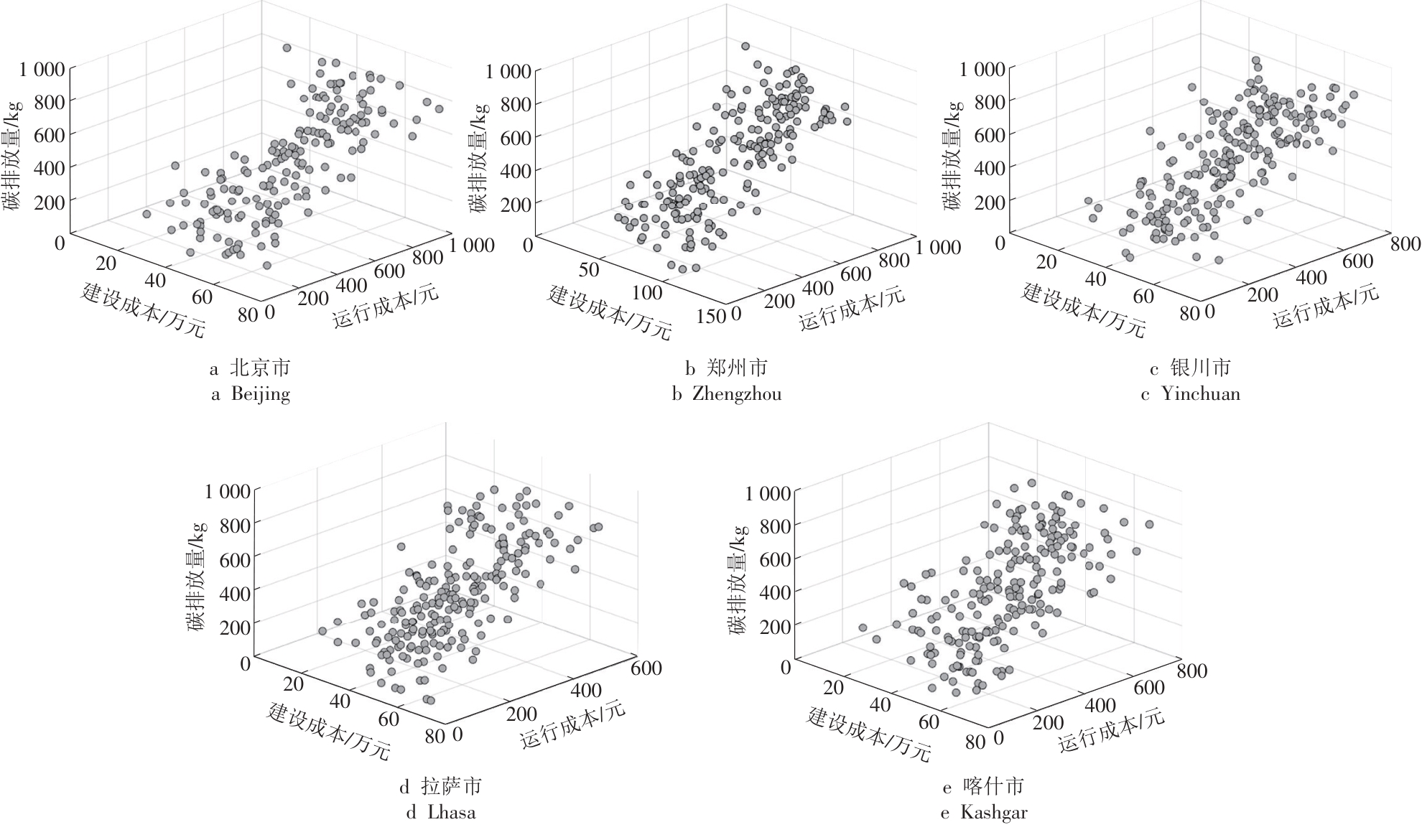
Table 4
Optimization results using different algorithms on typical winter(summer) day for residential buildings in different cities
| 城市 | 算法 | 建设成本/万元 | 冬季 | 夏季 | ||
|---|---|---|---|---|---|---|
| 运行成本/元 | 碳排放/kg | 运行成本/元 | 碳排放/kg | |||
| 北京 | 原始状态 | 0 | 548 | 464 | 276 | 276 |
| NSGA-Ⅱ | 20.027 | 118 | 119 | 77 | 109 | |
| PSO | 24.660 | 130 | 130 | 55 | 85 | |
| SA | 36.397 | 187 | 197 | 37 | 58 | |
| 郑州 | 原始状态 | 0 | 434 | 411 | 249 | 268 |
| NSGA-Ⅱ | 16.494 | 109 | 125 | 79 | 117 | |
| PSO | 18.615 | 129 | 172 | 68 | 110 | |
| SA | 31.258 | 160 | 202 | 63 | 102 | |
| 银川 | 原始状态 | 0 | 420 | 477 | 205 | 264 |
| NSGA-Ⅱ | 18.437 | 80 | 119 | 33 | 81 | |
| PSO | 28.171 | 104 | 167 | 19 | 49 | |
| SA | 24.625 | 127 | 214 | 23 | 58 | |
| 拉萨 | 原始状态 | 0 | 260 | 338 | 176 | 211 |
| NSGA-Ⅱ | 16.181 | 70 | 115 | 30 | 70 | |
| PSO | 20.075 | 138 | 227 | 29 | 69 | |
| SA | 30.503 | 91 | 176 | 45 | 105 | |
| 喀什 | 原始状态 | 0 | 356 | 413 | 230 | 286 |
| NSGA-Ⅱ | 13.200 | 104 | 154 | 82 | 163 | |
| PSO | 27.283 | 102 | 159 | 28 | 69 | |
| SA | 32.553 | 186 | 243 | 38 | 89 | |
| [1] | United Nations Environment Programme. 2024—2025 global status report for buildings and construction[R]. Nairobi: United Nations Environment Programme, 2025. |
| [2] |
OSTERGAARD P A, DUIC N, NOOROLLAHI Y, et al. Sustainable development using renewable energy technology[J]. Renewable Energy, 2020, 146: 2430-2437.
doi: 10.1016/j.renene.2019.08.094 |
| [3] | 王可睿, 莫馥任, 李怡, 等. 夏热冬暖地区公共建筑围护结构的节能技术分析[J]. 生态城市与绿色建筑, 2015(2): 80-85. |
| WANG Kerui, MO Furen, LI Yi, et al. Analysis on green energy technology of public buildings in hot summer and warm winter areas[J]. Eco-City and Green Building, 2015(2): 80-85. | |
| [4] | WANG D, YU W, ZHAO X T, et al. The influence of thermal insulation position in building exterior walls on indoor thermal comfort and energy consumption of residential buildings in Chongqing[C]// International Conference on New Energy and Future Energy System. NEES, 2016: 778-790. |
| [5] | 牛智辉, 陈天丽, 雷艳杰. 豫中地区既有居住建筑外围护结构节能改造[J]. 施工技术, 2010, 39(S2): 438-441. |
| NIU Zhihui, CHEN Tianli, LEI Yanjie. Energy-saving transformation of external envelope of existing residential buildings in central Henan Province[J]. Construction Technology, 2010, 39(S2): 438-441. | |
| [6] | 黄春华, 叶勇军. 节能建筑外墙保温层厚度的经济性优化[J]. 建筑热能通风空调, 2005, 24(6): 73-76. |
| HUANG Chunhua, YE Yongjun. Economical optimum of insulation thickness on external wall of energy saving building[J]. Building Energy & Environment, 2005, 24(6): 73-76. | |
| [7] | 蔡悦倩. 基于风环境的建筑布局形态设计策略研究[D]. 北京: 北京交通大学, 2020. |
| CAI Yueqian. Research on the design strategy of architectural layout based on wind environment[D]. Beijing: Beijing Jiaotong University, 2020. | |
| [8] | 尤欣怡, 石谦飞, 胡钧璞. 以热环境节能为导向的建筑布局优化模拟分析[J]. 建筑节能(中英文), 2025, 53(2): 111-119. |
| YOU Xinyi, SHI Qianfei, HU Junpu. Simulation analysis of layout optimization of buildings oriented by thermal environment energy saving[J]. Building Energy Efficiency, 2025, 53(2): 111-119. | |
| [9] | 刘慧娟, 宋长衡. 基于BIM技术的绿色建筑节能设计优化研究[J]. 山西建筑, 2025, 51(2): 20-23, 81. |
| LIU Huijuan, SONG Changheng. Research on optimization of energy saving design of green building based on BIM technology[J]. Shanxi Architecture, 2025, 51(2): 20-23, 81. | |
| [10] | 何蓝玲. 基于改进NSGA-Ⅱ算法的绿色施工项目多目标优化研究[D]. 贵阳: 贵州大学, 2022. |
| [11] |
WANG Y, WANG Z H, RAHMATOLLAHI N, et al. The impact of roof systems on cooling and building energy efficiency[J]. Applied Energy, 2024, 376: 124339.
doi: 10.1016/j.apenergy.2024.124339 |
| [12] | MIRRAHIMI S, MOHAMED M F, HAW L C, et al. The effect of building envelope on the thermal comfort and energy saving for high-rise buildings in hot-humid climate[J]. Renewable & Sustainable Energy Reviews, 2016, 53: 1508-1519. |
| [13] |
ATTIA S, HAMDY M, O'BRIEN W. Assessing gaps and needs for integrating building performance optimization tools in net zero energy buildings design[J]. Energy and Buildings, 2013, 60: 110-124.
doi: 10.1016/j.enbuild.2013.01.016 |
| [14] | LI K J, PAN L, XUE W P. Multi-objective optimization for energy performance improvement of residential buildings: A comparative study[J]. Energies, 2017, 10(2): 10020245. |
| [15] | HUSAINY A S N, MANGAVE S S, INGALE A S, et al. Innovation ecosystems and green building techniques for a sustainable future: Leveraging advanced technologies[J]. The Asian Review of Civil Engineering, 2024, 13(2): 1-10. |
| [16] |
刘一宁, 陈柏安, 杜鹏程, 等. 基于MDLOF-iForest和M-KNN-Slope的公共建筑负荷异常数据识别与修复[J]. 综合智慧能源, 2025, 47(3): 62-72.
doi: 10.3969/j.issn.2097-0706.2025.03.006 |
|
LIU Yining, CHEN Baian, DU Pengcheng, et al. Detection and repair of abnormal load data of public buildings based on MDLOF-iForest and M-KNN-Slope[J]. Integrated Intelligent Energy, 2025, 47(3): 62-72.
doi: 10.3969/j.issn.2097-0706.2025.03.006 |
|
| [17] |
甄箫斐, 李尚娥, 张永恒, 等. 西北地区近零能耗建筑围护结构多目标优化研究[J]. 综合智慧能源, 2024, 46(12): 81-90.
doi: 10.3969/j.issn.2097-0706.2024.12.010 |
|
ZHEN Xiaofei, LI Shang'e, ZHANG Yongheng, et al. Research on multi-objective optimization of envelope structures for nearly zero-energy buildings in Northwest China[J]. Integrated Intelligent Energy, 2024, 46(12): 81-90.
doi: 10.3969/j.issn.2097-0706.2024.12.010 |
|
| [18] |
樊颜搏, 熊亚选, 李想, 等. 基于遗传算法的建筑用能多目标优化应用进展[J]. 综合智慧能源, 2024, 46(9): 69-85.
doi: 10.3969/j.issn.2097-0706.2024.09.009 |
|
FAN Yanbo, XIONG Yaxuan, LI Xiang, et al. Advancement in multi-objective optimization for building energy use based on genetic algorithms[J]. Integrated Intelligent Energy, 2024, 46(9): 69-85.
doi: 10.3969/j.issn.2097-0706.2024.09.009 |
|
| [19] |
胡开永, 刘峰, 吴秀杰, 等. 基于Trnsys能耗预测的村镇建筑不同供能方式碳-经济分析[J]. 综合智慧能源, 2023, 45(8): 64-71.
doi: 10.3969/j.issn.2097-0706.2023.08.008 |
|
HU Kaiyong, LIU Feng, WU Xiujie, et al. Carbon-economy analysis on energy supply methods for rural buildings based on Trnsys energy consumption prediction[J]. Integrated Intelligent Energy, 2023, 45(8): 64-71.
doi: 10.3969/j.issn.2097-0706.2023.08.008 |
|
| [20] |
WANG C S, LV C X, LI P, et al. Modeling and optimal operation of community integrated energy systems: A case study from China[J]. Applied Energy, 2018, 230:1242-1254.
doi: 10.1016/j.apenergy.2018.09.042 |
| [21] |
BAHMANI R, KARIMI H, JADID S. Cooperative energy management of multi-energy hub systems considering demand response programs and ice storage[J]. International Journal of Electrical Power & Energy Systems, 2021, 130: 106904.
doi: 10.1016/j.ijepes.2021.106904 |
| [22] |
ZHENG X Y, WU G C, QIU Y W, et al. A MINLP multi-objective optimization model for operational planning of a case study CCHP system in urban China[J]. Applied Energy, 2018, 210: 1126-1140.
doi: 10.1016/j.apenergy.2017.06.038 |
| [23] |
GUO J C, LIU Z J, WU X, et al. Two-layer co-optimization method for a distributed energy system combining multiple energy storages[J]. Applied Energy, 2022, 322: 119486.
doi: 10.1016/j.apenergy.2022.119486 |
| [24] | 韩叶霞. 低能耗建筑中含分布式电源的多目标优化研究[D]. 北京: 北京建筑大学, 2018. |
| HAN Yexia. Research on distributed power supply in low-energy buildings of multi-objective optimization[D]. Beijing: Beijing University of Civil Engineering and Architecture, 2018. | |
| [25] |
JIANG Z, RIVERO M E N, LIU X L, et al. A novel composite phase change material for medium temperature thermal energy storage manufactured with a scalable continuous hot-melt extrusion method[J]. Applied Energy, 2021, 303: 117591.
doi: 10.1016/j.apenergy.2021.117591 |
| [26] |
DEB K, PRATAP A, AGARWAL S, et al. A fast and elitist multiobjective genetic algorithm: NSGA-Ⅱ[J]. IEEE Transaction on Evolutionary Computation, 2002, 6(2): 182-197.
doi: 10.1109/4235.996017 |
| [27] |
KOU F C, GONG Q P, ZOU Y, et al. Solar application potential and thermal property optimization of a novel zero-carbon heating building[J]. Energy and Buildings, 2023, 279: 112688.
doi: 10.1016/j.enbuild.2022.112688 |
| [28] |
JUNGHANS L, DARDE N. Hybrid single objective genetic algorithm coupled with the simulated annealing optimization method for building optimization[J]. Energy and Buildings, 2015, 86: 651-662.
doi: 10.1016/j.enbuild.2014.10.039 |
| [29] |
EVINS R. A review of computational optimisation methods applied to sustainable building design[J]. Renewable and Sustainable Energy Reviews, 2013, 22: 230-245.
doi: 10.1016/j.rser.2013.02.004 |
| [1] | DOU Xiang, LI Zhuoqun, ZHANG Zhe, WEN Xin, ZHAO Bo, HAN Yan, ZHONG Sheng. Load forecasting for integrated energy systems based on CNN-BiLSTM-RF-KDE [J]. Integrated Intelligent Energy, 2025, 47(9): 60-70. |
| [2] | ZHANG Yuanxi, YANG Guohua, MA Longteng, MA Xin, LIU Yaoze. Optimized wind-solar-storage configuration of industrial park microgrids based on improved differential evolution algorithm [J]. Integrated Intelligent Energy, 2025, 47(9): 71-79. |
| [3] | ZHOU Kai, WU Yanxi, HUANG Yuxiang, YANG Jinghao, FAN Xiaochao, LI Jianwei, WEI Zhizong, TENG Jian, CHEN Li, YE Qin, ZHANG Hao, JIANG Junnan. Large-scale gravity energy storage technology for solid flow in areas with large altitude differences [J]. Integrated Intelligent Energy, 2025, 47(8): 1-9. |
| [4] | ZHEN Wenxi, MA Xiping, DAI Yuehong, NIU Wei, CHEN Baixu, ZENG Gui. Research on wind-storage self-synchronizing frequency regulation strategy based on intermediate layer control [J]. Integrated Intelligent Energy, 2025, 47(8): 21-29. |
| [5] | CHU Longhao, LI Xiaozhu. Bidding strategies and value allocation mechanism for multi-type electric energy trading with participation of shared energy storage [J]. Integrated Intelligent Energy, 2025, 47(8): 30-39. |
| [6] | TAN Jiaqun, LYU Ruxuan, JU Hongjin, HONG Chunxue, XIAO Haiping, LEI Jing, HAN Zhenxing. Research on optimal scheduling strategy of wind-photovoltaic-thermal-storage integrated energy system based on IBES [J]. Integrated Intelligent Energy, 2025, 47(8): 68-76. |
| [7] | SONG Kun, GU Wenbo. Research progress on modeling and optimization of integrated energy systems considering uncertainty [J]. Integrated Intelligent Energy, 2025, 47(7): 32-43. |
| [8] | CHEN Liang, LIU Guiying, SU Shiping, TANG Changjiu, WANG Chenhao, GUO Sitong. Coordinated optimization scheduling of integrated energy system based on PER-MADDPG algorithm with two-layer network [J]. Integrated Intelligent Energy, 2025, 47(7): 44-54. |
| [9] | ZHENG Haoyu, ZHOU Jiahui, TONG Bin, WANG Haiming, XU Gang, ZHANG Ziyue. Research on capacity allocation and operation scheduling optimization of green hydrogen system with compressed air energy storage [J]. Integrated Intelligent Energy, 2025, 47(7): 64-70. |
| [10] | XING Zuoxia, ZHAO Ziyi, SUN Hao, ZHANG Pengfei, FU Qitong. Research on low-carbon economic operation optimization of integrated energy systems based on multi-level utilization of hydrogen production from electricity [J]. Integrated Intelligent Energy, 2025, 47(7): 71-81. |
| [11] | ZHANG Debin, LIN Wenye, HE Zixuan, YUE Xinru, SONG Wenji, FENG Ziping, FARID Mohammed Mehdi, USHAK DE GRAGEDA Svetlana Nikolaevna. Day-ahead dispatch optimization for integrated energy system in building prosumer community using generalized energy storage [J]. Integrated Intelligent Energy, 2025, 47(7): 82-92. |
| [12] | CHENG Xianlong, MA Yun, HAN Junfeng, MO Ying, GAO Yan. Research on economic scheduling of power systems with wind farms based on improved African vulture optimization algorithm [J]. Integrated Intelligent Energy, 2025, 47(6): 37-46. |
| [13] | WANG Cheng, SHAO Chong, HE Xin, DONG Haiying. Optimal power allocation for electrochemical energy storage power stations based on MOIBKA algorithm [J]. Integrated Intelligent Energy, 2025, 47(6): 74-84. |
| [14] | CHEN Hao, MA Gang, QIAN Da, MA Jian, PENG Leyao. Optimization of regional integrated energy systems under green certificate and carbon trading mechanism considering tiered demand response [J]. Integrated Intelligent Energy, 2025, 47(5): 21-30. |
| [15] | ZHANG Wenbo, QIN Wenping, LIU Jiaxin, CHEN Yumei, LIU Boyang, ZHAO Anting. Robust optimization scheduling strategy for virtual power plants considering demand response and leasing shared energy storage under the green certificate-electricity- carbon coupled market [J]. Integrated Intelligent Energy, 2025, 47(5): 31-40. |
| Viewed | ||||||
|
Full text |
|
|||||
|
Abstract |
|
|||||