Integrated Intelligent Energy ›› 2026, Vol. 48 ›› Issue (1): 13-22.doi: 10.3969/j.issn.2097-0706.2026.01.002
• AI-driven new energy power prediction and optimization • Previous Articles Next Articles
CHEN Xudong( ), BIAN Lijie(), MA Gang*(), CHEN Hao(), ZHAN Xiaosheng(), PENG Leyao()
Received:2025-07-03
Revised:2025-09-05
Published:2026-01-25
Contact:
MA Gang
E-mail:2741928845@qq.com;2239749260@qq.com;nnumg2@njnu.edu.cn;3312266385@qq.com;1478604982@qq.com;1519393180@qq.com
Supported by:CLC Number:
CHEN Xudong, BIAN Lijie, MA Gang, CHEN Hao, ZHAN Xiaosheng, PENG Leyao. Short-term wind power prediction based on CEEMDAN-DBO-VMD-TCN-BiGRU[J]. Integrated Intelligent Energy, 2026, 48(1): 13-22.
Add to citation manager EndNote|Ris|BibTeX
URL: https://www.hdpower.net/EN/10.3969/j.issn.2097-0706.2026.01.002
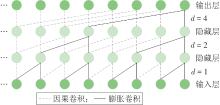
Fig.1
TCN architecture
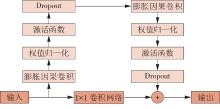
Fig.2
Residual module structure
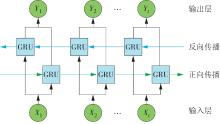
Fig.3
BiGRU principle
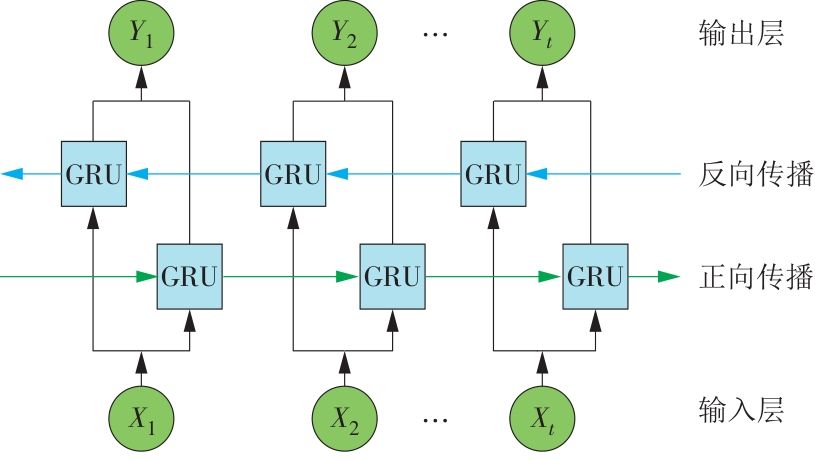
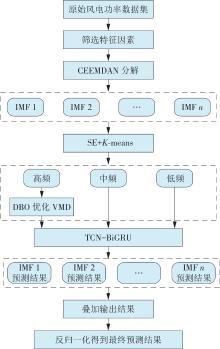
Fig.4
Combined model prediction process
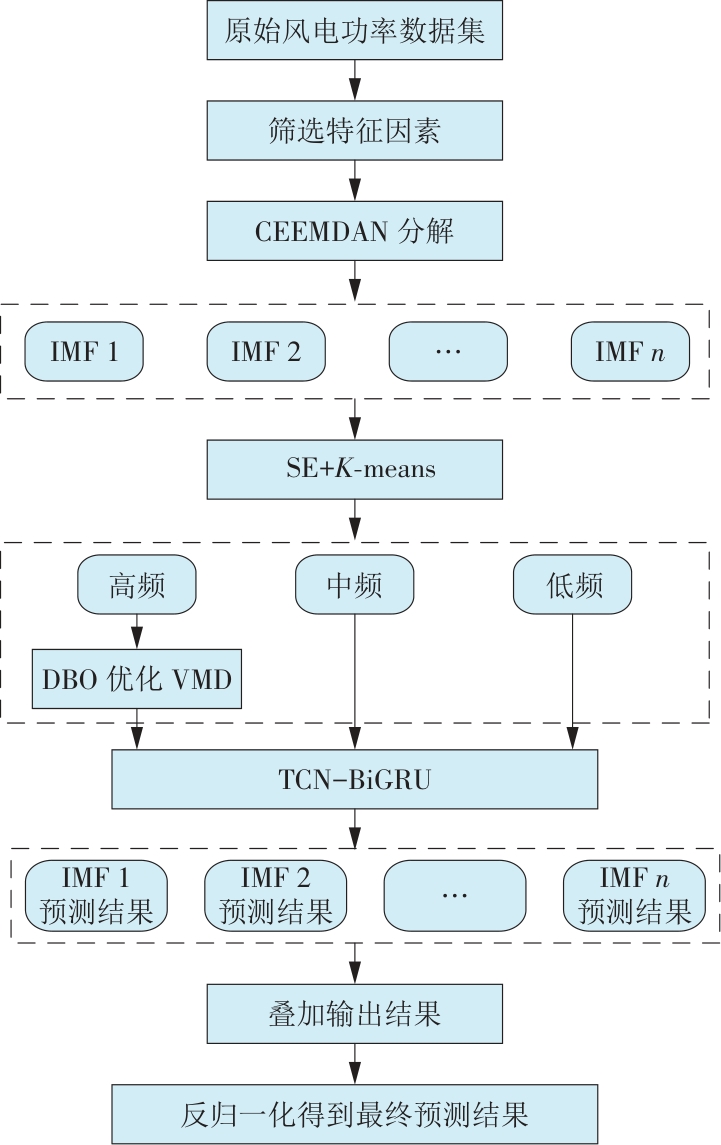
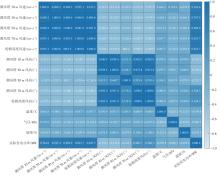
Fig.5
Correlation between wind power and various features
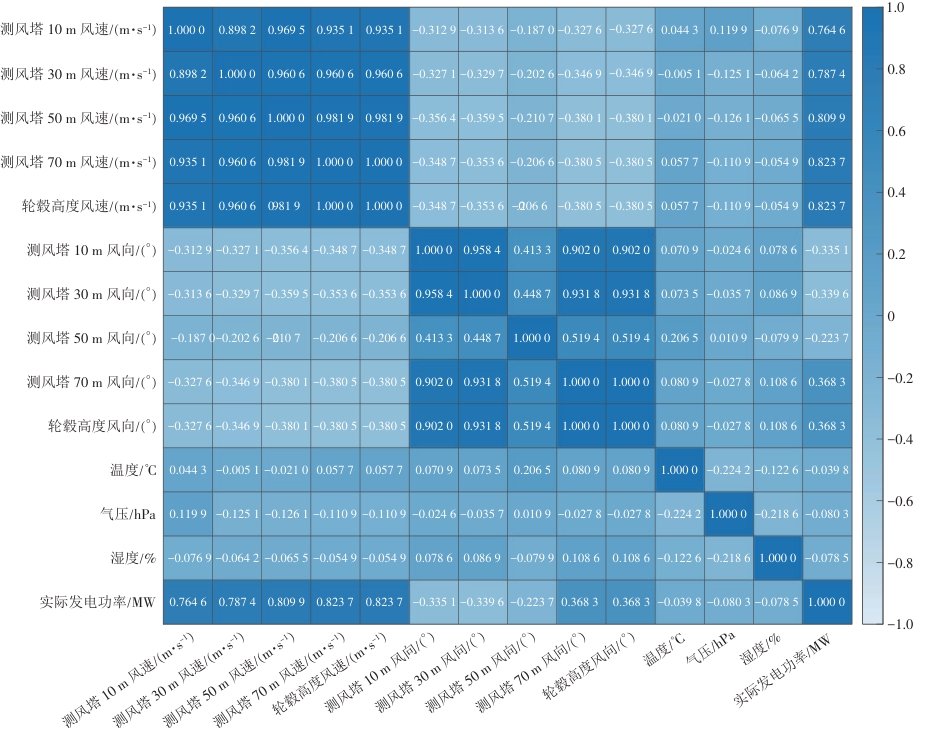
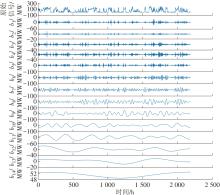
Fig.6
CEEMDAN primary decomposition
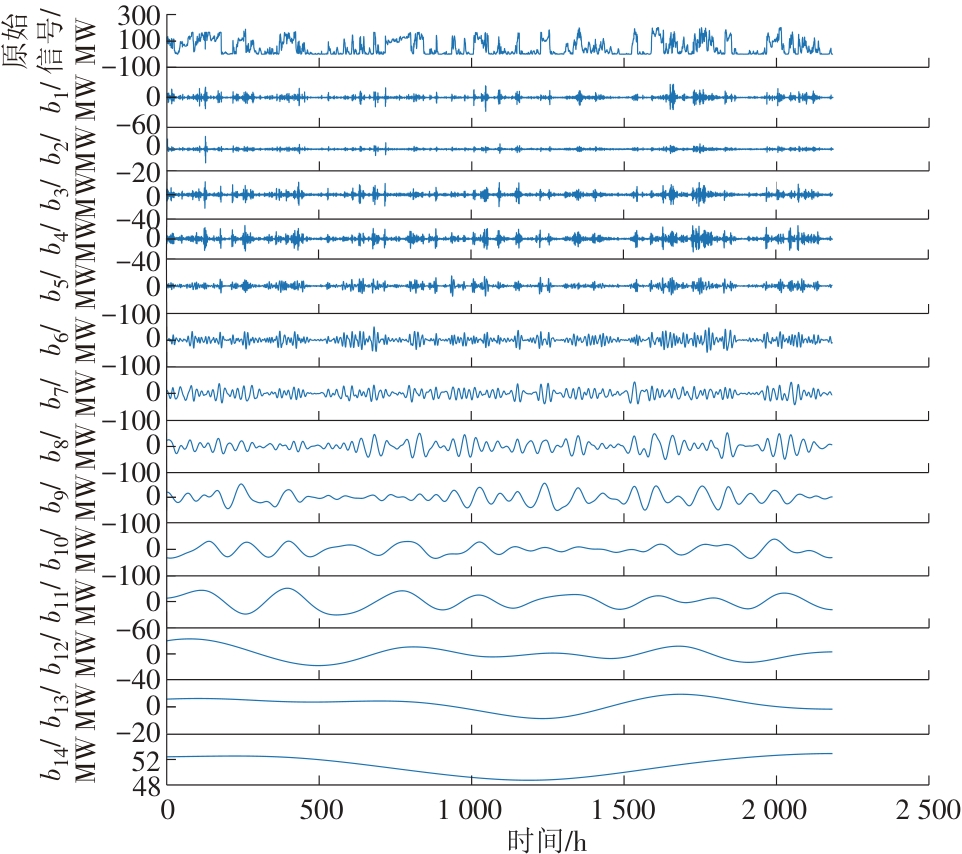
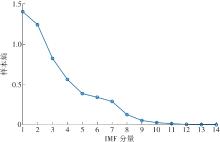
Fig.7
SE values of all IMF components
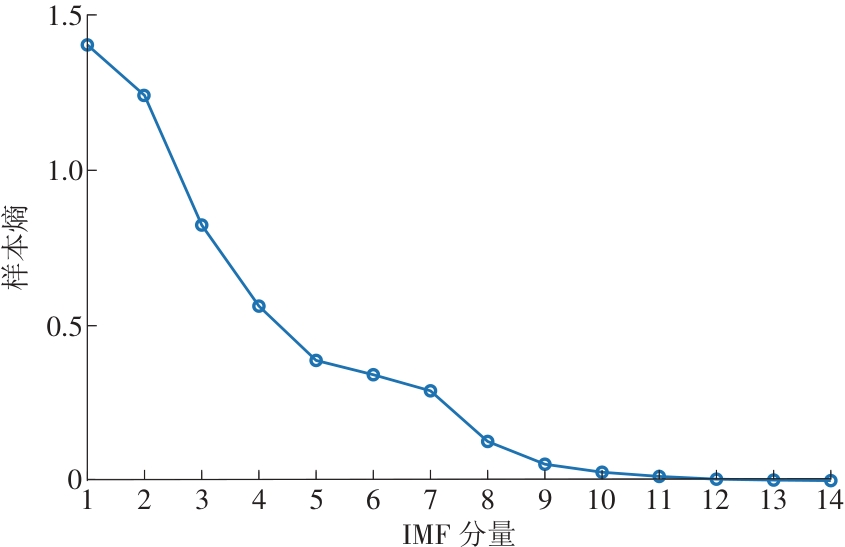
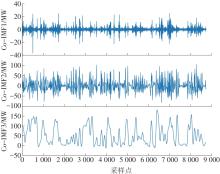
Fig.8
Components of each frequency band after clustering
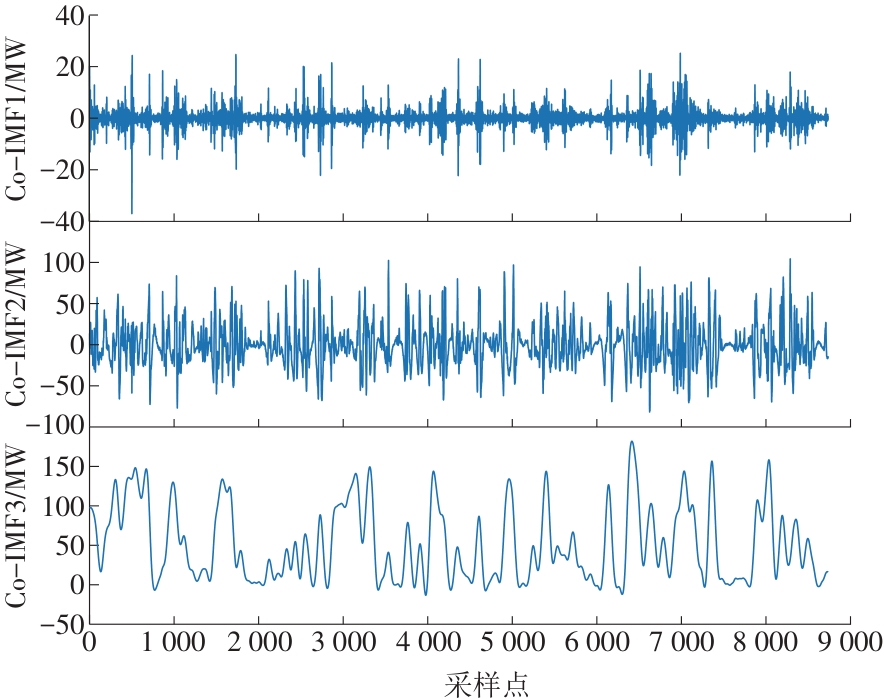
Fig.9
High-frequency component prediction results
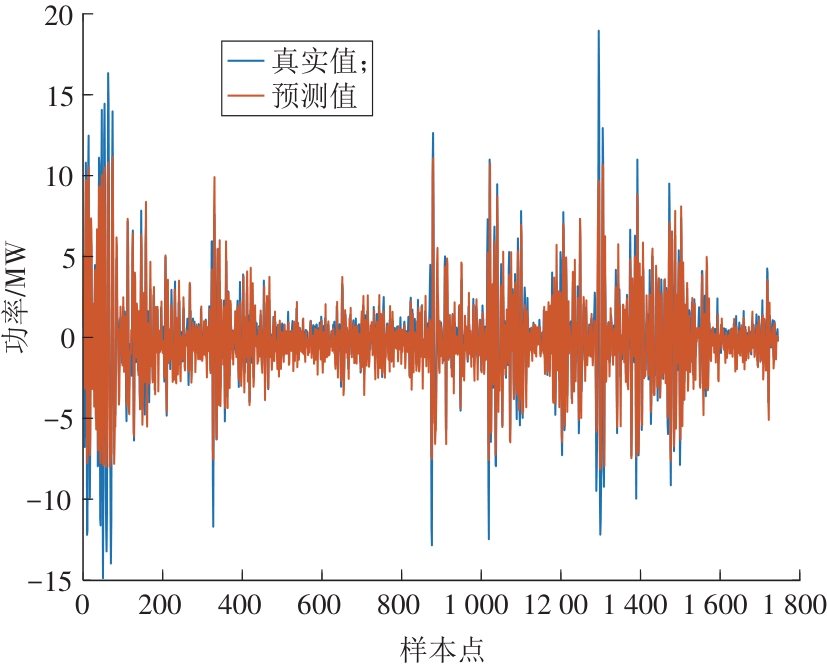
Fig.10
Medium-frequency component prediction results
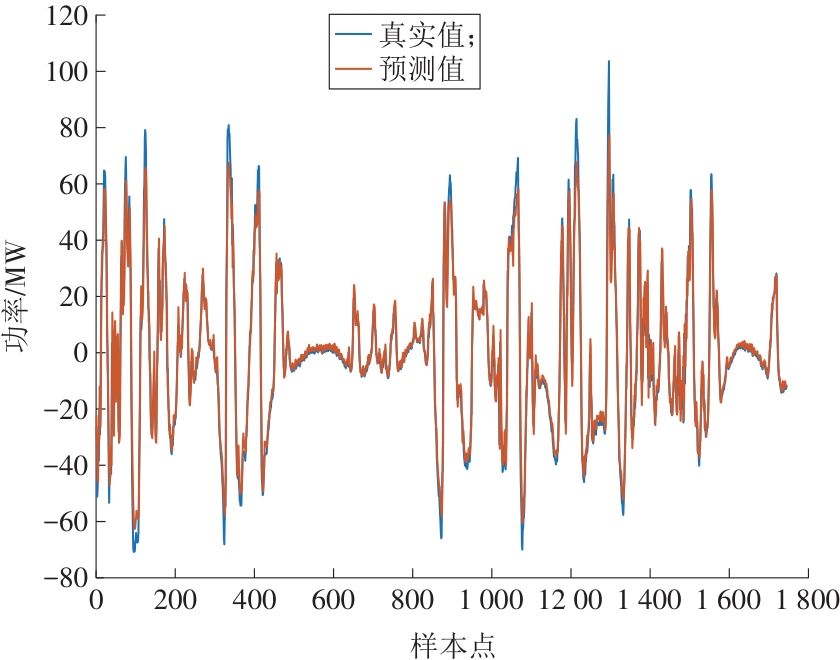
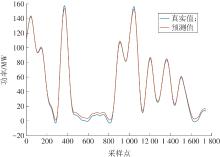
Fig.11
Low-frequency component prediction results
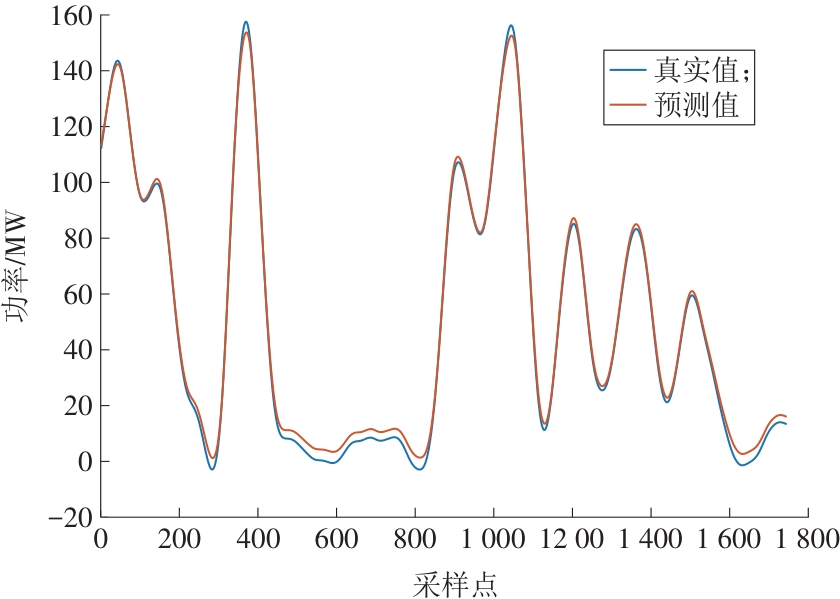
Table 1
Evaluation indicators of component prediction experiment
| 分量 | RMSE/MW | MAE/MW | MAPE/% | R2/% |
|---|---|---|---|---|
| 高频 | 12.55 | 8.99 | 10.28 | 77.80 |
| 中频 | 11.87 | 7.78 | 9.58 | 96.56 |
| 低频 | 8.47 | 5.98 | 8.46 | 97.73 |
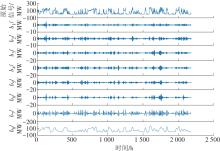
Fig.12
Components of each frequency band after optimized secondary decomposition
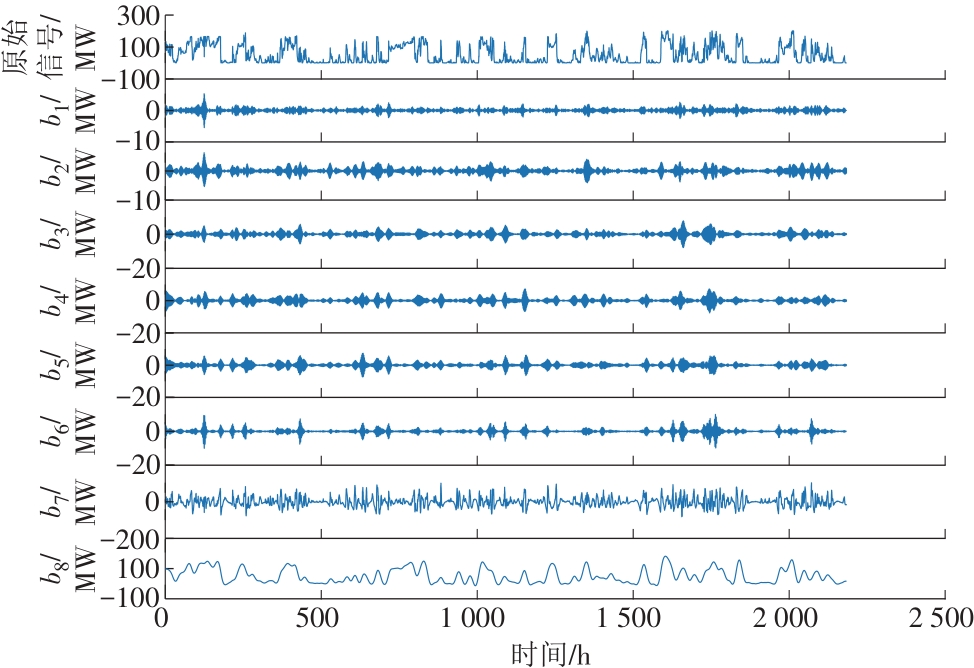
Fig.13
Comparison of prediction results in experiment 1
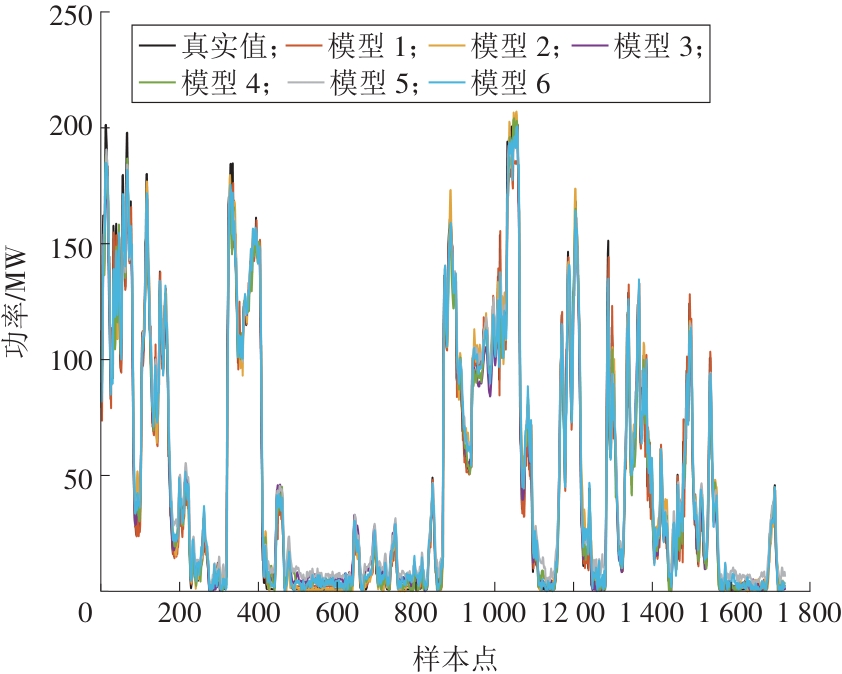
Table 2
Evaluation indicators of experiment 1
| 模型 | RMSE/MW | MAE/MW | MAPE/% | R2/% |
|---|---|---|---|---|
| 1 | 8.94 | 5.52 | 8.64 | 97.36 |
| 2 | 7.75 | 5.50 | 7.17 | 98.02 |
| 3 | 7.45 | 5.24 | 6.82 | 98.18 |
| 4 | 7.01 | 4.95 | 6.73 | 98.38 |
| 5 | 6.86 | 4.93 | 6.53 | 98.45 |
| 6 | 6.47 | 4.30 | 6.28 | 98.62 |
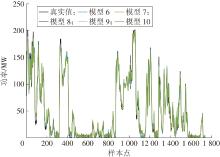
Fig.14
Comparison of prediction results in experiment 2
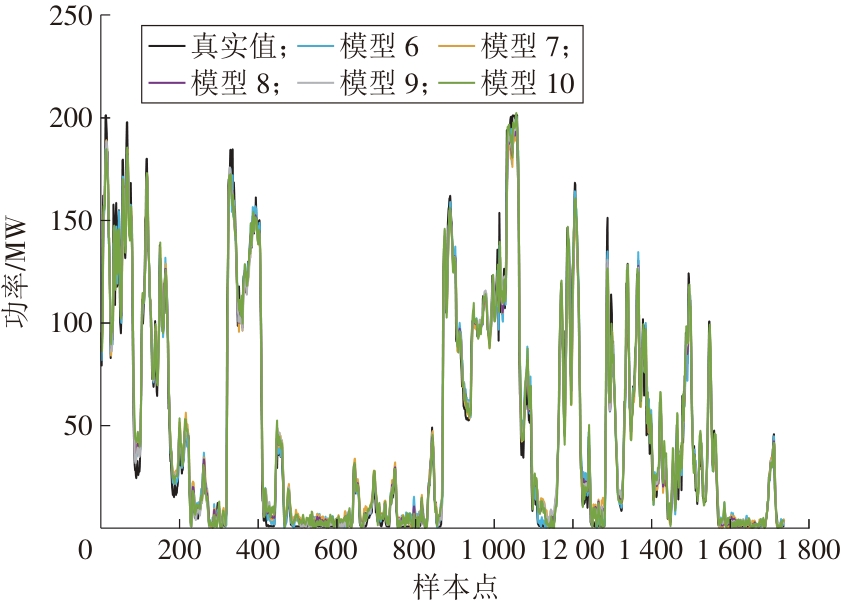
Table 3
Evaluation indicators of experiment 2
| 模型 | RMSE/MW | MAE/MW | MAPE/% | R2/% |
|---|---|---|---|---|
| 6 | 6.47 | 4.31 | 6.28 | 98.62 |
| 7 | 8.14 | 5.91 | 7.46 | 97.81 |
| 8 | 6.69 | 4.79 | 6.31 | 98.53 |
| 9 | 8.73 | 5.83 | 8.67 | 97.49 |
| 10 | 7.49 | 5.48 | 7.15 | 98.14 |
| [1] | 国家能源局. 新型电力系统发展蓝皮书[EB/OL].(2023-10-10)[2025-06-28]. http://www.nea.gov.cn/2023-06/02/c_1310724249.htm. |
| [2] | 薛禹胜, 雷兴, 薛峰, 等. 关于风电不确定性对电力系统影响的评述[J]. 中国电机工程学报, 2014, 34(29): 5029-5040. |
| XUE Yusheng, LEI Xing, XUE Feng, et al. A review on impacts of wind power uncertainties on power systems[J]. Proceedings of the CSEE, 2014, 34(29): 5029-5040. | |
| [3] | 郁琛, 薛禹胜, 文福拴, 等. 风电功率预测误差的风险评估[J]. 电力系统自动化, 2015, 39(7): 52-58. |
| YU Chen, XUE Yusheng, WEN Fushuan, et al. Risk assessment of wind power prediction errors[J]. Automation of Electric Power Systems, 2015, 39(7): 52-58. | |
| [4] |
ZHANG R X, ZHU Z Y, YUAN M, et al. Regional residential short-term load-interval forecasting based on SSA-LSTM and load consumption consistency analysis[J]. Energies, 2023, 16(24):8062.
doi: 10.3390/en16248062 |
| [5] |
唐新姿, 顾能伟, 黄轩晴, 等. 风电功率短期预测技术研究进展[J]. 机械工程学报, 2022, 58(12): 213-236.
doi: 10.3901/JME.2022.12.213 |
|
TANG Xinzi, GU Nengwei, HUANG Xuanqing, et al. Progress on short term wind power forecasting technology[J]. Journal of Mechanical Engineering, 2022, 58(12):213-236.
doi: 10.3901/JME.2022.12.213 |
|
| [6] |
张冬冬, 单琳珂, 刘天皓. 人工智能技术在风力与光伏发电数据挖掘及功率预测中的应用综述[J]. 综合智慧能源, 2025, 47(3): 32-46.
doi: 10.3969/j.issn.2097-0706.2025.03.004 |
|
ZHANG Dongdong, SHAN Linke, LIU Tianhao. Review on the application of artificial intelligence in data mining and wind and photovoltaic power forecasting[J]. Integrated Intelligent Energy, 2025, 47(3): 32-46.
doi: 10.3969/j.issn.2097-0706.2025.03.004 |
|
| [7] |
HUANG J T, QIN J, SONG S Z. A novel wind power outlier detection method with support vector machine optimized by improved Harris hawk[J]. Energies, 2023, 16(24): 7998.
doi: 10.3390/en16247998 |
| [8] |
JIN T Y, XIA Y, JIANG H L. A physics-informed neural network approach for surrogating a numerical simulation of fractured horizontal well production prediction[J]. Energies, 2023, 16(24): 7948.
doi: 10.3390/en16247948 |
| [9] |
HUANG A Z, XU R, CHEN Y, et al. Research on multi-label user classification of social media based on ML-KNN algorithm[J]. Technological Forecasting and Social Change, 2023, 188: 122271.
doi: 10.1016/j.techfore.2022.122271 |
| [10] | 郭威, 孙胜博, 陶鹏, 等. 基于多元变分模态分解和混合深度神经网络的短期光伏功率预测[J]. 太阳能学报, 2024, 45(4): 489-499. |
| GUO Wei, SUN Shengbo, TAO Peng, et al. Short-term photovoltaic power forecasting based on multivariate variational mode decomposition and hybrid deep neural network[J]. Acta Energiae Solaris Sinica, 2024, 45(4): 489-499. | |
| [11] |
SUN W, HUANG C C. A carbon price prediction model based on secondary decomposition algorithm and optimized back propagation neural network[J]. Journal of Cleaner Production, 2020, 243: 118671.
doi: 10.1016/j.jclepro.2019.118671 |
| [12] |
SAHU P K, RAI R N, PATEL N. Deep learning-based fault classification of rolling bearings under noisy conditions using CEEMD-VMD-IMF with magnitude scalogram images[J]. Journal of Mechanical Science and Technology, 2024, 38(10): 5281-5295.
doi: 10.1007/s12206-024-0905-3 |
| [13] | 岳有军, 刘英翰, 赵辉, 等. 基于CEEMDAN-SE和DBN的短期电力负荷预测[J]. 电测与仪表, 2020, 57(17): 59-65. |
| YUE Youjun, LIU Yinghan, ZHAO Hui, et al. Short-term load forecasting based on CEEMDAN-SE and DBN[J]. Electrical Measurement & Instrumentation, 2020, 57(17): 59-65. | |
| [14] | 胡锐, 乔加飞, 李永华, 等. 基于WOA-VMD-SSA-LSTM的中长期风电预测[J]. 太阳能学报, 2024, 45(9): 549-556. |
| HU Rui, QIAO Jiafei, LI Yonghua, et al. Medium and long term wind power forecast based on WOA-VMD-SSA-LSTM[J]. Acta Energiae Solaris Sinica, 2024, 45(9): 549-556. | |
| [15] |
PEI Y, HUANG C J, SHEN Y, et al. A novel model for spot price forecast of natural gas based on temporal convolutional network[J]. Energies, 2023, 16(5): 2321.
doi: 10.3390/en16052321 |
| [16] | 黄冬梅, 杨旭, 胡安铎, 等. 基于CNN-BiGRU-XGBoost的新型电力系统虚假数据注入攻击检测[J]. 电网技术, 2025, 49(5): 2119-2127. |
| HUANG Dongmei, YANG Xu, HU Anduo, et al. Detection of false data injection attack in new power system based on CNN-BiGRU-XGBoost[J]. Power System Technology, 2025, 49(5): 2119-2127. | |
| [17] |
JIANG Z Y, CHE J X, WANG L N. Ultra-short-term wind speed forecasting based on EMD-VAR model and spatial correlation[J]. Energy Conversion and Management, 2021, 250:114919.
doi: 10.1016/j.enconman.2021.114919 |
| [18] | 韩烨宸, 贺兴, 艾芊. 基于GRU-EEMD算法的非侵入式配电网功率欠定盲源分离[J]. 电力系统自动化, 2023, 47(14): 64-71. |
| HAN Yechen, HE Xing, AI Qian. Non-intrusive underdetermined blind power source separation for distribution network based on gate recurrent unit and ensemble empirical mode decomposition algorithm[J]. Automation of Electric Power Systems, 2023, 47(14): 64-71. | |
| [19] |
ZHANG G, ZHANG C C, ZHANG H Y. Improved K-means algorithm based on density Canopy[J]. Knowledge-based Systems, 2018, 145: 289-297.
doi: 10.1016/j.knosys.2018.01.031 |
| [20] | 钟燕, 王军, 宋戈, 等. 基于二次重构分解去噪及双向长短时记忆网络的极端天气下超短期电力负荷预测[J/OL]. 电网技术, 2024: 1-15(2024-09-11)[2025-06-28]. https://link.cnki.net/doi/10.13335/j.1000-3673.pst.2024.0935. |
| ZHONG Yan, WANG Jun, SONG Ge, et al. Ultra-short-term power load prediction under extreme weather based on secondary reconstruction denoising and BiLSTM[J/OL]. Power System Technology, 2024: 1-15(2024-09-11)[2025-06-28]. https://link.cnki.net/doi/10.13335/j.1000-3673.pst.2024.0935. | |
| [21] | 方朝雄, 郑洁云, 张章煌, 等. 基于相似日与VMD-DBO-KELM的分布式光伏发电功率预测方法[J]. 高电压技术, 2025, 51(7): 3477-3487. |
| FANG Chaoxiong, ZHENG Jieyun, ZHANG Zhanghuang, et al. Distributed photovoltaic power prediction based on similar day and VMD-DBO-KELM[J]. High Voltage Engineering, 2025, 51(7): 3477-3487. | |
| [22] | 范兴明, 许洪华, 李涛, 等. 基于SMA-VMD和能量熵的高压断路器故障诊断[J]. 高电压技术, 2024, 50(12): 5248-5258. |
| FAN Xingming, XU Honghua, LI Tao, et al. Fault diagnosis of high-voltage circuit breakers based on SMA-VMD and energy entropy[J]. High Voltage Engineering, 2024, 50(12): 5248-5258. | |
| [23] |
盛瑞祥, 张啸宇. 基于概率TCN-Transformer的短期光伏功率预测模型[J]. 综合智慧能源, 2024, 46(11): 10-18.
doi: 10.3969/j.issn.2097-0706.2024.11.002 |
|
SHENG Ruixiang, ZHANG Xiaoyu. Photovoltaic power forecasting model based on probabilistic TCN-Transformer[J]. Integrated Intelligent Energy, 2024, 46(11): 10-18.
doi: 10.3969/j.issn.2097-0706.2024.11.002 |
|
| [24] |
DUAN Y C, LI P, XIA J. Prediction and scheduling of multi-energy microgrid based on BiGRU self-attention mechanism and LQPSO[J]. Global Energy Interconnection, 2024, 7(3): 347-361.
doi: 10.1016/j.gloei.2024.06.007 |
| [25] | 宋江涛, 崔双喜, 樊小朝, 等. 基于SGMD-SE与优化TCN-BiLSTM/BiGRU的超短期风功率预测[J]. 太阳能学报, 2024, 45(10): 588-596. |
| SONG Jiangtao, CUI Shuangxi, FAN Xiaochao, et al. Ultra-short-term wind power prediction based on SGMD-SE and optimized TCN-BiLSTM/BiGRU[J]. Acta Energiae Solaris Sinica, 2024, 45(10): 588-596. |
| [1] | LIANG Fuguang, MA Zhongqiang. Load prediction for island microgrids based on evaluation factor reconstruction and DECN-BiGRU [J]. Integrated Intelligent Energy, 2026, 48(1): 85-97. |
| [2] | HUANGFU Chenmeng, RUAN Hebin, XU Junjun. Power regression prediction for wind turbines in multi-meteorological scenarios based on CEEMDAN-CNN-LSTM integration [J]. Integrated Intelligent Energy, 2025, 47(9): 38-50. |
| [3] | CHENG Xianlong, ZHANG Jie, LI Siying, YANG Yixia, YANG Cuifei. Short-term wind power prediction based on VMD-BP-BiLSTM [J]. Integrated Intelligent Energy, 2025, 47(6): 20-29. |
| [4] | YIN Linfei, ZHANG Yiling. Photovoltaic power output prediction based on variational mode decomposition and triple convolutional neural networks [J]. Integrated Intelligent Energy, 2025, 47(6): 11-19. |
| [5] | BAI Liuxing, WU Feiyu, YE Luyang, CAI Changlin, LEI Xia. A joint clearing model of electricity spot market considering wind power uncertainty [J]. Integrated Intelligent Energy, 2025, 47(5): 73-83. |
| [6] | HUANG Wenxuan, ZENG Haozheng, LIN Yijin, YIN Linfei. Research on the loss of magnetic components based on a data-driven method [J]. Integrated Intelligent Energy, 2025, 47(4): 73-84. |
| [7] | YANG Lijie, DENG Zhenyu, CHEN Zuoshuang, HUANG Chao, JIANG Meihui, ZHU Hongyu. Non-intrusive load identification for public buildings based on MSCNN-BiGRU-MLP model [J]. Integrated Intelligent Energy, 2025, 47(3): 23-31. |
| [8] | ZHANG Yuanxi, YANG Guohua, YANG Na, LI Zhen, MA Xin, LIU Haorui, NAN Shaoshuai. Photovoltaic power prediction based on K-means clustering and the LSTM-SVR-DE model [J]. Integrated Intelligent Energy, 2025, 47(2): 71-78. |
| [9] | YUAN Junqiu, WANG Di, XIE Xiaofeng, ZHANG Qianying, CAO Shang, CAO Fei, ZHANG Jingwei. Study of short-term PV power prediction based on ICEEMDAN-LSTM networks under generalized weather classifications [J]. Integrated Intelligent Energy, 2024, 46(9): 53-60. |
| [10] | YIN Linfei, MENG Yujie. Short-term wind power forecasting based on DenseNet convolutional neural networks [J]. Integrated Intelligent Energy, 2024, 46(7): 12-20. |
| [11] | ZHANG Xunxiang, WU Jiekang, SUN Yehua, PENG Qijian. Capacity allocation optimization of hybrid energy storage systems considering fluctuation control on offshore wind power [J]. Integrated Intelligent Energy, 2024, 46(6): 54-65. |
| [12] | JIANG Shanhe, LI Wei, XU Xiaoyan, WANG Dekai. Short-term wind power forecasting based on variational mode decomposition and generative adversarial networks [J]. Integrated Intelligent Energy, 2024, 46(2): 28-35. |
| [13] | DU Dongsheng, LIAN He, DENG Xiangshuai, REN Yiming, ZHAO Zhemin. Fault diagnosis of proton exchange membrane fuel cells based on MVMD and ISCSO-HKELM [J]. Integrated Intelligent Energy, 2024, 46(12): 17-28. |
| [14] | XU Bo, WEI Yijun, DENG Fangming. Research on transformer fault diagnosis method based on improved TCN model [J]. Integrated Intelligent Energy, 2024, 46(11): 38-45. |
| [15] | SHENG Ruixiang, ZHANG Xiaoyu. Photovoltaic power forecasting model based on probabilistic TCN-Transformer [J]. Integrated Intelligent Energy, 2024, 46(11): 10-18. |
| Viewed | ||||||
|
Full text |
|
|||||
|
Abstract |
|
|||||