综合智慧能源 ›› 2026, Vol. 48 ›› Issue (5): 31-43.doi: 10.3969/j.issn.2097-0706.2026.05.004
田进择1a( ), 孟克其劳1a,1b,*(), 贾大江2(), 张占强1a(), 周冉1a(), 菅春1a()
收稿日期:2025-09-22
修回日期:2025-10-24
出版日期:2026-01-07
通讯作者:
*孟克其劳(1969),男,教授,硕士,从事储能科学与工程、风能太阳能利用等方面的研究,2755879151@qq.com。作者简介:田进择(1998),男,硕士,从事永磁同步电机的设计及基础等方面的研究,1246823599@qq.com;基金资助:
TIAN Jinze1a(), MENG Keqilao1a,1b,*(), JIA Dajiang2(), ZHANG Zhanqiang1a(), ZHOU Ran1a(), JIAN Chun1a()
Received:2025-09-22
Revised:2025-10-24
Published:2026-01-07
Supported by:摘要:
永磁同步电机作为压缩空气储能系统核心部件,长期工作在密闭环境、宽转速且高频次启停的运行工况下,导致电机温升较高、噪音较大。过大的电机转矩波动也造成其模式切换过程不稳定,整体性能下降。针对上述问题,提出一种融合非支配排序遗传算法Ⅱ(NSGA-Ⅱ)与响应面法的协同优化策略,将永磁电机的齿槽转矩、损耗和转矩波动作为优化目标进行多目标优化设计。基于电磁仿真平台,构建高精度电机二维瞬态电磁场模型,引入磁热耦合计算方法对电机进行温度场仿真分析,将有限元方法计算出的电机电磁损耗作为热源,研究不同工况下的温升情况,校核电机温升特性,然后面对各参数变量互相影响的问题,利用NSGA-Ⅱ算法寻求帕累托前沿解以解决多目标优化中的矛盾,采取寻求最优组合而不是最佳值的寻优方式进行优化算法设计。结果显示,优化后的电机齿槽转矩、转矩波动及损耗都得到了显著降低,同时电机各主要结构的温升也有所下降。
中图分类号:
田进择, 孟克其劳, 贾大江, 张占强, 周冉, 菅春. 压缩空气储能用永磁同步电机分析与优化设计[J]. 综合智慧能源, 2026, 48(5): 31-43.
TIAN Jinze, MENG Keqilao, JIA Dajiang, ZHANG Zhanqiang, ZHOU Ran, JIAN Chun. Analysis and optimal design of permanent magnet synchronous motors for compressed air energy storage[J]. Integrated Intelligent Energy, 2026, 48(5): 31-43.
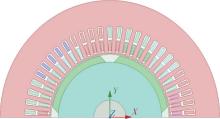
图1
PMSM 1/2模型(截图)
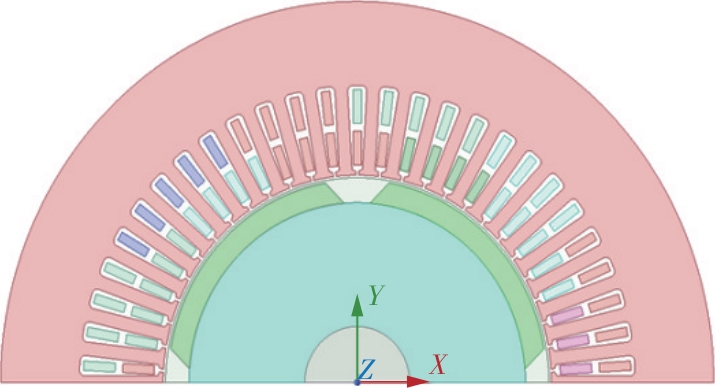
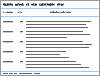
表1
电机主要参数初始值
| 参数 | 数值 | 参数 | 数值 |
|---|---|---|---|
| 额定功率/kW | 1 000 | 转子外径/mm | 345.00 |
| 额定电压/V | 690 | 转子内径/mm | 100.00 |
| 额定转速/(r·min-1) | 3 000 | 永磁体厚度/mm | 20.00 |
| 峰值转速/(r·min-1) | 6 000 | 气隙长度/mm | 5.50 |
| 槽数 | 54 | 槽口宽/mm | 3.00 |
| 齿宽/mm | 12.00 | 极弧系数(α) | 0.87 |
| 定子外径/mm | 650.00 | 转矩波动系数/% | <3 |
| 定子内径/mm | 370.00 | 效率/% | >95 |
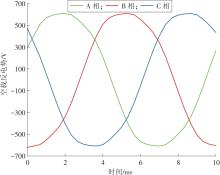
图2
电机空载反电动势
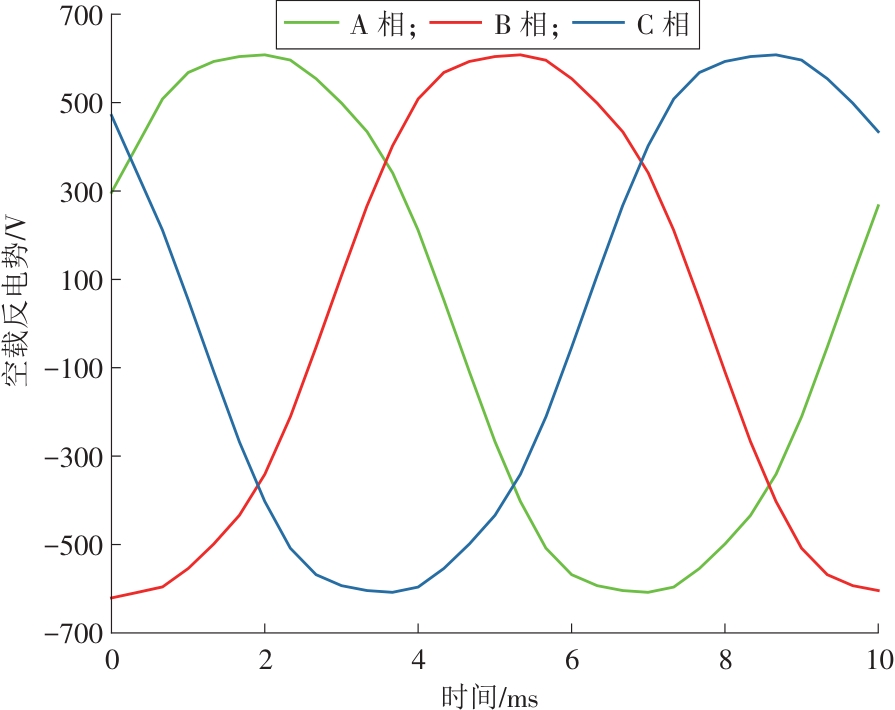
图3
电机空载齿槽转矩
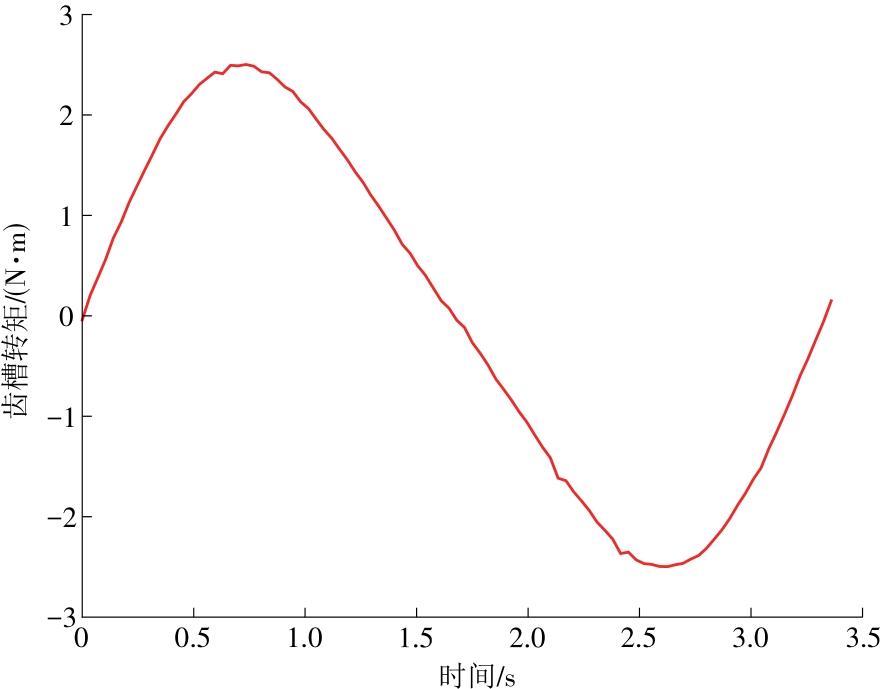
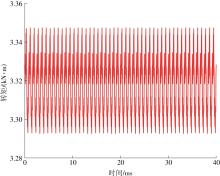
图4
输出转矩变化曲线
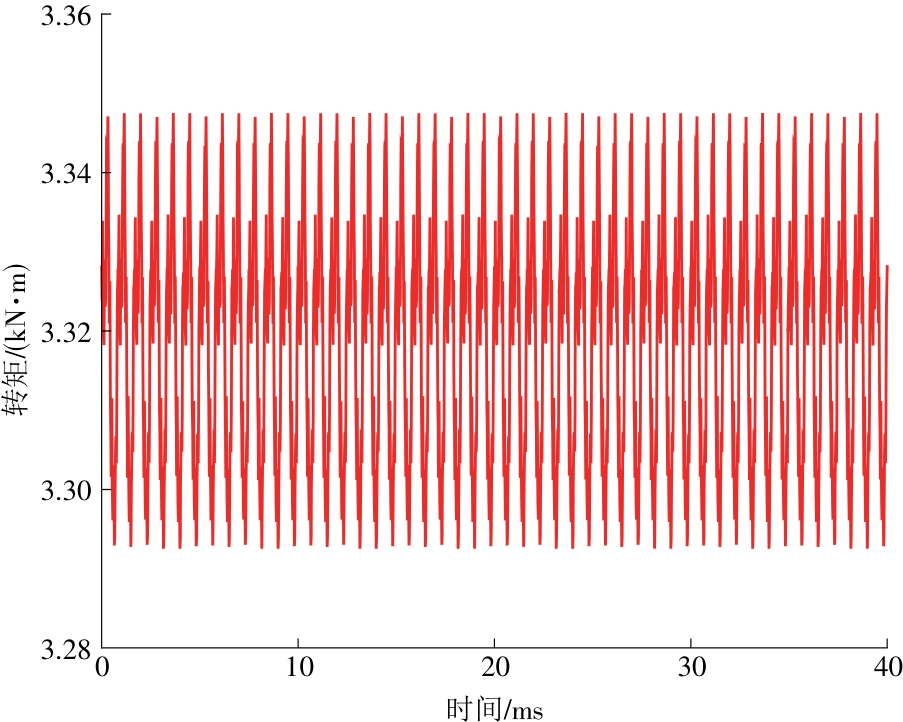
图5
PMSM结构优化参数
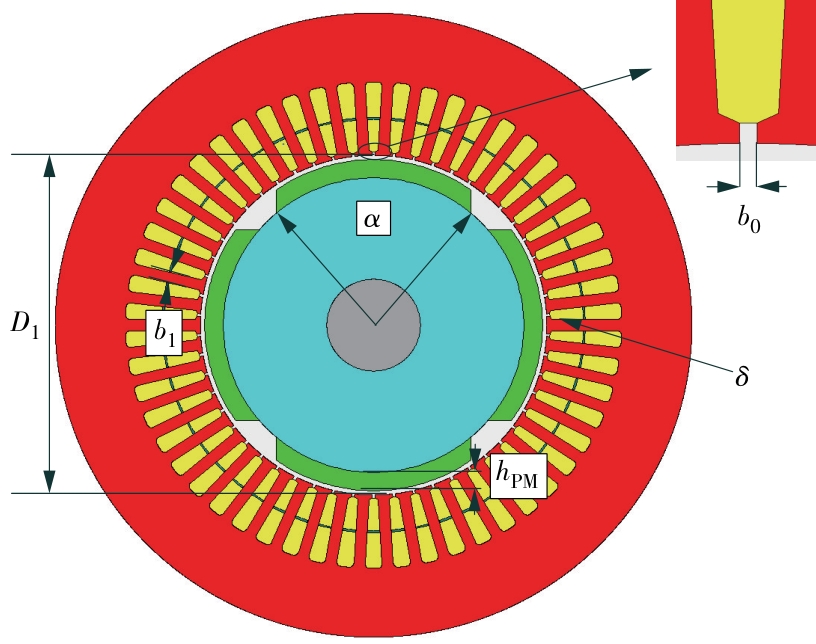
表2
各个参数的初始值及取值范围
| 参数 | 初始值 | 取值范围 |
|---|---|---|
| 永磁体厚度/mm | 20.00 | 17.00~23.00 |
| 气隙/mm | 4.65 | 4.00~6.00 |
| 极弧系数 | 0.87 | 0.75~0.95 |
| 槽口宽度/mm | 3.00 | 2.00~4.00 |
| 定子齿宽/mm | 12.00 | 10.00~14.00 |
| 定子内径/mm | 370.00 | 340.00~400.00 |
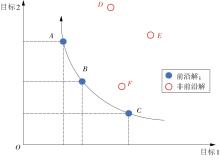
图6
Pareto前沿
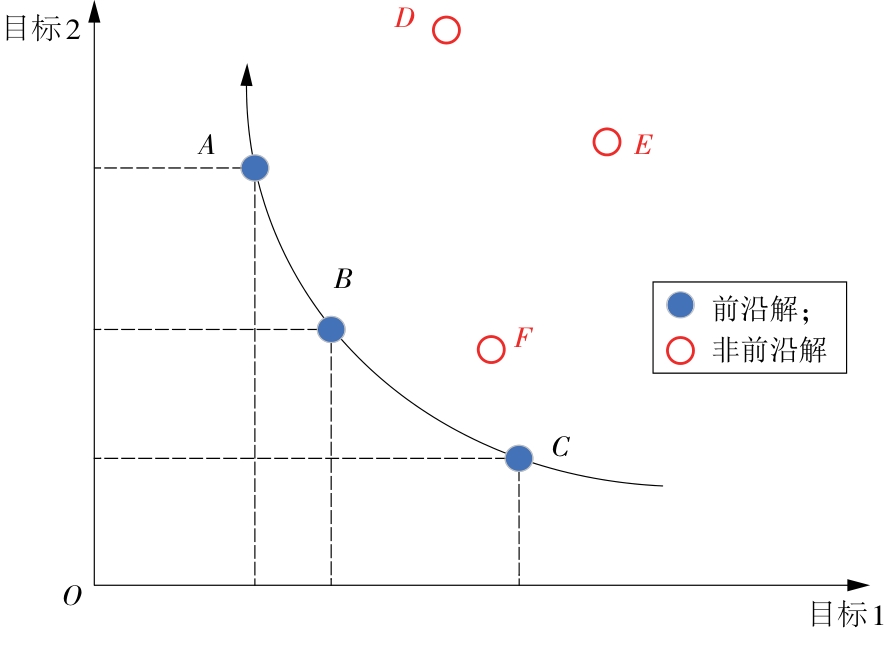
图7
额定转速下的定子铁耗
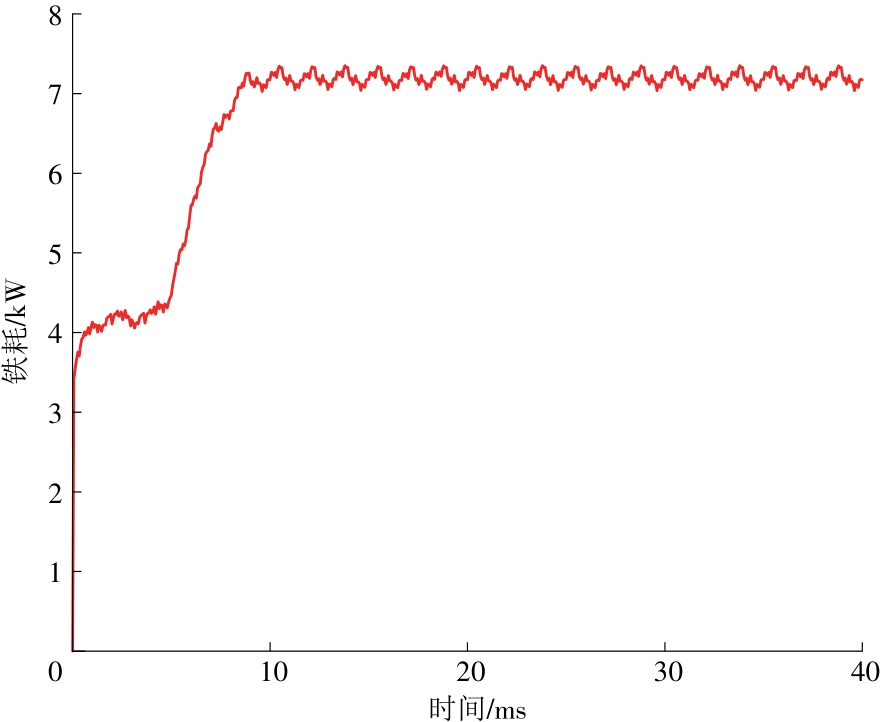
图8
峰值转速下定子的铁耗
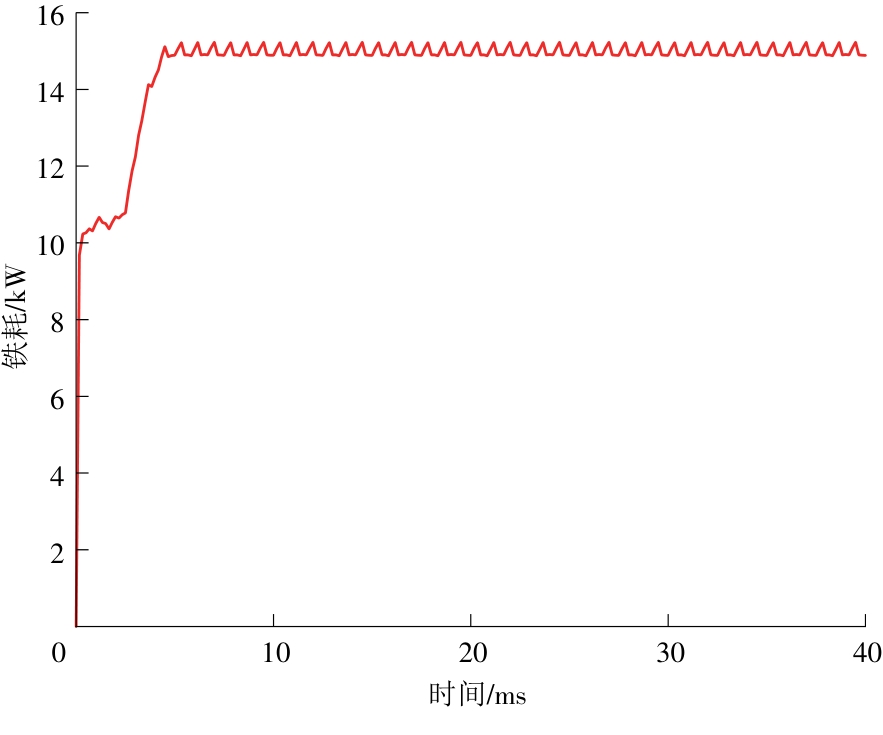
图9
绕组电流密度分布
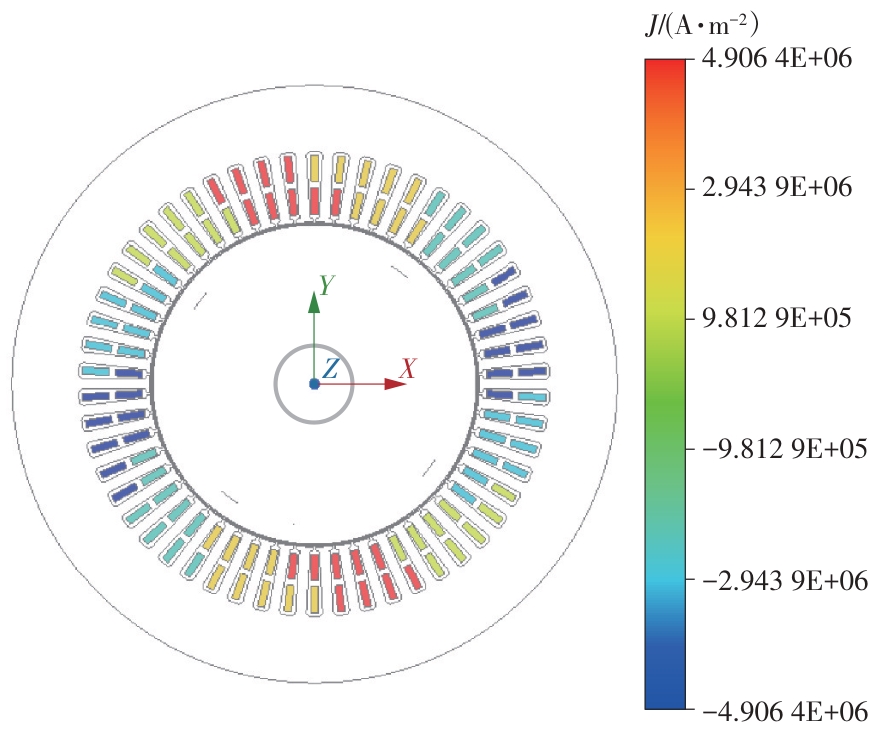
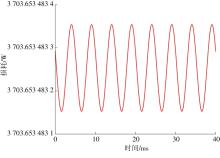
图10
额定转速下的绕组铜耗
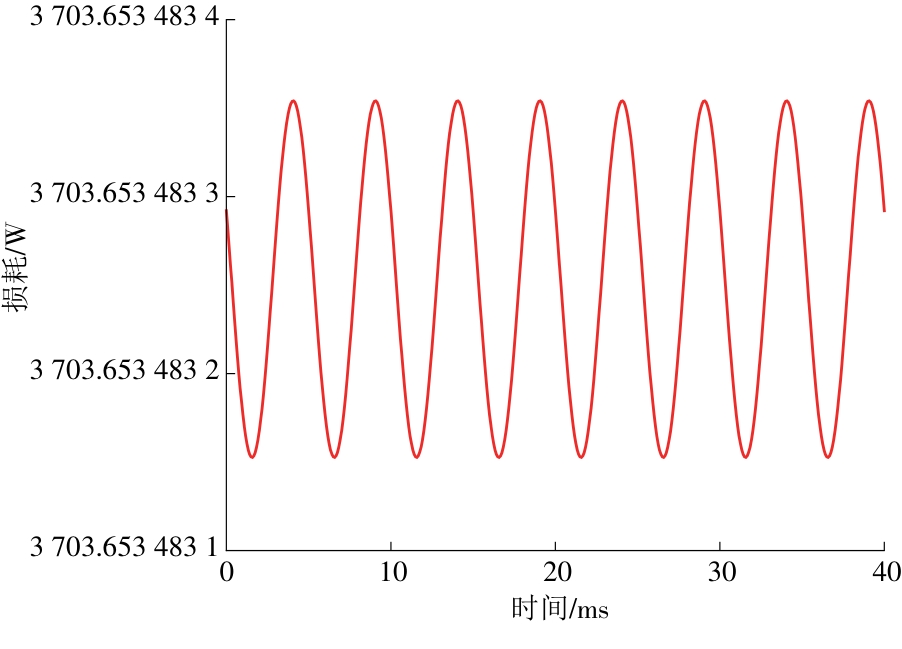
图11
峰值转速下的绕组铜耗
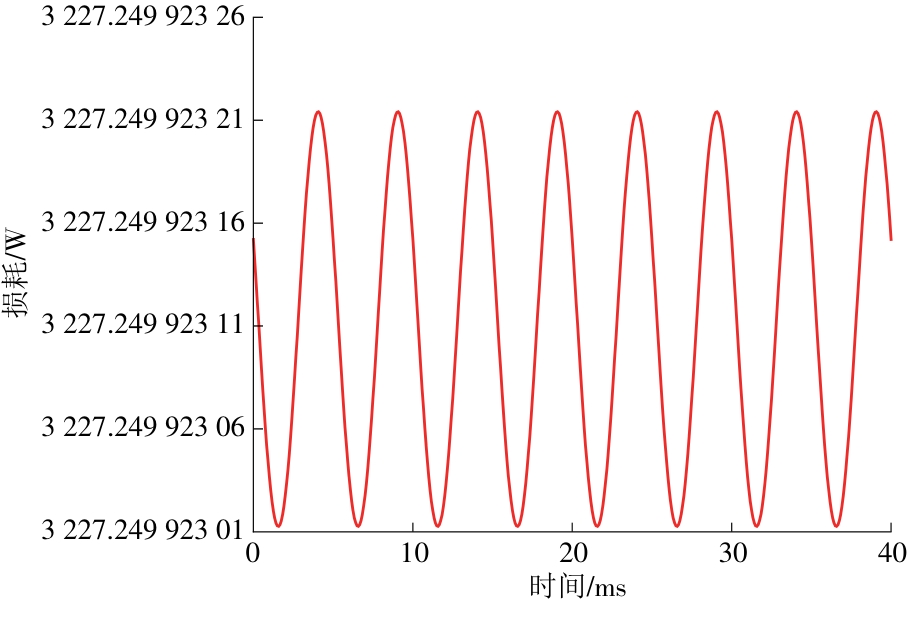
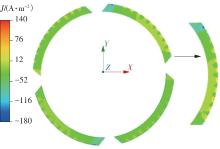
图12
永磁体磁密分布
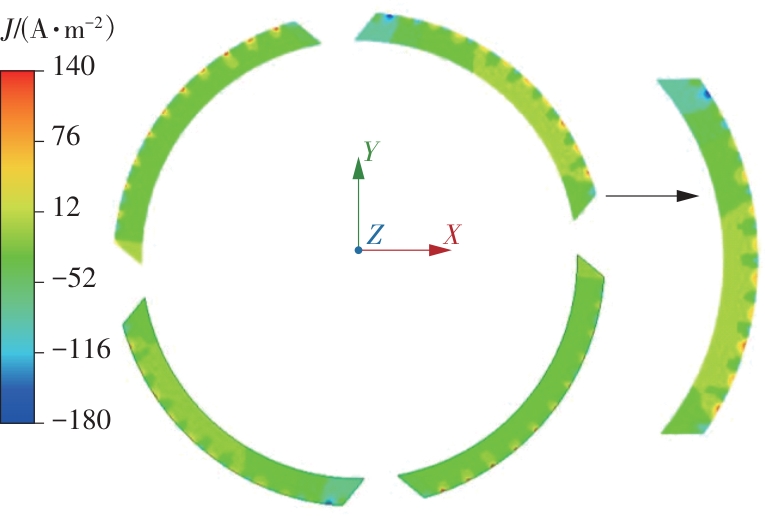
图13
额定转速下的永磁涡流损耗
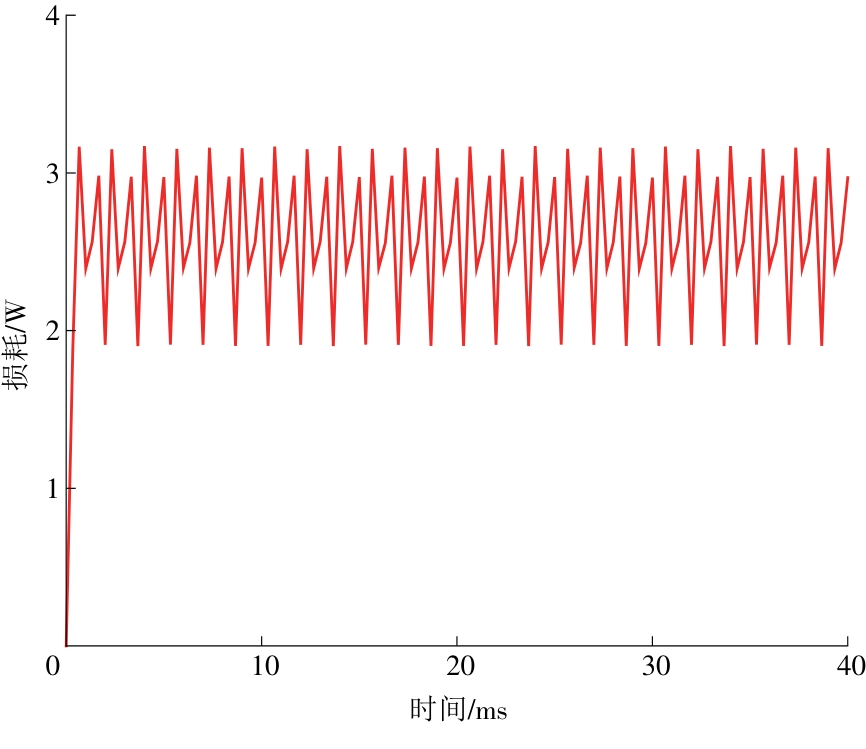
图14
峰值转速下的永磁涡流损耗
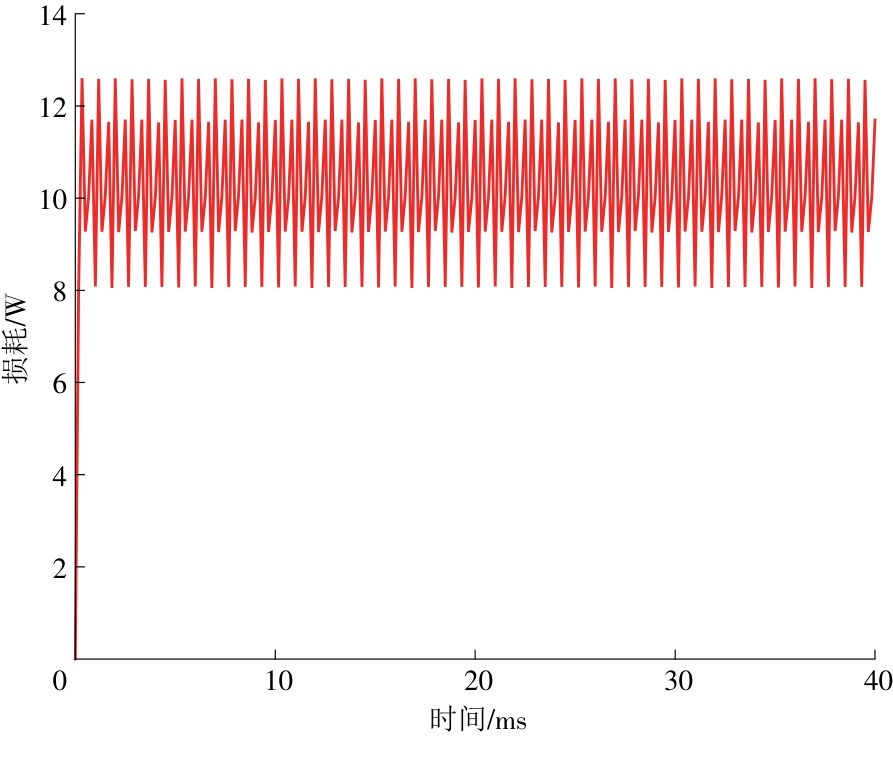
图15
电机总效率MAP
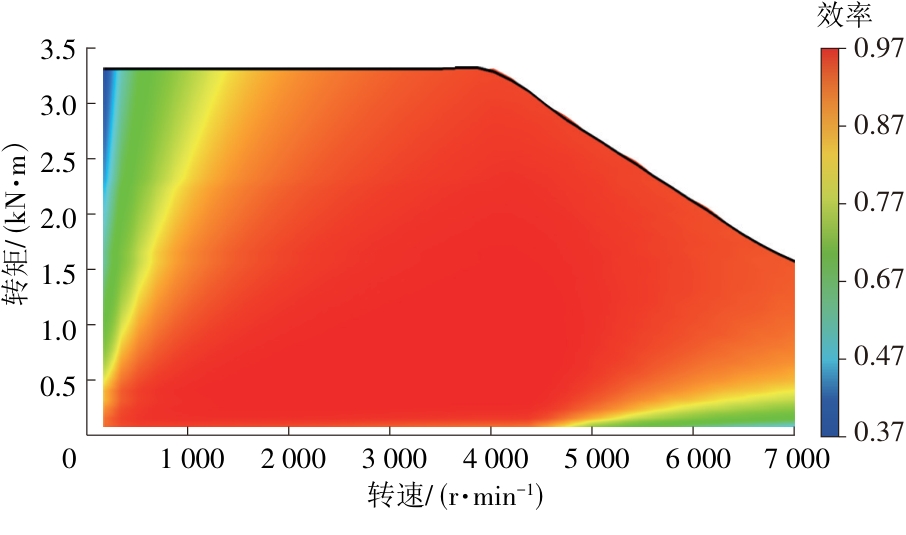
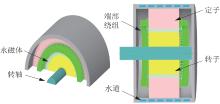
图16
PMSM简化三维模型
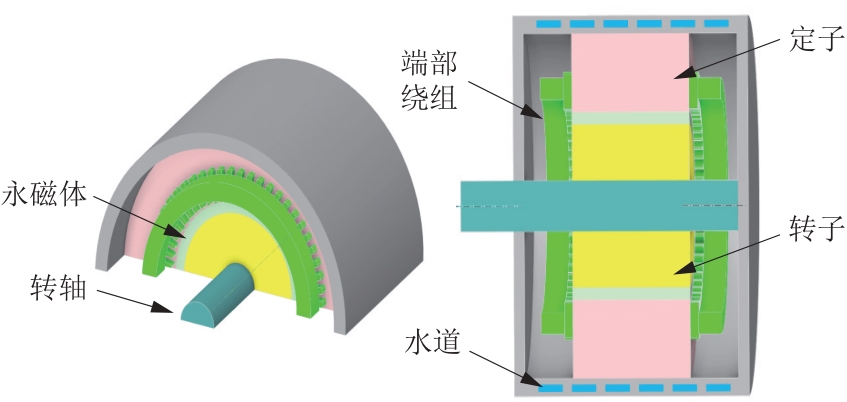
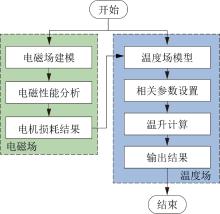
图17
磁热耦合实施流程
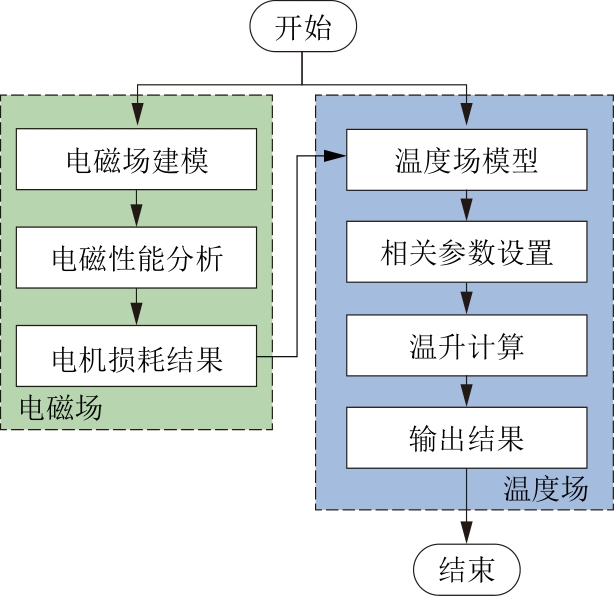

图18
机壳3D模型网格剖分结果
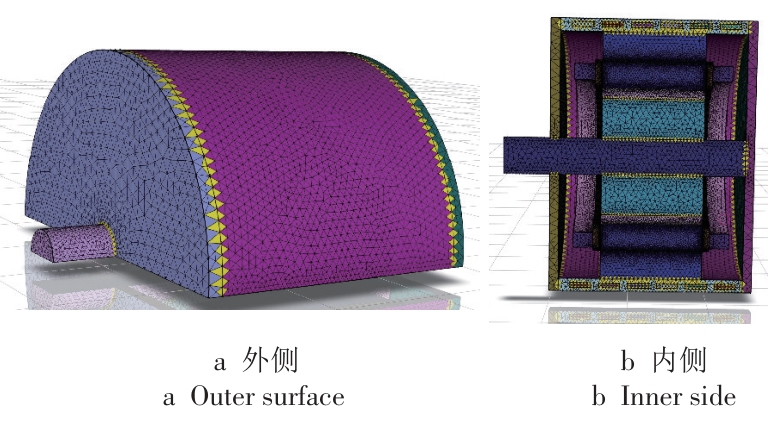
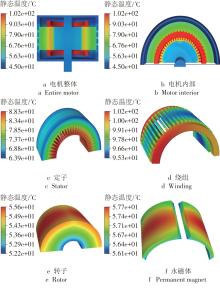
图19
额定转速下电机温升情况
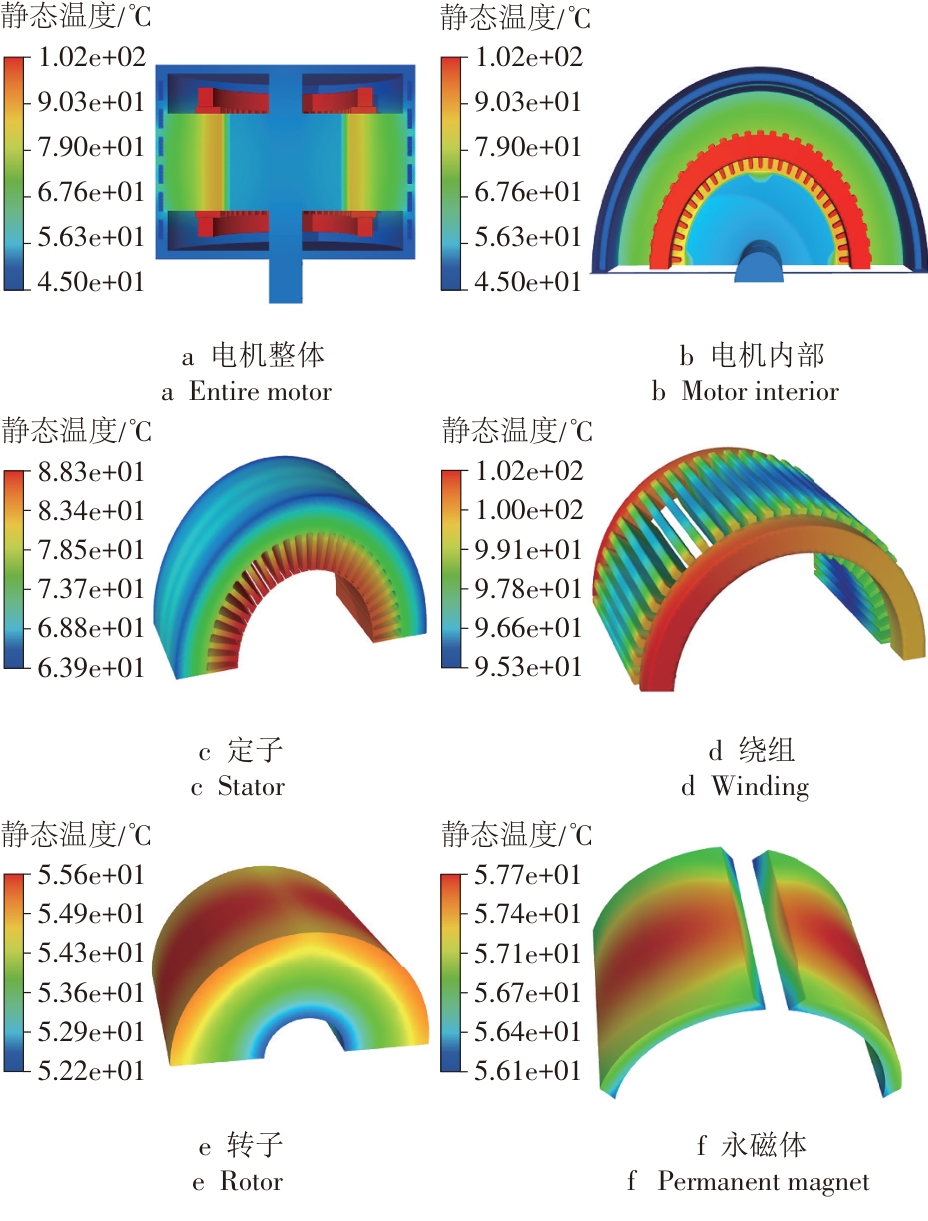
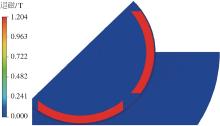
图20
额定转速下永磁体退磁仿真
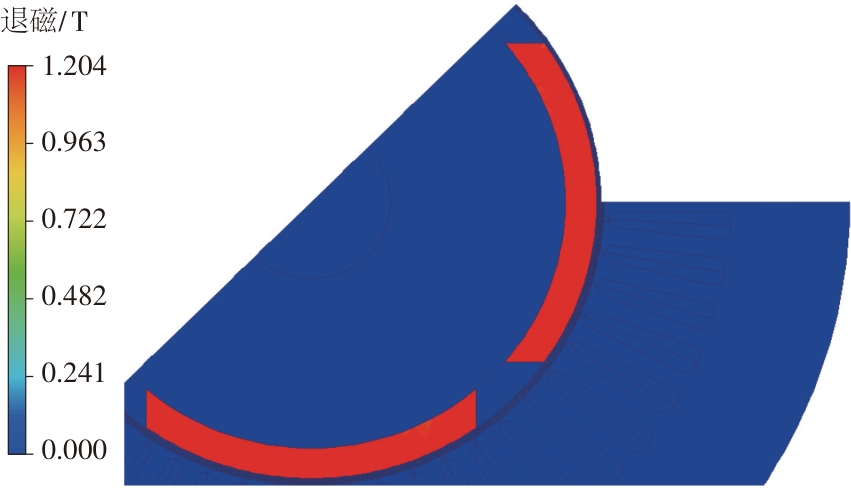
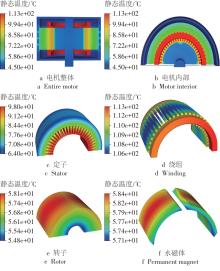
图21
峰值转速下电机温升情况
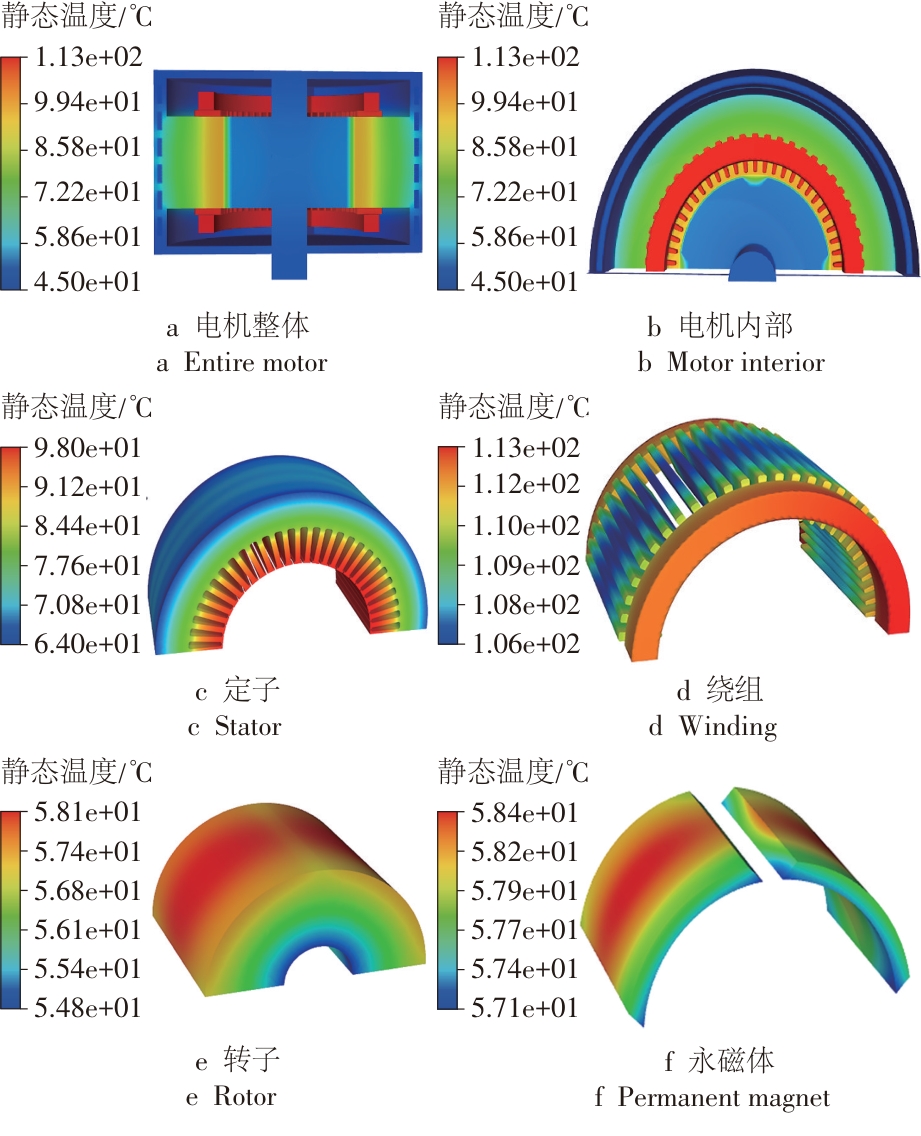
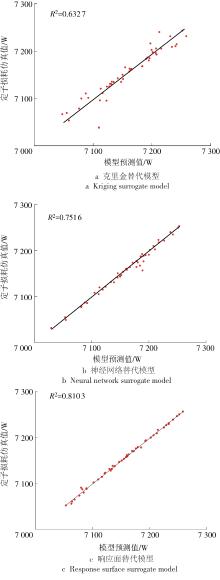
图22
不同替代模型误差
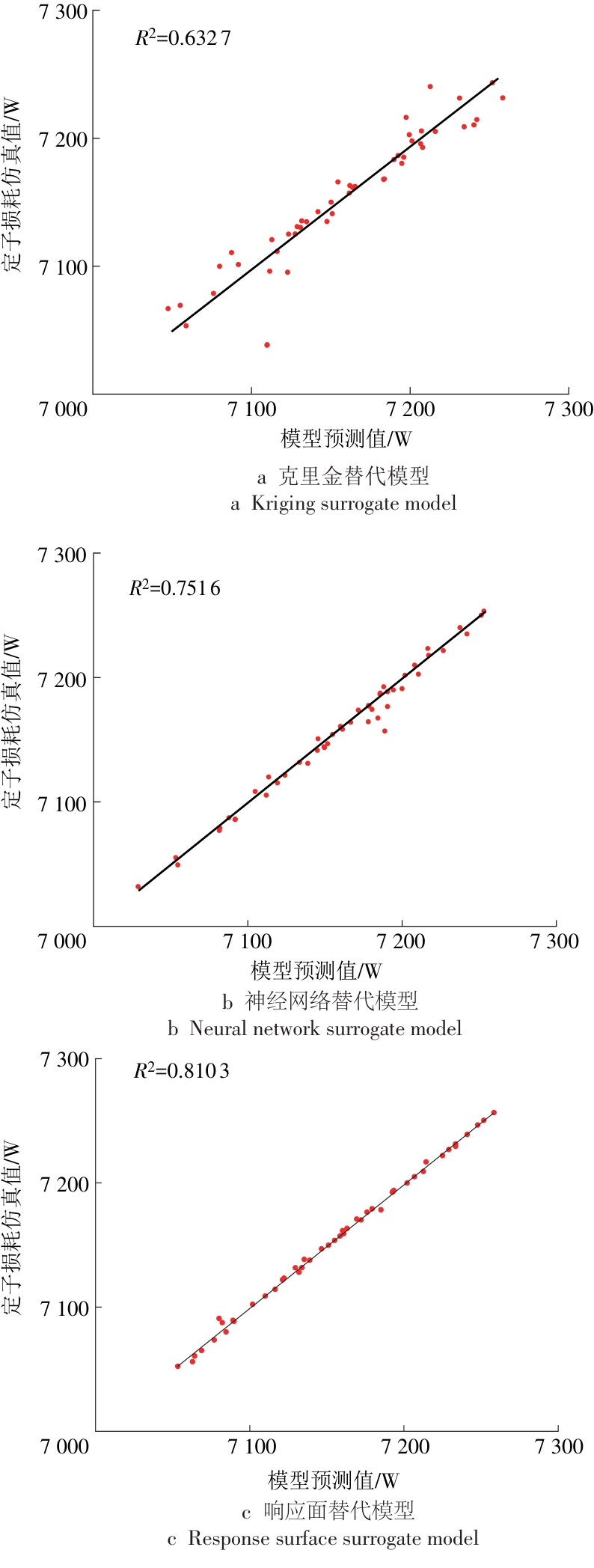
表3
不同采用点下替代模型的确定系数
| 模型 | 不同采样点数下的R2 | |||
|---|---|---|---|---|
| 50 | 130 | 170 | 320 | |
| 克里金模型 | 0.632 7 | 0.691 3 | 0.715 2 | 0.959 8 |
| 响应面模型 | 0.810 3 | 0.879 2 | 0.930 7 | 0.967 1 |
| 神经网络模型 | 0.751 6 | 0.840 1 | 0.916 2 | 0.980 3 |
表4
优化过程中参数的变化
| 迭代次数 | hPM | b1 | b0 | 极弧长度 | |
|---|---|---|---|---|---|
| 1 | 17.29 | 13.73 | 2.90 | 4.76 | 144.76 |
| 2 | 18.21 | 11.86 | 3.77 | 5.22 | 121.68 |
| 3 | 21.73 | 12.12 | 3.41 | 5.03 | 120.82 |
| 4 | 17.75 | 10.38 | 2.42 | 4.97 | 125.81 |
| 5 | 20.33 | 13.86 | 2.19 | 4.19 | 146.95 |
| 6 | 18.55 | 12.53 | 3.16 | 5.62 | 141.96 |
| 7 | 19.75 | 10.61 | 3.93 | 5.97 | 119.57 |
| … | … | … | … | … | … |
| 299 | 19.17 | 10.42 | 2.13 | 5.25 | 145.56 |
| 300 | 22.52 | 13.45 | 2.65 | 5.39 | 137.77 |
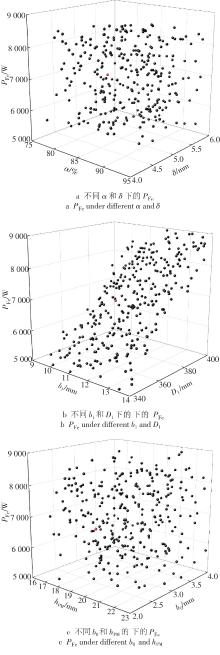
图23
各优化参数下定子铁损试验点的分布
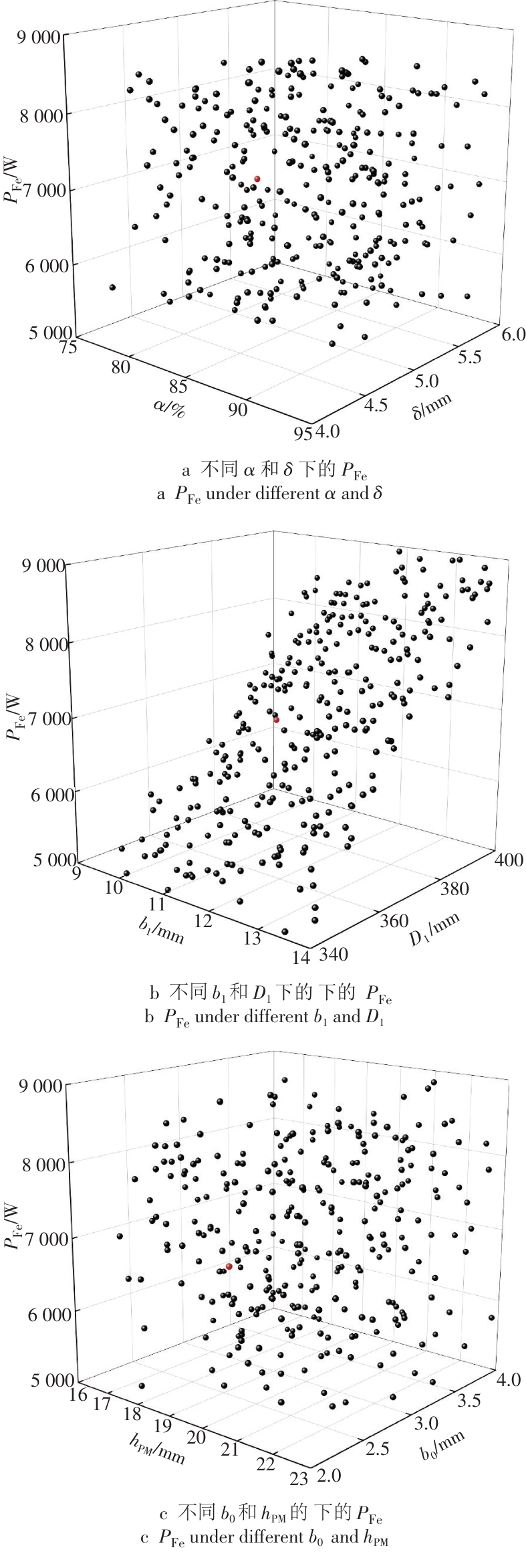
表5
优化前后的参数
| 设计变量 | 优化前 | 优化后 |
|---|---|---|
| b0/mm | 3.00 | 2.51 |
| b1/mm | 12.00 | 12.74 |
| hPM/mm | 20.00 | 19.71 |
| 4.65 | 5.15 | |
| α | 0.78 | 0.89 |
| PFe/W | 7 300.83 | 6 469.17 |
| 转矩波动率/% | 1.69 | 1.47 |
| 齿槽转矩/(N·m) | 2.5 | 1.7 |
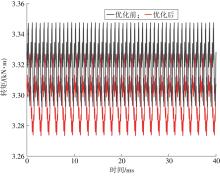
图24
优化前后的电机转矩波动
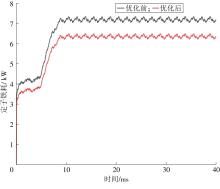
图25
优化前后的定子铁耗
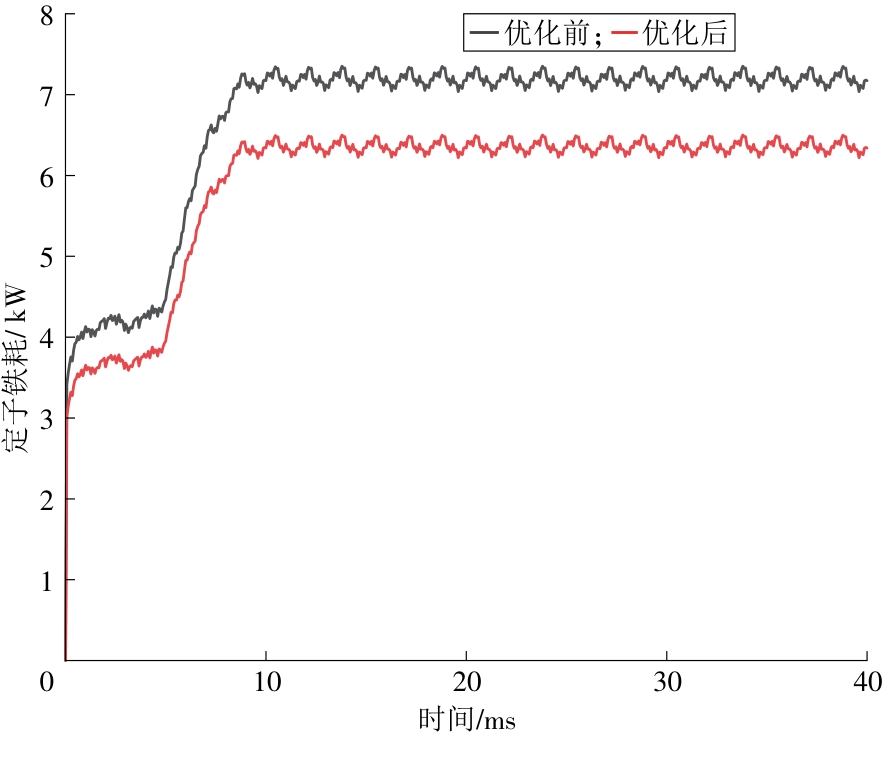
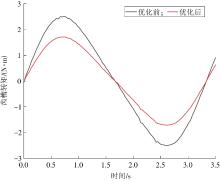
图26
优化前后的齿槽转矩
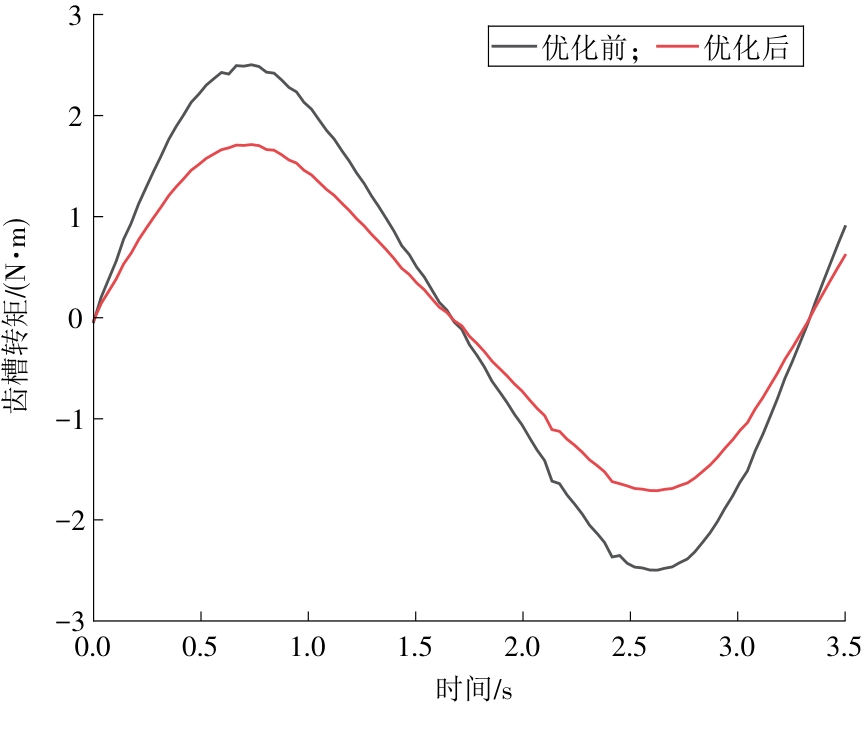
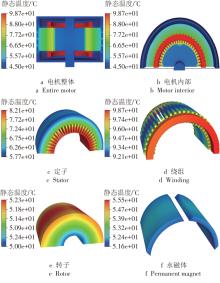
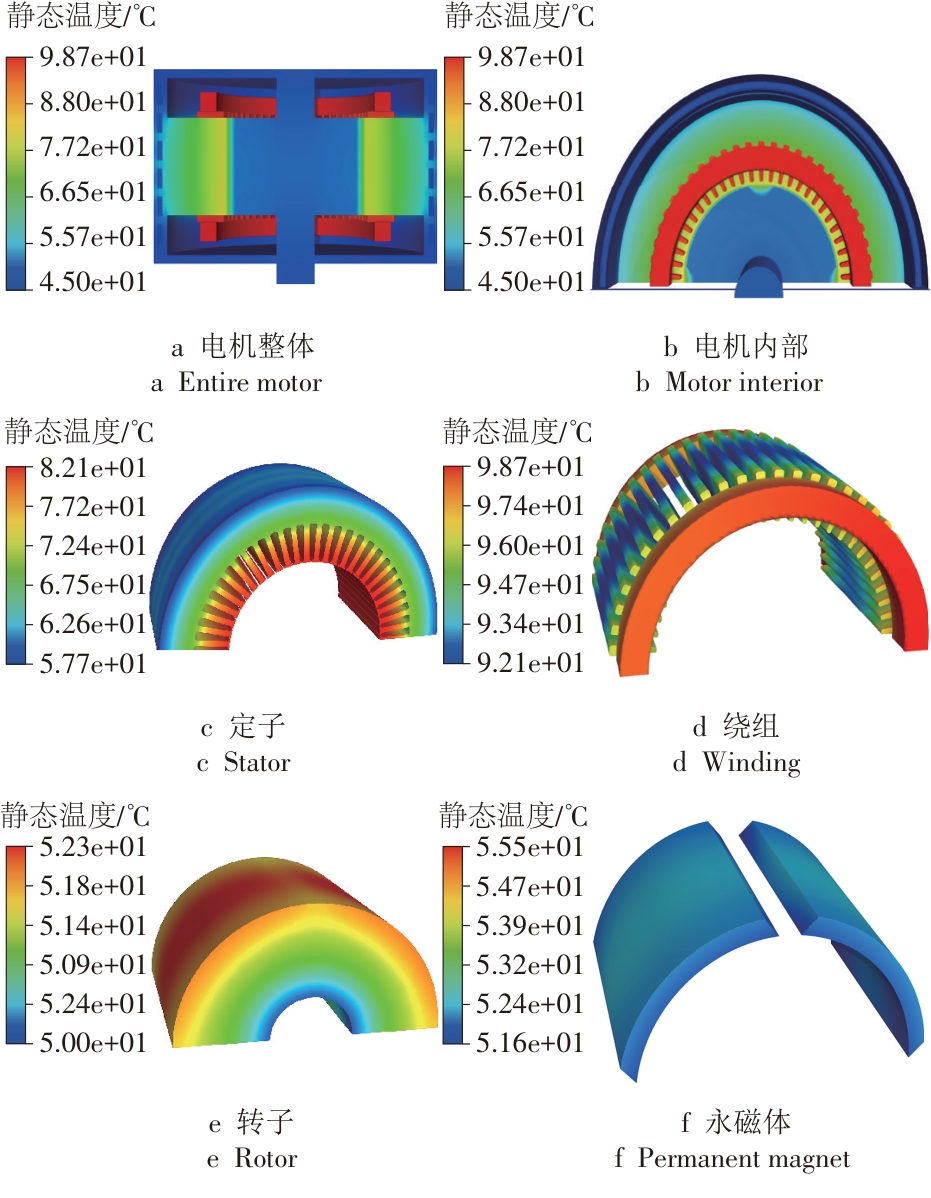
图27
额定转速下永磁同步电机各部位温度分布
| [1] |
XU Y L, ZHANG W, HUG G, et al. Cooperative control of distributed energy storage systems in a microgrid[J]. IEEE Transactions on Smart Grid, 2015, 6(1): 238-248.
doi: 10.1109/TSG.2014.2354033 |
| [2] | 王芳. 热储能技术在新型电力系统中的应用综述[J]. 东北电力技术, 2024, 45(3):13-15. |
| WANG Fang. Review on application of thermal energy storage technology in new power systems[J]. Northeast Electric Power Technology, 2024, 45(3):13-15. | |
| [3] |
王林, 孔小民, 周忠玉, 等. 云储能模式下的配电网分布式光伏-储能无功优化方法[J]. 综合智慧能源, 2024, 46(6): 44-53.
doi: 10.3969/j.issn.2097-0706.2024.06.006 |
|
WANG Lin, KONG Xiaomin, ZHOU Zhongyu, et al. Distributed photovoltaic-energy storage reactive power optimization method for distribution networks under cloud energy storage mode[J]. Integrated Intelligent Energy, 2024, 46(6): 44-53.
doi: 10.3969/j.issn.2097-0706.2024.06.006 |
|
| [4] | 刘笑驰, 梅生伟, 丁若晨, 等. 压缩空气储能工程现状、发展趋势及应用展望[J]. 电力自动化设备, 2023, 43(10): 38-47, 102. |
| LIU Xiaochi, MEI Shengwei, DING Ruochen, et al. Current situation, development trend and application prospect of compressed air energy storage engineering projects[J]. Electric Power Automation Equipment, 2023, 43(10): 38-47, 102. | |
| [5] |
郑昊宇, 周家辉, 仝冰, 等. 配置压缩空气储能的绿氢系统容量配置和运行调度优化研究[J]. 综合智慧能源, 2025, 47(7): 64-70.
doi: 10.3969/j.issn.2097-0706.2025.07.007 |
|
ZHENG Haoyu, ZHOU Jiahui, TONG Bin, et al. Research on capacity allocation and operation scheduling optimization of green hydrogen system with compressed air energy storage[J]. Integrated Intelligent Energy, 2025, 47(7): 64-70.
doi: 10.3969/j.issn.2097-0706.2025.07.007 |
|
| [6] |
KOOHI-FAYEGH S, ROSEN M. A. A review of energy storage types, applications and recent developments[J]. Journal of Energy Storage, 2020, 27: 101047.
doi: 10.1016/j.est.2019.101047 |
| [7] | 刘金利, 翟小飞, 晏明. 大容量储能发电机并联运行励磁控制算法[J]. 国防科技大学学报, 2019, 41(4): 46-52. |
| LIU Jinli, ZHAI Xiaofei, YAN Ming. Excitation control algorithm for high-capacity energy storage generator in parallel operation[J]. Journal of National University of Defense Technology, 2019, 41(4): 46-52. | |
| [8] | REN W, XU Q, LI Q, et al. Reduction of cogging torque and torque ripple in interior PM machines with asymmetrical V-type rotor design[J]. IEEE Transactions on Magnetics, 2016, 52(7): 1-5. |
| [9] |
FAN K G, XIAO J Y, WANG R D, et al. Thermoelectric-based cooling system for high-speed motorized spindle I: Design and control mechanism[J]. The International Journal of Advanced Manufacturing Technology, 2022, 121(5): 3787-3800.
doi: 10.1007/s00170-022-09568-4 |
| [10] | ZHANG C, CHEN L X, WANG X Y, et al. Loss calculation and thermal analysis for high-speed permanent magnet synchronous machines[J]. IEEE Access, 2020, 8: 92627-92636. |
| [11] | LIU L, LIU G, LIU M, et al. Analysis on three-dimensional temperature field of permanent magnet synchronous motor in vehicles[J]. China Mechanical Engineering, 2015, 26(11): 1438-1444. |
| [12] |
GUO Y J, XU R H, JIN P. A real-time temperature rise prediction method for PM motor varying working conditions based on the reduced thermal model[J]. Case Studies in Thermal Engineering, 2023, 47: 103098.
doi: 10.1016/j.csite.2023.103098 |
| [13] | SHI Y W, WANG J B, WANG B. EM-thermal coupled simulation under various fault conditions of a triple redundant 9-phase PMASynRM[C]// IEEE Energy Conversion Congress and Exposition. IEEE,2018:23-27. |
| [14] | 李进才, 李涵琪, 张卓然, 等. 航空油冷三级式无刷发电机流固耦合传热研究及散热优化[J]. 电工技术学报, 2024, 39(22): 7030-7044. |
| LI Jincai, LI Hanqi, ZHANG Zhuoran, et al. Research on fluid-solid coupling heat transfer and optimization of heat dissipation in the aircraft oil-cooled wound rotor synchronous generator[J]. Transactions of China Electrotechnical Society, 2024, 39(22): 7030-7044. | |
| [15] | 李全武, 窦满峰. 一种无刷直流电动机齿槽转矩分数槽削弱方法[J]. 微特电机, 2012(3): 31-33. |
| LI Quanwu, DOU Manfeng. Method for weaken cogging torque fractional slot of brushless DC motor[J]. Micro & Special Electric Machines, 2012(3): 31-33. | |
| [16] | 谢颖, 耿高旭, 蔡蔚, 等. 隔磁孔转子结构永磁同步电机效率与振动噪声优化设计[J/OL]. 中国电机工程学报, 2025: 1-11 (2025-03-26) [2025-09-06]. https://link.cnki.net/doi/10.13334/j.0258-8013.pcsee.242406. |
| XIE Ying, GENG Gaoxu, CAI Wei, et al. Optimized design of a permanent magnet synchronous motor efficiency and vibration noise with magnetic hole rotor structure[J/OL]. Proceedings of the CSEE, 2025: 1-11(2025-03-26)[2025-09-06]. https://link.cnki.net/doi/10.13334/j.0258-8013.pcsee.242406. | |
| [17] | 许孝卓, 刘俊哲, 肖磊, 等. 基于磁-固耦合振动的永磁同步电机多目标优化设计[J]. 电气工程学报, 2024, 19(4): 149-158. |
| XU Xiaozhuo, LIU Junzhe, XIAO Lei, et al. Multi-objective optimization design of permanent magnet synchronous motor based on magnetic-structural coupled vibration[J]. Journal of Electrical Engineering, 2024, 19(4): 149-158. | |
| [18] | 吉敬华, 沈人洁, 徐亮, 等. 考虑运行工况的模块化双永磁游标电机多工作点优化设计[J]. 电工技术学报, 2022, 37(22): 5649-5659. |
| JI Jinghua, SHEN Renjie, XU Liang, et al. Multi-working point optimization of modular double permanent-magnet vernier motor considering operation condition[J]. Transactions of China Electrotechnical Society, 2022, 37(22): 5649-5659. | |
| [19] | 王为术, 亓月欣, 彭岩, 等. 高速永磁电机损耗特性研究[J]. 电工技术, 2022(21): 234-238. |
| WANG Weishu, QI Yuexin, PENG Yan, et al. Research on loss characteristics of high speed permanent magnet motor[J]. Electric Engineering, 2022(21): 234-238. | |
| [20] | 许孝卓, 郭国宾, 封海潮, 等. 基于代理模型的永磁直线同步电机多目标优化[J]. 电机与控制学报, 2024, 28(11): 139-150. |
| XU Xiaozhuo, GUO Guobin, FENG Haichao, et al. Multi-objective optimization of permanent magnet linear synchronous motor based on surrogate model[J]. Electric Machines and Control, 2024, 28(11): 139-150. | |
| [21] | 刘娜, 钟成堡, 陈飞龙, 等. 极弧系数对永磁同步电机齿槽转矩影响的分析[J]. 微特电机, 2022, 50(8): 15-18. |
| LIU Na, ZHONG Chengbao, CHEN Feilong, et al. Analysis of influence of pole arc coefficient on cogging torque of permanent magnet synchronous motor[J]. Small & Special Electrical Machines, 2022, 50(8): 15-18. | |
| [22] | 边旭, 张果果, 李雪, 等. 逆变器供电系统下扁线电机绕组交流损耗计算[J]. 电机与控制学报, 2025, 29(5): 99-107, 122. |
| BIAN Xu, ZHANG Guoguo, LI Xue, et al. Calculation of AC losses in winding of flat wire motor under inverter power supply system[J]. Electric Machines and Control, 2025, 29(5): 99-107, 122. | |
| [23] | 赵志刚, 魏乐, 郭莹, 等. 基于修正Bertotti模型的变压器铁心谐波磁损耗计算与验证[J]. 天津大学学报(自然科学与工程技术版), 2019, 52(12): 1270-1277. |
| ZHAO Zhigang, WEI Le, GUO Ying, et al. Calculation and verification of harmonic magnetic loss of transformer core based on improved bertotti model[J]. Journal of Tianjin University (Science and Technology), 2019, 52(12): 1270-1277. | |
| [24] | 熊斌, 崔刚, 鲍炳炎, 等. 基于磁热耦合法的高功率密度永磁电机永磁体温度分布特性与试验研究[J]. 电机与控制学报, 2024, 28(11): 104-116. |
| XIONG Bin, CUI Gang, BAO Bingyan, et al. Temperature distribution characteristics and experiment of permanent magnet for high power density permanent magnet motor based on electromagnetic thermal coupling method[J]. Electric Machines and Control, 2024, 28(11): 104-116. | |
| [25] | 周鹏飞, 赵南南, 乔鹏博, 等. 基于响应面法的电动汽车用电励磁同步电机多目标优化设计[J]. 大电机技术, 2025(2): 18-27. |
| ZHOU Pengfei, ZHAO Nannan, QIAO Pengbo, et al. Multi-objective optimization design of electric vehicle excitation synchronous motor based on response surface methodology[J]. Large Electric Machine and Hydraulic Turbine, 2025(2): 18-27. | |
| [26] | 李泽泉, 马一鸣, 刘黎阳, 等. 基于几何相似性的迁移学习代理模型电机优化设计方法[J/OL]. 中国电机工程学报, 2025: 1-12(2025-01-22)[2025-09-06]. https://link.cnki.net/doi/10.13334/j.0258-8013.pcsee.242203. |
| LI Zequan, MA Yiming, LIU Liyang, et al. Research on geometrical similarity transfer learning-based surrogate-assisted model optimization design method for electric machines[J/OL]. Proceedings of the CSEE, 2025: 1-12(2025-01-22)[2025-09-06]. https://link.cnki.net/doi/10.13334/j.0258-8013.pcsee.242203. | |
| [27] | 李媛媛, 侯锦秋, 宋阳, 等. 基于分时电价的多目标电动汽车有序充电优化策略研究[J]. 东北电力技术, 2024, 45(3):23-27. |
| LI Yuanyuan, HOU Jinqiu, SONG Yang, et al. Research on optimization strategy of multi-objective electric vehicle orderly charging based on time-of-use price[J]. Northeast Electric Power Technology, 2024, 45(3): 23-27. | |
| [28] | 袁野, 张永将, 杨帆, 等. 单绕组无轴承同步磁阻电机参数优化策略[J]. 中国电机工程学报, 2025, 45(15): 6092-6103. |
| YUAN Ye, ZHANG Yongjiang, YANG Fan, et al. Optimal design of parameter for single winding bearingless synchronous reluctance motor[J]. Proceedings of the CSEE, 2025, 45(15): 6092-6103. | |
| [29] | 赵海宁, 于慎波. “模块化”混合励磁同步电机结构设计与制造技术研究[J]. 东北电力技术, 2021, 42(10):31-34. |
| ZHAO Haining, YU Shenbo. Research on structure design and manufacturing technology of modular hybrid excitation synchronous motor[J]. Northeast Electric Power Technology, 2021, 42(10):31-34. | |
| [30] | 谢冰川, 张岳, 徐振耀, 等. 基于代理模型的电机多学科优化关键技术综述[J]. 电工技术学报, 2022, 37(20): 5117-5143. |
| XIE Bingchuan, ZHANG Yue, XU Zhenyao, et al. Review on multidisciplinary optimization key technology of electrical machine based on surrogate models[J]. Transactions of China Electrotechnical Society, 2022, 37(20): 5117-5143. |
| [1] | 王海, 刘思雨, 张馨月, 刘思琦, 唐可溶, 梁栩赫, 布和巴特尔. 压缩空气储能发展现状与分析[J]. 综合智慧能源, 2026, 48(5): 19-30. |
| [2] | 王砥凡, 魏飞, 蒋德玉, 韩树山, 李中凯, 张盛林, 王政伟, 陈衡. 多类型电源与储能协同的配电网规划优化[J]. 综合智慧能源, 2025, 47(8): 49-57. |
| [3] | 洪春雪, 肖海平, 谭甲群, 吕如轩, 陈燕鹏, 巨星. 考虑容量电价的风光火储能源基地多目标优化调度[J]. 综合智慧能源, 2025, 47(7): 1-11. |
| [4] | 郑昊宇, 周家辉, 仝冰, 王海鸣, 徐钢, 张资悦. 配置压缩空气储能的绿氢系统容量配置和运行调度优化研究[J]. 综合智慧能源, 2025, 47(7): 64-70. |
| [5] | 程先龙, 马云, 韩军峰, 莫莹, 高艳. 基于改进非洲秃鹫优化算法的含风电场电力系统经济调度研究[J]. 综合智慧能源, 2025, 47(6): 37-46. |
| [6] | 王成, 邵冲, 何欣, 董海鹰. 基于MOIBKA算法的电化学储能电站最优功率分配[J]. 综合智慧能源, 2025, 47(6): 74-84. |
| [7] | 黄问铉, 曾浩政, 林奕津, 殷林飞. 基于数据驱动方法的磁性元件损耗研究[J]. 综合智慧能源, 2025, 47(4): 73-84. |
| [8] | 闫京, 李萌, 关宝良, 孟思宇, 樊颜搏, 王凤龙, 杨尚峰, 杨众杨, 熊亚选. 基于储能的寒冷地区住宅多能源供能多目标优化研究[J]. 综合智慧能源, 2025, 47(12): 46-56. |
| [9] | 马旭东, 杜彦君, 李冰淇, 崔胤, 张灿灿, 吴玉庭. 高温热泵耦合储能系统的热力学分析与性能提升[J]. 综合智慧能源, 2025, 47(12): 66-72. |
| [10] | 文贤馗, 李雅琴, 张世海, 范强, 叶华洋, 谢毅颖, 李新卓. AA-CAES启动过程中膨胀机自动控制对运行稳定性的影响[J]. 综合智慧能源, 2025, 47(12): 81-88. |
| [11] | 邱文婷, 董家乐, 吴笛, 苏文静, 宗毅. 基于NSGA-Ⅱ的含氢多能源系统经济与低碳协同优化调度[J]. 综合智慧能源, 2025, 47(10): 34-44. |
| [12] | 樊颜搏, 熊亚选, 李想, 田曦, 杨洋. 基于遗传算法的建筑用能多目标优化应用进展[J]. 综合智慧能源, 2024, 46(9): 69-85. |
| [13] | 陈勇, 肖雷鸣, 王井南, 吴健. 基于场景扩充的低碳综合能源系统高可靠性容量规划方法[J]. 综合智慧能源, 2024, 46(4): 24-33. |
| [14] | 汤梓涵, 王帅杰, 鞠振河, 雷志奇. 光伏/光热耦合空气源热泵系统性能优化[J]. 综合智慧能源, 2024, 46(4): 34-41. |
| [15] | 孙健, 张云帆, 蔡潇龙, 刘鼎群. 基于预测负荷的暖通空调系统优化调度[J]. 综合智慧能源, 2024, 46(3): 12-19. |
| 阅读次数 | ||||||
|
全文 |
|
|||||
|
摘要 |
|
|||||