综合智慧能源 ›› 2026, Vol. 48 ›› Issue (6): 34-45.doi: 10.3969/j.issn.2097-0706.2026.06.003
王子瑄1,2( ), 鹿院卫1,2,*(), 杨涵1,2(), 吴玉庭1,2()
收稿日期:2025-12-29
修回日期:2026-02-02
出版日期:2026-06-25
通讯作者:
*鹿院卫(1971),女,教授,博士,从事可再生能源利用方面的研究,luyuanwei@bjut.edu.cn作者简介:王子瑄(2001),男,硕士生,从事混合熔盐热物性计算、螺旋缠绕管换热器多目标优化设计等方面的研究,zixuanwang@emails.bjut.edu.cn;基金资助:
WANG Zixuan1,2(), LU Yuanwei1,2,*(), YANG Han1,2(), WU Yuting1,2()
Received:2025-12-29
Revised:2026-02-02
Published:2026-06-25
Supported by:摘要:
螺旋缠绕管换热器(SWHE)在燃煤机组深度调峰系统的蒸汽-熔盐换热过程中具有重要应用前景。现有研究多集中于SWHE的几何结构优化,工质热物性变化对SWHE的性能调控作用存在研究空白。通过集成SWHE设计计算模型与非支配排序遗传算法,构建了以冷/热侧综合性能评价指标、平均传热系数、壳外径和总熵产数为目标的多目标优化框架,针对5种混合熔盐(太阳盐、Hitec盐、Hitec XL盐、四元硝酸盐、三元硝酸盐)开展优化设计研究。结果表明,工质的热物性会显著影响SWHE的几何参数与其性能的关联性:高黏度熔盐(如Hitec XL)作为工质的SWHE,其缠绕角度与总传热系数呈强正相关,且增大管外径可使总传热系数增大,这与其他熔盐作为工质的SWHE有显著不同;高热导率熔盐(如四元硝酸盐)作为工质的SWHE,其缠绕角度与熵产数的相关性呈现出与其他熔盐作为工质时相反的特性。最后,通过单位体积换热强度与熵产数的综合决策,从多目标优化获得的帕累托解集中筛选出4种推荐方案:方案1虽然具有最优紧凑性(换热面积984.96 m2,建设成本583.8万元),但运行成本较高(115.31万元/a);方案4虽然换热面积较大(3 904.88 m2)、建设成本较高(1 216.1万元),但凭借低熵产特性使运行成本较方案1降低了51.5%(55.93万元/a)。研究结果揭示了混合熔盐的热物性对SWHE性能与几何参数的关联性,为熔盐配方选择与SWHE工程设计提供了理论依据与实践方案。
中图分类号:
王子瑄, 鹿院卫, 杨涵, 吴玉庭. 工质物性驱动的SWHE性能与几何参数关联研究[J]. 综合智慧能源, 2026, 48(6): 34-45.
WANG Zixuan, LU Yuanwei, YANG Han, WU Yuting. Research on correlation between SWHE performance and geometric parameters driven by working fluid physical properties[J]. Integrated Intelligent Energy, 2026, 48(6): 34-45.
表1
混合熔盐熔点与分解温度
| 混合熔盐 | 熔点 | 分解温度 |
|---|---|---|
| 太阳盐 | 223.2 | 575.9 |
| Hitec | 142.0 | 500.0 |
| Hitec XL | 120.0 | 500.0 |
| 四元盐 | 86.5 | 629.9 |
| 三元盐 | 135.5 | 648.5 |
表2
混合熔盐密度拟合公式
| 混合熔盐 | 密度拟合公式 |
|---|---|
| 太阳盐 | |
| Hitec | |
| Hitec XL | |
| 四元盐 | |
| 三元盐 |
表3
混合熔盐比热容拟合公式
| 混合熔盐 | 比热容拟合公式 |
|---|---|
| 太阳盐 | |
| Hitec | |
| Hitec XL | |
| 四元盐 | |
| 三元盐 |
表4
混合熔盐热导率拟合公式
| 混合熔盐 | 热导率拟合公式 |
|---|---|
| 太阳盐 | |
| Hitec | |
| Hitec XL | |
| 四元盐 | |
| 三元盐 |
表5
混合熔盐黏度拟合公式
| 混合熔盐 | 黏度拟合公式 |
|---|---|
| 太阳盐 | |
| Hitec | |
| Hitec XL | |
| 四元盐 | |
| 三元盐 |
表6
SWHE的传热与压降计算公式
| 模型 | 公式 | 补充公式 |
|---|---|---|
| 壳侧传热计算模型 | ||
| 壳侧压降计算模型 | ||
| 管侧传热计算模型 | ||
| 管侧压降计算模型 |
表7
模型验证
| 参数 | 参考值 | 计算值 | 偏差/% |
|---|---|---|---|
| 壳侧换热系数/[W·(m2·K)-1] | 1 880.42 | 1 948.57 | 3.6 |
| 管侧换热系数/[W·(m2·K)-1] | 2 741.21 | 2 651.05 | -3.3 |
| 总换热系数/[W·(m2·K)-1] | 691.88 | 709.95 | 2.6 |
| 壳侧压降/Pa | 87.36 | 86.89 | -0.5 |
| 管侧压降/Pa | 106.43 | 115.43 | 8.5 |
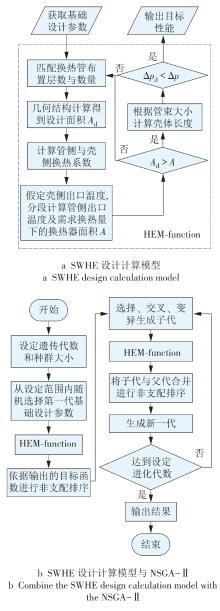
图1
优化设计流程
表8
SWHE设计条件
| 参数 | 蒸汽 | 熔盐 | ||
|---|---|---|---|---|
| 进口 | 出口 | 进口 | 出口 | |
| 压力/MPa | 8.023 | 8.023 | 0.1 | 0.1 |
| 质量流量/(kg·s-1) | 37.92 | 37.92 | ||
| 温度/℃ | 538.00 | 295.25 | 275.25 | |
表9
混合熔盐设计流量与出口温度
| 混合熔盐 | 设计流量/(kg·s-1) | 设计出口温度/℃ |
|---|---|---|
| 太阳盐 | 90.147 9 | 490.631 2 |
| Hitec | 112.251 8 | 442.789 3 |
| Hitec XL | 109.593 9 | 441.782 5 |
| 四元盐 | 76.852 4 | 519.848 3 |
| 三元盐 | 80.131 4 | 489.606 6 |
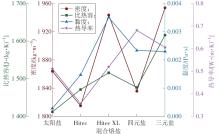
图2
混合熔盐在设计使用温区的热物性平均值
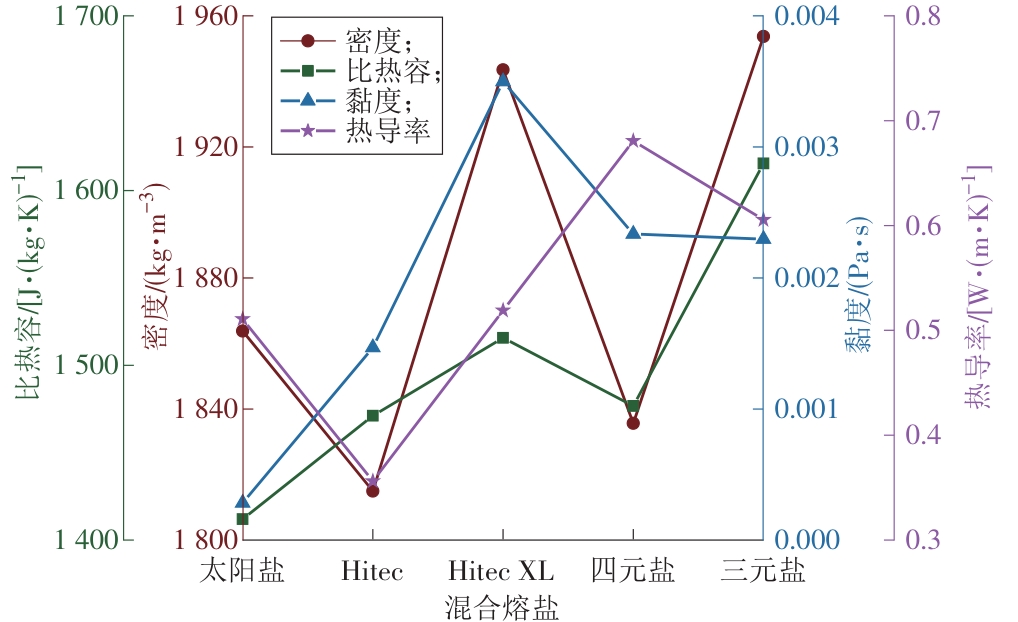
图3
PEC,H-PEC,C-总熵产数的三维分布
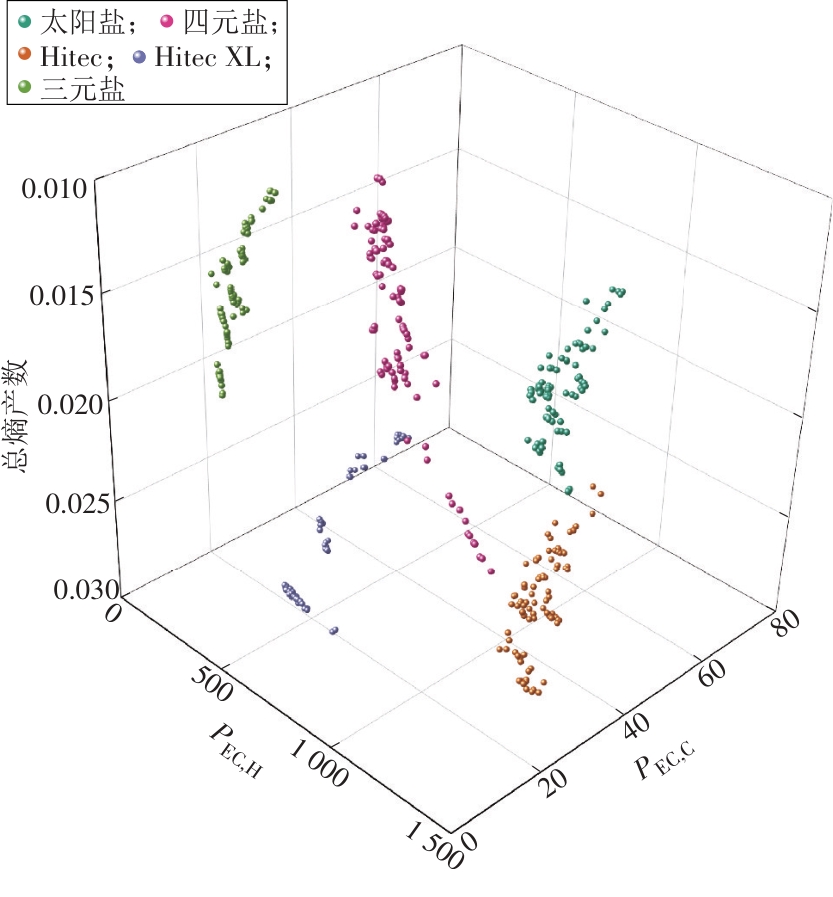
表10
相关系数绝对值对应强度
| 相关系数绝对值 | 相关强度 | 解释 |
|---|---|---|
| 0.00~0.10 | 微弱 | 变量间的关系极弱,几乎可以忽略 |
| 0.10~0.40 | 弱 | 存在较弱的关系 |
| 0.40~0.70 | 中度 | 存在一个明确的、实质性的关系 |
| 0.70~0.90 | 强 | 存在非常强的关系 |
| 0.90~1.00 | 极强 | 关系极其紧密,几乎可以相互预测 |
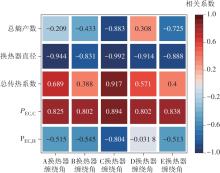
图4
SWHE缠绕角度与其性能的相关系数
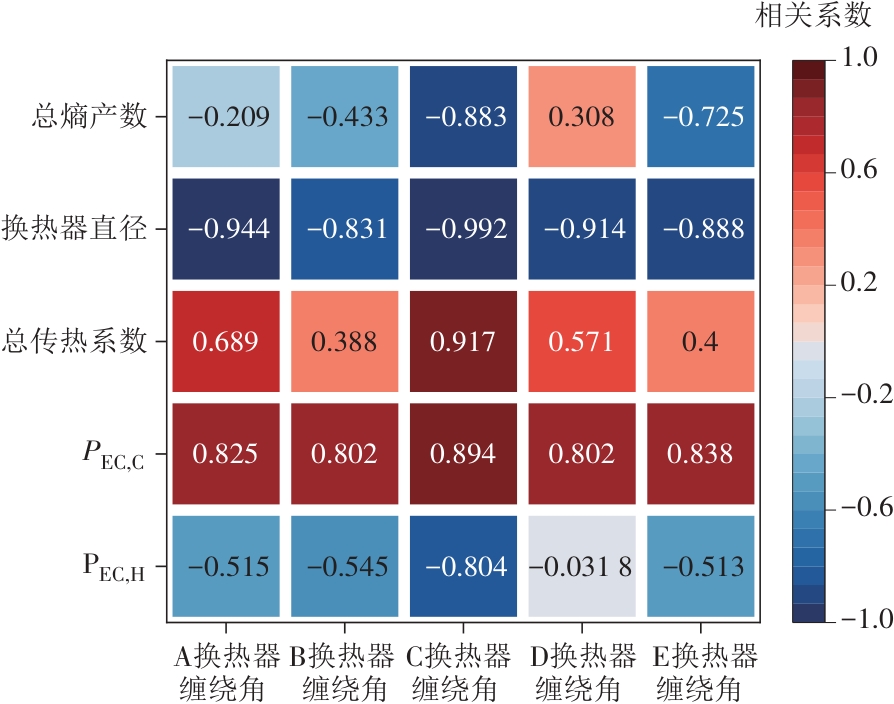
图5
SWHE缠绕角度的变化对熵产分布的影响(工质为四元盐)
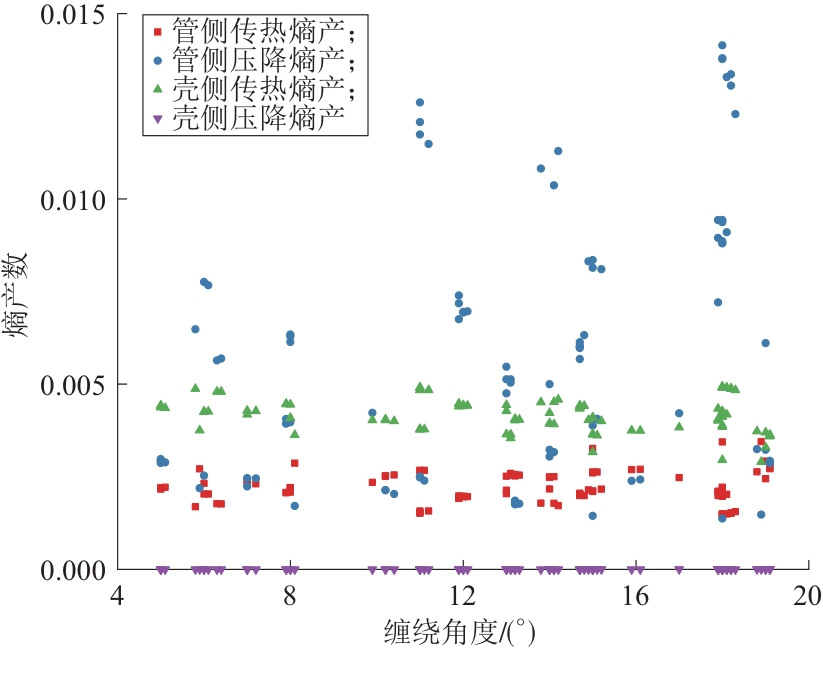
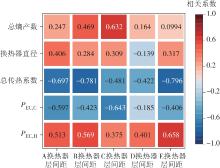
图6
SWHE层间距与其性能的相关系数
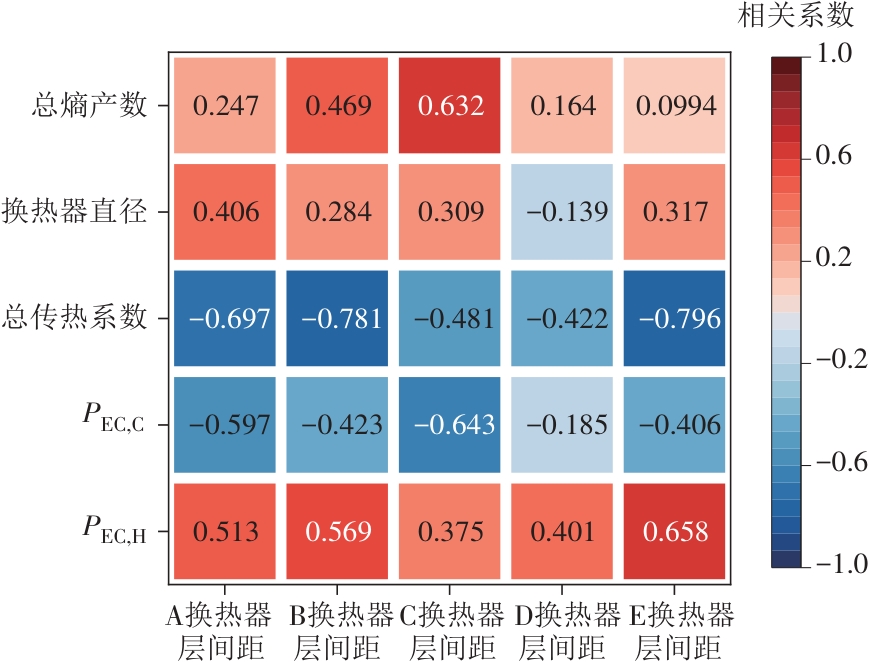
图7
SWHE管间距与其性能的相关系数
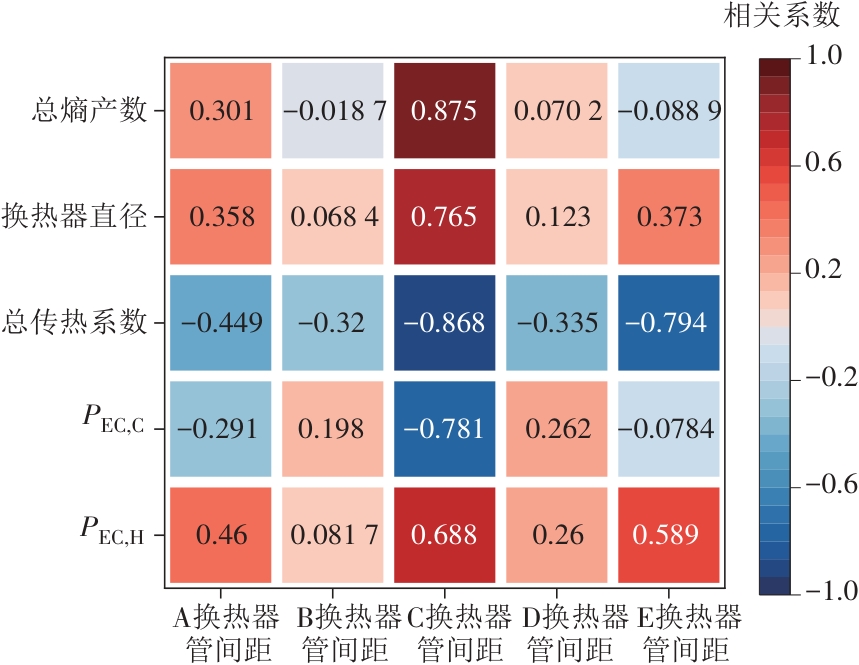
图8
SWHE管间距变化对熵产分布的影响(工质为太阳盐)
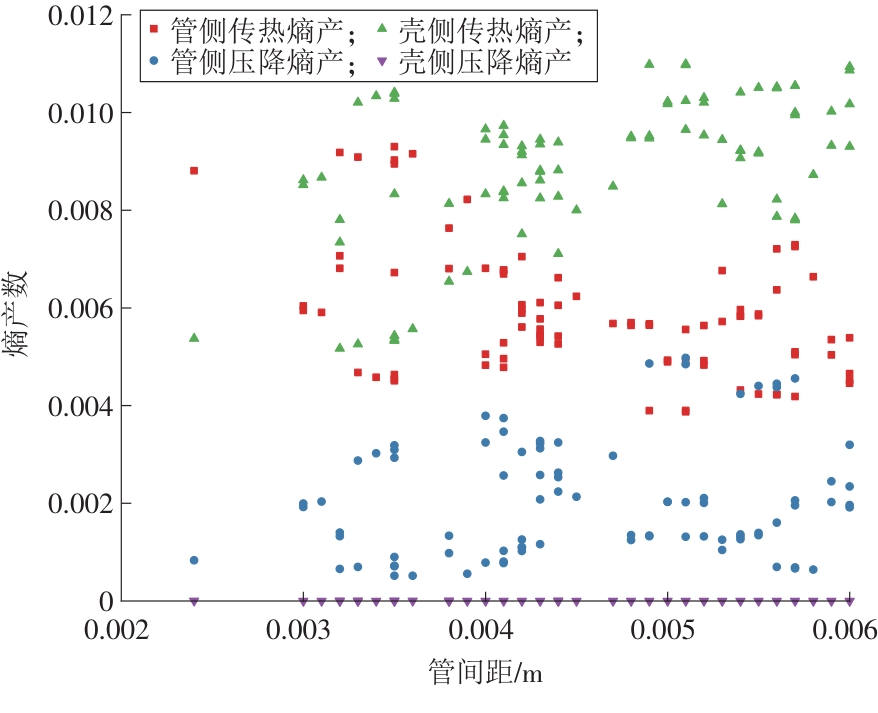
图9
SWHE管间距变化对熵产分布的影响(工质为Hitec XL)
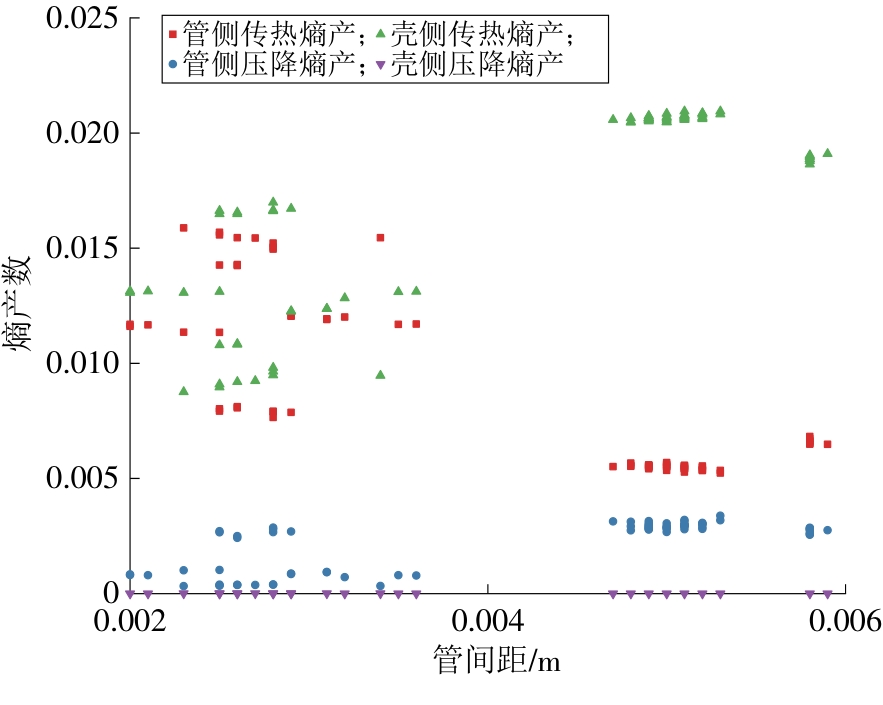
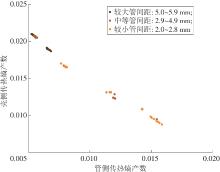
图10
SWHE管间距对传热熵产分布的影响(工质为Hitec XL)
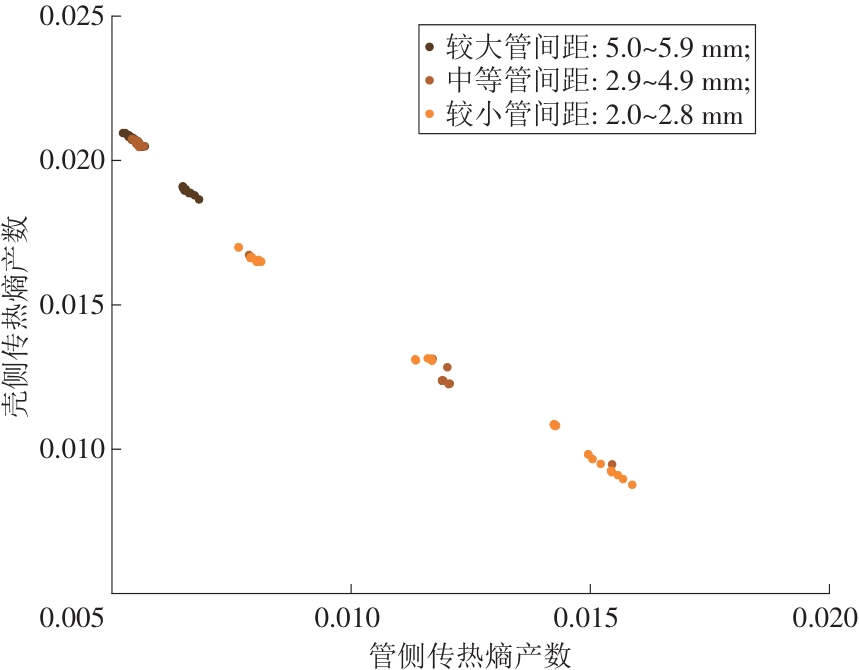
图11
SWHE不同管间距的Nu与f分布(工质为四元盐)
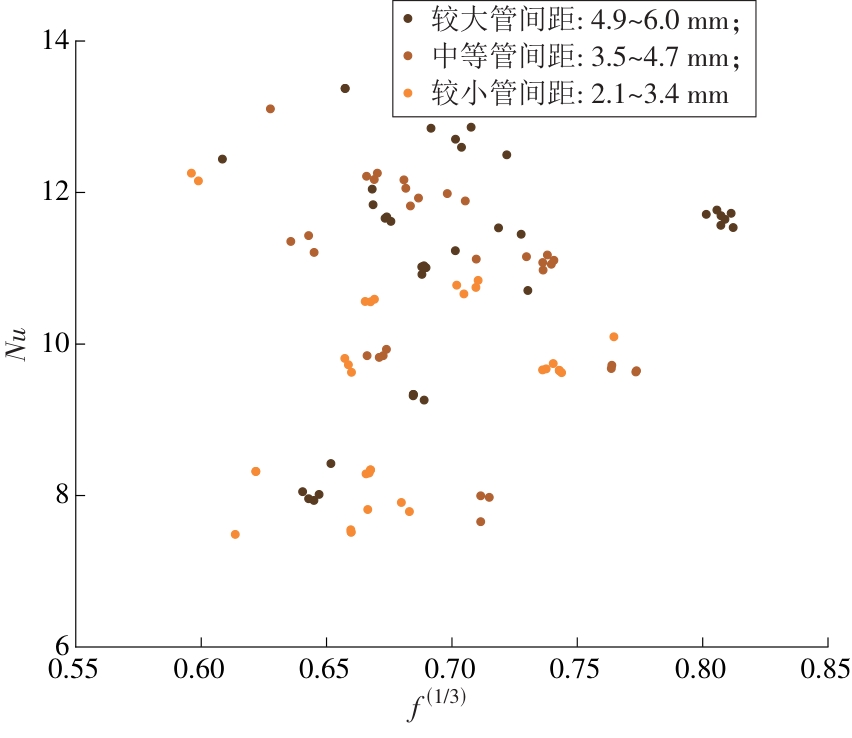
图12
SWHE不同管间距的Nu与f分布(工质为Hitec XL)
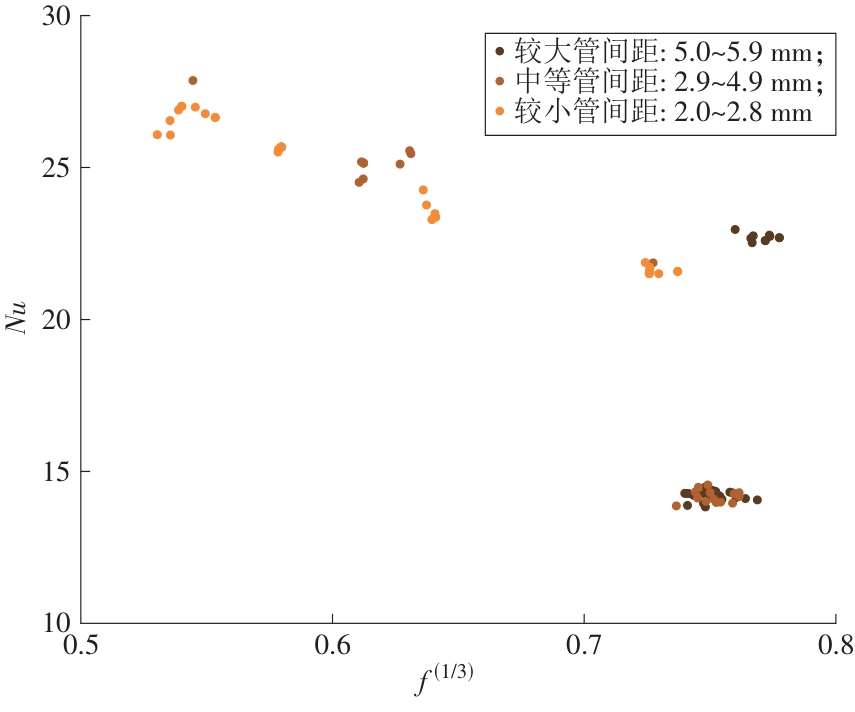
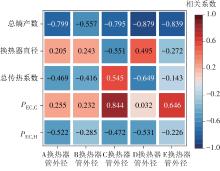
图13
SWHE管外径与其性能的相关系数
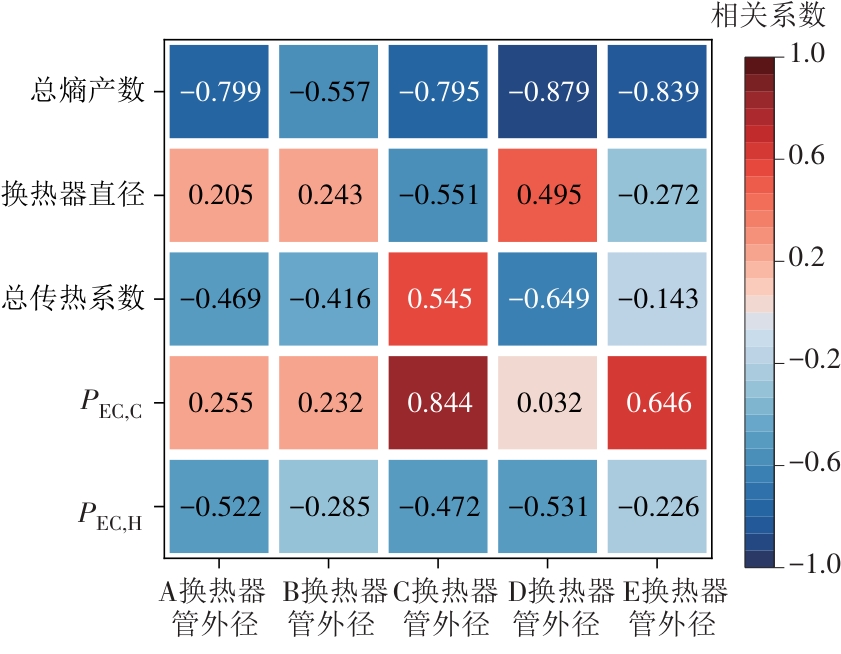
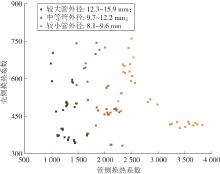
图14
SWHE不同管外径的换热系数分布(工质为四元盐)
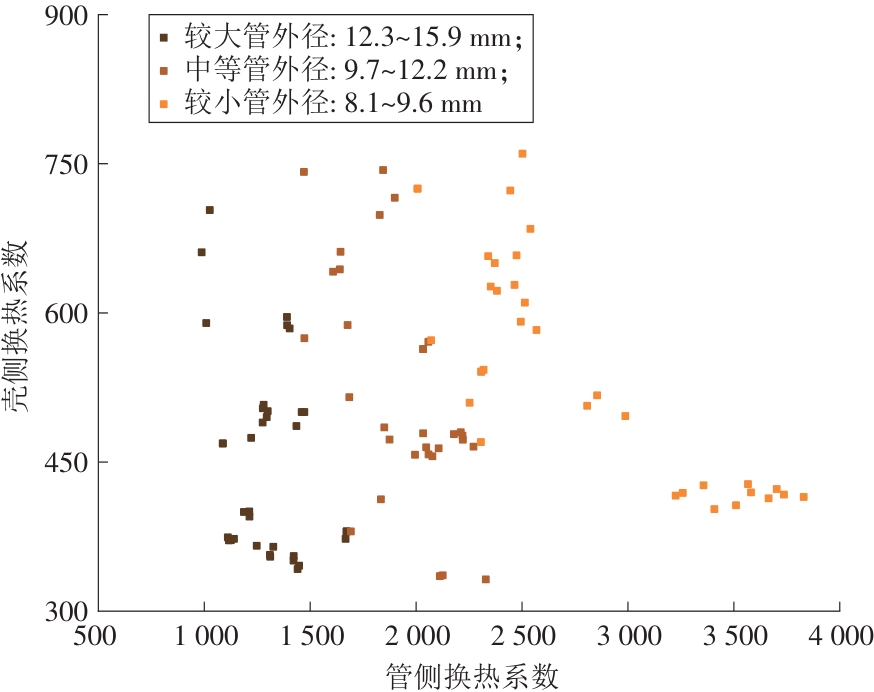
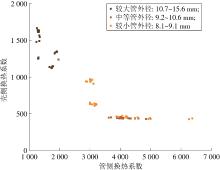
图15
SWHE不同管外径的换热系数分布(工质为Hitec XL)

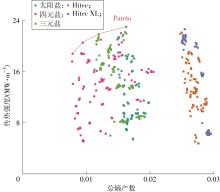
图16
单位体积传热强度与总熵产数帕累托直观分布
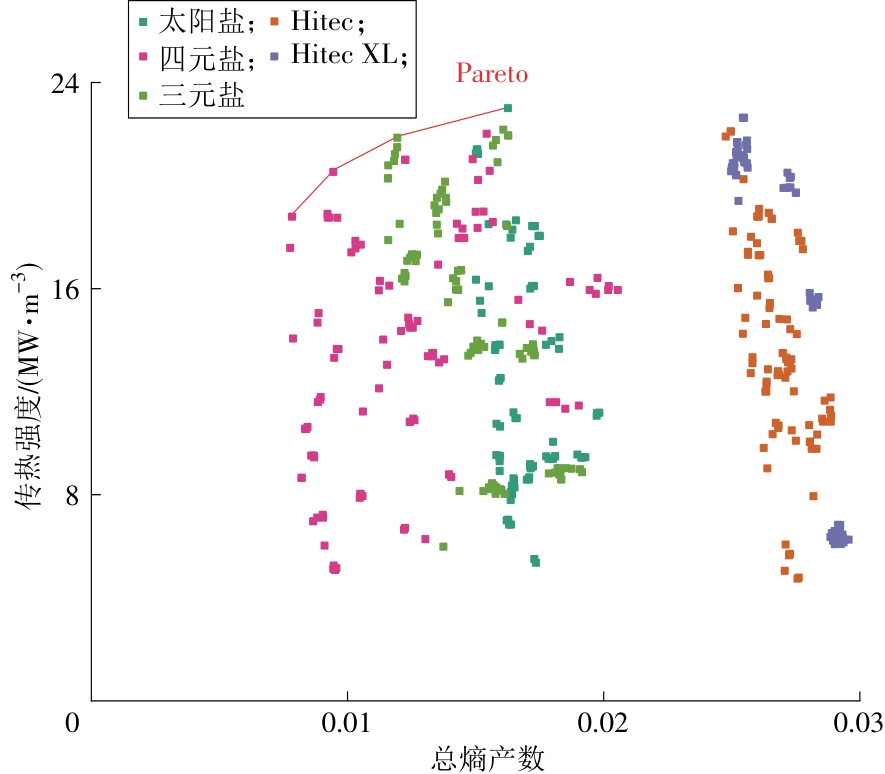
表11
推荐设计方案
| 方案 | 设计工质 | 缠绕角度/(°) | 层间距/m | 管间距/m | 管外径/m |
|---|---|---|---|---|---|
| 1 | 太阳盐 | 19.0 | 0.002 0 | 0.004 4 | 0.008 5 |
| 2 | 三元盐 | 19.0 | 0.002 1 | 0.004 1 | 0.012 1 |
| 3 | 四元盐 | 19.0 | 0.002 9 | 0.004 4 | 0.011 5 |
| 4 | 四元盐 | 18.9 | 0.003 7 | 0.003 3 | 0.015 1 |
表12
推荐方案成本估算
| 方案 | 换热面积/m2 | 面积余度/% | 估算建设 成本/万元 | 估算运行成本/(万元·a-1) |
|---|---|---|---|---|
| 1 | 984.96 | 16.24 | 583.8 | 115.31 |
| 2 | 2 075.91 | 15.59 | 980.5 | 84.74 |
| 3 | 3 370.39 | 15.35 | 1 062.2 | 67.22 |
| 4 | 3 904.88 | 15.33 | 1 216.1 | 55.93 |
| [1] | 魏海姣, 鹿院卫, 张灿灿, 等. 燃煤机组灵活性调节技术研究现状及展望[J]. 华电技术, 2020, 42(4): 57-63. |
| WEI Haijiao, LU Yuanwei, ZHANG Cancan, et al. Status and prospect of flexibility regulation technology for coal-fired power plants[J]. Huadian Technology, 2020, 42(4): 57-63. | |
| [2] |
李博, 曹越, 徐景怡, 等. 考虑火电-熔盐储热耦合特性的风光火储能源调度[J]. 综合智慧能源, 2024, 46(12): 55-63.
doi: 10.3969/j.issn.2097-0706.2024.12.007 |
|
LI Bo, CAO Yue, XU Jingyi, et al. Energy dispatch of wind-photovoltaic-thermal-storage considering the coupling characteristics of thermal power and molten salt heat storage[J]. Integrated Intelligent Energy, 2024, 46(12): 55-63.
doi: 10.3969/j.issn.2097-0706.2024.12.007 |
|
| [3] |
张钟平, 刘亨, 谢玉荣, 等. 熔盐储热技术的应用现状与研究进展[J]. 综合智慧能源, 2023, 45(9): 40-47.
doi: 10.3969/j.issn.2097-0706.2023.09.006 |
|
ZHANG Zhongping, LIU Heng, XIE Yurong, et al. Application and research progress of molten salt heat storage technology[J]. Integrated Intelligent Energy, 2023, 45(9): 40-47.
doi: 10.3969/j.issn.2097-0706.2023.09.006 |
|
| [4] | 吕胜楠. 基于主蒸汽抽汽储热的燃煤机组深度调峰系统构建与关键部件优化设计[D]. 北京: 北京工业大学, 2025. |
| LYU Shengnan. Construction of deep peak shaving system for coal-fired units based on main steam extraction thermal energy storage and optimal design of key components[D]. Beijing: Beijing University of Technology, 2025. | |
| [5] |
GHORBANI N, TAHERIAN H, GORJI M, et al. Experimental study of mixed convection heat transfer in vertical helically coiled tube heat exchangers[J]. Experimental Thermal and Fluid Science, 2010, 34(7): 900-905.
doi: 10.1016/j.expthermflusci.2010.02.004 |
| [6] |
FERNG Y M, LIN W C, CHIENG C C. Numerically investigated effects of different Dean number and pitch size on flow and heat transfer characteristics in a helically coil-tube heat exchanger[J]. Applied Thermal Engineering, 2012, 36: 378-385.
doi: 10.1016/j.applthermaleng.2011.10.052 |
| [7] |
JAMSHIDI N, FARHADI M, GANJI D D, et al. Experimental analysis of heat transfer enhancement in shell and helical tube heat exchangers[J]. Applied Thermal Engineering, 2013, 51(1/2): 644-652.
doi: 10.1016/j.applthermaleng.2012.10.008 |
| [8] |
MAJID ETGHANI M, AMIR HOSSEINI BABOLI S. Numerical investigation and optimization of heat transfer and exergy loss in shell and helical tube heat exchanger[J]. Applied Thermal Engineering, 2017, 121: 294-301.
doi: 10.1016/j.applthermaleng.2017.04.074 |
| [9] | 王有强. 缠绕管式换热器壳程螺旋流传热模拟与试验研究[D]. 天津: 河北工业大学, 2023. |
| WANG Youqiang. Simulation and experimental study on shell spiral heat transfer of spiral wound heat exchanger[D]. Tianjin: Hebei University of Technology, 2023. | |
| [10] | 程文. 发动机余热利用螺旋管式换热器性能研究[D]. 郑州: 华北水利水电大学, 2023. |
| CHENG Wen. Study on the performance of helical tube heat exchanger for engine exhaust heat utilization[D]. Zhengzhou: North China University of Water Resources and Electric Power, 2023. | |
| [11] |
WANG S M, JIAN G P, WANG J R, et al. Application of entransy-dissipation-based thermal resistance for performance optimization of spiral-wound heat exchanger[J]. International Journal of Heat and Mass Transfer, 2018, 116: 743-750.
doi: 10.1016/j.ijheatmasstransfer.2017.09.061 |
| [12] |
WANG S M, JIAN G P, XIAO J, et al. Optimization investigation on configuration parameters of spiral-wound heat exchanger using Genetic Aggregation response surface and multi-objective Genetic Algorithm[J]. Applied Thermal Engineering, 2017, 119: 603-609.
doi: 10.1016/j.applthermaleng.2017.03.100 |
| [13] |
HAN Y, WANG X S, ZHANG H N, et al. Multi-objective optimization of helically coiled tube heat exchanger based on entropy generation theory[J]. International Journal of Thermal Sciences, 2020, 147: 106150.
doi: 10.1016/j.ijthermalsci.2019.106150 |
| [14] | 邓靜. 螺旋缠绕管换热器流动传热性能研究[D]. 郑州: 郑州大学, 2016. |
| DENG Jing. The heat transfer and flow characteristics analysis of helically coiled tube heat exchanger[D]. Zhengzhou: Zhengzhou University, 2016. | |
| [15] | 曹佳铭, 王学生, 陈琴珠, 等. 含相变的缠绕管换热器设计及多目标优化[J]. 科学技术与工程, 2022, 22(9): 3543-3550. |
| CAO Jiaming, WANG Xuesheng, CHEN Qinzhu, et al. Design and multi-objective optimization of spiral coil tube heat exchanger with phase change[J]. Science Technology and Engineering, 2022, 22(9): 3543-3550. | |
| [16] | 韩燕. 四元混合硝酸盐与Solar salt理化性能测试及对比实验研究[D]. 北京: 北京工业大学, 2020. |
| HAN Yan. Physical and chemical properties test and comparative experimental study of quaternary mixed nitrate and solar salt[D]. Beijing: Beijing University of Technology, 2020. | |
| [17] |
KAOOD A, ABUBAKR M, AL-ORAN O, et al. Performance analysis and particle swarm optimization of molten salt-based nanofluids in parabolic trough concentrators[J]. Renewable Energy, 2021, 177: 1045-1062.
doi: 10.1016/j.renene.2021.06.049 |
| [18] |
WANG Y Y, MA Y C, LU Y W, et al. Phase diagram thermodynamic calculation of KNO3-NaNO2-KNO2 ternary system molten salt and its thermophysical properties investigation for thermal energy storage[J]. Journal of Energy Storage, 2024, 96: 112422.
doi: 10.1016/j.est.2024.112422 |
| [19] |
WANG G H, WANG D B, PENG X, et al. Experimental and numerical study on heat transfer and flow characteristics in the shell side of helically coiled trilobal tube heat exchanger[J]. Applied Thermal Engineering, 2019, 149: 772-787.
doi: 10.1016/j.applthermaleng.2018.11.055 |
| [20] |
GILLI P V. Heat transfer and pressure drop for cross flow through banks of multistart helical tubes with uniform inclinations and uniform longitudinal pitches[J]. Nuclear Science and Engineering, 1965, 22(3): 298-314.
doi: 10.13182/NSE65-A20934 |
| [21] |
SCHMIDT E F. Wärmeübergang und druckverlust in rohrschlangen[J]. Chemie Ingenieur Technik, 1967, 39(13): 781-789.
doi: 10.1002/cite.v39:13 |
| [22] | 王光辉. 螺旋缠绕管换热器性能强化理论与优化设计[D]. 郑州: 郑州大学, 2021. |
| WANG Guanghui. Performance enhancement theory and optimal design of helically coiled tube heat exchanger[D]. Zhengzhou: Zhengzhou University, 2021. | |
| [23] |
DEB K, PRATAP A, AGARWAL S, et al. A fast and elitist multi-objective genetic algorithm: NSGA-Ⅱ[J]. IEEE Transactions on Evolutionary Computation, 2002, 6(2): 182-197.
doi: 10.1109/4235.996017 |
| [24] |
REINI M, CASISI M. The Gouy-Stodola theorem and the derivation of exergy revised[J]. Energy, 2020, 210: 118486.
doi: 10.1016/j.energy.2020.118486 |
| [25] | 任楠. 混合熔盐传热蓄热介质的制备与热物性研究[D]. 北京: 北京工业大学, 2015. |
| REN Nan. Study on preparation and thermophysical properties of mixed molten salts for heat transfer and storage[D]. Beijing: Beijing University of Technology, 2015. | |
| [26] |
ZHAO C Y, WU Z G. Thermal property characterization of a low melting-temperature ternary nitrate salt mixture for thermal energy storage systems[J]. Solar Energy Materials and Solar Cells, 2011, 95(12): 3341-3346.
doi: 10.1016/j.solmat.2011.07.029 |
| [1] | 田进择, 孟克其劳, 贾大江, 张占强, 周冉, 菅春. 压缩空气储能用永磁同步电机分析与优化设计[J]. 综合智慧能源, 2026, 48(5): 31-43. |
| [2] | 洪春雪, 肖海平, 谭甲群, 吕如轩, 陈燕鹏, 巨星. 考虑容量电价的风光火储能源基地多目标优化调度[J]. 综合智慧能源, 2025, 47(7): 1-11. |
| [3] | 程先龙, 马云, 韩军峰, 莫莹, 高艳. 基于改进非洲秃鹫优化算法的含风电场电力系统经济调度研究[J]. 综合智慧能源, 2025, 47(6): 37-46. |
| [4] | 王成, 邵冲, 何欣, 董海鹰. 基于MOIBKA算法的电化学储能电站最优功率分配[J]. 综合智慧能源, 2025, 47(6): 74-84. |
| [5] | 闫京, 李萌, 关宝良, 孟思宇, 樊颜搏, 王凤龙, 杨尚峰, 杨众杨, 熊亚选. 基于储能的寒冷地区住宅多能源供能多目标优化研究[J]. 综合智慧能源, 2025, 47(12): 46-56. |
| [6] | 邱文婷, 董家乐, 吴笛, 苏文静, 宗毅. 基于NSGA-Ⅱ的含氢多能源系统经济与低碳协同优化调度[J]. 综合智慧能源, 2025, 47(10): 34-44. |
| [7] | 樊颜搏, 熊亚选, 李想, 田曦, 杨洋. 基于遗传算法的建筑用能多目标优化应用进展[J]. 综合智慧能源, 2024, 46(9): 69-85. |
| [8] | 汤梓涵, 王帅杰, 鞠振河, 雷志奇. 光伏/光热耦合空气源热泵系统性能优化[J]. 综合智慧能源, 2024, 46(4): 34-41. |
| [9] | 陈勇, 肖雷鸣, 王井南, 吴健. 基于场景扩充的低碳综合能源系统高可靠性容量规划方法[J]. 综合智慧能源, 2024, 46(4): 24-33. |
| [10] | 孙健, 张云帆, 蔡潇龙, 刘鼎群. 基于预测负荷的暖通空调系统优化调度[J]. 综合智慧能源, 2024, 46(3): 12-19. |
| [11] | 陆文甜. 基于增量交换的主动配电网分布式多目标最优潮流[J]. 综合智慧能源, 2024, 46(2): 43-48. |
| [12] | 甄箫斐, 李尚娥, 张永恒, 焦若楠, 吴文兵. 西北地区近零能耗建筑围护结构多目标优化研究[J]. 综合智慧能源, 2024, 46(12): 81-90. |
| [13] | 白章, 郝文杰, 李琦, 郝洪亮, 温彩凤, 郭苏, 黄贤坤. 基于全生命周期评价的风光制氢综合系统容量配置优化研究[J]. 综合智慧能源, 2024, 46(10): 1-11. |
| [14] | 张力, 金立, 任炬光, 刘小兵. 计及气象因素与分时电价影响的综合能源系统负荷调控策略研究[J]. 综合智慧能源, 2024, 46(1): 18-27. |
| [15] | 包义辛, 徐椤赟, 杨强. 基于MADDPG算法的建筑群柔性负荷优化调控方法[J]. 综合智慧能源, 2023, 45(7): 61-69. |
| 阅读次数 | ||||||
|
全文 |
|
|||||
|
摘要 |
|
|||||