Integrated Intelligent Energy ›› 2026, Vol. 48 ›› Issue (5): 44-55.doi: 10.3969/j.issn.2097-0706.2026.05.005
• Optimization of Hydrogen Production Systems • Previous Articles Next Articles
JIN Xilin1( ), ZHANG Chao1, HAO Junhong1,*(), XU Chao1, ZHU Guojin2, JIA Haoshuai3
Received:2025-06-24
Revised:2025-11-06
Published:2026-05-25
Contact:
HAO Junhong
E-mail:sddqwdj2017@163.com;hjh@ncepu.edu.cn
Supported by:CLC Number:
JIN Xilin, ZHANG Chao, HAO Junhong, XU Chao, ZHU Guojin, JIA Haoshuai. Hierarchical configuration and optimization of active distribution networks considering characteristics of power-to-hydrogen devices[J]. Integrated Intelligent Energy, 2026, 48(5): 44-55.
Add to citation manager EndNote|Ris|BibTeX
URL: https://www.hdpower.net/EN/10.3969/j.issn.2097-0706.2026.05.005
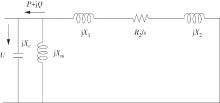
Fig.1
Equivalent circuit of a wind power
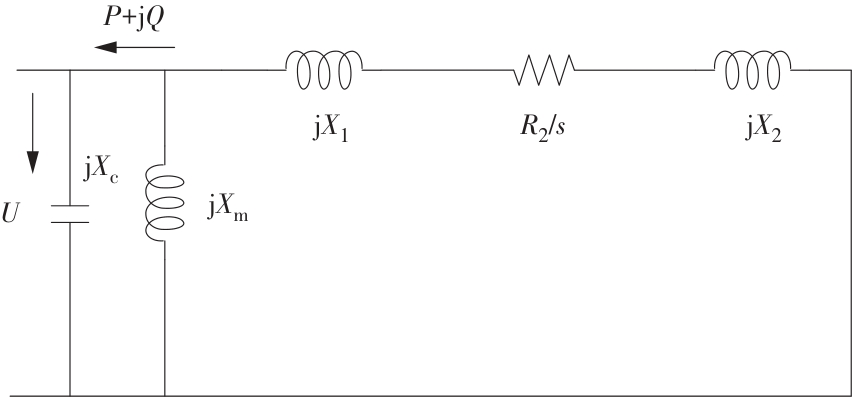
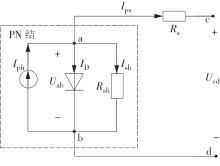
Fig.2
Equivalent circuit of solar power generation resource
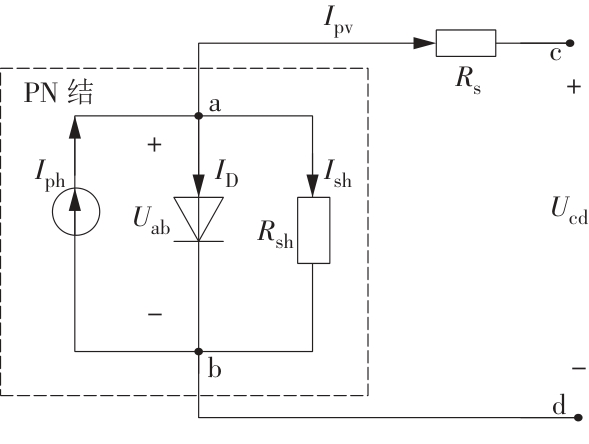
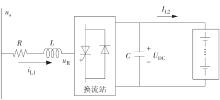
Fig.3
Equivalent circuit of energy storage system
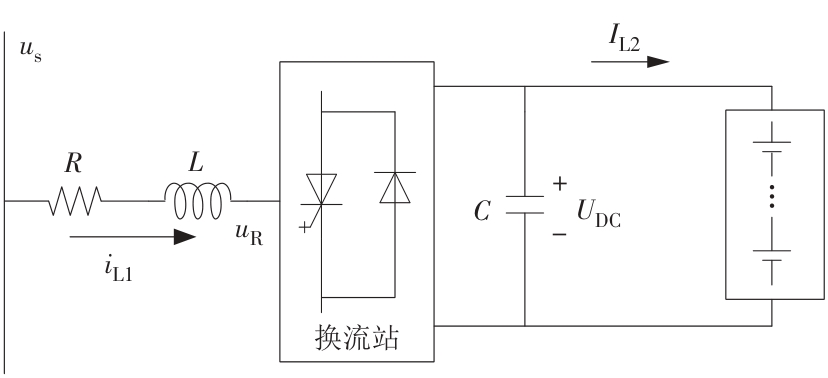
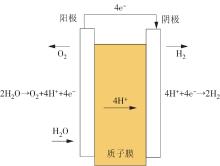
Fig.4
P2H process
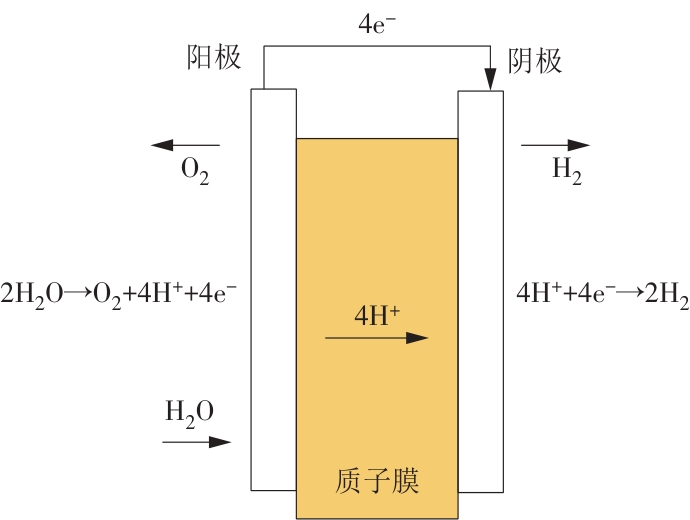
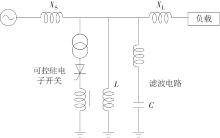
Fig.5
Equivalent circuit of SVC
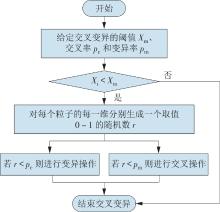
Fig.6
Flowchart of crossover and mutation operation
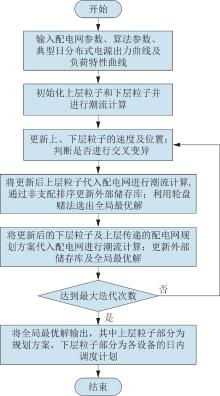
Fig.7
Solution flowchart
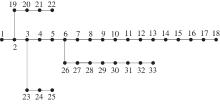
Fig.8
IEEE 33-node distribution system
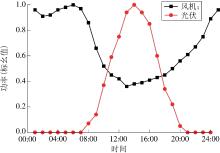
Fig.9
Typical daily wind and solar power output curves
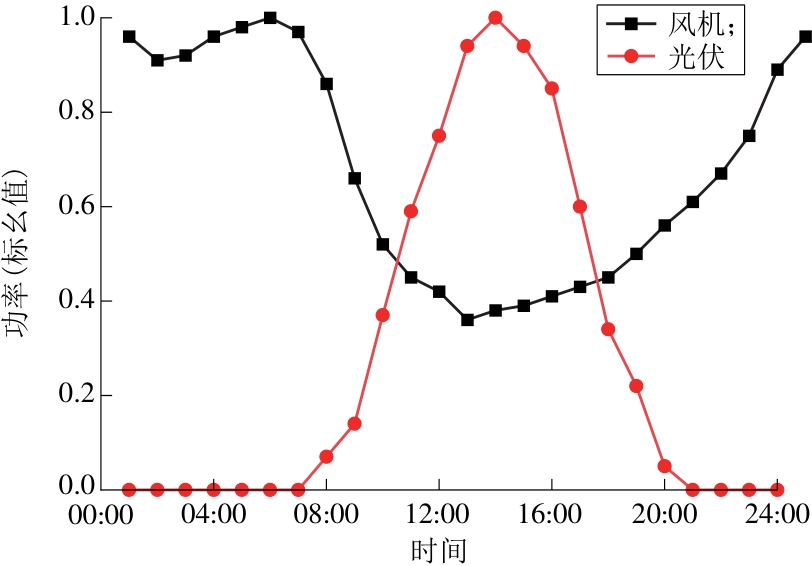
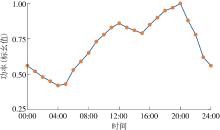
Fig.10
Typical daily load curve
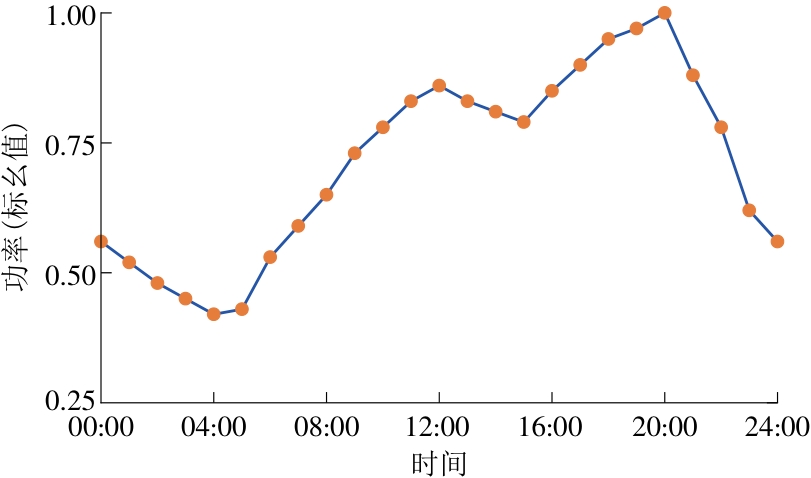
Table 1
Typical daily time-of-use electricity prices 元/(kW·h)
| 时段 | 电价 |
|---|---|
| 09:00 —14:00,18:00 —21:00 | 0.975 |
| 07:00 —09:00,14:00 —18:00,21:00 —23:00 | 0.510 |
| 00:00 —07:00,23:00 —24:00 | 0.195 |
Table 2
Parameters of devices integrated into distribution network
| 设备 | 投资成本 | 弃风弃光成本/[元·(kW·h)-1] | 使用寿命/a | 贴现率 | 运维更换率 |
|---|---|---|---|---|---|
| 风电 | 4 500 元/kW | 0.6 | 10 | 0.060 | |
| 光伏 | 3 000 元/kW | 0.5 | 10 | 0.060 | |
| 储能 | 3 600 元/(kW·h) | 15 | 0.065 | 0.05 | |
| P2H | 2 400 元/kW | 10 | 0.060 | ||
| SVC | 975 元/(kV·A) | 6 |
Table 3
Algorithm-related parameters
| 参数 | 数值 |
|---|---|
| 最大迭代次数 | 500 |
| 上层种群规模 | 200 |
| 下层种群规模 | 200 |
| 惯性权重 | 0.4~0.9 |
| 个体学习因子 | 2.05 |
| 社会学习因子 | 2.05 |
| 渗透率 | 0.7 |
| 交叉变异的阈值 | 0.1 |
| 交叉率 | 0.1 |
| 变异率 | 0.05 |
| 外部储存库规模 | 150 |
| 膨胀率 | 0.1 |
| 每一维分格数 | 5 |
| 最佳选择压 | 2 |
| 最佳删除压 | 2 |
| P2H效率/% | 60 |
| 售氢价格/(元·kg-1) | 42 |
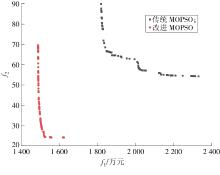
Fig.11
Comparison of optimization performance between conventional and improved MOPSO algorithms
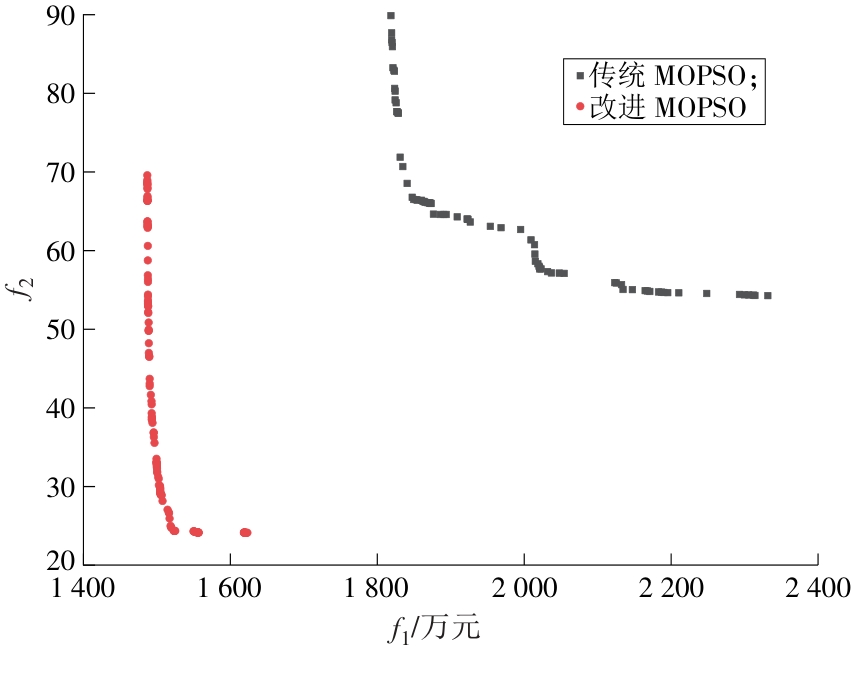
Table 4
Planning schemes under different scenarios
| 项目 | 场景1 | 场景2 | 场景3 |
|---|---|---|---|
| 风电/kW | 656.63(19) | 656.11(19) | 659.49(18) |
| 光伏/kW | 1 943.87(26) | 1 944.39(26) | 1 941.01(6) |
| 储能/(kW·h) | 250.00(30) | 360.08(28),357.62(14) | 342.25(19),449.19(12) |
| P2H/kW | 498.48(13) | ||
| SVC/(kV·A) | 25.00(20) |
Table 5
Annual optimal configuration results under different scenarios
| 场景 | 上层目标函数值/万元 | 下层目标函数值 | 弃风弃光惩罚/ 万元 |
|---|---|---|---|
| 1 | 1 387.26 | 68.73 | 147.98 |
| 2 | 1 208.64 | 63.43 | 65.66 |
| 3 | 1 093.59 | 60.94 | 30.08 |
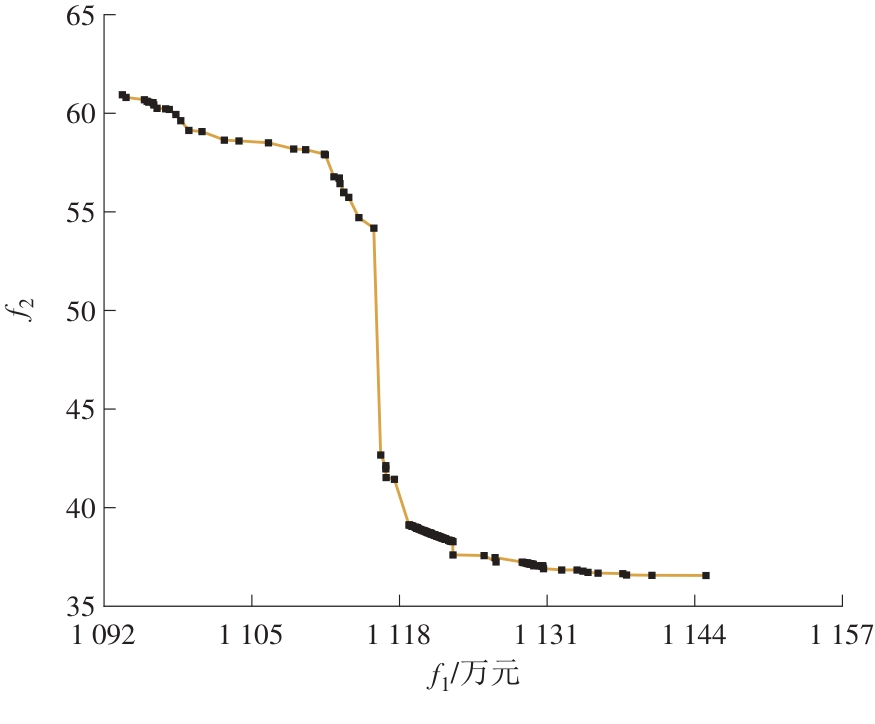
Fig.12
Pareto front under scenario 1
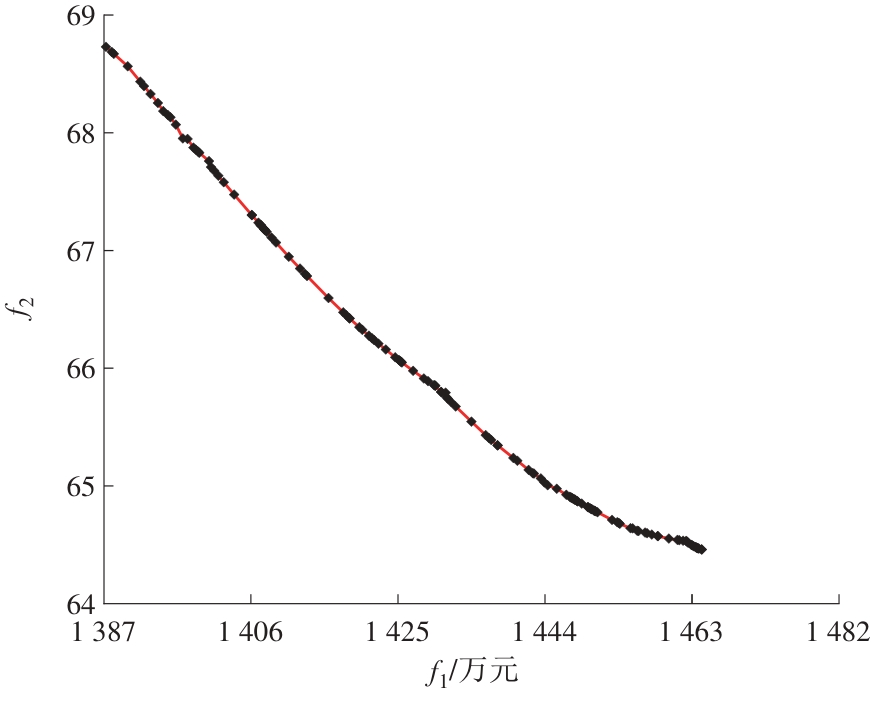
Fig.13
Pareto front under scenario 2
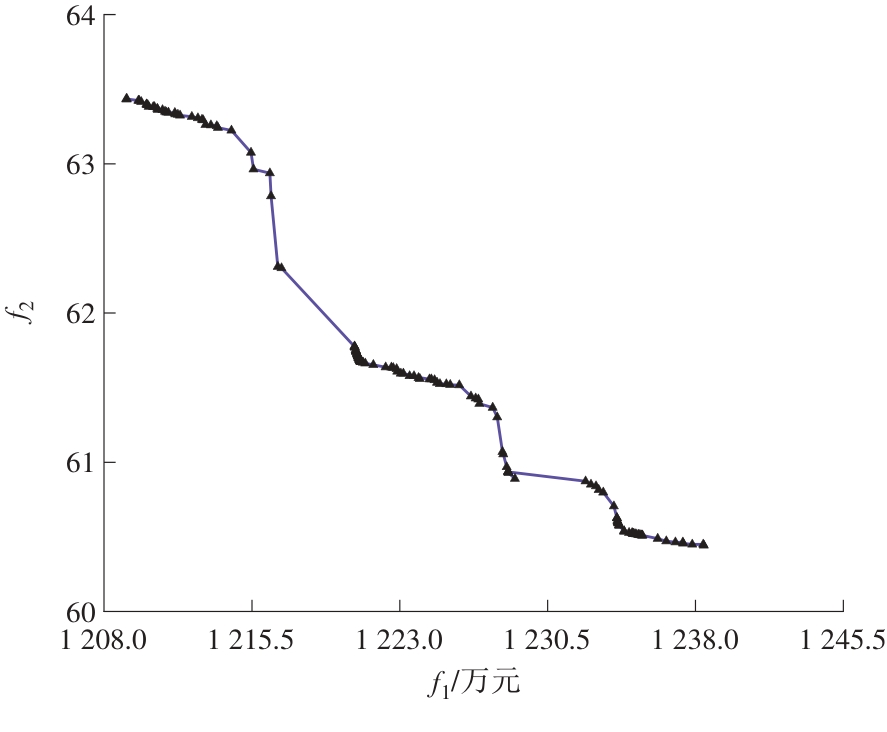
Fig.14
Pareto front under scenario 3
| [1] | 徐嘉豪, 汪泽原. 新型电力系统及 “双碳” 下配电网规划技术及策略[J]. 中国设备工程, 2024(17): 203-205. |
| XU Jiahao, WANG Zeyuan. New power system and distribution network planning technology and strategy under "double carbon"[J]. China Plant Engineering, 2024(17): 203-205. | |
| [2] | 李剑桥, 周洋. 新型电力系统下配电网当自强[J]. 中国电力企业管理, 2025(2): 9-10. |
| LI Jianqiao, ZHOU Yang. Distribution network should be self-reliant under new power system[J]. China Power Enterprise Management, 2025(2): 9-10. | |
| [3] |
林泓宏, 余涛, 张桂源, 等. 基于数据驱动的高比例新能源配电网无功优化算法[J]. 综合智慧能源, 2023, 45(11): 10-19.
doi: 10.3969/j.issn.2097-0706.2023.11.002 |
|
LIN Honghong, YU Tao, ZHANG Guiyuan, et al. Data-driven reactive power optimization algorithm for the distribution network with high proportion of renewable energy[J]. Integrated Intelligent Energy, 2023, 45(11): 10-19.
doi: 10.3969/j.issn.2097-0706.2023.11.002 |
|
| [4] |
LONG C Y, ZHANG J, YAN R J, et al. Source-load-storage distributional robust low-carbon economic scheduling considering carbon capture units and hydrogen energy storage system[J]. International Journal of Hydrogen Energy, 2025, 154: 150169.
doi: 10.1016/j.ijhydene.2025.150169 |
| [5] |
WANG J B, WEN J F, WANG J R, et al. Coordinated scheduling of wind-solar-hydrogen-battery storage system for techno-economic-environmental optimization of hydrogen production[J]. Energy Conversion and Management, 2024, 314: 118695.
doi: 10.1016/j.enconman.2024.118695 |
| [6] | 叶德意, 何正友, 臧天磊. 基于自适应变异粒子群算法的分布式电源选址与容量确定[J]. 电网技术, 2011, 35(6): 155-160. |
| YE Deyi, HE Zhengyou, ZANG Tianlei. Siting and sizing of distributed generation planning based on adaptive mutation particle swarm optimization algorithm[J]. Power System Technology, 2011, 35(6): 155-160. | |
| [7] | 崔艳龙, 陈前宇, 胡贵华. 基于改进粒子群算法的含分布式电源配电网规划[J]. 电气开关, 2014, 52(1): 44-48. |
| CUI Yanlong, CHEN Qianyu, HU Guihua. Distributed generation planning in distribution system based on modified particle swarm optimization algorithm[J]. Electric Switchgear, 2014, 52(1): 44-48. | |
| [8] |
范彬, 周力行, 黄頔, 等. 基于改进蝙蝠算法的配电网分布式电源规划[J]. 电力建设, 2015, 36(3): 123-128.
doi: 10.3969/j.issn.1000-7229.2015.03.022 |
|
FAN Bin, ZHOU Lixing, HUANG Di, et al. Distributed generation planning for distribution network based on modified bat algorithm[J]. Electric Power Construction, 2015, 36(3): 123-128.
doi: 10.3969/j.issn.1000-7229.2015.03.022 |
|
| [9] | 陈奇芳, 李若凡, 夏明超, 等. 计及多维性能评估的新型配电网光伏选址定容方法[J]. 中国电力, 2024, 57(10): 172-178, 207. |
| CHEN Qifang, LI Ruofan, XIA Mingchao, et al. Photovoltaic site selection and capacity determination method for new distribution network considering multidimensional performance evaluation[J]. Electric Power, 2024, 57(10): 172-178, 207. | |
| [10] | 赵昱森. 基于前推回代法的含分布式电源配电网潮流计算[J]. 光源与照明, 2020(8): 62-64. |
| ZHAO Yusen. Power flow calculation of distribution network with distributed generation based on forward-backward sweep method[J]. Lamps & Lighting, 2020(8): 62-64. | |
| [11] | 汪兴旺, 邱晓燕. 基于改进粒子群算法的配电网分布式电源规划[J]. 电力系统保护与控制, 2009, 37(14): 16-20, 40. |
| WANG Xingwang, QIU Xiaoyan. Distributed generation planning in distribution system based on modified particle swarm optimization algorithm[J]. Power System Protection and Control, 2009, 37(14): 16-20, 40. | |
| [12] | 周玲, 王兴念, 丁晓群, 等. 基因/禁忌组合算法在配电网网架优化规划中的应用[J]. 电网技术, 1999, 23(9): 35-37, 42. |
| ZHOU Ling, WANG Xingnian, DING Xiaoqun, et al. Application of genetic algorithm/tabu search combination algorithm in distribution network structure planning[J]. Power System Technology, 1999, 23(9): 35-37, 42. | |
| [13] | 苏海锋, 张建华, 梁志瑞, 等. 基于LCC和改进粒子群算法的配电网多阶段网架规划优化[J]. 中国电机工程学报, 2013, 33(4): 118-125. |
| SU Haifeng, ZHANG Jianhua, LIANG Zhirui, et al. Multi-stage planning optimization for power distribution network based on LCC and improved PSO[J]. Proceedings of the CSEE, 2013, 33(4): 118-125. | |
| [14] | 白牧可, 唐巍, 张璐, 等. 基于机会约束规划的DG与配电网架多目标协调规划[J]. 电工技术学报, 2013, 28(10): 346-354. |
| BAI Muke, TANG Wei, ZHANG Lu, et al. Multi-objective coordinated planning of distribution network incorporating distributed generation based on chance constrained programming[J]. Transactions of China Electrotechnical Society, 2013, 28(10): 346-354. | |
| [15] | 吴小刚, 刘宗歧, 田立亭, 等. 基于改进多目标粒子群算法的配电网储能选址定容[J]. 电网技术, 2014, 38(12): 3405-3411. |
| WU Xiaogang, LIU Zongqi, TIAN Liting, et al. Energy storage device locating and sizing for distribution network based on improved multi-objective particle swarm optimizer[J]. Power System Technology, 2014, 38(12): 3405-3411. | |
| [16] | 闫群民, 董新洲, 穆佳豪, 等. 基于改进多目标粒子群算法的有源配电网储能优化配置[J]. 电力系统保护与控制, 2022, 50(10): 11-19. |
| YAN Qunmin, DONG Xinzhou, MU Jiahao, et al. Optimal configuration of energy storage in an active distribution network based on improved multi-objective particle swarm optimization[J]. Power System Protection and Control, 2022, 50(10): 11-19. | |
| [17] | 项恩新, 王科, 关静恩, 等. 基于凸松弛的主动配电网储能与无功补偿协同规划[J]. 电力系统及其自动化学报, 2020, 32(10): 63-69. |
| XIANG Enxin, WANG Ke, GUAN Jing'en, et al. Collaborative planning for energy storage and reactive power compensation in active distribution network based on convex relaxation method[J]. Proceedings of the CSU-EPSA, 2020, 32(10): 63-69. | |
| [18] | 赵波, 薛美东, 陈荣柱, 等. 高可再生能源渗透率下考虑预测误差的微电网经济调度模型[J]. 电力系统自动化, 2014, 38(7): 1-8. |
| ZHAO Bo, XUE Meidong, CHEN Rongzhu, et al. An economic dispatch model for microgrid with high renewable energy resource penetration considering forecast errors[J]. Automation of Electric Power Systems, 2014, 38(7): 1-8. | |
| [19] | 禹威威, 刘世林, 陈其工, 等. 考虑电动汽车充电和需求侧响应的光伏微电网多目标优化调度[J]. 电力系统及其自动化学报, 2018, 30(1): 88-97. |
| YU Weiwei, LIU Shilin, CHEN Qigong, et al. Multi-objective optimization scheduling for PV microgrid considering electric vehicle charging and demand response[J]. Proceedings of the CSU-EPSA, 2018, 30(1): 88-97. | |
| [20] | HAO J H, FENG X L, JIN X L, et al. Optimal scheduling of active distribution network considering symmetric heat and power source-load spatial-temporal characteristics[J]. Applied Energy, 2024 (1): 373. |
| [21] |
XU Y H, CHEN H W. Layered power scheduling optimization of PV hydrogen production system considering performance attenuation of PEMEL[J]. Global Energy Interconnection, 2023, 6(6): 714-725.
doi: 10.1016/j.gloei.2023.11.005 |
| [22] |
NIU M, LI X J, SUN C, et al. Operation optimization of wind/battery storage/alkaline electrolyzer system considering dynamic hydrogen production efficiency[J]. Energies, 2023, 16(17): 6132.
doi: 10.3390/en16176132 |
| [23] | XIONG J, YI Y Q, CHEN B D, et al. Incremental distribution network day-ahead dynamic economic dispatch considering P2G[J]. Power Capacitors and Reactive Power Compensation, 2019, 40(6): 79-86. |
| [24] |
CHEN M, SHEN Z, WANG L, et al. Intelligent energy scheduling in renewable integrated microgrid with bidirectional electricity-to-hydrogen conversion[J]. IEEE Transactions on Network Science and Engineering, 2022, 9(4): 2212-2223.
doi: 10.1109/TNSE.2022.3158988 |
| [25] |
LIU N, ZHANG K R, ZHANG K. Coordinated configuration of hybrid energy storage for electricity-hydrogen integrated energy system[J]. Journal of Energy Storage, 2024, 95: 112590.
doi: 10.1016/j.est.2024.112590 |
| [26] |
GUO S. Active distribution network reactive power optimization based on an improved genetic particle swarm optimization algorithm[J]. Journal of Physics: Conference Series, 2023, 2655(1):012035.
doi: 10.1088/1742-6596/2655/1/012035 |
| [27] | SYAHPUTRA R, SOESANTI I. An optimization of power distribution network configuration with distributed generator integration using genetic algorithm[C]// Proceedings of the 2021 1st International Conference on Electronic and Electrical Engineering and Intelligent System (ICE3IS). IEEE, 2021. |
| [28] |
CHAKRABORTY A, RAY S. Optimal allocation of distribution generation sources with sustainable energy management in radial distribution networks using metaheuristic algorithm[J]. Computers and Electrical Engineering, 2024, 116: 109142.
doi: 10.1016/j.compeleceng.2024.109142 |
| [29] | 张庭场, 耿光飞. 基于改进粒子群算法的中压配电网无功优化[J]. 电网技术, 2012, 36(2): 158-162. |
| ZHANG Tingchang, GENG Guangfei. Reactive power optimization for medium voltage distribution network based on improved particle swarm optimization[J]. Power System Technology, 2012, 36(2): 158-162. | |
| [30] | 马永翔, 张勋, 淡文国, 等. 基于混合策略改进粒子群算法的配电网无功优化研究[J]. 电力电容器与无功补偿, 2023, 44(6): 32-38, 78. |
| MA Yongxiang, ZHANG Xun, DAN Wenguo, et al. Study on reactive power optimization of distribution network based on multi-strategy fusion improved particle swarm algorithm[J]. Power Capacitor & Reactive Power Compensation, 2023, 44(6): 32-38, 78. | |
| [31] | 刘宝宁, 章卫国, 李广文, 等. 一种改进的多目标粒子群优化算法[J]. 北京航空航天大学学报, 2013, 39(4): 458-462, 473. |
| LIU Baoning, ZHANG Weiguo, LI Guangwen, et al. Improved multi-objective particle swarm optimization algorithm[J]. Journal of Beijing University of Aeronautics and Astronautics, 2013, 39(4): 458-462, 473. | |
| [32] | 吴彤, 陈洪涛, 赵建明, 等. 含分布式风电和储能的配网潮流计算方法研究[J]. 东北电力大学学报, 2015, 35(3): 1-5. |
| WU Tong, CHEN Hongtao, ZHAO Jianming, et al. Power flow calculation method for distribution network containing grid-connected wind generator and energy storage[J]. Journal of Northeast Dianli University, 2015, 35(3): 1-5. | |
| [33] | 闫馨予. 含分布式电源的配电网潮流计算[D]. 兰州: 兰州理工大学, 2017. |
| YAN Xinyu. Power flow calculation of distribution network with distributed power supply[D]. Lanzhou: Lanzhou University of Technology, 2017. | |
| [34] | 刘华晶. 考虑储能影响的含分布式电源配电网规划研究[D]. 太原: 太原理工大学, 2020. |
| LIU Huajing. Research on distribution network planning with distributed generation considering energy storage[D]. Taiyuan: Taiyuan University of Technology, 2020. | |
| [35] | 张步涵, 曾杰, 毛承雄, 等. 电池储能系统在改善并网风电场电能质量和稳定性中的应用[J]. 电网技术, 2006, 30(15): 54-58. |
| ZHANG Buhan, ZENG Jie, MAO Chengxiong, et al. Improvement of power quality and stability of wind farms connected to power grid by battery energy storage system[J]. Power System Technology, 2006, 30(15): 54-58. | |
| [36] | 李佳蓉, 林今, 邢学韬, 等. 主动配电网中基于统一运行模型的电制氢(P2H)模块组合选型与优化规划[J]. 中国电机工程学报, 2021, 41(12): 4021-4033. |
| LI Jiarong, LIN Jin, XING Xuetao, et al. Technology portfolio selection and optimal planning of power-to-hydrogen(P2H) modules in active distribution network[J]. Proceedings of the CSEE, 2021, 41(12): 4021-4033. | |
| [37] | KOPONEN J. Review of water electrolysis technologies and design of renewable hydrogen production systems[D]. Lappeenranta: Lappeenranta University, 2015. |
| [38] |
OUABI H, LAJOUAD R, KISSAOUI M, et al. Hydrogen production by water electrolysis driven by a photovoltaic source: A review[J]. e-Prime-Advances in Electrical Engineering, Electronics and Energy, 2024, 8: 100608.
doi: 10.1016/j.prime.2024.100608 |
| [39] | 刘自发, 于普洋, 李颉雨. 计及运行特性的配电网分布式电源与广义储能规划[J]. 电力自动化设备, 2023, 43(3): 72-79. |
| LIU Zifa, YU Puyang, LI Jieyu. Planning of distributed generation and generalized energy storage in distribution network considering operation characteristics[J]. Electric Power Automation Equipment, 2023, 43(3): 72-79. | |
| [40] | 赵冬梅, 夏轩, 陶然. 含电转气的热电联产微网电/热综合储能优化配置[J]. 电力系统自动化, 2019, 43(17): 46-54. |
| ZHAO Dongmei, XIA Xuan, TAO Ran. Optimal configuration of electric/thermal integrated energy storage for combined heat and power microgrid with power to gas[J]. Automation of Electric Power Systems, 2019, 43(17): 46-54. | |
| [41] | 彭生江, 杨德州, 孙传帅, 等. 基于氢负荷需求的氢能系统容量规划[J]. 中国电力, 2023, 56(7): 13-20, 32. |
| PENG Shengjiang, YANG Dezhou, SUN Chuanshuai, et al. Capacity planning of hydrogen production and storage system based on hydrogen load demand[J]. Electric Power, 2023, 56(7): 13-20, 32. | |
| [42] | 乔艺林. 发电侧电氢混合储能系统容量配置与优化调度方法研究[D]. 杭州: 浙江大学, 2024. |
| QIAO Yilin. Capacity configuration and optimization scheduling of electric-hydrogen hybrid energy storage system for power generation[D]. Hangzhou: Zhejiang University, 2024. | |
| [43] |
王林, 孔小民, 周忠玉, 等. 云储能模式下的配电网分布式光伏-储能无功优化方法[J]. 综合智慧能源, 2024, 46(6): 44-53.
doi: 10.3969/j.issn.2097-0706.2024.06.006 |
|
WANG Lin, KONG Xiaomin, ZHOU Zhongyu, et al. Distributed photovoltaic-energy storage reactive power optimization method for distribution networks under cloud energy storage mode[J]. Integrated Intelligent Energy, 2024, 46(6): 44-53.
doi: 10.3969/j.issn.2097-0706.2024.06.006 |
|
| [44] |
VAN DEN BERGH F, ENGELBRECHT A P. A cooperative approach to particle swarm optimization[J]. IEEE Transactions on Evolutionary Computation, 2004, 8(3): 225-239.
doi: 10.1109/TEVC.2004.826069 |
| [1] | GUO Binglin, ZHANG Jingyu, ZANG Qiyong. Bi-level trading decision-making model for electric energy-frequency regulation markets [J]. Integrated Intelligent Energy, 2026, 48(5): 10-18. |
| [2] | WANG Hai, LIU Siyu, ZHANG Xinyue, LIU Siqi, TANG Kerong, LIANG Xuhe, BU Hebateer. Development status and analysis of compressed air energy storage [J]. Integrated Intelligent Energy, 2026, 48(5): 19-30. |
| [3] | TIAN Jinze, MENG Keqilao, JIA Dajiang, ZHANG Zhanqiang, ZHOU Ran, JIAN Chun. Analysis and optimal design of permanent magnet synchronous motors for compressed air energy storage [J]. Integrated Intelligent Energy, 2026, 48(5): 31-43. |
| [4] | ZHANG Yongjian, LI Bin, XING Geyu, SUN Junpeng, XU Gang, XUE Xiaojun. Feasibility study on steam supply expansion of combined heat and power based on molten salt energy storage [J]. Integrated Intelligent Energy, 2026, 48(5): 74-82. |
| [5] | CUI Yaru, LU Yuanwei, WANG Zixuan, YANG Han, WU Yuting. Economic efficiency analysis of operation strategies for the solar-coal peak-shaving system with steam extraction and molten salt thermal energy storage based on wind and solar power integration amount [J]. Integrated Intelligent Energy, 2026, 48(5): 83-94. |
| [6] | DING Xinyu, ZHOU Qingcai, CHI Yaodan, ZHANG Yao, WANG Junxi, WANG Chao, JIA Hongdan, LIN Guoxiong. Research progress on modeling, control, and source-load prediction of new-type power systems [J]. Integrated Intelligent Energy, 2026, 48(3): 1-14. |
| [7] | ZENG Yunrui, WANG Zeqi, XU Bo, JIANG Tianyu, LI Xijun, LI Tingyi. Modeling and stability analysis of grid-forming energy storage systems based on dynamic phasors [J]. Integrated Intelligent Energy, 2026, 48(3): 27-36. |
| [8] | PAN Lei, DING Yunfei, PANG Yi, WANG Yuxuan, CHEN Jianwei, GAO Rui, ZHANG Liyang. Optimal scheduling strategy for REHMIS-IES based on SC-SAC algorithm [J]. Integrated Intelligent Energy, 2026, 48(1): 43-58. |
| [9] | LIANG Fuguang, MA Zhongqiang. Load prediction for island microgrids based on evaluation factor reconstruction and DECN-BiGRU [J]. Integrated Intelligent Energy, 2026, 48(1): 85-97. |
| [10] | ZHANG Yuanxi, YANG Guohua, MA Longteng, MA Xin, LIU Yaoze. Optimized wind-solar-storage configuration of industrial park microgrids based on improved differential evolution algorithm [J]. Integrated Intelligent Energy, 2025, 47(9): 71-79. |
| [11] | ZHOU Kai, WU Yanxi, HUANG Yuxiang, YANG Jinghao, FAN Xiaochao, LI Jianwei, WEI Zhizong, TENG Jian, CHEN Li, YE Qin, ZHANG Hao, JIANG Junnan. Large-scale gravity energy storage technology for solid flow in areas with large altitude differences [J]. Integrated Intelligent Energy, 2025, 47(8): 1-9. |
| [12] | ZHEN Wenxi, MA Xiping, DAI Yuehong, NIU Wei, CHEN Baixu, ZENG Gui. Research on wind-storage self-synchronizing frequency regulation strategy based on intermediate layer control [J]. Integrated Intelligent Energy, 2025, 47(8): 21-29. |
| [13] | CHU Longhao, LI Xiaozhu. Bidding strategies and value allocation mechanism for multi-type electric energy trading with participation of shared energy storage [J]. Integrated Intelligent Energy, 2025, 47(8): 30-39. |
| [14] | ZHENG Haoyu, ZHOU Jiahui, TONG Bin, WANG Haiming, XU Gang, ZHANG Ziyue. Research on capacity allocation and operation scheduling optimization of green hydrogen system with compressed air energy storage [J]. Integrated Intelligent Energy, 2025, 47(7): 64-70. |
| [15] | ZHANG Debin, LIN Wenye, HE Zixuan, YUE Xinru, SONG Wenji, FENG Ziping, FARID Mohammed Mehdi, USHAK DE GRAGEDA Svetlana Nikolaevna. Day-ahead dispatch optimization for integrated energy system in building prosumer community using generalized energy storage [J]. Integrated Intelligent Energy, 2025, 47(7): 82-92. |
| Viewed | ||||||
|
Full text |
|
|||||
|
Abstract |
|
|||||