Integrated Intelligent Energy ›› 2026, Vol. 48 ›› Issue (6): 105-114.doi: 10.3969/j.issn.2097-0706.2026.06.009
• Energy Storage and Peak Regulation Technology • Previous Articles
XU Juan1( ), LI Chao2,*(), ZHAI Rongrong1()
Received:2025-09-30
Revised:2025-11-03
Published:2026-01-07
Contact:
LI Chao
E-mail:xjuan0220@163.com;lichao201408@163.com;zhairongrong01@163.com
Supported by:CLC Number:
XU Juan, LI Chao, ZHAI Rongrong. Typical daily performance analysis of a wind-photovoltaic-gas complementary integrated energy system[J]. Integrated Intelligent Energy, 2026, 48(6): 105-114.
Add to citation manager EndNote|Ris|BibTeX
URL: https://www.hdpower.net/EN/10.3969/j.issn.2097-0706.2026.06.009
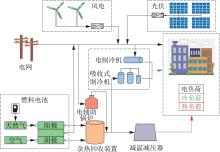
Fig.1
Wind-photovoltaic-gas integrated energy system
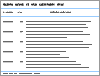
Table 1
Coefficients of fitting function
| 系数 | 数值 | 系数 | 数值 |
|---|---|---|---|
| a1 | 0.215 2 | a2 | -0.544 5 |
| b1 | -1.075 3 | b2 | 1.176 7 |
| c1 | 1.286 2 | c2 | -0.876 7 |
| d1 | 0.004 4 | d2 | 0.675 0 |
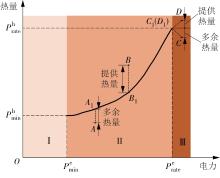
Fig.2
Electricity-following operation mode
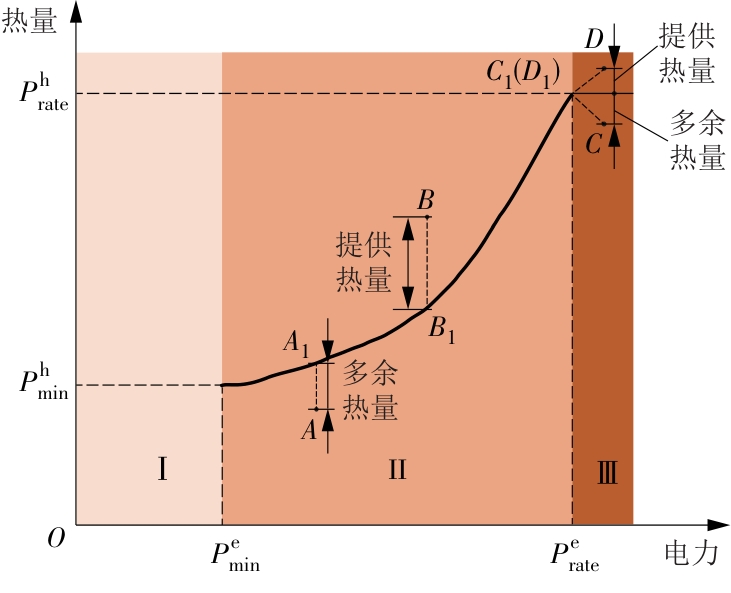
Fig.3
Heat-following operation mode
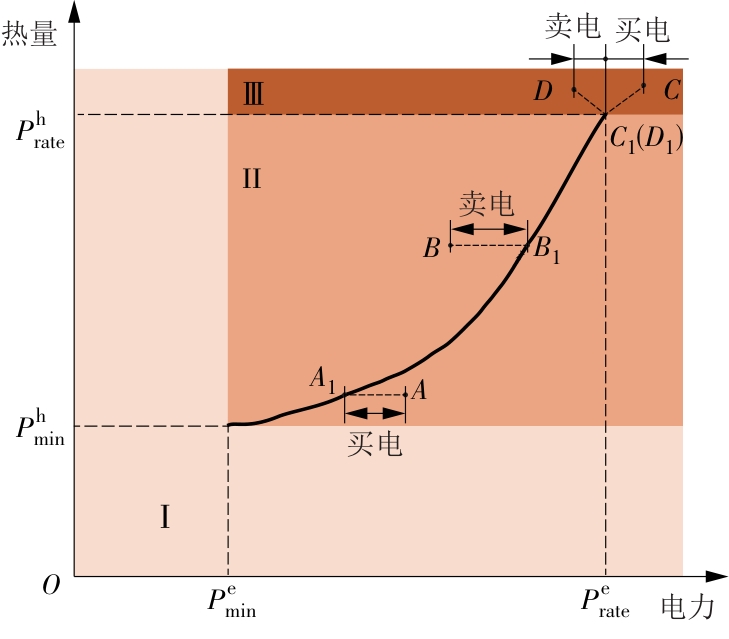
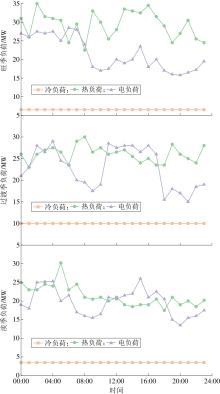
Fig.4
Typical daily load
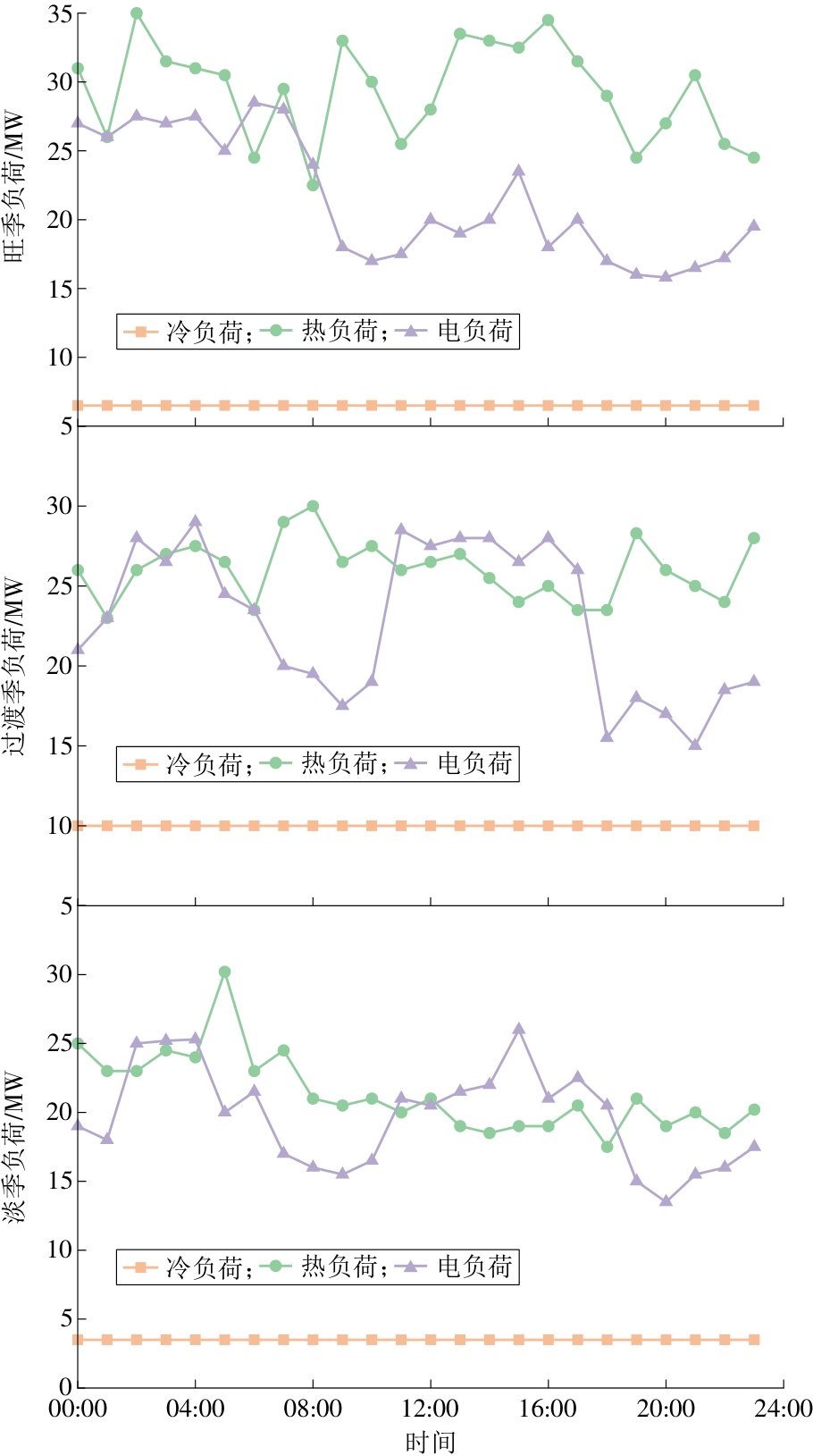
Table 2
Time-of-use electricity prices
| 时段 | 电价 | |
|---|---|---|
| 高峰 | 07:00 —09:00,18:00 —24:00 | 0.880 0 |
| 低谷 | 02:00 —04:00,11:00 —17:00 | 0.308 6 |
| 平段 | 其他时段 | 0.594 3 |
Table 3
Parameters of each device in the system
| 参数 | 数值 | 参数 | 数值 |
|---|---|---|---|
| COP,ec | 3.0 | μ1/[kg·(MW·h)-1] | 877 |
| COP,ac | 1.2 | μ2[kg·(MW·h)-1] | 220 |
| ηh | 1.00 | ηgrid | 0.92 |
| ηe | 0.35 | ηwh | 0.70 |
Fig.5
Operational performance in peak season
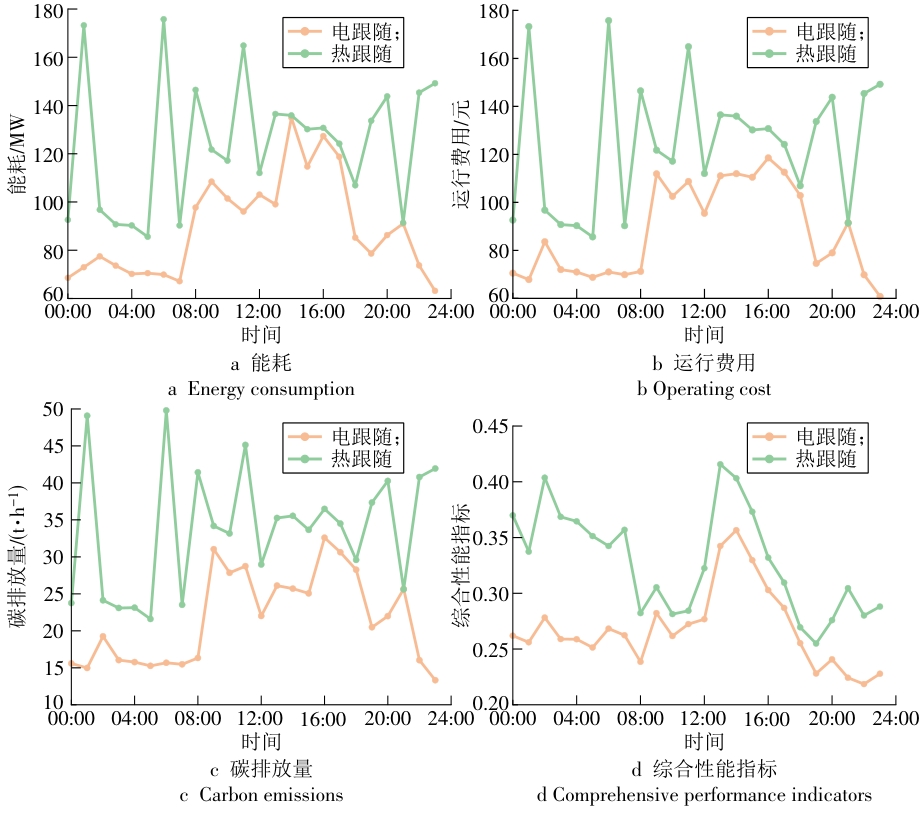
Fig.6
Operational performance in transition season
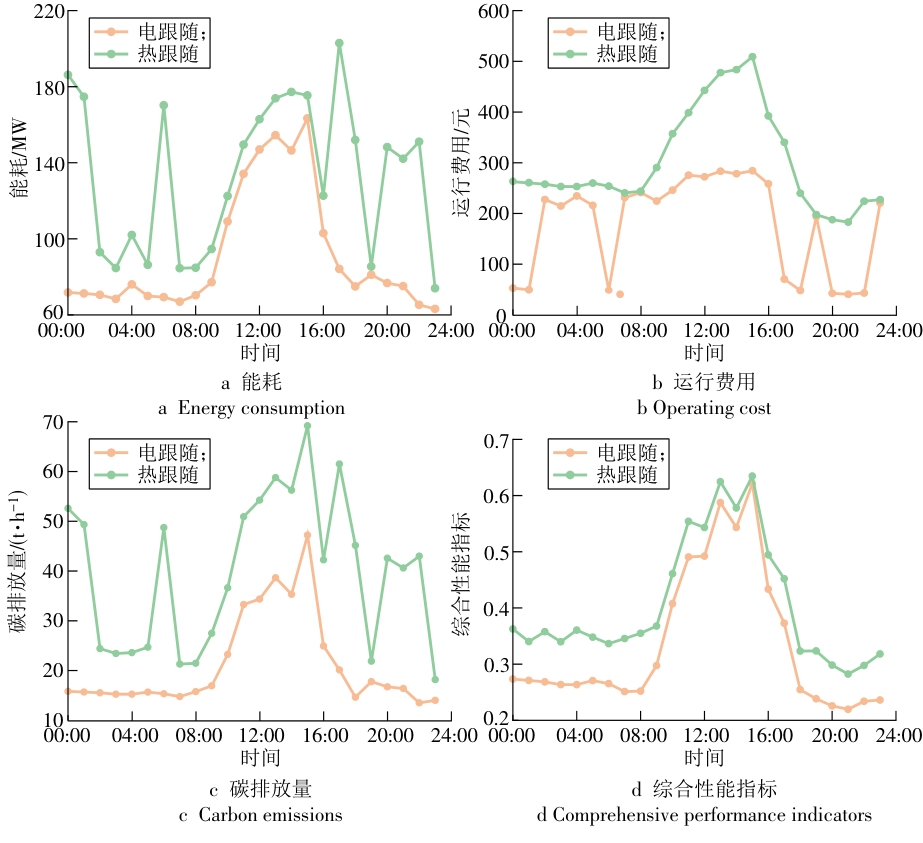
Fig.7
Operational performance in off-season
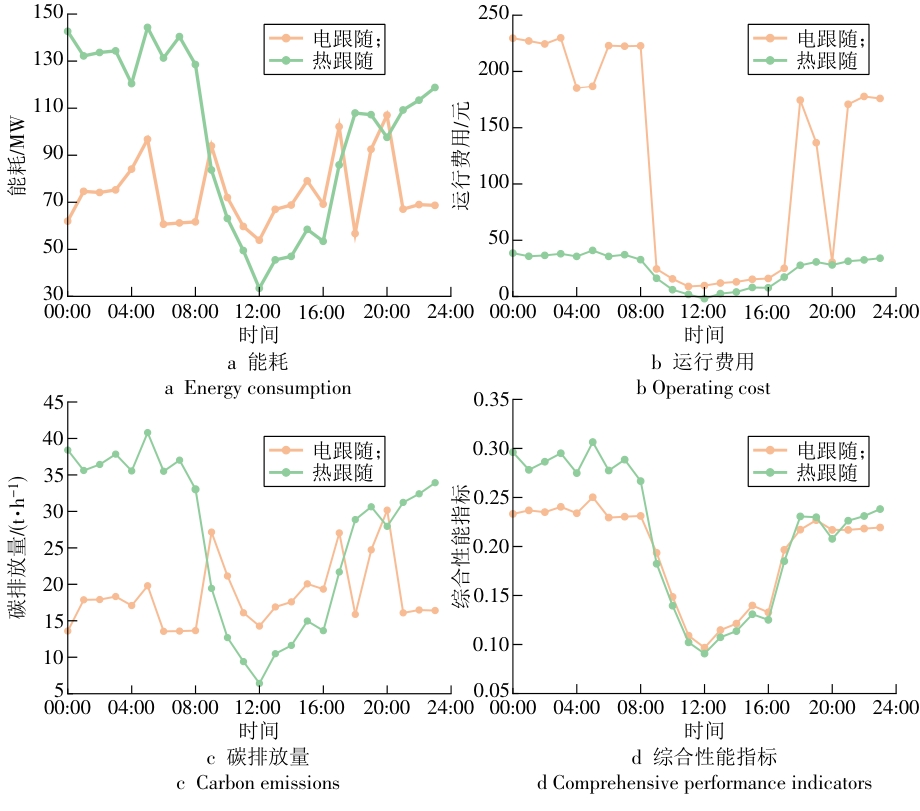
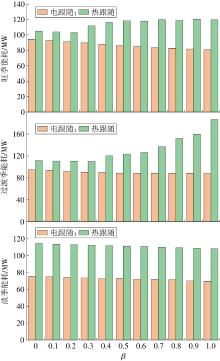
Fig.8
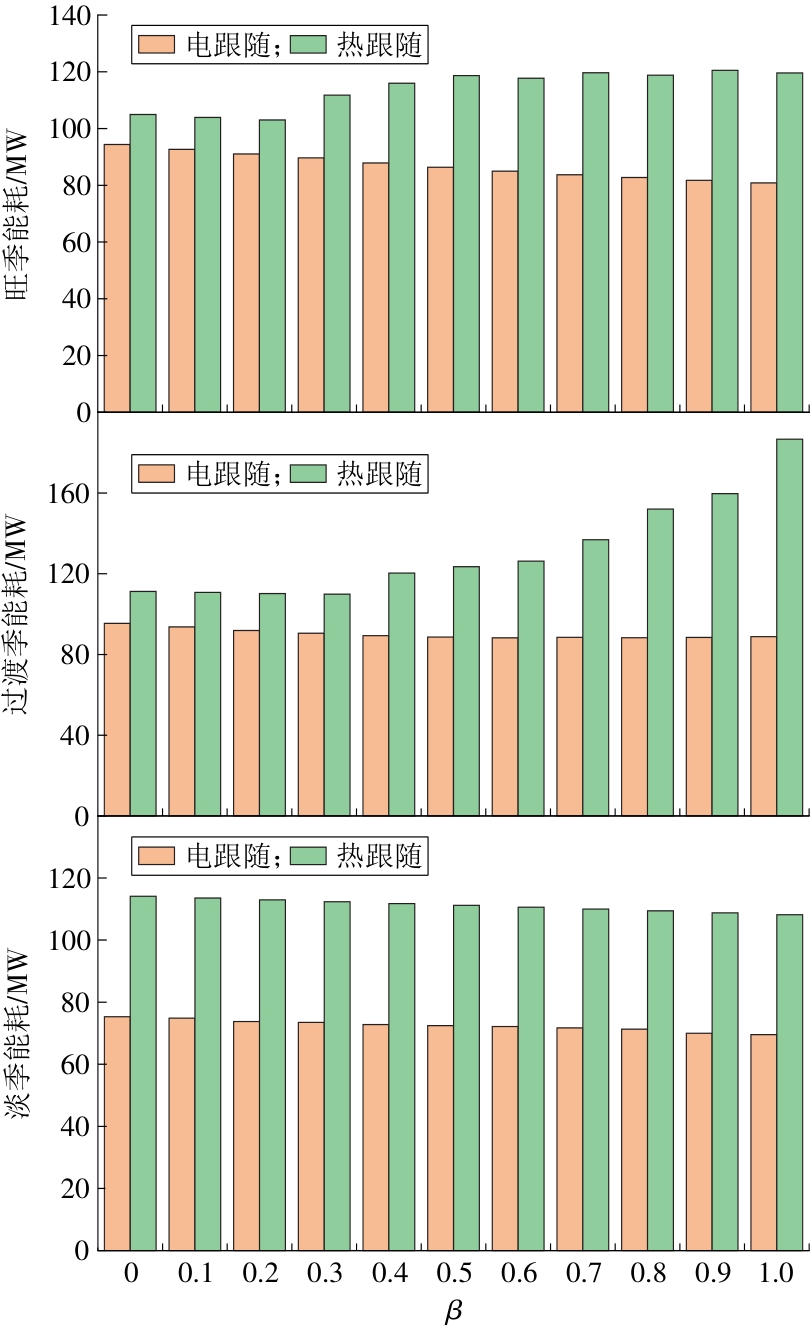
Average system energy consumption under different β values
| [1] | 邵桂萍, 许洪华. 可再生能源综合系统现状与未来发展趋势研究[J]. 太阳能, 2024(7): 127-132. |
| SHAO Guiping, XU Honghua. Research on present situation and future development trend of renewable energy integrated system[J]. Solar Energy, 2024(7): 127-132. | |
| [2] | 李承周, 王宁玲, 窦潇潇, 等. 多能源互补分布式能源系统集成研究综述及展望[J]. 中国电机工程学报, 2023, 43(18): 7127-7150. |
| LI Chengzhou, WANG Ningling, DOU Xiaoxiao, et al. Review and prospect on the system integration of distributed energy system with the complementation of multiple energy sources[J]. Proceedings of the CSEE, 2023, 43(18): 7127-7150. | |
| [3] | 龚健, 李晓萍, 张帅. 区域综合能源系统冷热供需匹配方法综述: 以减碳为目标[J]. 建筑节能, 2025(8):28-33. |
| GONG Jian, LI Xiaoping, ZHANG Shuai. A review of matching methods of heat and cold supply in regional integrated energy system: Aiming at carbon reduction[J]. Building Energy Efficiency, 2025(8): 28-33. | |
| [4] |
黄银恒, 李猛, 庞毅, 等. 区域综合能源系统容量配置和调度策略优化方法研究[J]. 综合智慧能源, 2023, 45(6): 34-41.
doi: 10.3969/j.issn.2097-0706.2023.06.005 |
|
HUANG Yinheng, LI Meng, PANG Yi, et al. Research on optimization method for capacity allocation and scheduling strategy of regional integrated energy systems[J]. Integrated Intelligent Energy, 2023, 45(6): 34-41.
doi: 10.3969/j.issn.2097-0706.2023.06.005 |
|
| [5] | 王丹阳. 飞轮储能系统在风力发电系统中的应用研究[D]. 北京: 华北电力大学, 2022. |
| Wang Danyang. Research on the application of flywheel energy storage system in wind power generation system[D]. Beijing: North China Electric Power University, 2022. | |
| [6] | 陈玮. 直驱型永磁同步风力发电系统主动频率支撑控制技术[D]. 杭州: 浙江大学, 2022. |
| CHEN Wei. Control technology of direct-driven permanent magnet synchronous wind power generation system for active frequency support[D]. Hangzhou: Zhejiang University, 2022. | |
| [7] | 孙泽涛. 光伏发电系统中MPPT和并网控制策略的研究[D]. 淮南: 安徽理工大学, 2022. |
| SUN Zetao. Research on MPPT and grid-connection control strategy in photovoltaic power generation system[D]. Huainan: Anhui University of Science & Technology, 2022. | |
| [8] | 暴蕊. 光伏发电并网控制技术的研究[D]. 大庆: 东北石油大学, 2022. |
| BAO Rui. Research on grid control of photovoltaic power generation system[D]. Daqing: Northeast Petroleum University, 2022. | |
| [9] | 王超博. 分布式光伏发电设计及安装分析[J]. 现代工业经济和信息化, 2022, 12(10): 27-28. |
| WANG Chaobo. Analysis of distributed photovoltaic power generation design and installation[J]. Modern Industrial Economy and Informationization, 2022, 12(10): 27-28. | |
| [10] | 王常平, 何良策. 基于分布式光伏发电的新能源多能互补系统研究[J]. 自动化应用, 2025(17): 83-85. |
| WANG Changping, HE Liangce. Research on new energy multi-energy complementary system based on distributed photovoltaic power generation[J]. Automation Application, 2025(17): 83-85. | |
| [11] | 张琪. 分布式能源系统集成设计与运行调控优化研究[D]. 北京: 华北电力大学, 2022. |
| ZHANG Qi. Research on integrated design and operation regulation optimization of distributed energy systems[D]. Beijing: North China Electric Power University, 2022. | |
| [12] | 李闯. 太阳能与燃料电池耦合热泵系统的热力学分析[D]. 唐山: 华北理工大学, 2021. |
| LI Chuang. Thermodynamic analysis of solar energy and fuel cell coupled heat pump system[D]. Tangshan: North China University of Science and Technology, 2021. | |
| [13] | 陈程, 肖军, 吴斌, 等. 基于双联流化床固体废弃物共气化的固体氧化物燃料电池分布式冷热电三联供系统研究[J]. 能源研究与利用, 2021(6): 27-32. |
| CHEN Cheng, XIAO Jun, WU Bin, et al. Research on solid oxide fuel cell distributed combined cooling, heating and power system based on solid waste co-gasification in double fluidized bed[J]. Energy Research & Utilization, 2021(6): 27-32. | |
| [14] | 李和颖, 熊志勋, 张刘海, 等. 微型风光储氢燃料电池综合能源系统设计及应用[J]. 上海节能, 2025(6): 951-958. |
| LI Heying, XIONG Zhixun, ZHANG Liuhai, et al. Design and application of integrated energy system for miniature solar and photovoltaic hydrogen storage fuel cell[J]. Shanghai Energy Saving, 2025(6): 951-958. | |
| [15] | 姜飞, 刘利波, 裴翔羽, 等. 综合能源系统智慧运维技术综述及展望[J]. 电气工程学报, 2025, 20(1): 170-187. |
| JIANG Fei, LIU Libo, PEI Xiangyu, et al. Review and prospect of intelligent operation and maintenance of integrated energy systems[J]. Journal of Electrical Engineering, 2025, 20(1): 170-187. | |
| [16] | 张苏涵, 顾伟, 俞睿智, 等. 综合能源系统建模与仿真: 综述、思考与展望[J]. 电力系统自动化, 2024, 48(17): 1-21. |
| ZHANG Suhan, GU Wei, YU Ruizhi, et al. Modeling and simulation of integrated energy system: Review, reflection and prospects[J]. Automation of Electric Power Systems, 2024, 48(17): 1-21. | |
| [17] |
尹昌洁, 权楠, 苏凯, 等. 我国分布式能源发展现状及展望[J]. 分布式能源, 2022, 7(2): 1-7.
doi: 10.16513/j.2096-2185.DE.2207201 |
|
YIN Changjie, QUAN Nan, SU Kai, et al. Status and outlook of distributed energy development in China[J]. Distributed Energy, 2022, 7(2): 1-7.
doi: 10.16513/j.2096-2185.DE.2207201 |
|
| [18] | 朱晨光, 张颖洁, 岳彩通, 等. 基于多能互补分布式能源站研究及分析[J]. 能源与环保, 2025, 47(7): 108-115. |
| ZHU Chenguang, ZHANG Yingjie, YUE Caitong, et al. Research and analysis of multi-energy complementary distributed energy stations[J]. China Energy and Environmental Protection, 2025, 47(7): 108-115. | |
| [19] | 孙健, 吴可欣, 王寅武, 等. 多源分布式换能系统构建理论方法研究与应用[J]. 暖通空调, 2024, 54(5): 72-79. |
| SUN Jian, WU Kexin, WANG Yinwu, et al. Research and application of construction theory method of multi-energy distributed energy conversion system[J]. Heating Ventilating & Air Conditioning, 2024, 54(5): 72-79. | |
| [20] | 郝俊红, 冯晓龙, 杨云溪, 等. 分布式换能系统的概念、架构与规划分析[J]. 中国电机工程学报, 2024, 44(10): 3885-3897. |
| HAO Junhong, FENG Xiaolong, YANG Yunxi, et al. Conception, architecture and planning analysis of distributed energy conversion system[J]. Proceedings of the CSEE, 2024, 44(10): 3885-3897. | |
| [21] | 李亚松, 张伟, 王曦. 工业园区能源系统综合利用性能分析与优化研究[J]. 城市燃气, 2025(6): 24-29. |
| LI Yasong, ZHANG Wei, WANG Xi. Analysis and optimization research on the comprehensive utilization performance of energy systems in industrial parks[J]. Urban Gas, 2025(6): 24-29. | |
| [22] | 田莉, 王志凌. 基于风光气互补的园区综合能源系统性能分析及优化调控[J]. 中国测试, 2024, 50(1): 128-137. |
| TIAN Li, WANG Zhiling. Performance analysis and optimization regulation scheme of park integrated energy system based on wind-solar-gas[J]. China Measurement & Test, 2024, 50(1): 128-137. | |
| [23] | 彭海龙. 计及风光与柔性负荷不确定性的综合能源系统优化策略[D]. 重庆: 重庆理工大学, 2025. |
| PENG Hailong. Optimization strategy for integrated energy systems considering uncertainties of wind-solar power and flexible load[D]. Chongqing: Chongqing University of Technology, 2025. | |
| [24] |
白章, 郝文杰, 李琦, 等. 基于全生命周期评价的风光制氢综合系统容量配置优化研究[J]. 综合智慧能源, 2024, 46(10): 1-11.
doi: 10.3969/j.issn.2097-0706.2024.10.001 |
|
BAI Zhang, HAO Wenjie, LI Qi, et al. Capacity configuration optimization of wind-solar hydrogen production based on life cycle assessment[J]. Integrated Intelligent Energy, 2024, 46(10): 1-11.
doi: 10.3969/j.issn.2097-0706.2024.10.001 |
|
| [25] | 侯韶栋. 风光气储多能互补系统容量配置与优化调度研究[D]. 石家庄: 河北科技大学, 2022. |
| HOU Shaodong. Research on capacity configuration and optimization dispatching of wind-solar-gas-energy storage multi-energy complementary system[D]. Shijiazhuang: Hebei University of Science and Technology, 2022. | |
| [26] | 王京, 徐诒玥, 房毅, 等. 多时空尺度风电集群爬坡的模型预测控制分层策略[J]. 山东电力技术, 2024, 51(11): 39-47. |
| WANG Jing, XU Yiyue, FANG Yi, et al. Hierarchical model predictive control strategy for slope climbing of wind power clusters based on multi-temporal scales[J]. Shandong Electric Power, 2024, 51(11):39-47. | |
| [27] |
马志程, 李维俊, 周强, 等. 含光热电站的风光联合发电系统互补效益评估[J]. 综合智慧能源, 2023, 45(2): 1-9.
doi: 10.3969/j.issn.2097-0706.2023.02.001 |
|
MA Zhicheng, LI Weijun, ZHOU Qiang, et al. Evaluation on the complementary benefit of a wind-solar combined power generation system with a photothermal power station[J]. Integrated Intelligent Energy, 2023, 45(2): 1-9.
doi: 10.3969/j.issn.2097-0706.2023.02.001 |
|
| [28] | 王文浩. 多能互补分布式能源系统优化研究[D]. 北京: 华北电力大学, 2019. |
| WANG Wenhao. Research on optimization of multi-energy complementary distributed energy system[D]. Beijing: North China Electric Power University, 2019. | |
| [29] | 吴基文. 基于太阳能利用的冷热电联供系统研究[D]. 北京: 华北电力大学, 2020. |
| WU Jiwen. Research on combined cooling, heating and power system based on solar energy utilization master[D]. Beijing: North China Electric Power University, 2020. |
| [1] | WANG Yingchao, LIU Yasuo, GAO Jia, JIANG Jiading, YIN Shaowu, FAN Xiaochao. Optimization of solar-assisted air source heat pump dual-source system for wolfberry drying in Northwest China [J]. Integrated Intelligent Energy, 2026, 48(6): 57-67. |
| [2] | WANG Jin, QIU Yong, ZHANG Ruifang, LIU Yuhui, SHAO Jintao. Simulation and optimal scheduling of integrated heat-electricity-gas energy systems considering network dynamic characteristics [J]. Integrated Intelligent Energy, 2026, 48(6): 82-91. |
| [3] | FAN Xiaochao, ZHOU Kai, SHI Ruijing, ZHANG Zhihao. Construction and thermodynamic analysis of an IBC-based atmospheric-pressure SOFC-GT system [J]. Integrated Intelligent Energy, 2026, 48(6): 92-104. |
| [4] | SHI Qindong, ZHANG Li, XU Qing, FU Changchang, ZHANG Xiangqin, CHEN Xi. Dynamic performance analysis of a combined cooling, heating, and power system based on PEMFC-ASHP integration [J]. Integrated Intelligent Energy, 2026, 48(4): 12-18. |
| [5] | ZHU Lijuan, LIU Jiying, YU Mingzhi, YANG Kaimin, MAO Yudong. Optimal scheduling of integrated energy systems based on improved CNN-LSTM and multi-objective RIME algorithm [J]. Integrated Intelligent Energy, 2026, 48(4): 35-46. |
| [6] | ZHU Weidong, HUANG Shuai, MIAO Wenjie, JIN Xu, Aruna , ZHANG Jiapeng, ZHANG Hao, SHA Shuai. Design and energy conservation optimization of cold and heat source systems for main control buildings of substations in cold regions [J]. Integrated Intelligent Energy, 2026, 48(4): 72-80. |
| [7] | CHEN Feng, LU Xiaomin, LI Mengyang, ZHANG Tao, YANG Fan. Optimization operation of multi-energy complementary system based on multi-agent reinforcement learning [J]. Integrated Intelligent Energy, 2026, 48(3): 15-26. |
| [8] | WANG Zixuan, HAO Yu, LIU Xingchen, SUN Weinan, LIU Lin, ZHANG Yi. Distributed robust low-carbon optimization model for integrated energy systems driven by historical data [J]. Integrated Intelligent Energy, 2026, 48(3): 47-55. |
| [9] | ZHANG Yang, TAO Shenghu, LIU Qi. Carbon pathway analysis and integrated energy management strategy considering rural energy consumption diversity [J]. Integrated Intelligent Energy, 2026, 48(3): 56-64. |
| [10] | XIA Xiaoping, YAO Dehua, SONG Zongtao, WANG Yueyue, TAN Yifan, FANG Yiming, ZHANG Jun. Research on construction pathways for zero-carbon parks driven by data flywheel [J]. Integrated Intelligent Energy, 2026, 48(3): 65-75. |
| [11] | XU Cong, XU Jingjing, JIANG Ting, XUE Dong, YAN Lichen. Research on data-driven operation optimization of integrated energy systems [J]. Integrated Intelligent Energy, 2026, 48(1): 34-42. |
| [12] | PAN Lei, DING Yunfei, PANG Yi, WANG Yuxuan, CHEN Jianwei, GAO Rui, ZHANG Liyang. Optimal scheduling strategy for REHMIS-IES based on SC-SAC algorithm [J]. Integrated Intelligent Energy, 2026, 48(1): 43-58. |
| [13] | XUE Dong, XU Jingjing, JIANG Ting, WANG Xiaohai, XU Cong. Research on heat load prediction of integrated energy systems in parks based on dual feature processing [J]. Integrated Intelligent Energy, 2026, 48(1): 59-66. |
| [14] | DOU Xiang, LI Zhuoqun, ZHANG Zhe, WEN Xin, ZHAO Bo, HAN Yan, ZHONG Sheng. Load forecasting for integrated energy systems based on CNN-BiLSTM-RF-KDE [J]. Integrated Intelligent Energy, 2025, 47(9): 60-70. |
| [15] | TAN Jiaqun, LYU Ruxuan, JU Hongjin, HONG Chunxue, XIAO Haiping, LEI Jing, HAN Zhenxing. Research on optimal scheduling strategy of wind-photovoltaic-thermal-storage integrated energy system based on IBES [J]. Integrated Intelligent Energy, 2025, 47(8): 68-76. |
| Viewed | ||||||
|
Full text |
|
|||||
|
Abstract |
|
|||||