Integrated Intelligent Energy ›› 2026, Vol. 48 ›› Issue (5): 31-43.doi: 10.3969/j.issn.2097-0706.2026.05.004
• Energy Storage Technology • Previous Articles Next Articles
TIAN Jinze1a( ), MENG Keqilao1a,1b,*(), JIA Dajiang2(), ZHANG Zhanqiang1a(), ZHOU Ran1a(), JIAN Chun1a()
Received:2025-09-22
Revised:2025-10-24
Published:2026-01-07
Contact:
MENG Keqilao
E-mail:1246823599@qq.com;2755879151@qq.com;jiadajiang@163.com;13576934@139.com;21376168@qq.com;2909008330@qq.com
Supported by:CLC Number:
TIAN Jinze, MENG Keqilao, JIA Dajiang, ZHANG Zhanqiang, ZHOU Ran, JIAN Chun. Analysis and optimal design of permanent magnet synchronous motors for compressed air energy storage[J]. Integrated Intelligent Energy, 2026, 48(5): 31-43.
Add to citation manager EndNote|Ris|BibTeX
URL: https://www.hdpower.net/EN/10.3969/j.issn.2097-0706.2026.05.004
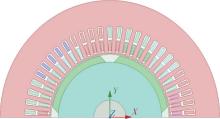
Fig.1
1/2 model of a PMSM(screenshot)
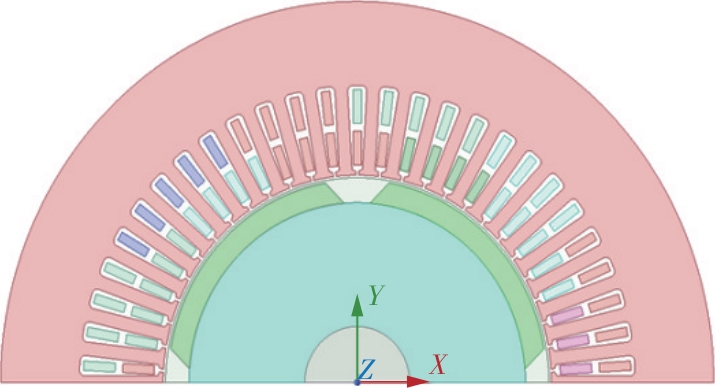
Table 1
Main parameters of the PMSM
| 参数 | 数值 | 参数 | 数值 |
|---|---|---|---|
| 额定功率/kW | 1 000 | 转子外径/mm | 345.00 |
| 额定电压/V | 690 | 转子内径/mm | 100.00 |
| 额定转速/(r·min-1) | 3 000 | 永磁体厚度/mm | 20.00 |
| 峰值转速/(r·min-1) | 6 000 | 气隙长度/mm | 5.50 |
| 槽数 | 54 | 槽口宽/mm | 3.00 |
| 齿宽/mm | 12.00 | 极弧系数(α) | 0.87 |
| 定子外径/mm | 650.00 | 转矩波动系数/% | <3 |
| 定子内径/mm | 370.00 | 效率/% | >95 |
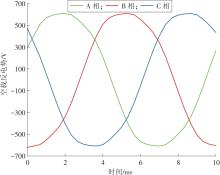
Fig.2
No-load motor back electromotive force
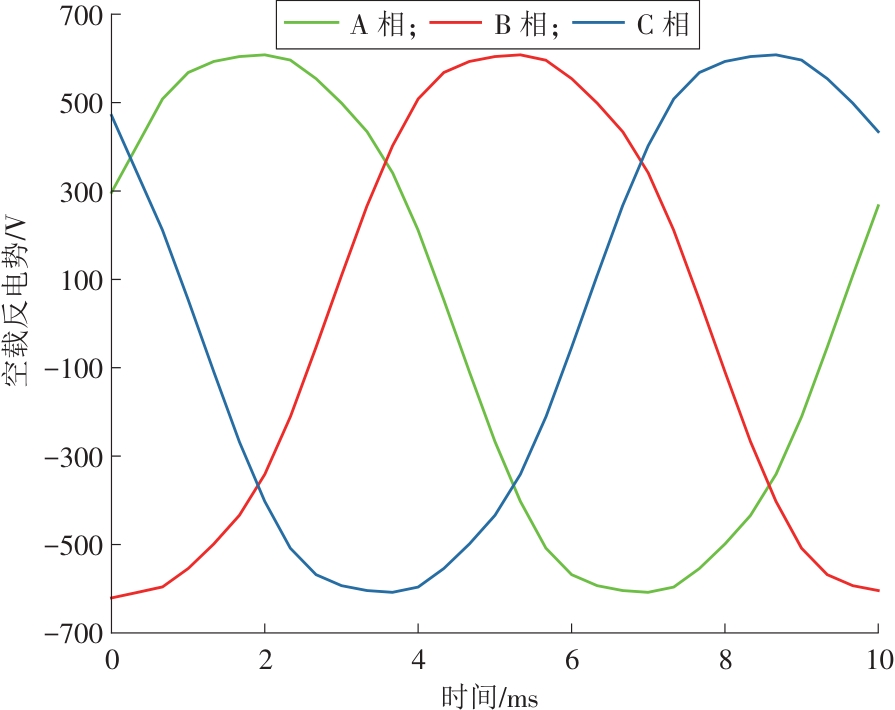
Fig.3
No-load motor cogging torque
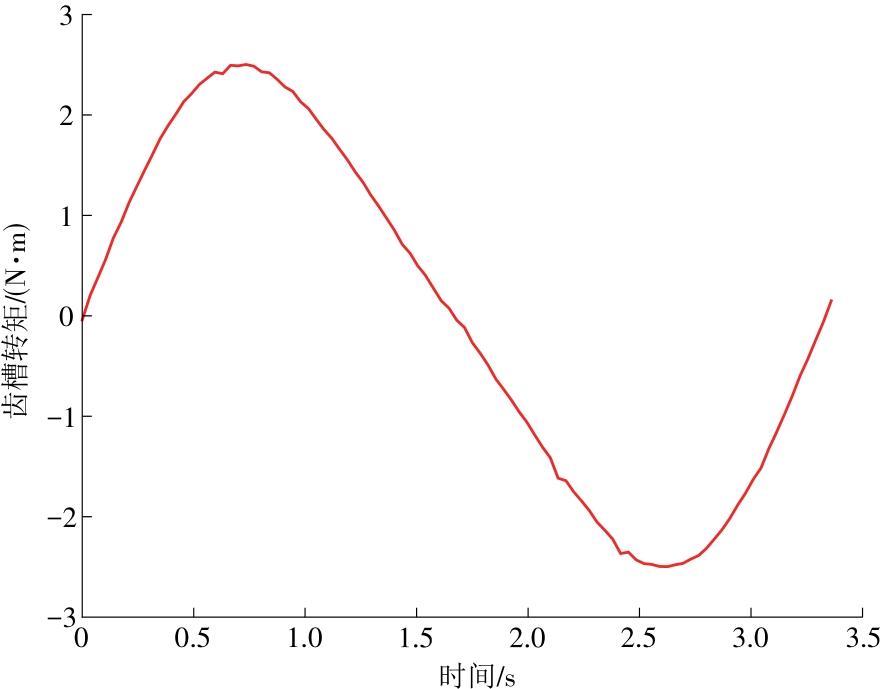
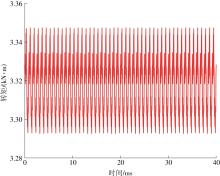
Fig. 4
Variation of output torque
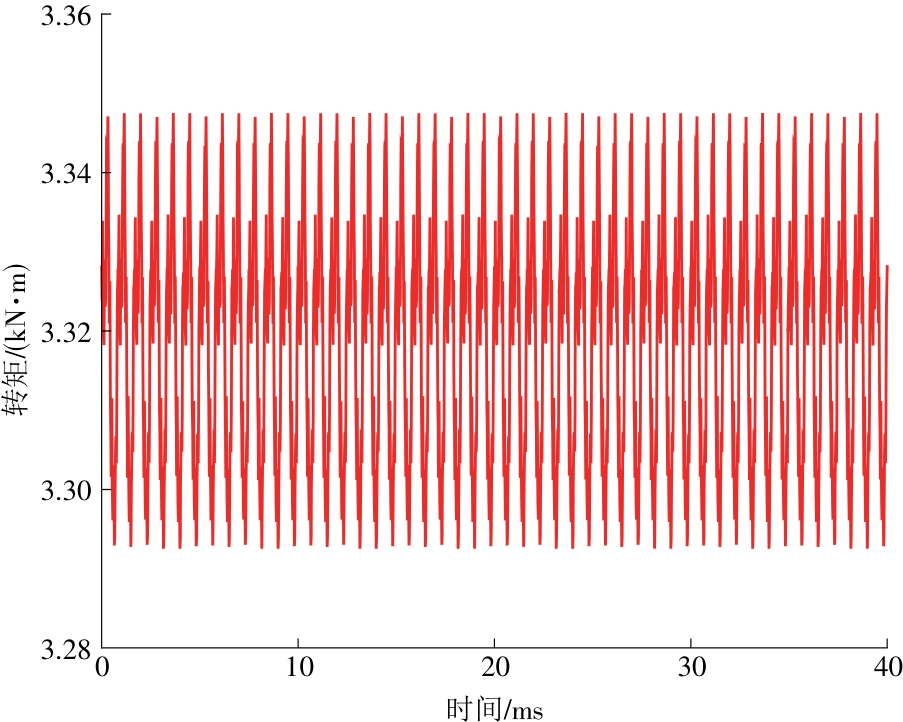
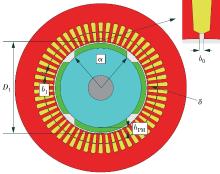
Fig.5
Optimization parameters of the PMSM
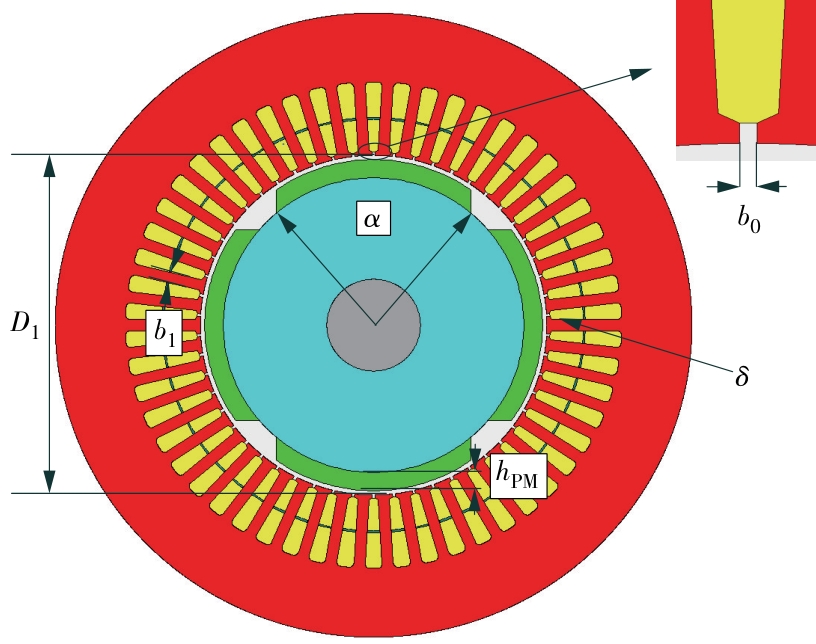
Table 2
Initial values and value ranges of each parameter
| 参数 | 初始值 | 取值范围 |
|---|---|---|
| 永磁体厚度/mm | 20.00 | 17.00~23.00 |
| 气隙/mm | 4.65 | 4.00~6.00 |
| 极弧系数 | 0.87 | 0.75~0.95 |
| 槽口宽度/mm | 3.00 | 2.00~4.00 |
| 定子齿宽/mm | 12.00 | 10.00~14.00 |
| 定子内径/mm | 370.00 | 340.00~400.00 |
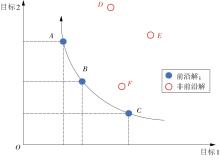
Fig.6
Pareto frontier
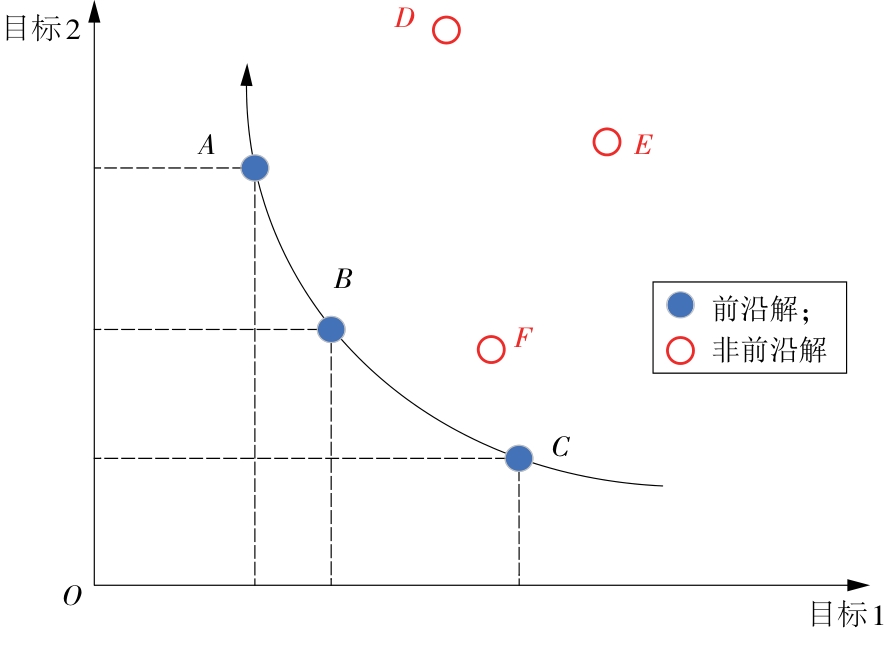
Fig.7
Stator iron loss at rated speed
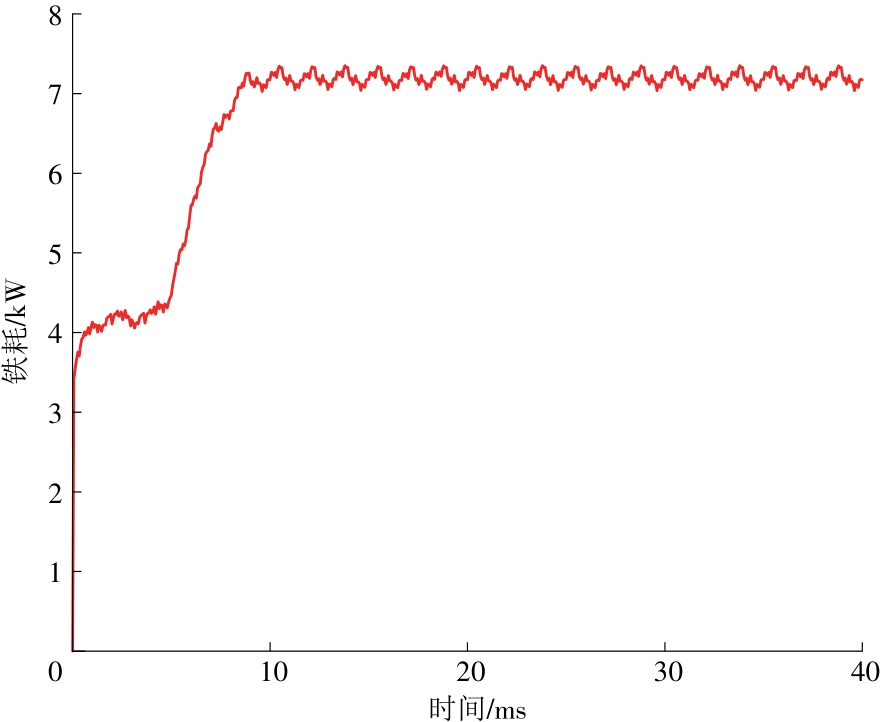
Fig.8
Stator iron loss at peak speed
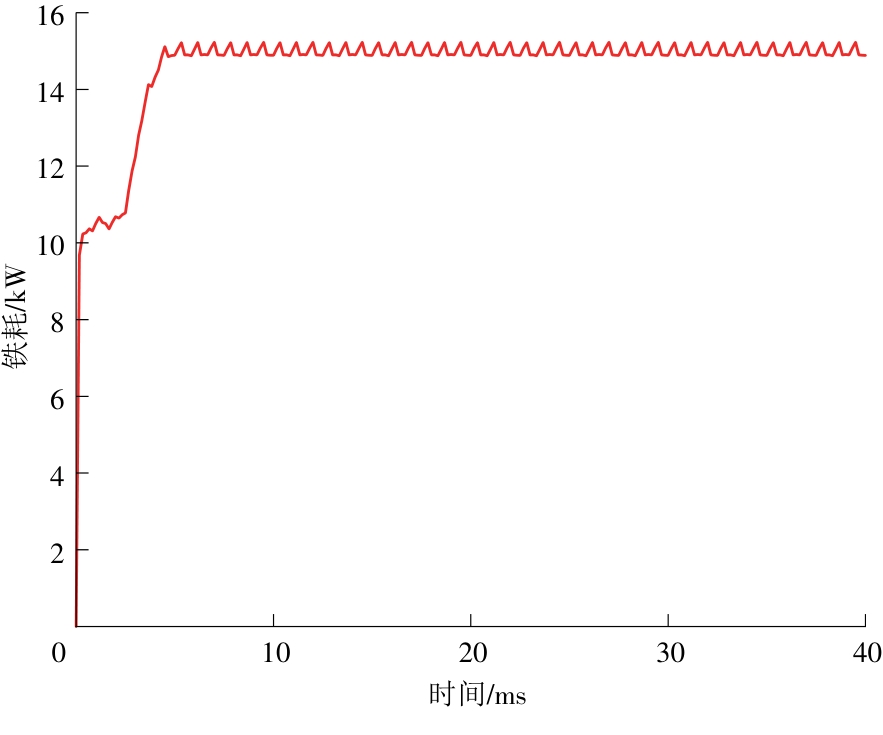
Fig.9
Current density distribution of the winding
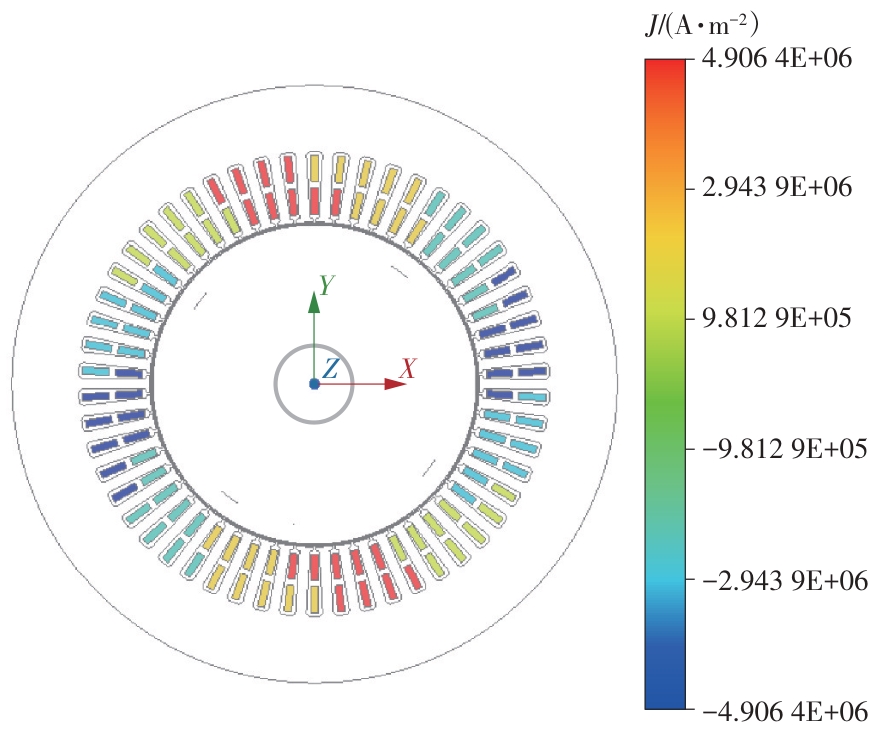
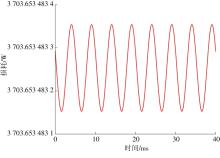
Fig.10
Copper loss of winding at rated rate
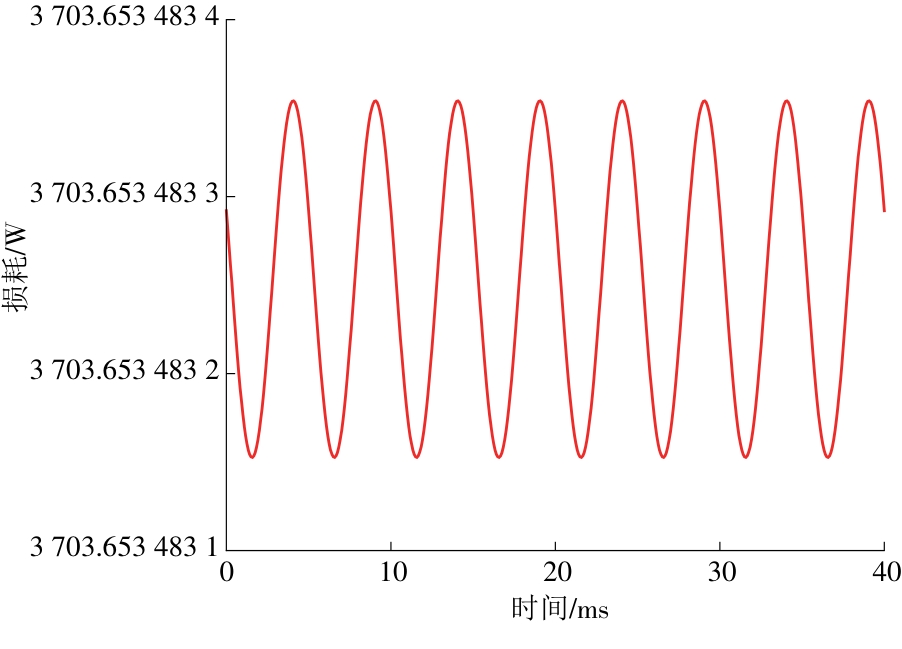
Fig.11
Copper loss of winding at peak rate
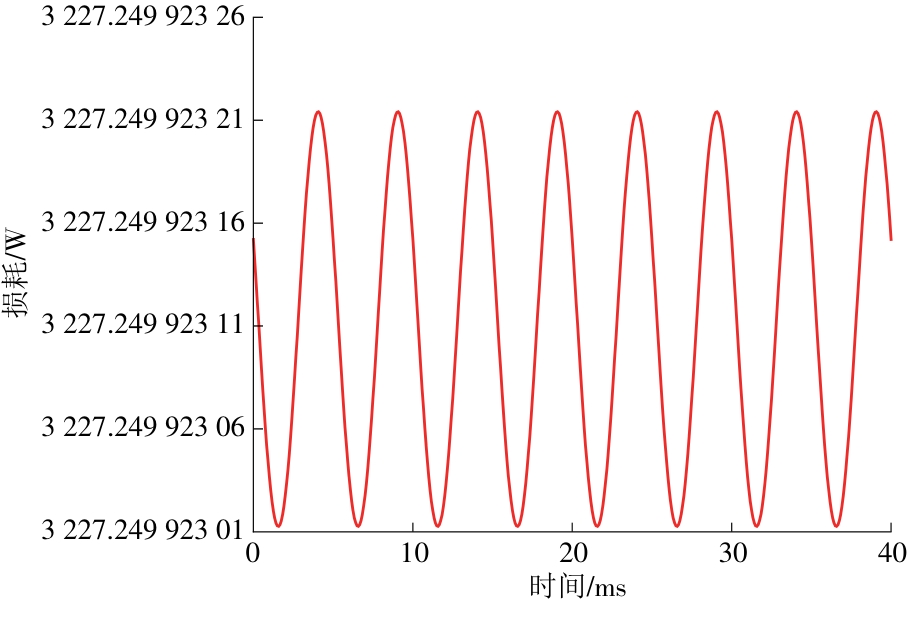
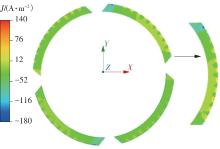
Fig.12
Magnetic flux density distribution of permanent magnet
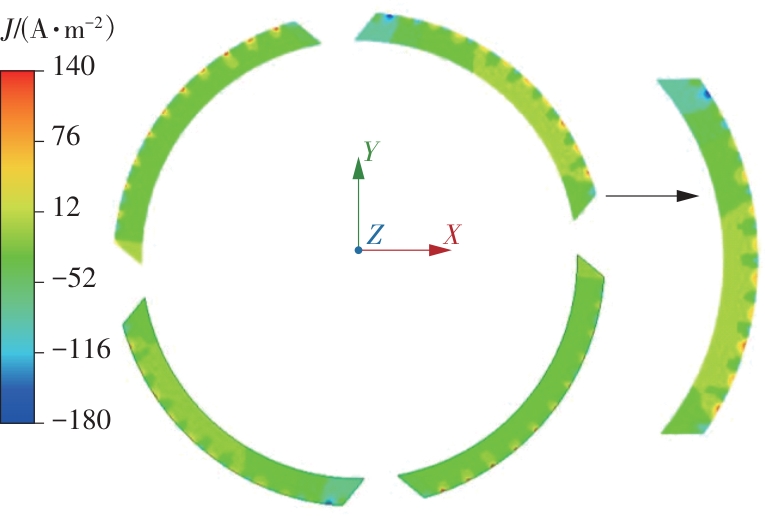
Fig.13
Permanent magnet eddy current loss at rated rate
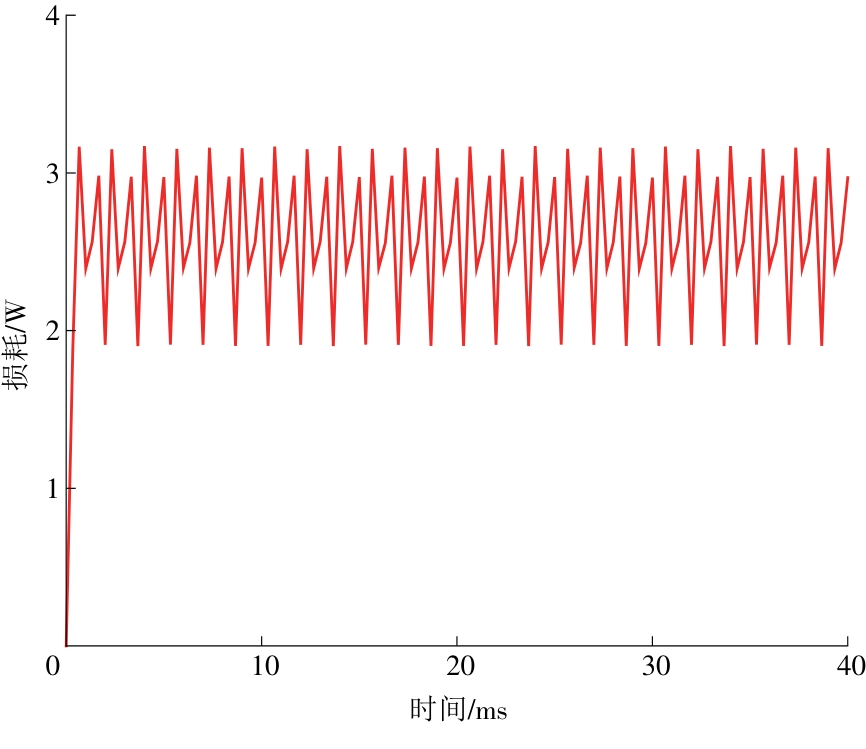
Fig.14
Permanent magnet eddy current loss at peak rate
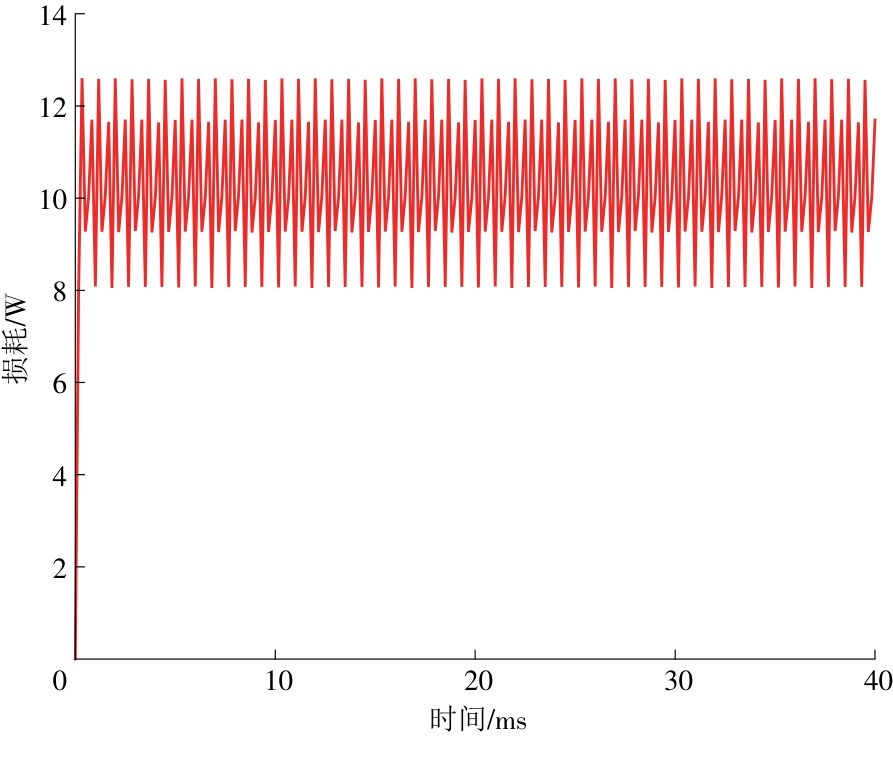
Fig.15
MAP of the motor
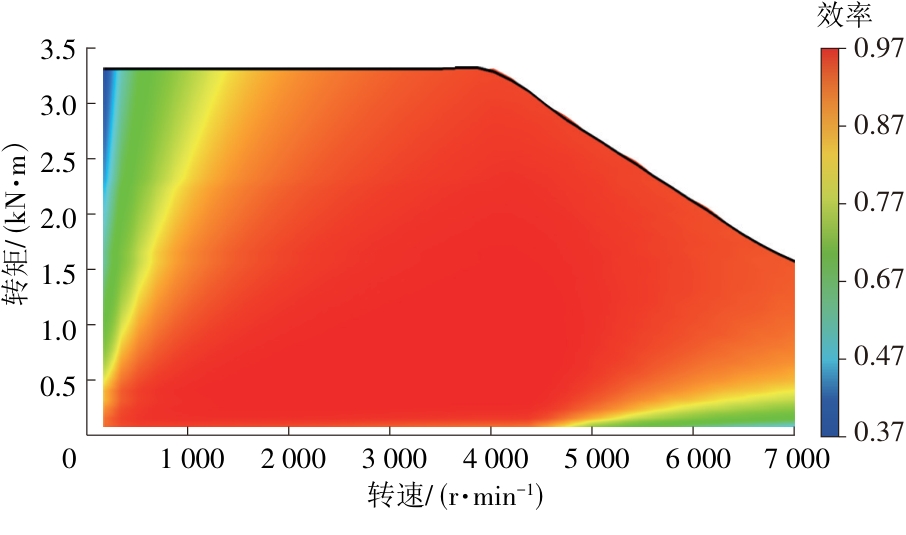
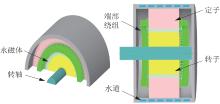
Fig.16
Simplified 3D model of a PMSM
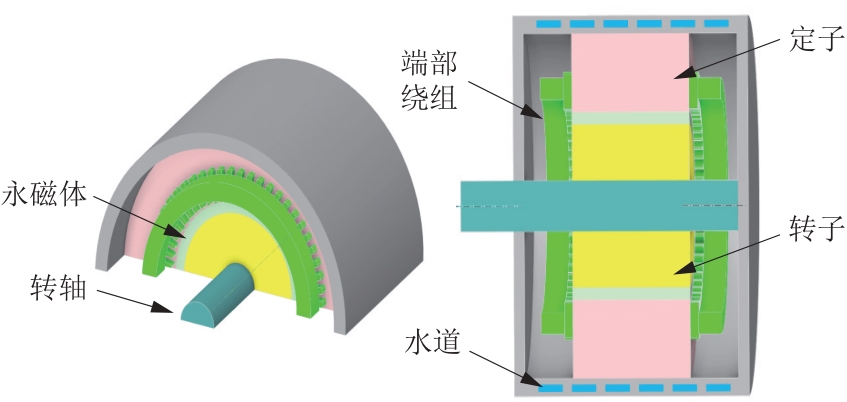
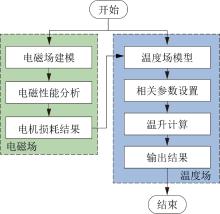
Fig.17
Magneto-thermal coupling implementation process
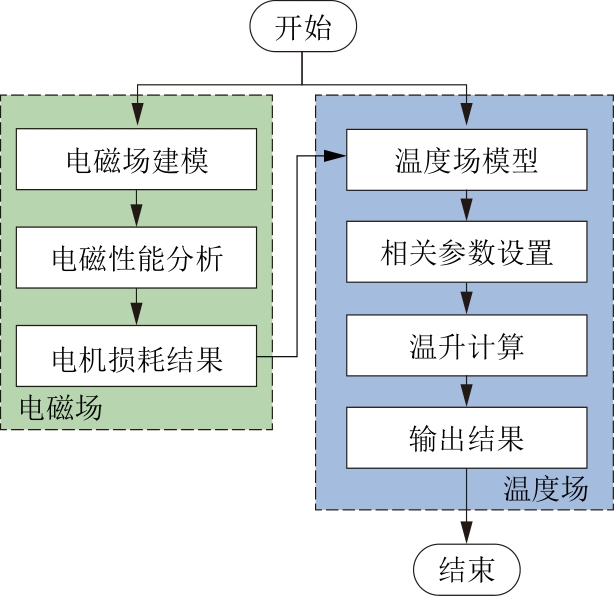

Fig.18
Mesh generation of the motor shield 3D model
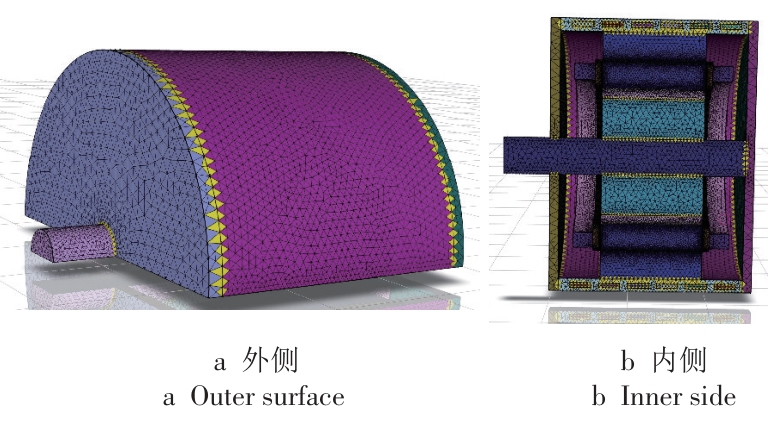
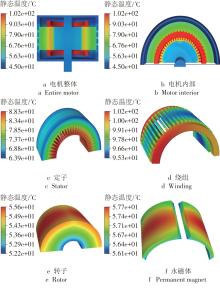
Fig.19
Motor temperature rise at rated speed
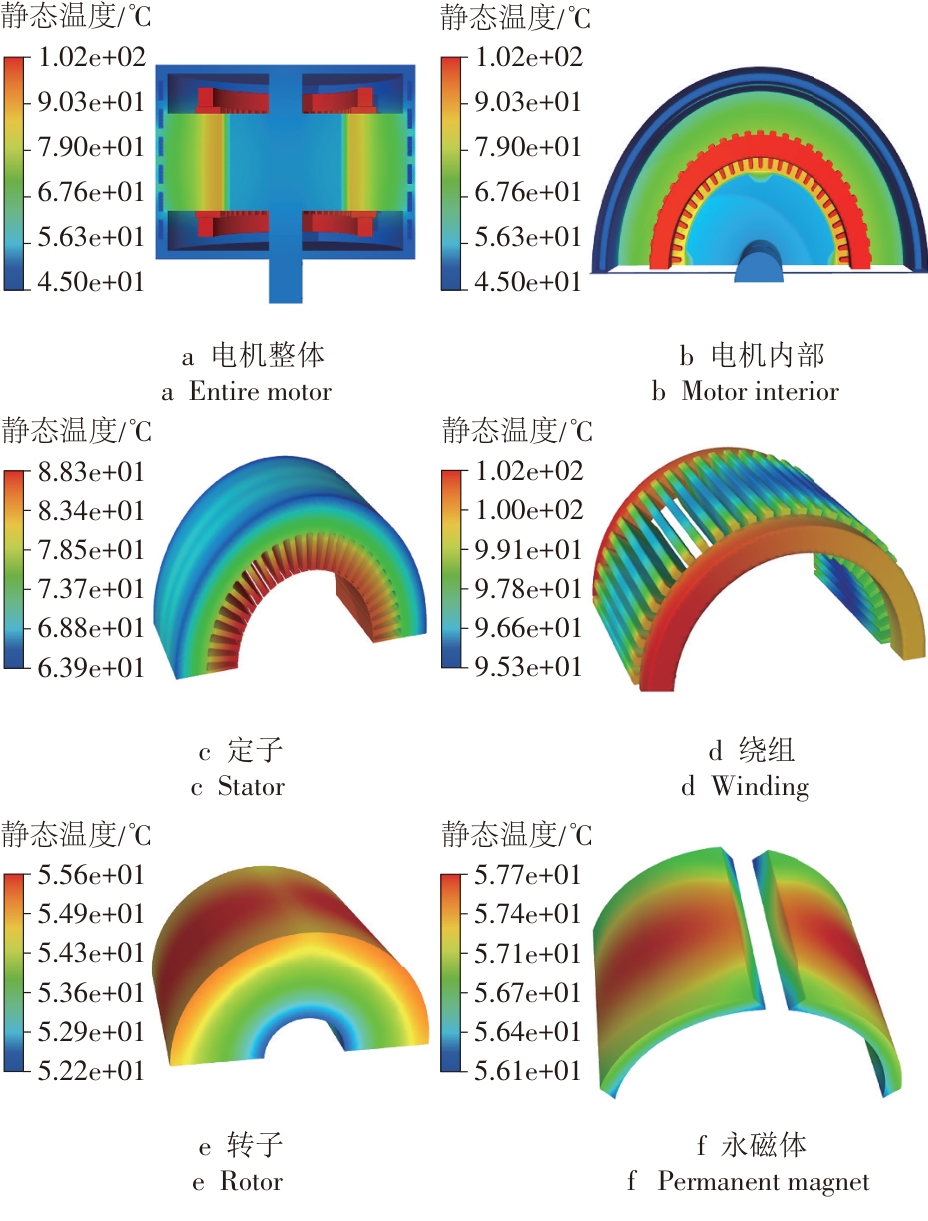
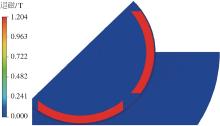
Fig.20
Simulation of permanent magnet demagnetization at rated speed
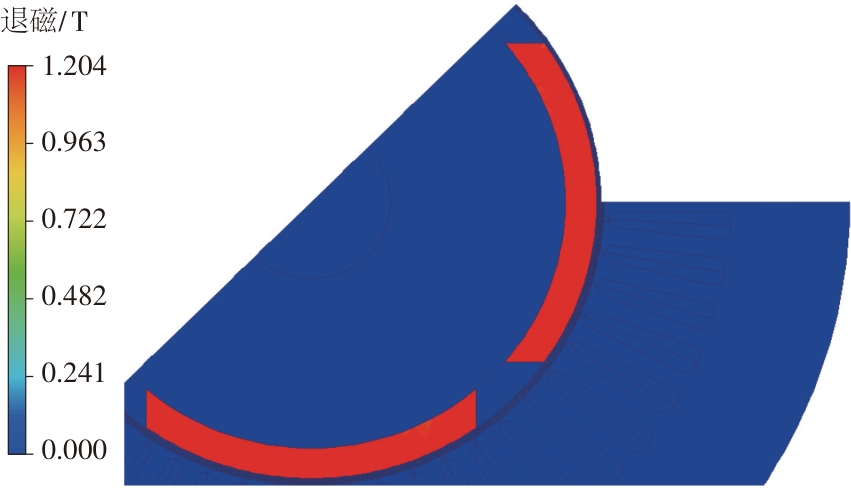
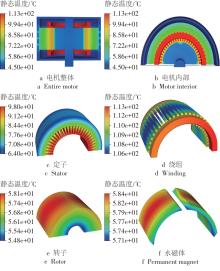
Fig.21
Motor temperature rise at peak speed
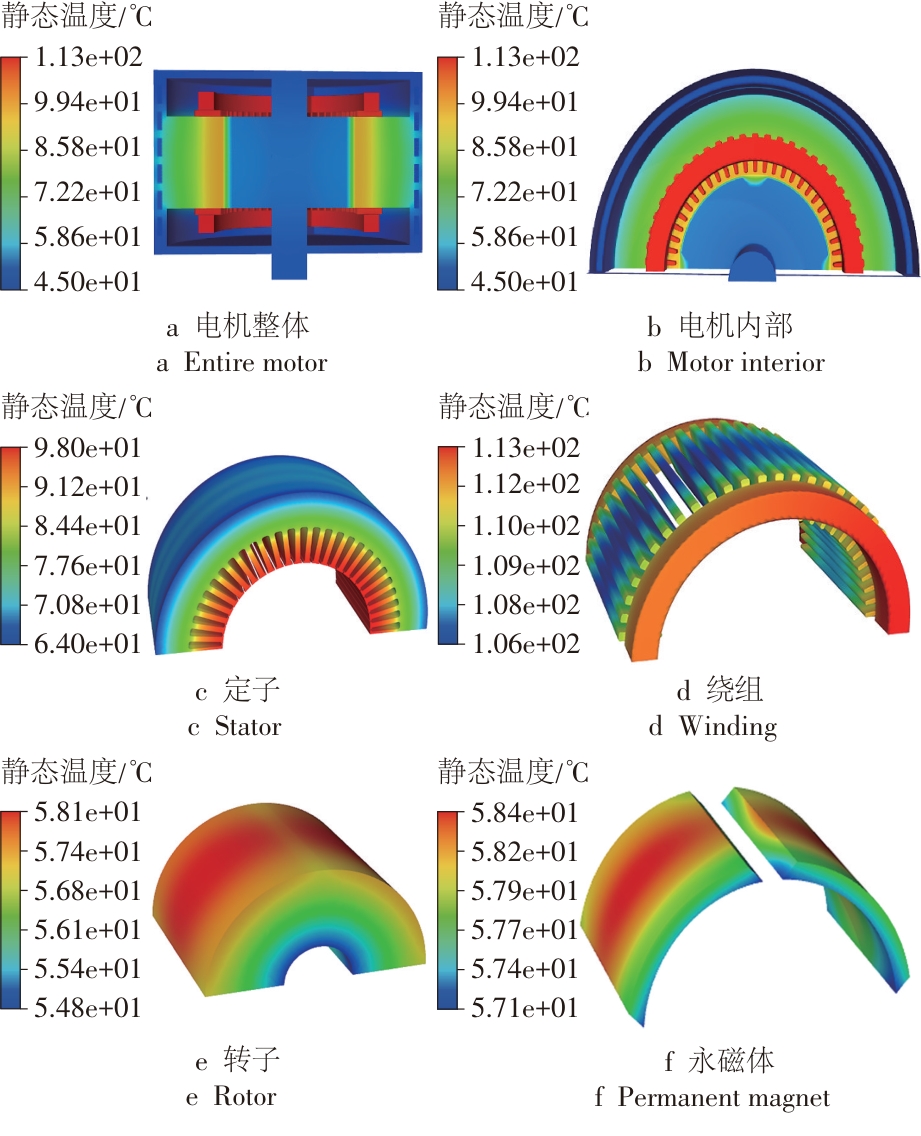
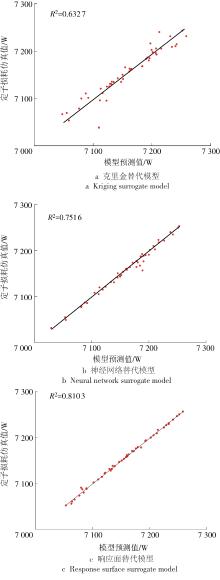
Fig.22
Error analysis of different alternative models
Table 3
Determination coefficient of surrogate model at different sampling points
| 模型 | 不同采样点数下的R2 | |||
|---|---|---|---|---|
| 50 | 130 | 170 | 320 | |
| 克里金模型 | 0.632 7 | 0.691 3 | 0.715 2 | 0.959 8 |
| 响应面模型 | 0.810 3 | 0.879 2 | 0.930 7 | 0.967 1 |
| 神经网络模型 | 0.751 6 | 0.840 1 | 0.916 2 | 0.980 3 |
Table 4
Variation of parameters during the optimization process mm
| 迭代次数 | hPM | b1 | b0 | 极弧长度 | |
|---|---|---|---|---|---|
| 1 | 17.29 | 13.73 | 2.90 | 4.76 | 144.76 |
| 2 | 18.21 | 11.86 | 3.77 | 5.22 | 121.68 |
| 3 | 21.73 | 12.12 | 3.41 | 5.03 | 120.82 |
| 4 | 17.75 | 10.38 | 2.42 | 4.97 | 125.81 |
| 5 | 20.33 | 13.86 | 2.19 | 4.19 | 146.95 |
| 6 | 18.55 | 12.53 | 3.16 | 5.62 | 141.96 |
| 7 | 19.75 | 10.61 | 3.93 | 5.97 | 119.57 |
| … | … | … | … | … | … |
| 299 | 19.17 | 10.42 | 2.13 | 5.25 | 145.56 |
| 300 | 22.52 | 13.45 | 2.65 | 5.39 | 137.77 |
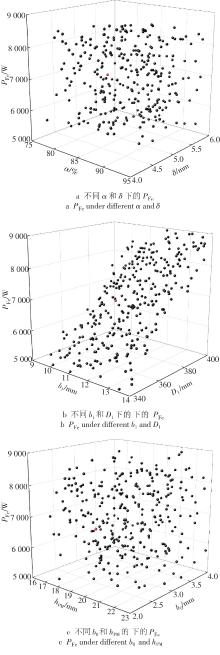
Fig.23
Distribution of experimental points for stator iron loss with different optimization variables
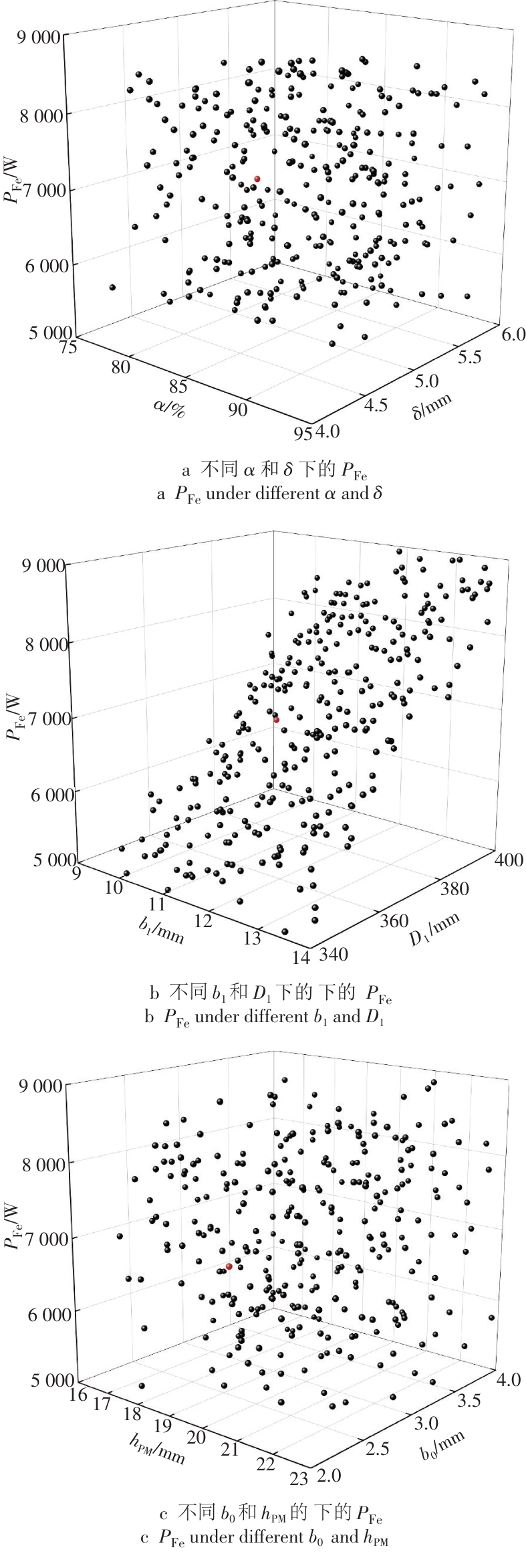
Table 5
Parameters before and after the optimization
| 设计变量 | 优化前 | 优化后 |
|---|---|---|
| b0/mm | 3.00 | 2.51 |
| b1/mm | 12.00 | 12.74 |
| hPM/mm | 20.00 | 19.71 |
| 4.65 | 5.15 | |
| α | 0.78 | 0.89 |
| PFe/W | 7 300.83 | 6 469.17 |
| 转矩波动率/% | 1.69 | 1.47 |
| 齿槽转矩/(N·m) | 2.5 | 1.7 |
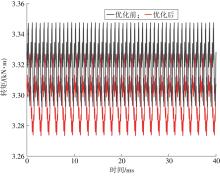
Fig.24
Torque ripple before and after the optimization
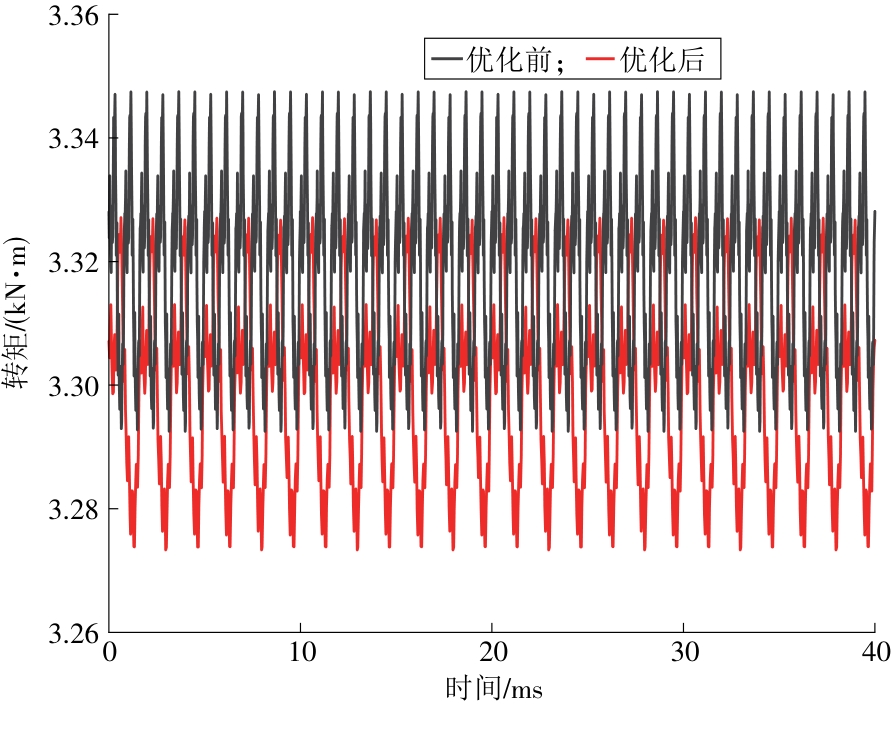
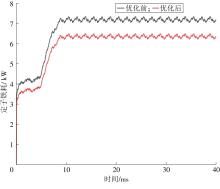
Fig.25
Stator iron loss before and after the optimization
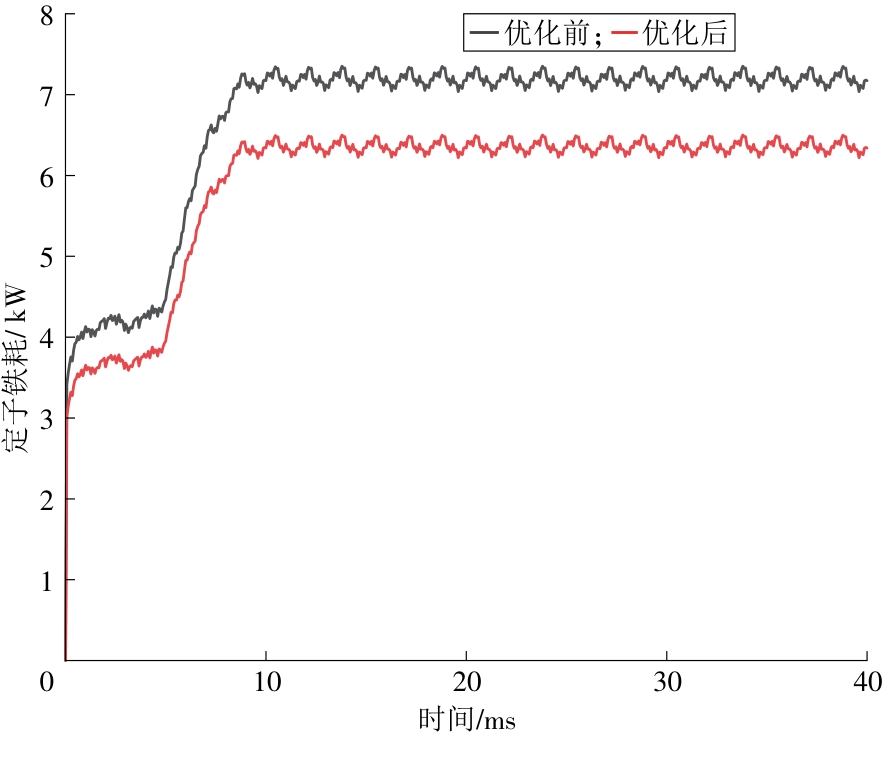
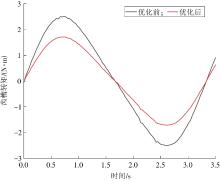
Fig.26
Cogging torque before and after the optimization
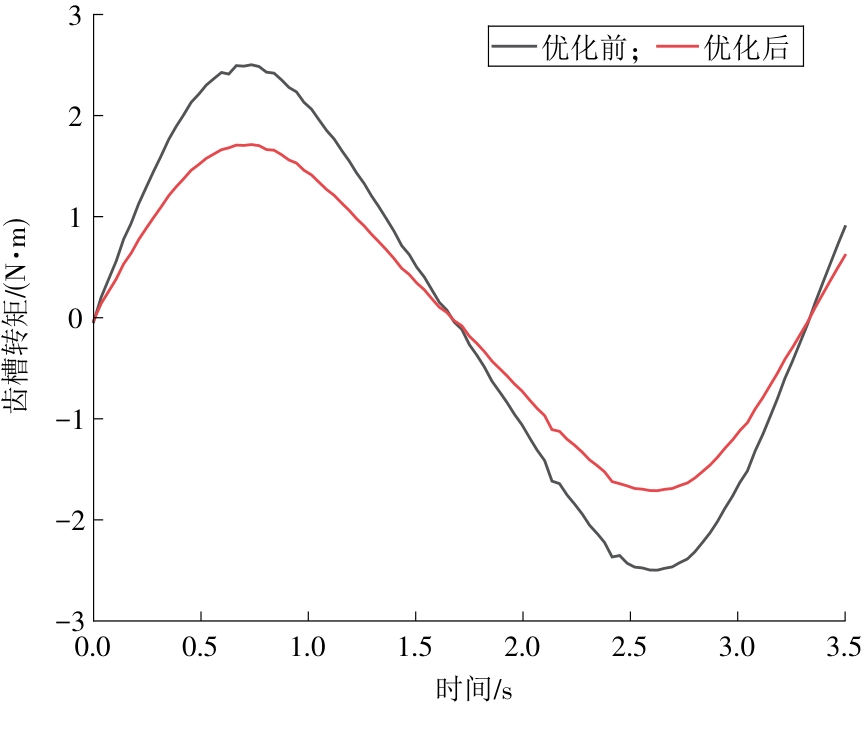
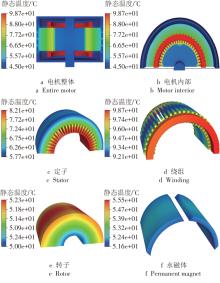
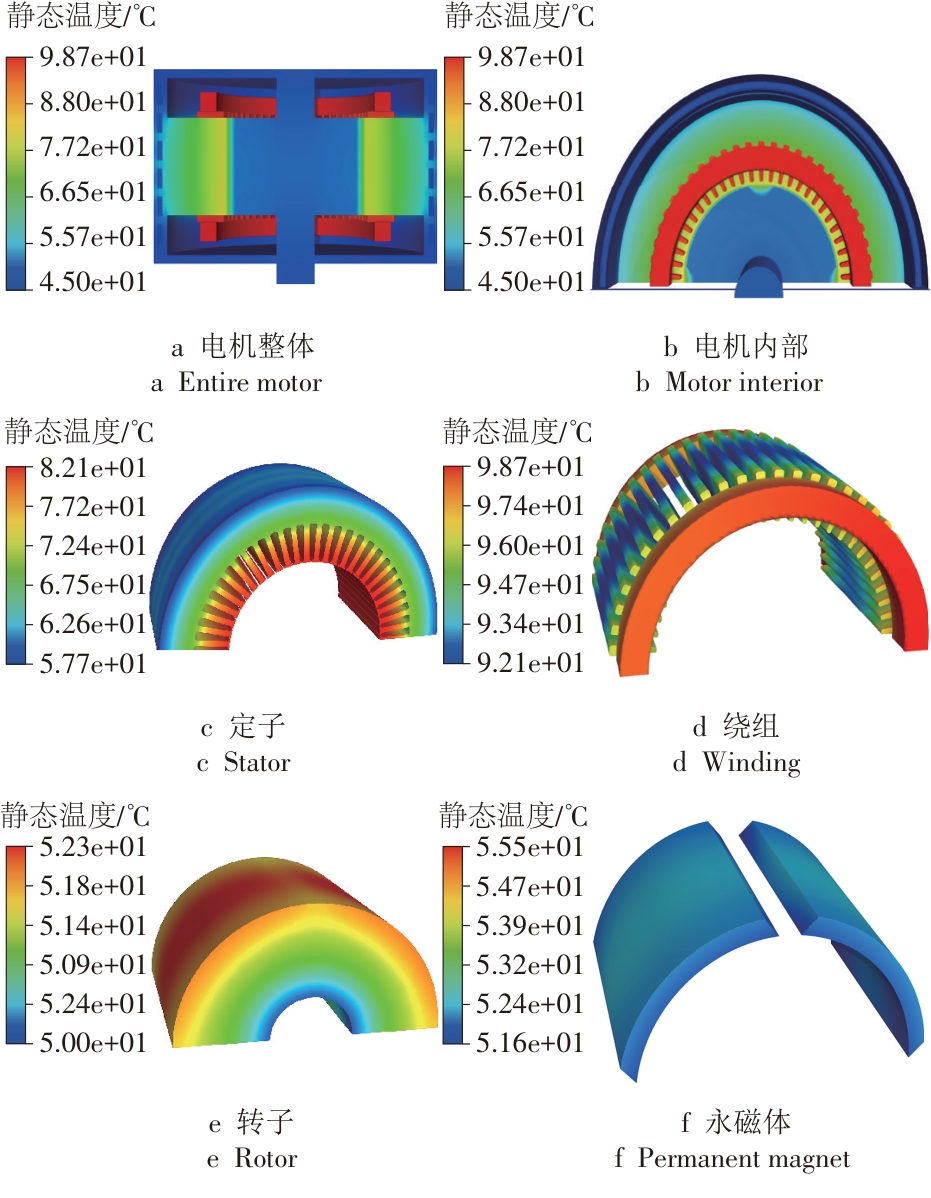
Fig.27
Temperature distribution maps of different of the PMSM at rated speed
| [1] |
XU Y L, ZHANG W, HUG G, et al. Cooperative control of distributed energy storage systems in a microgrid[J]. IEEE Transactions on Smart Grid, 2015, 6(1): 238-248.
doi: 10.1109/TSG.2014.2354033 |
| [2] | 王芳. 热储能技术在新型电力系统中的应用综述[J]. 东北电力技术, 2024, 45(3):13-15. |
| WANG Fang. Review on application of thermal energy storage technology in new power systems[J]. Northeast Electric Power Technology, 2024, 45(3):13-15. | |
| [3] |
王林, 孔小民, 周忠玉, 等. 云储能模式下的配电网分布式光伏-储能无功优化方法[J]. 综合智慧能源, 2024, 46(6): 44-53.
doi: 10.3969/j.issn.2097-0706.2024.06.006 |
|
WANG Lin, KONG Xiaomin, ZHOU Zhongyu, et al. Distributed photovoltaic-energy storage reactive power optimization method for distribution networks under cloud energy storage mode[J]. Integrated Intelligent Energy, 2024, 46(6): 44-53.
doi: 10.3969/j.issn.2097-0706.2024.06.006 |
|
| [4] | 刘笑驰, 梅生伟, 丁若晨, 等. 压缩空气储能工程现状、发展趋势及应用展望[J]. 电力自动化设备, 2023, 43(10): 38-47, 102. |
| LIU Xiaochi, MEI Shengwei, DING Ruochen, et al. Current situation, development trend and application prospect of compressed air energy storage engineering projects[J]. Electric Power Automation Equipment, 2023, 43(10): 38-47, 102. | |
| [5] |
郑昊宇, 周家辉, 仝冰, 等. 配置压缩空气储能的绿氢系统容量配置和运行调度优化研究[J]. 综合智慧能源, 2025, 47(7): 64-70.
doi: 10.3969/j.issn.2097-0706.2025.07.007 |
|
ZHENG Haoyu, ZHOU Jiahui, TONG Bin, et al. Research on capacity allocation and operation scheduling optimization of green hydrogen system with compressed air energy storage[J]. Integrated Intelligent Energy, 2025, 47(7): 64-70.
doi: 10.3969/j.issn.2097-0706.2025.07.007 |
|
| [6] |
KOOHI-FAYEGH S, ROSEN M. A. A review of energy storage types, applications and recent developments[J]. Journal of Energy Storage, 2020, 27: 101047.
doi: 10.1016/j.est.2019.101047 |
| [7] | 刘金利, 翟小飞, 晏明. 大容量储能发电机并联运行励磁控制算法[J]. 国防科技大学学报, 2019, 41(4): 46-52. |
| LIU Jinli, ZHAI Xiaofei, YAN Ming. Excitation control algorithm for high-capacity energy storage generator in parallel operation[J]. Journal of National University of Defense Technology, 2019, 41(4): 46-52. | |
| [8] | REN W, XU Q, LI Q, et al. Reduction of cogging torque and torque ripple in interior PM machines with asymmetrical V-type rotor design[J]. IEEE Transactions on Magnetics, 2016, 52(7): 1-5. |
| [9] |
FAN K G, XIAO J Y, WANG R D, et al. Thermoelectric-based cooling system for high-speed motorized spindle I: Design and control mechanism[J]. The International Journal of Advanced Manufacturing Technology, 2022, 121(5): 3787-3800.
doi: 10.1007/s00170-022-09568-4 |
| [10] | ZHANG C, CHEN L X, WANG X Y, et al. Loss calculation and thermal analysis for high-speed permanent magnet synchronous machines[J]. IEEE Access, 2020, 8: 92627-92636. |
| [11] | LIU L, LIU G, LIU M, et al. Analysis on three-dimensional temperature field of permanent magnet synchronous motor in vehicles[J]. China Mechanical Engineering, 2015, 26(11): 1438-1444. |
| [12] |
GUO Y J, XU R H, JIN P. A real-time temperature rise prediction method for PM motor varying working conditions based on the reduced thermal model[J]. Case Studies in Thermal Engineering, 2023, 47: 103098.
doi: 10.1016/j.csite.2023.103098 |
| [13] | SHI Y W, WANG J B, WANG B. EM-thermal coupled simulation under various fault conditions of a triple redundant 9-phase PMASynRM[C]// IEEE Energy Conversion Congress and Exposition. IEEE,2018:23-27. |
| [14] | 李进才, 李涵琪, 张卓然, 等. 航空油冷三级式无刷发电机流固耦合传热研究及散热优化[J]. 电工技术学报, 2024, 39(22): 7030-7044. |
| LI Jincai, LI Hanqi, ZHANG Zhuoran, et al. Research on fluid-solid coupling heat transfer and optimization of heat dissipation in the aircraft oil-cooled wound rotor synchronous generator[J]. Transactions of China Electrotechnical Society, 2024, 39(22): 7030-7044. | |
| [15] | 李全武, 窦满峰. 一种无刷直流电动机齿槽转矩分数槽削弱方法[J]. 微特电机, 2012(3): 31-33. |
| LI Quanwu, DOU Manfeng. Method for weaken cogging torque fractional slot of brushless DC motor[J]. Micro & Special Electric Machines, 2012(3): 31-33. | |
| [16] | 谢颖, 耿高旭, 蔡蔚, 等. 隔磁孔转子结构永磁同步电机效率与振动噪声优化设计[J/OL]. 中国电机工程学报, 2025: 1-11 (2025-03-26) [2025-09-06]. https://link.cnki.net/doi/10.13334/j.0258-8013.pcsee.242406. |
| XIE Ying, GENG Gaoxu, CAI Wei, et al. Optimized design of a permanent magnet synchronous motor efficiency and vibration noise with magnetic hole rotor structure[J/OL]. Proceedings of the CSEE, 2025: 1-11(2025-03-26)[2025-09-06]. https://link.cnki.net/doi/10.13334/j.0258-8013.pcsee.242406. | |
| [17] | 许孝卓, 刘俊哲, 肖磊, 等. 基于磁-固耦合振动的永磁同步电机多目标优化设计[J]. 电气工程学报, 2024, 19(4): 149-158. |
| XU Xiaozhuo, LIU Junzhe, XIAO Lei, et al. Multi-objective optimization design of permanent magnet synchronous motor based on magnetic-structural coupled vibration[J]. Journal of Electrical Engineering, 2024, 19(4): 149-158. | |
| [18] | 吉敬华, 沈人洁, 徐亮, 等. 考虑运行工况的模块化双永磁游标电机多工作点优化设计[J]. 电工技术学报, 2022, 37(22): 5649-5659. |
| JI Jinghua, SHEN Renjie, XU Liang, et al. Multi-working point optimization of modular double permanent-magnet vernier motor considering operation condition[J]. Transactions of China Electrotechnical Society, 2022, 37(22): 5649-5659. | |
| [19] | 王为术, 亓月欣, 彭岩, 等. 高速永磁电机损耗特性研究[J]. 电工技术, 2022(21): 234-238. |
| WANG Weishu, QI Yuexin, PENG Yan, et al. Research on loss characteristics of high speed permanent magnet motor[J]. Electric Engineering, 2022(21): 234-238. | |
| [20] | 许孝卓, 郭国宾, 封海潮, 等. 基于代理模型的永磁直线同步电机多目标优化[J]. 电机与控制学报, 2024, 28(11): 139-150. |
| XU Xiaozhuo, GUO Guobin, FENG Haichao, et al. Multi-objective optimization of permanent magnet linear synchronous motor based on surrogate model[J]. Electric Machines and Control, 2024, 28(11): 139-150. | |
| [21] | 刘娜, 钟成堡, 陈飞龙, 等. 极弧系数对永磁同步电机齿槽转矩影响的分析[J]. 微特电机, 2022, 50(8): 15-18. |
| LIU Na, ZHONG Chengbao, CHEN Feilong, et al. Analysis of influence of pole arc coefficient on cogging torque of permanent magnet synchronous motor[J]. Small & Special Electrical Machines, 2022, 50(8): 15-18. | |
| [22] | 边旭, 张果果, 李雪, 等. 逆变器供电系统下扁线电机绕组交流损耗计算[J]. 电机与控制学报, 2025, 29(5): 99-107, 122. |
| BIAN Xu, ZHANG Guoguo, LI Xue, et al. Calculation of AC losses in winding of flat wire motor under inverter power supply system[J]. Electric Machines and Control, 2025, 29(5): 99-107, 122. | |
| [23] | 赵志刚, 魏乐, 郭莹, 等. 基于修正Bertotti模型的变压器铁心谐波磁损耗计算与验证[J]. 天津大学学报(自然科学与工程技术版), 2019, 52(12): 1270-1277. |
| ZHAO Zhigang, WEI Le, GUO Ying, et al. Calculation and verification of harmonic magnetic loss of transformer core based on improved bertotti model[J]. Journal of Tianjin University (Science and Technology), 2019, 52(12): 1270-1277. | |
| [24] | 熊斌, 崔刚, 鲍炳炎, 等. 基于磁热耦合法的高功率密度永磁电机永磁体温度分布特性与试验研究[J]. 电机与控制学报, 2024, 28(11): 104-116. |
| XIONG Bin, CUI Gang, BAO Bingyan, et al. Temperature distribution characteristics and experiment of permanent magnet for high power density permanent magnet motor based on electromagnetic thermal coupling method[J]. Electric Machines and Control, 2024, 28(11): 104-116. | |
| [25] | 周鹏飞, 赵南南, 乔鹏博, 等. 基于响应面法的电动汽车用电励磁同步电机多目标优化设计[J]. 大电机技术, 2025(2): 18-27. |
| ZHOU Pengfei, ZHAO Nannan, QIAO Pengbo, et al. Multi-objective optimization design of electric vehicle excitation synchronous motor based on response surface methodology[J]. Large Electric Machine and Hydraulic Turbine, 2025(2): 18-27. | |
| [26] | 李泽泉, 马一鸣, 刘黎阳, 等. 基于几何相似性的迁移学习代理模型电机优化设计方法[J/OL]. 中国电机工程学报, 2025: 1-12(2025-01-22)[2025-09-06]. https://link.cnki.net/doi/10.13334/j.0258-8013.pcsee.242203. |
| LI Zequan, MA Yiming, LIU Liyang, et al. Research on geometrical similarity transfer learning-based surrogate-assisted model optimization design method for electric machines[J/OL]. Proceedings of the CSEE, 2025: 1-12(2025-01-22)[2025-09-06]. https://link.cnki.net/doi/10.13334/j.0258-8013.pcsee.242203. | |
| [27] | 李媛媛, 侯锦秋, 宋阳, 等. 基于分时电价的多目标电动汽车有序充电优化策略研究[J]. 东北电力技术, 2024, 45(3):23-27. |
| LI Yuanyuan, HOU Jinqiu, SONG Yang, et al. Research on optimization strategy of multi-objective electric vehicle orderly charging based on time-of-use price[J]. Northeast Electric Power Technology, 2024, 45(3): 23-27. | |
| [28] | 袁野, 张永将, 杨帆, 等. 单绕组无轴承同步磁阻电机参数优化策略[J]. 中国电机工程学报, 2025, 45(15): 6092-6103. |
| YUAN Ye, ZHANG Yongjiang, YANG Fan, et al. Optimal design of parameter for single winding bearingless synchronous reluctance motor[J]. Proceedings of the CSEE, 2025, 45(15): 6092-6103. | |
| [29] | 赵海宁, 于慎波. “模块化”混合励磁同步电机结构设计与制造技术研究[J]. 东北电力技术, 2021, 42(10):31-34. |
| ZHAO Haining, YU Shenbo. Research on structure design and manufacturing technology of modular hybrid excitation synchronous motor[J]. Northeast Electric Power Technology, 2021, 42(10):31-34. | |
| [30] | 谢冰川, 张岳, 徐振耀, 等. 基于代理模型的电机多学科优化关键技术综述[J]. 电工技术学报, 2022, 37(20): 5117-5143. |
| XIE Bingchuan, ZHANG Yue, XU Zhenyao, et al. Review on multidisciplinary optimization key technology of electrical machine based on surrogate models[J]. Transactions of China Electrotechnical Society, 2022, 37(20): 5117-5143. |
| [1] | WANG Hai, LIU Siyu, ZHANG Xinyue, LIU Siqi, TANG Kerong, LIANG Xuhe, BU Hebateer. Development status and analysis of compressed air energy storage [J]. Integrated Intelligent Energy, 2026, 48(5): 19-30. |
| [2] | WANG Difan, WEI Fei, JIANG Deyu, HAN Shushan, LI Zhongkai, ZHANG Shenglin, WANG Zhengwei, CHEN Heng. Optimization planning of distribution networks with multiple energy resources and energy storage coordination [J]. Integrated Intelligent Energy, 2025, 47(8): 49-57. |
| [3] | ZHENG Haoyu, ZHOU Jiahui, TONG Bin, WANG Haiming, XU Gang, ZHANG Ziyue. Research on capacity allocation and operation scheduling optimization of green hydrogen system with compressed air energy storage [J]. Integrated Intelligent Energy, 2025, 47(7): 64-70. |
| [4] | CHENG Xianlong, MA Yun, HAN Junfeng, MO Ying, GAO Yan. Research on economic scheduling of power systems with wind farms based on improved African vulture optimization algorithm [J]. Integrated Intelligent Energy, 2025, 47(6): 37-46. |
| [5] | WANG Cheng, SHAO Chong, HE Xin, DONG Haiying. Optimal power allocation for electrochemical energy storage power stations based on MOIBKA algorithm [J]. Integrated Intelligent Energy, 2025, 47(6): 74-84. |
| [6] | HUANG Wenxuan, ZENG Haozheng, LIN Yijin, YIN Linfei. Research on the loss of magnetic components based on a data-driven method [J]. Integrated Intelligent Energy, 2025, 47(4): 73-84. |
| [7] | YAN Jing, LI Meng, GUAN Baoliang, MENG Siyu, FAN Yanbo, WANG Fenglong, YANG Shangfeng, YANG Zhongyang, XIONG Yaxuan. Multi-objective optimization of multi-energy supply for residential buildings in cold regions based on energy storage [J]. Integrated Intelligent Energy, 2025, 47(12): 46-56. |
| [8] | WEN Xiankui, LI Yaqin, ZHANG Shihai, FAN Qiang, YE Huayang, XIE Yiying, LI Xinzhuo. Impact of expander automatic control on operational stability during AA-CAES startup process [J]. Integrated Intelligent Energy, 2025, 47(12): 81-88. |
| [9] | QIU Wenting, DONG Jiale, WU Di, SU Wenjing, ZONG Yi. Economic and low-carbon coordinated optimization scheduling of hydrogen-integrated multi-energy system based on NSGA-Ⅱ [J]. Integrated Intelligent Energy, 2025, 47(10): 34-44. |
| [10] | FAN Yanbo, XIONG Yaxuan, LI Xiang, TIAN Xi, YANG Yang. Advancement in multi-objective optimization for building energy use based on genetic algorithms [J]. Integrated Intelligent Energy, 2024, 46(9): 69-85. |
| [11] | CHEN Yong, XIAO Leiming, WANG Jingnan, WU Jian. Capacity planning method with high reliability for integrated energy systems with low-carbon emissions based on scenario expansion [J]. Integrated Intelligent Energy, 2024, 46(4): 24-33. |
| [12] | TANG Zihan, WANG Shuaijie, JU Zhenhe, LEI Zhiqi. Performance optimization of photovoltaic/thermal systems coupled with air source heat pumps [J]. Integrated Intelligent Energy, 2024, 46(4): 34-41. |
| [13] | SUN Jian, ZHANG Yunfan, CAI Xiaolong, LIU Dingqun. Optimal scheduling of HVAC systems based on predicted loads [J]. Integrated Intelligent Energy, 2024, 46(3): 12-19. |
| [14] | LU Wentian. Increment-exchange-based decentralized multi-objective optimal power flow algorithm for active distribution grids [J]. Integrated Intelligent Energy, 2024, 46(2): 43-48. |
| [15] | HU Xueru, XING Lingli, LI Yuanyuan, SU Wen, LIU Pengfei, DING Ruochen, LIN Xinxing. Performance simulation and analysis of an isobaric compressed air energy storage system based on Aspen Plus [J]. Integrated Intelligent Energy, 2024, 46(12): 72-80. |
| Viewed | ||||||
|
Full text |
|
|||||
|
Abstract |
|
|||||